The Best Books on the Rwandan Genocide
This curriculum builds from vivid, accessible narrative accounts of the genocide itself toward deeper historical, political, and structural analysis — and finally to questions of justice, memory, and rebuilding. Starting at an intermediate level, each stage assumes the knowledge and emotional grounding laid by the previous one, creating a coherent arc from "what happened" to "why" to "what comes after."
The Ground Truth: What Happened in 1994
IntermediateBuild a vivid, human-scale understanding of the genocide as it unfolded — the timeline, the scale, the perpetrators, the victims, and the world's failure to intervene.
▸ Study plan for this stage
Pace: 10–12 weeks, ~40–50 pages/day (with 2–3 reflection days per week). Week 1–4: Gourevitch (400 pages); Week 5–7: Courtemanche (320 pages); Week 8–12: Dallaire (500+ pages, slower pace for dense military/political analysis).
- The 100-day timeline and escalation: how the genocide unfolded from April 7 to mid-July 1994, from targeted assassination to systematic mass murder
- The role of propaganda, radio, and dehumanization: how Hutu Power ideology and RTLM broadcasts mobilized ordinary citizens as perpetrators
- Victim testimonies and the human cost: understanding the genocide through survivors' voices, family separations, and the scale of loss (800,000+ deaths)
- Perpetrator psychology and complicity: how neighbors, clergy, soldiers, and officials participated in or enabled the killings
- The failure of international intervention: UNAMIR's mandate, the withdrawal of UN forces after April 7, and the world's inaction despite clear warnings
- Rwanda's social fabric before and during genocide: the colonial legacy of Hutu-Tutsi categorization, economic grievance, and how trust was weaponized
- Witness accounts and journalistic truth-seeking: how Gourevitch reconstructs events through interviews; how Courtemanche's fiction captures lived experience; how Dallaire documents command decisions
- The geography of killing: how the genocide was localized yet coordinated—roadblocks, churches, schools as killing sites, and the role of local authorities
- What were the key events and turning points in the 100-day genocide, and how did the violence escalate from April 7 onwards?
- How did Hutu Power ideology, RTLM radio broadcasts, and propaganda dehumanize Tutsis and mobilize perpetrators? What role did colonial history play in creating these divisions?
- What does Gourevitch's investigative journalism reveal about how ordinary Rwandans became perpetrators, and what patterns emerge in perpetrator testimony?
- How does Courtemanche's novel convey the lived experience of genocide—the choices, moral compromises, and survival strategies of his characters—in ways that complement historical accounts?
- What was UNAMIR's mandate under Dallaire, and why did the UN withdraw forces after April 7? What were the consequences of this decision?
- What evidence do these three texts provide about the world's knowledge of and response to the genocide in real time, and why did intervention fail?
- Create a detailed timeline of the genocide (April 7–July 15, 1994) with 15–20 key events from Gourevitch and Dallaire; annotate each with perpetrator groups, victim numbers, and international responses.
- Compile 5–7 perpetrator testimonies from Gourevitch (e.g., taxi drivers, priests, soldiers) and analyze the justifications, rationalizations, and psychological mechanisms each uses; identify common patterns.
- Read and annotate 3–4 survivor testimonies from Gourevitch; write a 2–3 page reflection on how these accounts humanize the statistics and what emotional/psychological insights they offer.
- Track Courtemanche's protagonist(s) through the novel: map their moral choices, relationships, and survival strategies; write a character study exploring how the novel captures the 'banality of evil' in personal terms.
- Create a map of Rwanda showing major killing sites, roadblocks, and safe zones mentioned in all three texts; annotate with local perpetrator groups and UN positions (from Dallaire).
- Write a comparative analysis (3–4 pages) of how Gourevitch (journalism), Courtemanche (fiction), and Dallaire (military memoir) each convey truth about the genocide—what does each form reveal or obscure?
Next up: This stage grounds you in the documented facts, human testimonies, and command-level failures of 1994; the next stage will likely examine Rwanda's aftermath—justice, reconciliation, trauma, and how survivors and perpetrators rebuilt society—requiring this vivid, granular understanding of what must be healed.
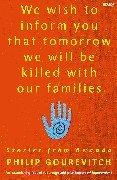
The essential starting point — a masterfully reported narrative that puts a human face on the genocide while also asking hard political questions. It establishes the core facts and moral stakes that every subsequent book builds upon.

A novel based on real events and real people in Kigali just before and during the genocide. Reading it second gives emotional texture and ground-level perspective that complements Gourevitch's journalism.
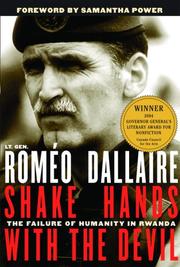
The UN force commander's firsthand account of being abandoned by the international community. It deepens understanding of the institutional failures and adds a crucial insider military-diplomatic perspective.
Deep Roots: History, Ethnicity, and Colonial Origins
IntermediateUnderstand how Hutu and Tutsi identities were constructed and weaponized over decades of colonial rule and post-independence politics, making the genocide historically intelligible rather than simply monstrous.
▸ Study plan for this stage
Pace: 4–5 weeks, ~40–50 pages/day (approximately 280–350 pages total)
- Colonial construction of Hutu and Tutsi as rigid, essentialized categories (rather than fluid pre-colonial identities)
- How Belgian colonial administration weaponized ethnic classification through the identity card system and administrative hierarchy
- The role of the Catholic Church and missionary education in reinforcing ethnic divisions and Hutu nationalism
- Post-independence political consolidation under Grégoire Kayibanda and the 1959 Hutu revolution as a turning point in ethnic polarization
- Economic grievances, land scarcity, and competition for resources as drivers of ethnic resentment in the post-colonial state
- The rise of Hutu Power ideology and extremist media (RTLM) as mechanisms for dehumanization and mobilization
- How decades of smaller pogroms, massacres, and political violence normalized killing and created a culture of impunity
- How did Belgian colonialism transform Hutu and Tutsi from social categories into fixed, biological-seeming ethnic identities?
- What was the role of the identity card system in making ethnicity a tool of administrative control and later genocide?
- How did the 1959 Hutu revolution and post-independence politics reshape power dynamics and deepen ethnic resentment?
- What economic and land-related grievances fueled Hutu nationalism and anti-Tutsi sentiment in the decades before 1994?
- How did earlier episodes of ethnic violence (1959, 1967, 1973) create a pattern of impunity and normalize mass killing?
- What was the relationship between Hutu Power ideology, the Catholic Church's role, and the dehumanization of Tutsis?
- Create a timeline of key colonial and post-independence events (1916–1990) that hardened ethnic boundaries, noting how each shifted Hutu-Tutsi relations
- Map the administrative hierarchy under Belgian rule: who held power at each level and how did ethnicity determine access to education, jobs, and resources?
- Analyze Berkeley's treatment of the 1959 Hutu revolution: what grievances did it channel, and how did it reframe Tutsis as a threat rather than a minority?
- Track the progression of violence across three episodes (1959, 1967, 1973): what patterns emerge in perpetrators, victims, and official responses?
- Write a short analysis (500–750 words) on how the identity card system functioned as a precursor to genocide—how did it make ethnic targeting logistically possible?
- Compare pre-colonial and colonial-era descriptions of Hutu-Tutsi relations in Berkeley's account: what changed and why?
Next up: This stage establishes that the 1994 genocide was not an eruption of ancient tribal hatred but the culmination of decades of deliberate ethnic construction, political exclusion, and normalized violence—preparing you to examine the immediate triggers, key actors, and the genocide itself in the next stage.
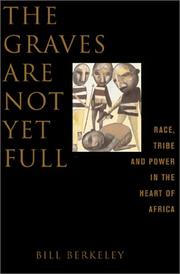
Places Rwanda within the broader pattern of African ethnic violence and state collapse, providing essential comparative context before diving into Rwanda-specific colonial history.
Perpetrators, Bystanders, and the Machinery of Mass Murder
ExpertGrapple with the harder questions of how ordinary people become killers, how propaganda and local power structures drove participation, and what this reveals about human nature and political violence.
▸ Study plan for this stage
Pace: 8–10 weeks, ~40–50 pages/day (alternating between the two books to build comparative perspective)
- The perpetrator's own narrative: how killers rationalize, remember, and justify their actions years after the genocide
- Dehumanization and incremental moral descent: how ordinary farmers and laborers crossed the threshold into mass murder
- Local power structures and social pressure: the role of authority figures, peer groups, and community dynamics in driving participation
- Propaganda, ethnic ideology, and radio: how Hutu Power messaging shaped perception and mobilized violence at the grassroots level
- The psychology of obedience and conformity: why refusal was rare and how social cohesion became a tool of genocide
- Trauma, memory, and the unreliability of perpetrator testimony: what we can and cannot learn from killers' retrospective accounts
- The continuum between bystander and perpetrator: how proximity, complicity, and circumstance blur moral categories
- How do the perpetrators in Hatzfeld's interviews explain their own participation, and what patterns emerge in their justifications?
- What role did local authority figures, militia leaders, and community pressure play in driving ordinary people to kill?
- How did propaganda and ethnic ideology, particularly through radio and local messaging, prepare the ground for mass violence?
- What does Hatzfeld reveal about the psychology of conformity and obedience—why did so few refuse to participate?
- How reliable are perpetrator accounts as historical evidence, and what biases or gaps should we account for when reading their testimonies?
- What is the relationship between being a bystander and being a perpetrator in the context of the Rwandan genocide, and where are the moral lines?
- Create a detailed profile of 3–4 perpetrators from the books: map their pre-genocide status, their stated motivations, and the justifications they offer. Identify patterns and contradictions.
- Track one perpetrator's narrative across both books (if the same individuals appear in both). Note how their account changes, what they emphasize or downplay, and what this reveals about memory and self-justification.
- Analyze a specific passage where a perpetrator describes the moment they first killed or joined in killing. What language do they use? What emotions do they report? What do they omit?
- Create a 'social pressure map' for a specific community or group described in the books: identify the authority figures, peer networks, and incentives that pushed people toward participation.
- Write a comparative essay: How do the perpetrators' explanations in Hatzfeld's interviews challenge or complicate the 'just following orders' or 'caught up in mob mentality' narratives?
- Conduct a close reading of Hatzfeld's framing and methodology: How does his approach as an interviewer shape what we learn? What questions does he ask or not ask? What are the limits of his method?
Next up: This stage grounds you in the lived experience and psychology of perpetrators, preparing you to examine broader institutional and structural factors—how state machinery, military planning, and international complicity enabled and sustained the genocide at scale.

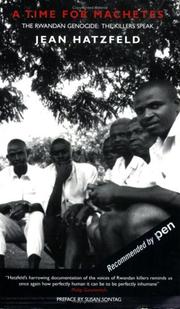
Interviews with convicted Hutu killers in their own words — an unflinching and essential account of perpetrator psychology and the social mechanics of mass participation in killing.
Hatzfeld's companion volume gives voice to Tutsi survivors of the same marshes, creating a devastating dialogue with the perpetrators' testimony and deepening moral complexity.
Aftermath: Justice, Memory, and Reconstruction
ExpertExamine how Rwanda and the international community have attempted — and often failed — to achieve justice, reconciliation, and accountability, and what the genocide's legacy means for the world today.
▸ Study plan for this stage
Pace: 4-5 weeks, ~40-50 pages/day (approximately 200 pages total; allows time for reflection on survivor testimonies and thematic analysis)
- Survivor testimony as a form of justice and historical record: how personal narratives document atrocity and resist forgetting
- The psychology of perpetrators and survivors: Hatzfeld's exploration of how ordinary people committed and endured extraordinary violence
- Coexistence and reconciliation in post-genocide Rwanda: the practical and emotional challenges of living alongside former killers
- The limitations of institutional justice: how the ICTR and local gacaca courts address accountability imperfectly
- Memory, trauma, and silence: how genocide survivors navigate speaking about trauma and the costs of bearing witness
- The role of narrative and storytelling in healing and accountability: how Hatzfeld's interview methodology itself becomes a form of justice work
- What does Hatzfeld reveal about the motivations and mindsets of perpetrators through his interviews, and how does this complicate narratives of pure evil versus ordinary people?
- How do survivors in 'The Strategy of Antelopes' describe the process of coexistence with perpetrators in post-genocide Rwanda, and what psychological or social mechanisms enable this?
- What are the limitations of formal justice mechanisms (ICTR, gacaca courts) as portrayed through the testimonies in this book, and what alternatives or supplements do survivors suggest?
- How does Hatzfeld's methodology of collecting and presenting survivor and perpetrator testimony function as a form of justice or accountability in itself?
- What does the book suggest about the relationship between remembering, speaking about trauma, and the possibility of reconciliation in Rwanda?
- How does 'The Strategy of Antelopes' challenge or complicate Western assumptions about justice, forgiveness, and healing after mass atrocity?
- Close-read 3-4 key testimonies (one survivor, one perpetrator, one witness): annotate for emotional tone, contradictions, and what remains unsaid; compare how each narrator frames their experience of justice or accountability
- Create a 'testimony map' tracking how different survivors and perpetrators describe the same events or locations differently; analyze what these divergences reveal about memory, perspective, and trauma
- Write a reflective essay (1,500-2,000 words) on one survivor's or perpetrator's account: explore the psychological and social mechanisms they describe for living with genocide's aftermath
- Conduct a comparative analysis: select one testimony from the book and research the same person's account in another Hatzfeld work or documentary; examine what changes, what remains consistent, and what this reveals about narrative construction
- Design a 'justice audit' for one community described in the book: identify what formal justice mechanisms (ICTR, gacaca) addressed, what gaps remain, and what informal or alternative justice processes the testimonies suggest
- Create a multimedia presentation (5-7 slides) on Hatzfeld's methodology: explain how his interview approach differs from journalistic or academic approaches, and argue for what unique insights this methodology enables or what it might obscure
Next up: This stage grounds you in the lived realities of post-genocide Rwanda through intimate testimony, preparing you to examine broader institutional, legal, and political frameworks for justice and memory in subsequent stages.

Hatzfeld's third Rwanda volume follows survivors and perpetrators living side by side years later, examining the painful, ambiguous reality of reconciliation on the ground — the perfect closing lens.
Discussion
Keep reading
Paths that share books, cover the same subject, or open a related topic.