The Best Books on the History of Iraq
This curriculum traces Iraq from its ancient Mesopotamian roots through Ottoman rule, the turbulent 20th century, Saddam Hussein's dictatorship, the 2003 war and occupation, and the fractured modern state. Starting at an intermediate level, each stage builds the political, cultural, and historical vocabulary needed to fully absorb the next, moving from broad civilizational context to granular, on-the-ground accounts.
Ancient Roots & the Long Arc
IntermediateUnderstand Iraq's civilizational foundations in Mesopotamia and the deep historical forces — geography, ethnicity, religion — that shape everything that follows.
▸ Study plan for this stage
Pace: 6–7 weeks, ~40–50 pages/day. "Mesopotamia" (weeks 1–3, ~300 pages), "The Reckoning" (weeks 4–7, ~400 pages). Allow 1–2 days per book for review and integration.
- Mesopotamia as the cradle of civilization: how geography (Tigris-Euphrates rivers, fertile crescent) enabled the rise of cities, writing, law, and complex societies that became the template for Iraq
- The Sumerian, Akkadian, Babylonian, and Assyrian empires as successive powers that established patterns of centralized rule, irrigation systems, and cultural synthesis still visible in modern Iraq
- Religion and mythology in ancient Mesopotamia: how Sumerian and Babylonian gods, temples, and priestly authority created the first institutional power structures that prefigure later Islamic governance
- Ethnicity and language as deep historical fault lines: Sumerians vs. Akkadians, Arabs vs. Kurds, Sunni vs. Shia—rooted in ancient migrations and religious schisms that MacKey traces through to the modern era
- The Ottoman and colonial legacies: how external empires (Ottoman, British) imposed borders and governance structures on Iraq that ignored ancient ethnic and religious divisions, creating modern state fragility
- Oil, geography, and geopolitics: how Iraq's resource wealth and strategic location have made it a prize for external powers from ancient times through the 20th century
- The role of tribalism, sectarianism, and centralized authority in Iraqi governance: how ancient patterns of strongman rule and tribal loyalty persist in modern political culture
- What geographical and technological advantages did Mesopotamia possess, and how did they enable the emergence of the world's first cities and written language?
- How did successive Mesopotamian empires (Sumerian, Akkadian, Babylonian, Assyrian) establish patterns of centralized rule and cultural synthesis that shaped later Iraqi governance?
- What role did religion, temples, and priestly authority play in organizing Mesopotamian society, and how do these patterns echo in modern Iraqi politics?
- How do the ethnic and linguistic divisions between Sumerians and Akkadians in ancient Mesopotamia prefigure modern Arab-Kurdish and Sunni-Shia tensions that MacKey describes?
- What were the consequences of Ottoman and British colonial rule on Iraq's borders, institutions, and internal cohesion, according to MacKey?
- How has Iraq's oil wealth and strategic location shaped its vulnerability to external intervention from ancient times through the 20th century?
- Create a timeline of Mesopotamian empires (Sumerian → Akkadian → Babylonian → Assyrian) with 3–4 key characteristics of each (governance style, religious innovations, military tactics, cultural achievements). Annotate how each empire's approach to centralized authority or ethnic management prefigures modern Iraqi governance.
- Map the Tigris-Euphrates river system and the major ancient Mesopotamian cities (Uruk, Ur, Babylon, Nineveh). Explain how geography determined settlement patterns and why control of irrigation became a source of power and conflict—then note parallels to modern water disputes in Iraq.
- Read excerpts from the Code of Hammurabi (available in Leick's book or online) and identify 5 principles of law and social hierarchy. Discuss how these early legal frameworks established templates for authority that persist in Middle Eastern governance.
- Create a comparative chart: ancient Mesopotamian religions (Sumerian, Babylonian pantheons) vs. Islam. Identify structural similarities in how temples/mosques served as centers of power, how priests/clerics legitimized rulers, and how religious law organized society.
- Using MacKey's account, write a 2–3 page essay tracing one specific ethnic or sectarian division (Arab-Kurdish, Sunni-Shia, tribal vs. state) from its ancient roots through the Ottoman period to the modern era. Cite specific passages from both books.
- Conduct a 'deep dive' on one Mesopotamian empire (e.g., Babylon under Hammurabi or Assyria under Sargon II). Research its military strategy, administrative structure, and approach to conquered peoples. Hypothesize how these patterns influenced later Iraqi strongmen (e.g., Saddam Hussein's centralization tactics).
Next up: This stage establishes the civilizational DNA and deep historical fault lines (geography, ethnicity, religion, resource competition) that will allow you to understand how modern Iraq's 20th-century nation-building, sectarian conflicts, and geopolitical vulnerabilities are not aberrations but continuations of ancient patterns—preparing you to analyze Iraq's colonial period, independence, and contem
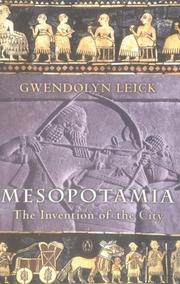
A readable, authoritative survey of Sumerian and Babylonian urban civilization that establishes why the land between the rivers has always been a crucible of empire and conflict. Reading this first gives the reader a sense of Iraq's extraordinary depth before the modern state existed.
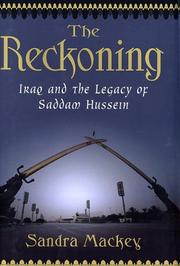
Mackey opens with a sweeping history of Iraq from ancient times through the Ottoman period and the British Mandate, making it the perfect bridge from antiquity to modernity. Its accessible prose and broad scope give the intermediate reader a unified narrative spine for the entire curriculum.
Ottoman Rule, British Creation & the Monarchy
IntermediateGrasp how the Ottoman millet system, World War I, and the British Mandate literally invented the Iraqi state, and why its artificial borders and sectarian tensions were baked in from the start.
▸ Study plan for this stage
Pace: 8–10 weeks, ~40–50 pages/day. Start with "A Line in the Sand" (4–5 weeks, ~400 pages), then "Gertrude Bell" (4–5 weeks, ~450 pages). Allow 1 week for overlap and integration.
- The Ottoman millet system as a framework for organizing religious communities without fixed territorial borders, and how its collapse after WWI created the need for new state structures
- The Sykes-Picot Agreement and secret wartime diplomacy: how European powers divided the Middle East without regard for existing populations or sectarian boundaries
- The British Mandate system as a mechanism of imperial control disguised as international trusteeship, and how it imposed artificial borders (especially the inclusion of Mosul and the Kurdish north)
- Gertrude Bell's role as an architect of Iraqi state-building: her influence on borders, the selection of the Hashemite monarchy, and her vision for a unified nation-state
- The fundamental contradiction between British promises to Arab nationalists and the Sykes-Picot carve-up, and how this betrayal shaped Iraqi political consciousness
- Sectarian tensions (Sunni-Shia) as a product of state design rather than inevitable history: how the British-imposed monarchy and borders privileged certain groups over others
- The creation of Iraq as a nation-state from three Ottoman provinces (Mosul, Baghdad, Basra) with no prior unified identity, and the institutional challenges this posed
- How the artificial state and weak legitimacy of the early monarchy set the stage for future instability, coups, and authoritarian rule
- How did the Ottoman millet system differ from the nation-state model, and why was this difference crucial when the Ottoman Empire collapsed?
- What were the key terms of the Sykes-Picot Agreement, and how did they contradict British promises to Arab nationalists during World War I?
- What role did Gertrude Bell play in determining Iraq's borders, governance structure, and the choice of the Hashemite monarchy?
- Why was the inclusion of Mosul and the Kurdish north in Iraq controversial, and what were the alternatives discussed by British policymakers?
- How did the British Mandate system function as a form of imperial control, and what mechanisms did Britain use to maintain authority over Iraq?
- In what ways were sectarian tensions (Sunni-Shia) exacerbated or created by the artificial state structure and the British-backed monarchy?
- Create a timeline of key events from 1914–1932 (Ottoman collapse through Iraqi independence) using both books, marking moments when borders were decided, promises were made/broken, and institutions were created.
- Map the three Ottoman provinces (Mosul, Baghdad, Basra) and sketch the Sykes-Picot line, then compare to Iraq's final borders. Annotate with notes on why each region was included or contested.
- Write a 2–3 page character study of Gertrude Bell based on Howell's biography, focusing on her assumptions about Arab nationalism, her vision for Iraq's governance, and any blind spots in her thinking.
- Create a comparison chart: Ottoman millet system vs. British Mandate vs. Iraqi nation-state. For each, note how religious/sectarian identity was organized, what legitimacy was claimed, and what tensions arose.
- Analyze the Sykes-Picot Agreement as a primary source: extract the key territorial divisions, then cross-reference with Barr's account of how these were justified and communicated (or hidden) from Arab allies.
- Write a short policy memo (1–2 pages) from the perspective of a British official in 1921, arguing for or against the inclusion of Mosul in Iraq, using evidence from both books about the strategic, sectarian, and nationalist considerations at stake.
Next up: This stage establishes that Iraq's borders, institutions, and sectarian fault lines were not natural or inevitable but deliberately constructed by external powers and individuals—a foundation essential for understanding how these structural contradictions drove the political crises, revolutions, and authoritarianism of the 20th century.

Barr's gripping account of the Anglo-French rivalry that carved up the Middle East after WWI explains the Sykes-Picot logic that drew Iraq's borders, providing essential geopolitical context for every subsequent chapter of Iraqi history.
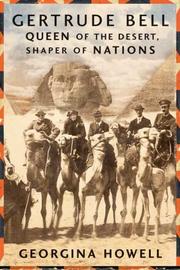
Bell was the British official most responsible for designing the Iraqi state and selecting its first king. Reading her story humanizes the Mandate period and shows how personal ambition and imperial ideology shaped a country of 30 million people.
The Rise of the Ba'ath & Saddam Hussein
IntermediateUnderstand how the Ba'ath Party seized power, how Saddam Hussein built and weaponized the Iraqi state, and the human cost of his totalitarian rule.
▸ Study plan for this stage
Pace: 4-5 weeks, ~40-50 pages/day (approximately 300 pages total; adjust based on density of political analysis sections)
- The Ba'ath Party's ideological foundations and the 1968 coup: how a secular Arab nationalist party seized power and consolidated control through military and intelligence apparatus
- Saddam Hussein's rise within the Ba'ath hierarchy: his role in the secret police (Mukhabarat), the 1979 purge, and consolidation of absolute personal power
- The architecture of totalitarianism in Iraq: how the state weaponized surveillance, terror, and propaganda to control the population and eliminate dissent
- The cult of personality and state mythology: how Saddam Hussein constructed an omnipresent public image and rewrote Iraqi history to legitimize his rule
- Mechanisms of fear as governance: the use of torture, extrajudicial killings, and informant networks to maintain compliance and prevent organized opposition
- The human cost of Ba'athist rule: documented atrocities, purges of intellectuals and political opponents, and the psychological impact of living under totalitarian surveillance
- The relationship between oil wealth, military spending, and state repression: how Iraq's resources enabled both internal security apparatus and regional military ambitions
- Makiya's methodology as a scholar-witness: how he documents state terror through archival evidence, survivor testimony, and structural analysis of the regime
- What were the key ideological and political factors that enabled the Ba'ath Party to seize power in 1968, and how did they consolidate control in the immediate aftermath?
- Trace Saddam Hussein's rise to power within the Ba'ath Party: what was his role in the secret police, and how did he eliminate rivals to achieve absolute authority by 1979?
- How did the Ba'athist state use surveillance, torture, and informant networks as tools of governance? What was the psychological impact on Iraqi society?
- Describe the cult of personality surrounding Saddam Hussein: how did the state construct and disseminate his public image, and what purpose did this serve?
- What specific atrocities and purges does Makiya document, and what do they reveal about the regime's systematic approach to eliminating perceived threats?
- How did Iraq's oil wealth and military spending intersect with the development of the internal security apparatus and state repression?
- Create a detailed timeline of key events from the 1968 coup through Saddam's consolidation of power (1979), marking major purges, institutional changes, and shifts in power dynamics
- Map the organizational structure of the Ba'athist state security apparatus (Mukhabarat, Republican Guard, party hierarchy): identify key figures, their roles, and how they reported to Saddam
- Analyze 3-4 specific case studies from the book of individual victims or purged groups: write a 2-3 page analysis of each that explains who they were, why they were targeted, and what their fate reveals about regime logic
- Construct a visual diagram showing how fear and surveillance functioned as mechanisms of control: trace how information flowed through informant networks, how it was used for purges, and how this affected ordinary Iraqis' behavior
- Write a comparative analysis (3-4 pages) of how Makiya portrays the Ba'athist state versus other totalitarian regimes you may know (Soviet Union, Nazi Germany, etc.): what is distinctive about the Iraqi case?
- Compile a dossier of Saddam Hussein's public persona as constructed by the state: collect examples of propaganda, mythology, and official narratives from the book, then analyze how they functioned to legitimize his rule
Next up: This stage establishes the internal logic and human machinery of Ba'athist totalitarianism, preparing you to understand how this militarized, repressive state pursued external conflicts and regional ambitions in the subsequent stages.
The definitive analytical account of Ba'athist ideology and Saddam's terror state, written by an Iraqi intellectual. It should be read first in this stage because it explains the machinery of repression that all subsequent books on Saddam take for granted.
The 2003 War & the Occupation
IntermediateUnderstand the decision to invade, the collapse of the Iraqi state, the insurgency, and the catastrophic failures of the occupation — from both American and Iraqi perspectives.
▸ Study plan for this stage
Pace: 8–10 weeks, ~40–50 pages/day. Ricks (400 pp): 2 weeks; Chandrasekaran (320 pp): 2 weeks; Packer (450 pp): 2.5 weeks; review & synthesis: 1.5 weeks.
- The neoconservative rationale for invasion and how it diverged from ground reality (Ricks' analysis of planning failures)
- The deliberate dismantling of the Iraqi state: de-Baathification and the disbanding of the army as catastrophic decisions (Ricks & Packer)
- The Green Zone as a bubble: how American administrators became isolated from Iraqi reality and local knowledge (Chandrasekaran's core argument)
- The rise and character of the insurgency: who joined it, why, and how American tactics radicalized the population (Ricks, Packer)
- Sectarian fracturing: how occupation policies accelerated Sunni-Shia conflict and state collapse (Packer & Ricks)
- The gap between official narratives and on-the-ground accounts: corruption, incompetence, and moral reckoning (all three authors)
- Reconstruction as imperial project: the failure to understand Iraqi society, history, and agency (Chandrasekaran's framework)
- Personal testimonies and moral complexity: how individual Americans and Iraqis experienced the occupation (Packer's strength)
- What were the main strategic assumptions behind the 2003 invasion, and how did Ricks argue they were fundamentally flawed?
- How did the de-Baathification process and disbanding of the Iraqi army contribute to the insurgency, according to these authors?
- What does Chandrasekaran mean by the 'Emerald City' as a metaphor, and how did the Green Zone's isolation shape American decision-making?
- How did the occupation policies inadvertently accelerate sectarian conflict between Sunnis and Shias?
- What role did corruption, incompetence, and lack of cultural understanding play in the occupation's failure (cite examples from each book)?
- How do Packer's personal narratives and moral reflections differ from Ricks' institutional analysis, and what does each approach reveal?
- Timeline exercise: Create a detailed chronology of key decisions (invasion planning, de-Baathification, disbanding the army, major insurgent attacks) using all three books. Annotate each with consequences identified by the authors.
- Perspective mapping: Write one-page character sketches of 3–4 figures (e.g., Bremer, a Green Zone administrator from Chandrasekaran, an insurgent profile from Packer) showing their worldview, decisions, and blindspots.
- Comparative analysis: Write a 3–4 page essay comparing Ricks' institutional/military critique with Chandrasekaran's cultural/administrative critique and Packer's moral/narrative approach. What does each author see that the others miss?
- Decision-point simulation: Choose one major decision (e.g., disbanding the army) and write a 2-page memo arguing for an alternative approach, using evidence from the books about what actually happened.
- Insurgency case study: Using Ricks and Packer, trace the radicalization of one insurgent group or region. How did American actions shape recruitment and tactics?
- Green Zone vs. reality: Create a two-column comparison of what American officials believed/planned (Chandrasekaran) versus what was actually happening on the ground (Packer, Ricks). Identify 5–6 major disconnects.
Next up: This stage establishes how the occupation's foundational failures—ideological blindness, institutional incompetence, and sectarian mismanagement—created the conditions for state collapse and civil war, preparing you to examine the sectarian conflict, the rise of extremism, and Iraq's fragmentation in the subsequent period.

Ricks's Pulitzer-recognized account of the planning and execution of the Iraq War is the essential starting point for this stage — a rigorous, reported indictment of military and political decision-making that sets the factual record straight.
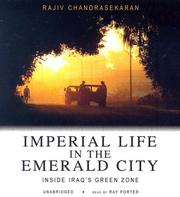
A ground-level portrait of the Coalition Provisional Authority inside the Green Zone, showing how ideological blindness and incompetence dismantled Iraqi institutions. It pairs perfectly with Fiasco by shifting the lens from the battlefield to the political bubble.
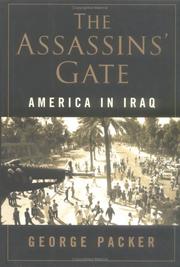
Packer weaves together the intellectual origins of the war with vivid on-the-ground reporting on Iraqis and Americans alike. Reading it third in this stage synthesizes the strategic and human dimensions into a single, morally serious narrative.
Modern Iraq: Sectarianism, ISIS & the Fragile State
ExpertAnalyze the post-occupation power vacuum, the rise and fall of ISIS, the Kurdish question, Iranian influence, and what Iraq looks like as a state today.
▸ Study plan for this stage
Pace: 8–10 weeks, ~40–50 pages/day. Allocate 3 weeks to "The Longest August" (foundational context), 2–3 weeks to "The ISIS Apocalypse" (focused narrative), and 2–3 weeks to "Iraq after America" (contemporary analysis and synthesis).
- The post-2003 power vacuum: how the dissolution of the Ba'athist state and military created conditions for sectarian conflict and extremist recruitment
- Sectarianism as a political tool: how Sunni-Shia tensions were weaponized by elites and foreign powers, not inevitable historical fact
- ISIS's ideological foundations and organizational structure: understanding how it emerged from Al-Qaeda in Iraq and exploited state collapse
- The Kurdish question: autonomy, oil politics, and the PKK—why Kurdish nationalism remains unresolved within Iraq's borders
- Iranian influence and the Shia crescent: how Iran filled the vacuum left by the US and shaped Iraq's post-occupation trajectory
- The fragility of Iraqi state institutions: weak central authority, competing militias, and the challenge of rebuilding legitimacy
- The international dimension: how US withdrawal, regional powers (Saudi Arabia, Turkey, Iran), and great power competition shaped Iraq's fate
- ISIS's rise, territorial control, and defeat: the military and political factors that enabled and then reversed the caliphate
- What specific institutional and military decisions made by the US occupation (as detailed in Hiro and Rayburn) created the conditions for sectarian violence and ISIS recruitment?
- How does McCants explain ISIS's ideological break from Al-Qaeda in Iraq, and what does this reveal about the organization's strategic thinking?
- Why does Hiro argue that sectarianism in modern Iraq is a political construction rather than an inevitable outcome of Sunni-Shia history?
- What is the 'Kurdish question' as presented across all three books, and why has it remained unresolved despite Iraq's nominal sovereignty?
- How did Iranian influence expand in Iraq after 2003, and what role did the US withdrawal play in enabling this (according to Rayburn)?
- What were the key factors in ISIS's territorial defeat, and what does Rayburn suggest about Iraq's stability in the aftermath?
- Timeline exercise: Create a detailed chronology of key events from 2003–2023 using all three books, marking turning points in sectarian violence, ISIS's rise/fall, and shifts in Iranian/US influence. Annotate each with the book(s) that cover it.
- Sectarianism analysis: Read Hiro's sections on Sunni-Shia relations and write a 2–3 page essay arguing whether sectarianism was inevitable or constructed—use specific examples from the text to support your position.
- ISIS organizational chart: Using McCants's analysis, map ISIS's leadership structure, ideology, and military strategy at three points: pre-2014, 2015 (peak), and post-2017. Explain how each evolved.
- Map exercise: Annotate a map of Iraq showing (1) Kurdish autonomous regions, (2) areas of ISIS control at peak, (3) Iranian proxy militia presence, (4) Sunni-majority vs. Shia-majority regions. Cross-reference with all three books.
- Comparative policy analysis: Compare the US occupation strategy (Hiro/Rayburn) with Iran's post-occupation strategy. Write a 2–3 page memo explaining why Iran's approach proved more effective in filling the power vacuum.
- Primary source close-read: Select one key speech, policy document, or statement cited in the books (e.g., a Maliki government decree, an ISIS manifesto excerpt, a Kurdish independence statement) and analyze it in 1–2 pages using concepts from all three books.
Next up: This stage equips you with a granular understanding of Iraq's post-occupation fragmentation and the regional/international forces that shaped it, preparing you to examine either Iraq's path toward state reconstruction and reconciliation, or the broader geopolitics of the Middle East in which Iraq remains a contested arena.
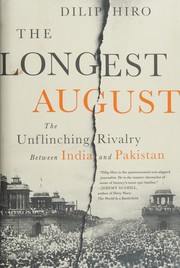
Hiro's deep dive into the Iran-Iraq relationship provides the essential regional framework for understanding modern Iraq's political alignment and the sectarian proxy wars that define its present — a necessary foundation before tackling ISIS.
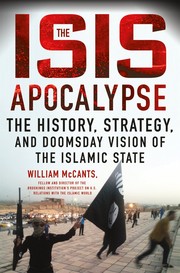
McCants draws on primary ISIS documents to explain the group's theology, strategy, and state-building project in Iraq and Syria. Reading this after Hiro places ISIS within the longer arc of Sunni dispossession and regional competition.

A former U.S. Army officer and historian, Rayburn provides the most rigorous account of Iraqi politics from 2003 to the present, covering Maliki's sectarianism, the Sunni awakening's collapse, and the structural weaknesses of the Iraqi state. It closes the curriculum by connecting every earlier stage to the Iraq that exists today.
Discussion
Keep reading
Paths that share books, cover the same subject, or open a related topic.