The history of the Congo is among the most consequential and least understood stories of the modern era: precolonial kingdoms, one of history's deadliest colonial regimes, a hopeful independence quickly betrayed, decades of kleptocracy, and a war that drew in much of a continent. Read in order, the pattern behind the suffering, resource plunder enabled by outside powers, becomes legible rather than merely appalling.
This is difficult material, and the books do not spare the reader. But understanding the Congo means seeing the through-line from Leopold to Mobutu to the wars, and giving Congolese agency its due alongside the record of exploitation.
The colonial catastrophe
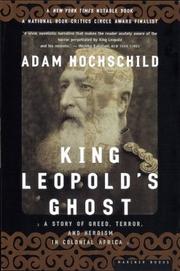
Start with King Leopold's ghost, Adam Hochschild's searing account of how Belgium's king turned the Congo into a private extraction machine that cost millions of lives, and the reformers who exposed it. Pair it with Congo by David Van Reybrouck, a sweeping, humane history told substantially through Congolese voices that carries the story across the whole century. Together they give both the crime and the sweep.
Precolonial roots and the rubber terror
To understand what colonialism destroyed, read The Kingdom of Kongo: Civil War and Transition, 1641-1718 by John Thornton on the sophisticated state that predated European rule, and Africa and Africans in the making of the Atlantic world, 1400-1800, which situates the region in the wider Atlantic history of trade and slavery. Red rubber by E. D. Morel is the contemporary exposé that helped mobilize the world against Leopold's atrocities, a primary document of the first great human-rights campaign.
Independence, dictatorship, and war
The modern tragedy unfolds fast. Congo: A History by Vanthemsche covers the Belgian colonial state and its collapse, and The Assassination of Lumumba by Ludo De Witte documents the Western-backed killing of the independent Congo's first leader. In the Footsteps of Mr. Kurtz by Michela Wrong is the vivid portrait of Mobutu's grotesque kleptocracy, Dancing in the Glory of Monsters by Jason Stearns is the essential account of the catastrophic wars that followed, and This Is Not a Drill by Severine Autesserre closes the path with a hard look at why international intervention so often failed.
Read in this order, the Congo's history becomes explicable, and its people visible as more than victims. Follow the full path to understand the whole arc.
Follow the full reading path →
Ready to learn something deeply?
Build a reading path — free