The Balkans have long been treated as Europe's cautionary tale, a shorthand for ancient hatreds and endless conflict. That framing is lazy and mostly wrong. Read the region's history in order and you find not primordial chaos but a comprehensible sequence of empires, nationalisms, and modern political failures, with people caught in between. Understanding the Balkans well means resisting both romantic and dismissive stereotypes.
The path below moves from the imperial framework through the birth of Balkan nations to the making and unmaking of Yugoslavia, and it deliberately includes books that challenge the very idea of the Balkans as inherently violent.
Empire and its long shadow
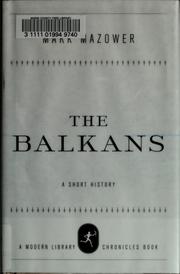
Start with The Ottoman Empire; the classical age, 1300-1600, Inalcik's foundational account of the empire that ruled much of the region for centuries and shaped its ethnic and religious map. Then read The Balkans by Mark Mazower, a concise, humane history that dismantles the myth of eternal hatreds and shows how modern nationalism, not ancient blood feud, drove the region's conflicts.
Travelers, nations, and the road to war
For texture and warning, Black Lamb and Grey Falcon is Rebecca West's vast, opinionated 1930s journey through Yugoslavia, a landmark of travel writing even where it must be read critically. The Sleepwalkers by Christopher Clark reconstructs how a Balkan assassination helped ignite the First World War, and Yugoslavia: A History by Pavlowitch explains how the fragile South Slav state was assembled from these pieces. Together they trace how empires gave way to nations and then to catastrophe.
Yugoslavia's rise and violent collapse
The modern tragedy is Yugoslavia's. Tito and the Rise and Fall of Yugoslavia covers the strongman who held it together, and The death of Yugoslavia is the gripping account of how it came apart in the 1990s. Balkan Ghosts by Kaplan is influential but best read skeptically for its ancient-hatreds framing, a useful contrast to Mazower. The butcher's trail follows the hunt for war criminals afterward, The Balkans, 1804-2012 (Misha Glenny) by Glenny provides the sweeping two-century narrative, and Imagining the Balkans by Todorova closes the path by examining how the West invented the very stereotype of Balkan barbarism.
Read in this order, the region becomes explicable rather than exotic. Follow the full path to understand the Balkans on their own terms.
Follow the full reading path →
Ready to learn something deeply?
Build a reading path — free