The Best Books on the History of Vietnam
This curriculum takes you from a broad, accessible introduction to Vietnamese history all the way through its ancient roots, colonial trauma, devastating wars, and modern transformation. Each stage builds the historical vocabulary, cast of characters, and political context needed to absorb the deeper, more specialized works that follow. By the end, you will have a genuinely comprehensive and nuanced understanding of Vietnam from its earliest dynasties to the present day.
Foundations: The Big Picture
BeginnerGain a confident, chronological overview of all of Vietnamese history — dynasties, colonialism, war, and modernity — so every later book has a clear framework to attach to.
▸ Study plan for this stage
Pace: 4–5 weeks, ~40–50 pages/day (Karnow's Vietnam, a History is ~670 pages; adjust pace based on density of historical periods)
- Vietnam's ancient kingdoms and the 1,000-year Chinese domination (111 BCE–938 CE) as the foundation for Vietnamese identity and resistance
- The Ly, Tran, and Le dynasties and the gradual southward expansion (Tien Tien Nam Vu) that shaped Vietnam's modern borders
- French colonialism (1887–1954) and its economic, political, and cultural impact on Vietnamese society
- The rise of Vietnamese nationalism and Ho Chi Minh's path to power through the Viet Minh and the First Indochina War
- The partition of Vietnam (1954) and the origins of the Cold War conflict between North and South
- The American War (Vietnam War, 1955–1975): causes, major battles, and the role of ideology versus nationalism
- Vietnam's reunification and the transition to the modern era, including the boat people and economic reform (Doi Moi)
- How did China's 1,000-year domination of Vietnam shape Vietnamese culture, language, and political institutions, and how did Vietnamese resistance during this period establish patterns that recurred later?
- What was Tien Tien Nam Vu (the March to the South), and how did this centuries-long expansion determine Vietnam's modern geographic and ethnic composition?
- How did French colonialism restructure Vietnamese economy, society, and politics, and what role did colonial exploitation play in sparking nationalist movements?
- Who was Ho Chi Minh, what was the Viet Minh, and how did they use both anti-colonial and nationalist sentiment to consolidate power during and after the First Indochina War?
- Why was Vietnam partitioned in 1954, and how did the Cold War ideological conflict between the US and Soviet Union become intertwined with Vietnamese nationalism?
- What were the major turning points in the American War (e.g., Gulf of Tonkin, Tet Offensive), and why did a technologically superior US military ultimately fail to prevent reunification?
- Create a visual timeline on paper or digitally marking all major dynasties, foreign occupations, and wars from 111 BCE to 1975, labeling key dates and rulers; use different colors for each era (Chinese rule, independent dynasties, French colonialism, partition, American War)
- Draw a map of Vietnam showing the progression of the Tien Tien Nam Vu expansion southward from the Red River Delta to the Mekong Delta; mark major cities and regions conquered during each dynasty
- Write a one-page summary for each of the seven major historical periods (Ancient/Chinese, Ly–Tran–Le dynasties, French colonialism, Viet Minh/First Indochina War, Partition, American War, Reunification) capturing the key actors, conflicts, and outcomes
- Create a comparison chart of Ho Chi Minh vs. other Vietnamese nationalist leaders mentioned in Karnow (e.g., Ngo Dinh Diem, Vo Nguyen Giap); note their ideologies, methods, and historical legacies
- Identify and list 5–7 specific moments in Karnow where Vietnamese nationalism overrode ideology or foreign pressure; write 2–3 sentences explaining each and what it reveals about Vietnamese priorities
- Discuss with a study partner or write a reflection: Why did the US fail in Vietnam despite superior military technology? How does Karnow attribute this to Vietnamese history and culture rather than just military tactics?
Next up: With a solid chronological framework and understanding of how Vietnamese history shaped national identity and resistance patterns, you are now ready to dive deeper into specific periods—whether that's the nuances of French colonial society, the ideological battles of the Cold War era, or the lived experiences of ordinary Vietnamese during war and reunification.
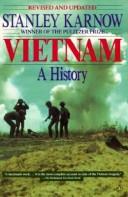
The landmark popular history written to accompany the PBS documentary series; Karnow's vivid narrative style makes the sweep from ancient Confucian kingdoms through the American war immediately accessible, and it remains the most widely read single-volume introduction in English.
Ancient Roots & the Long Struggle for Independence
BeginnerUnderstand Vietnam's pre-colonial identity — its Chinese-influenced dynasties, its own imperial ambitions southward, and the deep cultural nationalism that would shape everything that followed.
▸ Study plan for this stage
Pace: 4–5 weeks, ~40–50 pages/day (approximately 200–250 pages total)
- The Hung Kings and the mythological foundations of Vietnamese identity
- Chinese domination and cultural assimilation during the 1,000-year period of Chinese rule
- The Tran Dynasty's role in establishing Vietnamese independence and national consciousness
- The concept of Nam Vu (Southward March) and territorial expansion as a defining feature of Vietnamese history
- The synthesis of Chinese administrative and cultural influences with indigenous Vietnamese traditions
- The role of Buddhism and Confucianism in shaping Vietnamese civilization
- The emergence of a distinct Vietnamese identity separate from Chinese identity despite centuries of cultural exchange
- How did the Hung Kings establish the mythological and cultural foundations of Vietnamese identity, and why is this period significant to understanding later Vietnamese nationalism?
- What were the key mechanisms through which China maintained control over Vietnam for 1,000 years, and how did Vietnamese elites respond to and resist Chinese cultural assimilation?
- How did the Tran Dynasty's military and political strategies lead to Vietnamese independence, and what role did national consciousness play in this victory?
- What is Nam Vu (Southward March), and how did this expansionist policy shape Vietnamese territorial identity and culture?
- How did Vietnamese civilization synthesize Chinese influences (administrative systems, philosophy, writing) with indigenous traditions to create a distinct Vietnamese identity?
- What were the key differences between Chinese and Vietnamese approaches to governance, warfare, and cultural identity that Taylor identifies in 'The Birth of Vietnam'?
- Create a timeline of major dynasties and rulers mentioned in Taylor's book, marking key transitions from Chinese rule to Vietnamese independence
- Write a 2–3 page comparative analysis of Chinese vs. Vietnamese administrative and cultural practices as described in the text
- Map the territorial expansion of Vietnam during the Nam Vu period, annotating key regions conquered and their cultural significance
- Identify 5–7 primary source excerpts from the book (or Taylor's citations) that reveal Vietnamese resistance to Chinese cultural assimilation; annotate what each reveals about Vietnamese identity
- Create a visual diagram showing how Buddhism, Confucianism, and indigenous Vietnamese beliefs interacted and blended during the periods Taylor covers
- Write a reflective essay: 'How did the 1,000 years of Chinese rule paradoxically strengthen rather than erase Vietnamese identity?' using specific examples from Taylor
Next up: This stage establishes Vietnam's foundational identity—rooted in resistance to foreign domination and the synthesis of external influences with indigenous culture—preparing you to understand how these same patterns of cultural resilience and nationalist fervor would drive Vietnam's responses to French colonialism, Japanese occupation, and American intervention in later stages.
The definitive scholarly account of Vietnam's origins and its millennium under Chinese rule; reading it here gives you the cultural and political DNA — Confucian statecraft, resistance mythology, the drive for autonomy — that explains every later chapter of Vietnamese history.
French Colonialism & the Birth of Revolution
IntermediateGrasp how French Indochina was built, how it transformed Vietnamese society, and how Ho Chi Minh and the Viet Minh forged the revolutionary movement that would expel two Western powers.
▸ Study plan for this stage
Pace: 6–8 weeks, ~40–50 pages/day (approximately 300 pages total for Duiker's biography)
- Ho Chi Minh's early life, education, and radicalization in France and the Soviet Union, and how these experiences shaped his revolutionary ideology
- The structure and exploitation of French Indochina: economic extraction, colonial administration, and the suppression of Vietnamese autonomy
- The emergence of Vietnamese nationalism and competing revolutionary movements (communists vs. non-communists) in the 1920s–1930s
- Ho Chi Minh's role in founding the Indochinese Communist Party (1930) and unifying fractured nationalist movements under communist leadership
- The Japanese occupation of Indochina (1940–1945) and how it created an opening for the Viet Minh to gain popular support
- The Viet Minh's military and political strategy during WWII, including alliance with the Allies against Japan
- Ho Chi Minh's declaration of Vietnamese independence (September 1945) and the immediate postwar political landscape
- The ideological and practical foundations of Ho Chi Minh's vision: communism as a vehicle for national liberation, not just class struggle
- How did Ho Chi Minh's experiences in France and the Soviet Union transform his understanding of revolution and nationalism?
- What were the key mechanisms of French economic and political control in Indochina, and how did they provoke Vietnamese resistance?
- Why did Ho Chi Minh choose communism as the framework for Vietnamese independence, and how did he use it to unify nationalist movements?
- What role did the Japanese occupation play in strengthening the Viet Minh's position and legitimacy among the Vietnamese people?
- How did the Viet Minh's wartime alliance with the Allies (particularly the United States) shape Ho Chi Minh's early postwar expectations?
- What were the major obstacles Ho Chi Minh faced in consolidating power after the August Revolution of 1945?
- Create a timeline of Ho Chi Minh's life from birth to 1945, marking key events in France, the Soviet Union, China, and Vietnam—note how each location influenced his ideology
- Map the structure of French Indochina's colonial administration and economy; identify which Vietnamese groups benefited and which were exploited, and trace how this created revolutionary grievances
- Compare the platforms and strategies of at least three Vietnamese nationalist/revolutionary movements (e.g., VNQDĐ, Cao Đài, Viet Minh); explain why communism ultimately prevailed
- Write a 2–3 page analysis of how Ho Chi Minh used Marxist-Leninist theory to frame Vietnamese independence as a national liberation struggle rather than a class war
- Analyze the Viet Minh's wartime propaganda and military tactics during Japanese occupation; assess how they built popular legitimacy
- Create a primary source comparison: examine Ho Chi Minh's 1945 Declaration of Independence alongside the U.S. Declaration of Independence; discuss what Ho Chi Minh borrowed and why
Next up: This stage establishes Ho Chi Minh as a revolutionary leader and the Viet Minh as a unified nationalist force by 1945, setting the stage for the next phase—the struggle against French recolonization and the First Indochina War (1946–1954)—where these ideological and military foundations will be tested in open conflict.
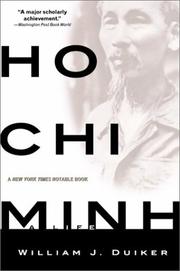
The most authoritative biography of Vietnam's founding revolutionary; reading it after Goscha's colonial context lets you see exactly how French exploitation, Marxism, and Vietnamese nationalism fused in one man and ignited a decades-long independence struggle.
War: The French & American Conflicts
IntermediateDevelop a deep, multi-perspective understanding of both the First Indochina War and the Vietnam War — military strategy, political failures, the human cost, and the Vietnamese experience at the center of it all.
▸ Study plan for this stage
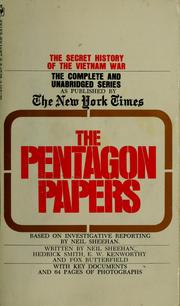
Pace: 8–10 weeks, ~40–50 pages/day. *Street without Joy* (~350 pages) takes 1–2 weeks; *The Pentagon Papers* (~700 pages) takes 5–7 weeks. Build in 1–2 weeks for review, synthesis, and exercises.
- The fatal mismatch between French military doctrine and the Indochina terrain and enemy—how conventional warfare failed against guerrilla tactics (*Street without Joy*)
- The role of Dien Bien Phu as a turning point: strategic miscalculation, logistics, and the psychological/political impact of French defeat
- American escalation logic and the 'domino theory'—how political assumptions, not military necessity, drove U.S. involvement (*Pentagon Papers*)
- The credibility gap: how successive U.S. administrations (Eisenhower, Kennedy, Johnson) systematized deception about progress, body counts, and war aims
- Vietnamese agency and perspective: the Viet Minh and Viet Cong as nationalist movements, not mere Soviet/Chinese proxies
- The human cost of both wars: civilian casualties, refugee crises, and the moral reckoning absent from official narratives
- How institutional momentum and bureaucratic inertia perpetuated failed strategies despite mounting evidence of failure
- The distinction between military victory and political defeat—why the U.S. could 'win' battles but lose the war
- Why did French conventional military superiority fail to defeat the Viet Minh, and what does *Street without Joy* reveal about the mismatch between French strategy and the realities of fighting in Indochina?
- What was Dien Bien Phu, and why did Fall treat it as both a military and political watershed? How did this battle shape French withdrawal and American entry?
- According to *The Pentagon Papers*, what were the core assumptions behind American escalation, and how did these assumptions diverge from ground truth?
- How did the U.S. government systematically misrepresent progress in the war to the public and to itself? Cite specific examples from *The Pentagon Papers*.
- What role did the Viet Minh and Viet Cong play as nationalist movements, and how does this complicate the Cold War framing of the conflict?
- How did institutional and bureaucratic factors—rather than military logic alone—sustain American involvement even as evidence mounted that victory was unattainable?
- Create a timeline comparing French and American military campaigns in Indochina/Vietnam (1946–1973), marking key turning points, escalations, and policy shifts. Annotate with casualty figures and strategic rationales from both books.
- Write a 2–3 page analysis of Dien Bien Phu using Fall's account: map the tactical errors, logistical failures, and psychological factors that led to French defeat. Then reflect on how this battle foreshadowed American failures.
- Extract and organize 8–10 key deceptions or credibility gaps from *The Pentagon Papers* (e.g., body count inflation, claims of progress, bombing campaign assessments). For each, note the political purpose it served and the actual outcome.
- Conduct a close reading of Fall's descriptions of Viet Minh tactics and organization in *Street without Joy*. Write a 2–page memo from a hypothetical U.S. military strategist in 1954 explaining why French methods would not work and what would be needed instead.
- Create a comparison matrix of French vs. American strategic assumptions, political objectives, and operational approaches. Use evidence from both books to show how each power repeated or learned from the other's mistakes.
- Interview or survey 2–3 people (if possible) who lived through or have family experience of the Vietnam War era. Record their perspectives on the war's causes and costs. Write a 1–2 page reflection on how their accounts align with or challenge the narratives in Fall and Sheehan.
Next up: This stage anchors you in the military, political, and human dimensions of two interconnected wars, equipping you to examine the war's aftermath—its legacies in Vietnamese society, American foreign policy, and Cold War geopolitics—in the next stage.
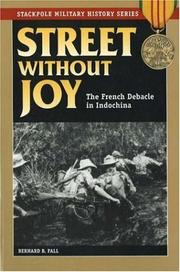
Fall's on-the-ground reporting of the French war (and early American involvement) is the essential primer on the military and human realities of fighting in Indochina — reading it first shows why the Americans repeated so many French mistakes.
Sheehan's Pulitzer Prize-winning A Bright Shining Lie uses the life of John Paul Vann as a lens on the entire American war, exposing the institutional self-deception that drove U.S. policy — a gripping, deeply reported masterpiece that puts the war's tragedy in human terms.
Modern Vietnam: Reunification to the Present
ExpertUnderstand post-war Vietnam — the painful reunification, the Doi Moi economic reforms, Vietnam's reintegration into the world, and the tensions between authoritarian governance and rapid modernization.
▸ Study plan for this stage
Pace: 8–10 weeks, ~40–50 pages/day (mix of narrative and analytical reading)
- The human and psychological toll of reunification on displaced families, returnees, and war survivors (Borton's focus)
- The Doi Moi ('Renovation') economic reforms as Vietnam's pivot from centrally planned to market-oriented economy
- Vietnam's diplomatic reintegration into the global order after decades of isolation and sanctions
- The tension between one-party Communist rule and the liberalizing forces of economic modernization
- Regional geopolitics: Vietnam's shifting relationships with China, the Soviet Union, Cambodia, and the West
- The role of Vietnamese diaspora and overseas communities in shaping post-war national identity
- Environmental and social costs of rapid industrialization and urbanization
- How did the reunification process affect Vietnamese families and individuals, and what does Borton reveal about the emotional/psychological dimensions of this transition?
- What were the key features of Doi Moi reforms, and why did the Vietnamese Communist Party decide economic liberalization was necessary?
- How did Vietnam move from international isolation to integration into regional and global institutions, and what obstacles did it face?
- What tensions exist between Vietnam's one-party political system and its increasingly market-driven economy, and how are these managed?
- How have Vietnam's relationships with neighboring countries (especially China and Cambodia) and major powers (US, Russia) evolved since 1975?
- What role has the Vietnamese diaspora played in Vietnam's post-war development and cultural identity?
- Timeline exercise: Create a detailed chronology of major events from 1975–present using both books, marking political, economic, and diplomatic turning points
- Character study: Track 2–3 individuals from Borton's 'After Sorrow' across the book and write a 500-word reflection on how their personal journeys illustrate broader reunification themes
- Comparative analysis: Write a 1000-word essay comparing Vietnam's economic transition (Doi Moi) with another post-Cold War transition (e.g., China's reforms, Eastern European transitions) using Hayton as your primary source
- Geopolitical mapping: Create an annotated map showing Vietnam's key diplomatic relationships and trade partnerships circa 1990, 2000, and 2020, with brief notes on how these shifted
- Primary source analysis: Find and annotate 2–3 Vietnamese government statements or speeches on Doi Moi reforms; compare the official narrative with Hayton's critical assessment
- Debate preparation: Prepare arguments for and against the proposition 'Vietnam's economic success required political liberalization' using evidence from both books
Next up: This stage grounds you in the lived experience and policy mechanics of modern Vietnam's transformation, preparing you to examine either contemporary Vietnamese society in depth (urban/rural divides, generational shifts, environmental crises) or to zoom out to Vietnam's role in 21st-century geopolitics and regional power dynamics.
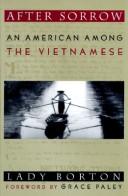
A deeply personal account of post-war rural Vietnam told through the lives of ordinary Vietnamese women; it humanizes the painful transition from war to peace and corrects the tendency to treat 1975 as the end of the story.
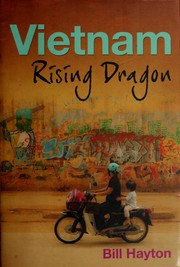
A sharp, clear-eyed journalist's account of contemporary Vietnam — its booming economy, one-party politics, corruption, civil society, and place in Asia — bringing the entire curriculum up to the present and leaving the reader with a fully rounded picture of the country today.
Discussion
Keep reading
Paths that share books, cover the same subject, or open a related topic.