Few historical subjects are as contested as the Israeli-Palestinian conflict, where the same events carry opposite meanings for the two peoples who lived them. Reading only one side leaves you fluent in one narrative and deaf to the other. The honest approach is to read across the divide deliberately, holding competing accounts in view at once, which is exactly how this path is built.
Nothing here claims to settle the questions. The aim is a reader who understands why each side sees the past as it does, and who can distinguish evidence from advocacy. Both peoples' experiences of loss and fear are real, and a serious reading list has to make room for both.
Two national narratives
Start with a deliberate pairing. The Hundred Years' War on Palestine by Rashid Khalidi presents the Palestinian experience as a century of dispossession, while Israel: A Concise History of a Nation Reborn by Daniel Gordis tells the story of Zionism and Israel's founding from within that tradition. Read back to back, they establish the two frameworks the rest of the conflict is argued inside.
The wars and their turning points
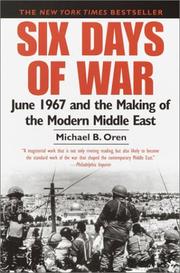
Next, the pivotal events, handled by careful historians. 1948: A History of the First Arab-Israeli War by Benny Morris is the authoritative account of the war that created Israel and the Palestinian refugee crisis, and Six Days of War by Michael Oren is the standard history of the 1967 war that reshaped the map. The Missing Peace by Dennis Ross, a former U.S. negotiator, gives the insider account of why peace talks repeatedly failed. These trace the hinge points where the conflict hardened.
Human lives and hard arguments
The final stretch balances memoir and analysis. My Promised Land by Ari Shavit is a searching, self-critical Israeli reckoning with his country's history, and Once upon a country by Sari Nusseibeh offers a thoughtful Palestinian memoir of the same decades. The Lemon Tree by Sandy Tolan tells both narratives through one house and two families. The Iron Wall by Avi Shlaim advances a critical revisionist reading of Israeli strategy, and One State, Two States by Benny Morris closes by weighing the possible political futures. Read together, they keep both peoples' humanity in frame.
Read in this order, you finish not with an answer but with genuine understanding. Follow the full path to hold both narratives honestly.
Follow the full reading path →
Ready to learn something deeply?
Build a reading path — free