The Best Books on the History of Taiwan
This curriculum traces Taiwan's history from Qing-era incorporation through Japanese colonialism, the ROC's authoritarian period, democratization, and the ongoing cross-strait standoff with the PRC. Starting at an intermediate level, each stage builds conceptual and historical vocabulary so that later, more analytically demanding works feel fully grounded. The path moves from accessible narrative overviews to specialized scholarly arguments, ending with the geopolitical and identity questions that define Taiwan today.
Foundations: The Big Picture
IntermediateGain a confident, chronological command of Taiwan's full history — from indigenous societies and Qing rule through Japanese colonialism, the KMT era, and democratization — so that all later reading has a solid narrative spine.
▸ Study plan for this stage
Pace: 8–10 weeks, ~40–50 pages/day (Rubinstein first: ~3 weeks; Davidson second: ~4–5 weeks; review and synthesis: ~1–2 weeks)
- Taiwan's indigenous societies and their displacement under successive colonial regimes
- The Qing dynasty's administrative approach to Taiwan and the 1895 Treaty of Shimonoseki handover to Japan
- Japanese colonial modernization (1895–1945): infrastructure, education, and cultural assimilation policies
- The KMT retreat to Taiwan (1949) and the establishment of the Republic of China government
- The transition from authoritarian rule to democratization (1980s–1990s) and the emergence of Taiwanese identity
- Economic transformation: from agricultural colony to industrial powerhouse and high-tech hub
- The role of geopolitical tensions (China, Japan, the US) in shaping Taiwan's political trajectory
- How successive waves of migration and rule created Taiwan's multicultural, multilingual society
- What were the major indigenous groups of Taiwan before colonization, and how did each colonial power (Qing, Japanese, KMT) treat them differently?
- Why did the Qing dynasty cede Taiwan to Japan in 1895, and what were the immediate consequences for Taiwan's governance and economy?
- How did Japanese colonial policies (1895–1945) modernize Taiwan's infrastructure and education while simultaneously promoting cultural assimilation?
- What were the circumstances of the KMT's retreat to Taiwan in 1949, and how did the party establish its authority over the island?
- How did Taiwan transition from authoritarian single-party rule to democracy, and what role did generational change and economic development play?
- How do Rubinstein and Davidson each frame Taiwan's historical identity, and where do their interpretations converge or diverge?
- Create a detailed timeline spanning 1600–2000, marking major political transitions, wars, treaties, and demographic shifts; annotate each entry with the source (Rubinstein or Davidson) and one key consequence.
- Construct a comparative table of the four major ruling periods (indigenous, Qing, Japanese, KMT/ROC) with columns for: administrative structure, economic policy, language/cultural policy, and treatment of indigenous peoples.
- Write a 500-word synthesis essay: 'How did each colonial power's approach to modernization shape Taiwan's later development?' Use specific examples from both books.
- Map Taiwan's major regions and annotate them with: indigenous group territories, Japanese colonial development zones, and KMT-era industrial centers; explain how geography influenced each period's priorities.
- Read the prefaces and introductions of both Rubinstein and Davidson; write a 300-word reflection on how each author's historiographical approach (narrative vs. analytical, scope, intended audience) shapes their account.
- Create a genealogy of Taiwan's political identities (indigenous, Han Chinese, Japanese subjects, Chinese Nationalist, Taiwanese) by tracing how each emerged and competed across the periods covered in both books.
Next up: With a solid chronological spine and understanding of how Taiwan's colonial and geopolitical legacies shaped its institutions and identity, you are now prepared to dive into specialized topics—whether regional histories, biographical studies, or deep dives into specific eras—with confidence that you can contextualize each new detail within the larger narrative.

The standard English-language scholarly survey, covering every major period from prehistory to the late 20th century. Reading it first gives you the chronological skeleton and key terminology every subsequent book assumes.

A classic firsthand account written at the moment of the 1895 Japanese takeover, invaluable for understanding the late Qing period and the transition to Japanese rule from a contemporary perspective. Read second to put vivid primary-source texture on the survey's framework.
Qing Rule and Japanese Colonialism
IntermediateUnderstand how Qing incorporation shaped Taiwanese society and how fifty years of Japanese colonial rule created the economic, institutional, and cultural legacies that still echo in Taiwan's politics and identity.
▸ Study plan for this stage
Pace: 8–10 weeks, ~40–50 pages/day (accounting for dense historical analysis and note-taking)
- Qing incorporation of Taiwan (1683–1895): administrative integration, Han Chinese settlement patterns, and the construction of a 'frontier' identity that distinguished Taiwan from the mainland
- Japanese colonial modernization: infrastructure, education, and economic development as tools of assimilation and control
- The concept of 'becoming Japanese': how colonial policies shaped Taiwanese identity, language use, and cultural practices under the Japanese regime
- Colonial economic structures: sugar, rice, and resource extraction; the role of Japanese zaibatsu (conglomerates) in Taiwan's economy
- Resistance and accommodation: how Taiwanese elites, intellectuals, and ordinary people navigated, resisted, or collaborated with colonial rule
- Institutional legacies: how Japanese colonial bureaucracy, legal systems, and education frameworks persisted after 1945 and influenced post-war Taiwan
- The relationship between Qing rule and Japanese colonialism: continuities and ruptures in how Taiwan was governed and imagined as a territory
- Colonial modernity and identity formation: how fifty years of Japanese rule created competing visions of Taiwanese identity that persist in contemporary politics
- What were the key differences between how the Qing and Japanese rulers approached the administration and development of Taiwan, and what continuities existed between the two periods?
- How did Japanese colonial policies—particularly in education, language, and infrastructure—attempt to transform Taiwanese identity, and what does Ching mean by 'becoming Japanese'?
- What economic structures did the Japanese establish in Taiwan, and how did these shape Taiwan's post-colonial economy?
- How did different segments of Taiwanese society (elites, intellectuals, workers, indigenous peoples) respond to Japanese colonialism, and what forms did resistance take?
- What institutional, legal, and cultural legacies from the Japanese colonial period remained influential in Taiwan after 1945, and how do they continue to shape contemporary Taiwanese politics and identity?
- How did the concept of Taiwan as a 'frontier' or 'other' under Qing rule evolve under Japanese colonialism, and what role did this play in shaping Taiwanese national consciousness?
- Create a comparative timeline mapping key administrative, economic, and cultural policies under Qing rule (1683–1895) versus Japanese colonialism (1895–1945); annotate which policies persisted or transformed after 1945
- Read and annotate 2–3 primary source excerpts (colonial education curricula, newspaper articles, or government directives) from Liao's book; analyze how language and framing reveal colonial ideology
- Write a 1,500-word analytical essay on one aspect of 'becoming Japanese' (e.g., language policy, education, or cultural assimilation) using evidence from both Ching and Liao
- Map the major zaibatsu and economic enterprises discussed in Liao's account; trace one company's role in colonial Taiwan and its post-1945 trajectory to understand economic continuity
- Interview or research one historical figure mentioned in the books (e.g., a colonial administrator, intellectual, or resistance leader); write a 1-page biography connecting their actions to broader themes of accommodation or resistance
- Create a visual chart comparing how different Taiwanese social groups (urban elites, rural farmers, indigenous peoples, workers) experienced Japanese colonialism according to the two texts; identify patterns of collaboration versus resistance
Next up: This stage establishes how colonial legacies—institutional, economic, and psychological—became embedded in Taiwanese society, providing essential context for understanding how Taiwan navigated decolonization, the KMT transition, and the emergence of modern Taiwanese identity in the post-1945 period.

Examines how Japanese colonial policy attempted to assimilate Taiwanese subjects and how Taiwanese people negotiated, resisted, and internalized that identity pressure — the essential cultural-history lens for the colonial period.
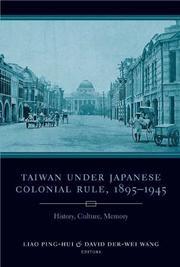
A multi-author scholarly volume covering colonial governance, economy, and society in depth; read after Ching so you can situate the cultural arguments within the broader institutional and economic structures.
The KMT Era: Authoritarian Rule and the Road to Democracy
IntermediateReckon with the trauma of 1947's February 28 Massacre, the White Terror, and the long authoritarian period under Chiang Kai-shek and Chiang Ching-kuo, and understand how Taiwan's democracy was hard-won from within that system.
▸ Study plan for this stage
Pace: 8–10 weeks, ~40–50 pages/day. "Formosa Betrayed" (~400 pages) takes 2–3 weeks; "Memories of the Future" (~300 pages) takes 2–3 weeks; remaining time for review, reflection, and exercises.
- The February 28 Massacre (1947) as a pivotal rupture between mainlanders and Taiwanese, and its role in shaping collective trauma and political consciousness
- The White Terror (1949–1987) as a systematic apparatus of political repression, surveillance, and execution used to consolidate KMT control
- Chiang Kai-shek's authoritarian consolidation of power after the Chinese Civil War and his imposition of martial law on Taiwan
- The mechanisms of authoritarian rule: party-state fusion, secret police networks, and ideological control through anti-communism
- Chiang Ching-kuo's gradual liberalization and the emergence of indigenous Taiwanese political consciousness within and against the system
- How democratic institutions and civil society grew from within authoritarianism, setting conditions for the transition to democracy
- The role of memory, testimony, and historical reckoning in understanding Taiwan's path to democracy
- What were the immediate causes and consequences of the February 28 Massacre, and how did it reshape Taiwanese identity and political attitudes toward the KMT?
- How did the White Terror function as a tool of political control, and what groups were most targeted?
- What were the key differences between Chiang Kai-shek's and Chiang Ching-kuo's approaches to governance, and how did the latter's policies inadvertently create space for democratic movements?
- How did Taiwanese intellectuals, activists, and ordinary citizens resist or navigate authoritarian rule, and what role did indigenous Taiwanese consciousness play in this resistance?
- What is Stéphane Corcuff's argument about the relationship between memory, identity, and Taiwan's democratic future, and how does he use oral history to support it?
- How do 'Formosa Betrayed' and 'Memories of the Future' complement each other in telling the story of Taiwan's authoritarian period and path to democracy?
- Create a detailed timeline of major events from 1947–1987 (February 28 Massacre, key White Terror campaigns, Chiang Ching-kuo's reforms, early democratic openings) using both texts; annotate with the human and political costs of each period.
- Write a 2–3 page comparative analysis of how Kerr's journalistic account in 'Formosa Betrayed' and Corcuff's oral-history approach in 'Memories of the Future' each illuminate different aspects of the same historical period.
- Select 3–4 testimonies or anecdotes from 'Memories of the Future' and trace how they illustrate the key mechanisms of authoritarian control and resistance described in 'Formosa Betrayed'.
- Create a concept map showing the relationship between the February 28 Massacre, the White Terror, martial law, and the eventual conditions for democratization—use both texts to populate it.
- Write a reflective essay (3–4 pages) on how understanding the trauma of 1947 and the White Terror changes your understanding of Taiwan's democracy and its fragility.
- Interview someone (if possible) about how their family or community experienced Taiwan's authoritarian period, or research one specific White Terror case in depth; compare their account to how Corcuff and Kerr frame similar experiences.
Next up: This stage establishes the historical trauma and authoritarian structures that shaped Taiwan's political consciousness, providing essential context for understanding how Taiwan's democracy, once achieved, became both precious and contested—setting up the next stage's exploration of contemporary democratic challenges and Taiwan's regional position.

A firsthand diplomatic account of the 1947 February 28 Massacre and its brutal suppression — the foundational trauma of modern Taiwanese political identity. Its moral urgency makes it the right entry point for this stage.
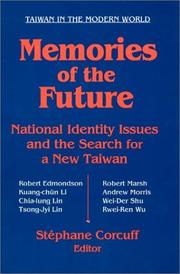
Explores how Taiwanese and mainlander identities were renegotiated during and after democratization, deepening your understanding of why identity politics remain so central to Taiwan's domestic scene.
Cross-Strait Relations and the China Question
ExpertAnalyze the strategic, legal, and identity dimensions of the Taiwan–China relationship, understand the competing sovereignty claims, and assess the military and diplomatic risks that define Taiwan's place in the world today.
▸ Study plan for this stage
Pace: 6–8 weeks, ~40–50 pages/day, with weekly synthesis sessions
- The historical evolution of cross-strait relations from 1949 to the present, including the civil war legacy and competing legitimacy claims
- The concept of 'One China' and its multiple interpretations (PRC, ROC, and international legal frameworks)
- Strategic asymmetry: Taiwan's military vulnerability versus its economic and democratic significance
- The role of the United States as the critical third party in the Taiwan–China relationship, including the Taiwan Relations Act and strategic ambiguity
- Identity politics and the rise of Taiwanese nationalism as distinct from Chinese identity
- The mechanisms of cross-strait economic integration and their political implications
- International law, sovereignty, and the status quo: why Taiwan's legal status remains contested and unresolved
- Military modernization, deterrence theory, and the balance of power across the Taiwan Strait
- How does Dittmer explain the origins of the Taiwan–China conflict, and why has it remained unresolved for over 70 years?
- What are the different interpretations of 'One China,' and how do the PRC, ROC, and international actors define it differently?
- How has U.S. policy shaped cross-strait relations, and what is the strategic logic behind American 'strategic ambiguity'?
- What role has economic interdependence played in either reducing or intensifying tensions between Taiwan and China?
- How has Taiwanese identity evolved, and what does Dittmer argue about the relationship between identity politics and cross-strait stability?
- What are the key military vulnerabilities and strategic assets that define Taiwan's deterrence posture, according to Dittmer?
- Create a timeline of major cross-strait incidents and diplomatic breakthroughs (1949–present) from Dittmer's account, annotating the strategic context of each
- Map the competing sovereignty claims: write a one-page summary of how the PRC, ROC, and international community each define Taiwan's status, using Dittmer's framework
- Analyze the Taiwan Relations Act: extract the key provisions Dittmer discusses and explain how they create strategic ambiguity and why that matters
- Conduct a comparative analysis of two cross-strait crises (e.g., 1995–96 missile tests vs. 2020s tensions) using Dittmer's analytical framework to identify patterns
- Debate exercise: argue both the PRC and Taiwan positions on unification using Dittmer's presentation of each side's strategic logic and identity claims
- Create a visual diagram of the military balance across the Taiwan Strait, incorporating Dittmer's assessment of Taiwan's asymmetric vulnerabilities and deterrent capabilities
Next up: This stage establishes the foundational strategic, legal, and identity dimensions of the Taiwan–China relationship, positioning you to examine how specific policy actors, regional powers, and international institutions navigate or complicate this relationship in subsequent stages.

A comparative political-science analysis of cross-strait relations across multiple administrations on both sides; the ideal capstone because it synthesizes history, identity, and geopolitics into a single analytical framework.
Discussion
Keep reading
Paths that share books, cover the same subject, or open a related topic.