In roughly a hundred days in 1994, more than half a million people were murdered in Rwanda, mostly Tutsi killed by their Hutu neighbors, while the world looked away. Understanding this demands more than horror; it demands reading in an order that moves from the essential narrative to firsthand testimony and finally to the difficult analysis of why and how ordinary people became killers. These are hard books, and they deserve to be read with care.
The path treats the genocide as a historical event with causes and warning signs, not an inexplicable eruption. That framing is itself a form of respect for the dead: it insists the catastrophe was made by human choices and could have been prevented.
The essential account
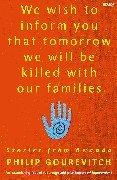
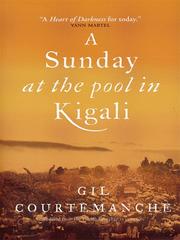
Start with We wish to inform you that tomorrow we will be killed with our families, Philip Gourevitch's landmark work of reporting that remains the indispensable introduction to what happened and why it matters. Pair it with A Sunday at the Pool in Kigali, a novel that renders the human texture of the days before and during the killing. Together they establish both the facts and the felt reality.
Testimony and failure
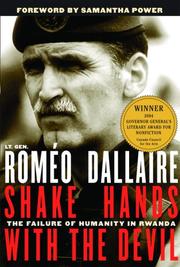
Next, the voices closest to the events. Shake hands with the devil is Romeo Dallaire's devastating memoir as the UN commander whose warnings were ignored and whose small force was abandoned, one of the great indictments of international inaction. The graves are not yet full by Bill Berkeley places Rwanda within a wider pattern of engineered ethnic violence in Africa, and Rwanda and Genocide in the Twentieth Century by Alison Des Forges is the meticulous human-rights documentation of how the killing was organized. These make the failure and the planning unmistakable.
Perpetrators, causes, and aftermath
The hardest reading confronts the killers directly. Machete Season and A Time for Machetes, both by Jean Hatzfeld, are built from interviews with the men who did the killing, unbearable but essential for understanding how genocide is carried out by ordinary people. After the Genocide by Mahmood Mamdani analyzes the political and colonial roots of the Hutu-Tutsi divide, and The strategy of antelopes by Hatzfeld closes the path with the near-impossible aftermath: survivors and killers living again as neighbors.
Read in this order, the genocide becomes something we can face and learn from. Follow the full path with the seriousness it demands.
Follow the full reading path →
Ready to learn something deeply?
Build a reading path — free