The Royal Society Science Book Prize: The Best Popular Science Books, in Order
Run by the Royal Society since 1988, this prize goes to a popular-science book written for a general reader and published in the UK, judged by a panel that mixes working scientists with writers and broadcasters. It has changed sponsor so often — Rhône-Poulenc, then Aventis, then Winton, then Insight Investment — that its own winners are catalogued under four different prize names, which is why no single list of them circulates widely. Its remit is narrower than it looks: British publication, English language, and a strong historical lean toward biology and medicine over physics and mathematics. Read in order of difficulty rather than by year, the winners make an unusually well-tested introduction to modern science writing — and a couple of them are worth reading precisely because the field has since argued back.
No Science Required
BeginnerRead three winners that assume nothing at all, and get used to the prize's central quality: an expert explaining something to a stranger without condescending.
▸ Study plan for this stage
Pace: Six to eight weeks. A short history of nearly everything is the longest of the three at around 500 pages but reads like conversation; three weeks. Stuff Matters is short, around 250 pages, and can be read in a week — a chapter a night matches its structure exactly. Entangled Life is around 350 pages
- The prize's actual remit, which is narrower than it looks: a popular-science book for a general reader, published in the UK, judged by a panel mixing working scientists with writers and broadcasters
- Why no tidy list of winners circulates. The prize has changed sponsor repeatedly, so its own winners are catalogued under four different prize names, and the historical lean is markedly toward biology and medicine over physics and mathematics
- The prize's central quality, visible in all three books here: an expert explaining something to a stranger without condescension, which is a much rarer skill than technical accuracy
- A short history of nearly everything written by someone who began as ignorant as the reader, which is why it models the questions rather than assuming you already have them
- Stuff Matters as a lesson in framing. Ten materials from one photograph — steel, paper, concrete, chocolate — and the point that good science writing is mostly the choice of frame
- Structure determines behaviour, which is the actual scientific content of the materials book: the same atoms arranged differently produce a substance with entirely different properties
- Entangled Life's central claim, that fungi make the concept of an individual organism hard to sustain, which is where this stage stops being a survey and starts being an argument
- Reading in order of difficulty rather than by year, which is what makes a prize list into a curriculum
- What does A short history of nearly everything do with the history of science that a straight explainer would not? Why does that make it easier to read?
- Pick any chapter of Stuff Matters and state the underlying principle in two sentences without naming the material.
- What does Entangled Life mean by questioning what an individual is? Give the fungal evidence rather than the slogan.
- Which of the three is making a claim the field might still argue about, and how can you tell from the writing?
- What do all three books do in their opening pages to keep a non-scientist reading? Compare the three openings directly.
- After A short history of nearly everything, write down five questions it raised that it did not answer. Keep the list — several will be answered in later stages.
- Take one object within arm's reach and write 300 words about it in the manner of Stuff Matters: what it is made of, why that structure gives it those properties, and how it came to be manufactured.
- For Entangled Life, separate on paper what is established from what the author is proposing. The book is fairly honest about the line and finding it is good practice for the next stage.
- Read the three opening chapters again back to back and write a paragraph on which strategy worked best on you. You are calibrating your own taste before the books get harder.
Next up: You have three books that mostly explain; the next stage is three that argue, which is a different kind of reading and requires you to start asking what the evidence actually is.

A travel writer decides to find out how the universe works and reports back. Written by someone who started as ignorant as the reader, which is exactly why it is the right first book — it models the questions rather than assuming you already have them.
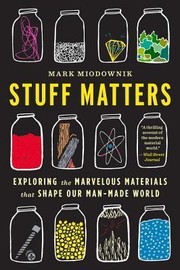
Ten chapters about the materials in one photograph of the author on a roof terrace: steel, paper, concrete, chocolate. The best short demonstration that good science writing is mostly about choosing the right frame, and a painless introduction to why atoms arranged differently behave differently.

Fungi, and the argument that they force a rethink of what an individual organism even is. Read it third: it is the most recent of the three and the one that pushes furthest past settled textbook material, so it benefits from the general grounding the first two give.
The Big Argument Books
BeginnerMove to three winners that are making a case rather than surveying a field, and learn to separate the evidence from the thesis — including where the thesis has not held up.
▸ Study plan for this stage
Pace: Eight to ten weeks. Invisible Women is around 400 pages and is best read in sections rather than continuously — the accumulation is the method and it can be numbing at speed. Guns, Germs, and Steel is around 450 pages; give it three weeks and read it straight through, because the argument is cumulat
- Invisible Women's method laid bare: hundreds of individual studies — crash-test dummies, phone dimensions, drug trials, snow-clearing routes — stacked into a single claim about a male default in design and data
- Why that transparency is the right starting point. When the evidence is visible in that quantity, you learn to ask of every subsequent book what its evidence actually is
- The data-gap argument as distinct from any claim about intent, which is a distinction the book itself draws and which readers frequently collapse
- Guns, Germs, and Steel's thesis: that the continental distribution of domesticable plants and animals, plus Eurasia's east-west axis, explains why some societies conquered others rather than any cultural or racial factor
- The prize's most famous winner and by now its most criticised. Historians, geographers and archaeologists have spent two decades disputing the environmental determinism, and a reader is entitled to weigh that literature rather than accept or dismiss the book wholesale
- Argument construction as a skill worth studying separately from whether the conclusion holds. The book is superbly built, and watching how a single-cause explanation is assembled is useful regardless of your verdict
- The Invention of Nature recovering Alexander von Humboldt, who framed nature as a connected web and whom almost nobody in the English-speaking world now reads
- Biography as intellectual history. The Humboldt book tracks an idea through the people it moved, which is the bridge into books written by working scientists about their own fields
- In Invisible Women, pick three examples and describe the evidence behind each. Are they equally strong?
- The book distinguishes a data gap from deliberate exclusion. Does it hold that distinction consistently?
- State the thesis of Guns, Germs, and Steel in three sentences without using the word geography.
- The determinism in that book is contested by specialists. Set out the strongest objection you can construct and the strongest reply, before saying what you think.
- What does a single-cause explanation do well, and what is it structurally unable to answer?
- What idea did Humboldt actually introduce, and why did his name fade while the idea did not?
- For any ten claims in Invisible Women, note the study type behind each — survey, trial, administrative data, anecdote. The distribution tells you how the book is built.
- Draw the causal chain of Guns, Germs, and Steel as a diagram with each link labelled. The weakest links become obvious the moment you have to draw them.
- Before reading any criticism of that book, write down the three strongest objections you can construct yourself. Then look up one specialist response and compare.
- Write 300 words on Humboldt's central idea and trace it to one modern scientific field. The biography gives you most of what you need.
- Compare how the three books handle uncertainty — where each one says it does not know. The differences are large and revealing.
Next up: You can now separate an argument from its evidence, which is exactly what you need for four books written by working scientists about their own fields, where the mechanisms are the point.

Crash-test dummies, phone sizes, drug trials and snow-clearing routes, all designed around a male default. Read it first in this stage because the method is completely transparent — hundreds of small studies stacked into one claim — which teaches you to ask, of every later book, what the evidence actually is.
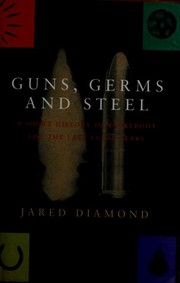
Geography, domesticable plants and animals as the explanation for why some societies conquered others. The prize's most famous winner and by now its most criticised — historians and geographers have spent two decades pointing out where the environmental determinism breaks. Read it as a superb piece of argument construction that you should not finish believing entirely.
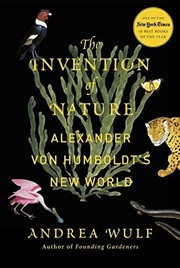
Alexander von Humboldt, who invented the idea of nature as a connected web, and whom almost nobody in the English-speaking world now reads. A biography that doubles as a history of an idea, and the natural bridge into the more technical stage that follows.
Real Science, Carefully Explained
IntermediateTake on four winners written by working scientists about their own fields, and get comfortable holding a mechanism in your head across a whole book.
▸ Study plan for this stage
Pace: Fourteen to sixteen weeks. The age of wonder is around 550 pages of narrative history; three to four weeks. Life Ascending is around 350 pages and is genuinely dense — budget the same time despite the shorter length, and expect to reread paragraphs. The Emperor of All Maladies runs around 570 pages
- The age of wonder placed first because it is history rather than mechanism: Herschel, Banks and Davy, and the generation who made experiment a public adventure
- Science as a social activity with patrons, audiences and reputations, which is the frame the three following books quietly operate inside
- Life Ascending's structure — ten inventions of evolution from DNA to consciousness — with the biochemistry left in rather than gestured at
- The deliberate step up in density. The author will not simplify past the point of honesty, and getting comfortable holding a mechanism across a whole chapter is the skill this stage builds
- The Emperor of All Maladies as a biography of a disease, running from ancient surgery to targeted therapy, with the author's own patients recurring throughout
- How medical evidence is built and overturned. That book is the best account here of trials, statistics, false starts and the long argument between clinical intuition and controlled data
- Testosterone rex dismantling the claim that testosterone explains the difference between men's and women's behaviour, with much of the argument turning on study design
- That last book is genuinely contested — several behavioural endocrinologists hold that it overstates its case — so it is best read as the sharpest available statement of one position rather than as a settled verdict, and the study-design arguments in it are worth following closely whatever you concl
- What changed about who could do science, and who could watch it, in the period The age of wonder covers?
- Pick any one of Life Ascending's ten inventions and explain the mechanism from memory. If you cannot, that chapter has not been read yet.
- What is the hardest thing to explain about the origin of life, on that book's account?
- In The Emperor of All Maladies, find a case where the evidence overturned an established treatment. What made the old view persist so long?
- Testosterone rex and its critics disagree about what the studies show. Set out the disagreement in terms of study design, without deciding it, then say what evidence would settle it.
- All four books are by working scientists or close observers of them. What does that access give the writing, and what might it cost?
- Write a one-page explanation of any Life Ascending chapter for a reader who has read nothing on this path. Explaining it is the only reliable test of having understood it.
- From The Emperor of All Maladies, chart one treatment from first proposal to standard practice or abandonment, marking each piece of evidence that moved it.
- For Testosterone rex, list the specific methodological objections it raises against the studies it criticises. Then ask whether those objections would also apply to the studies it relies on.
- Take one figure from The age of wonder and write 200 words on what they wanted from science, in their own terms.
- Return to the five unanswered questions from stage one and answer any that this stage resolved.
Next up: You are now comfortable with mechanism and with contested evidence, which is the only reasonable footing for three books that demand sustained concentration and, in one case, actual mathematics.
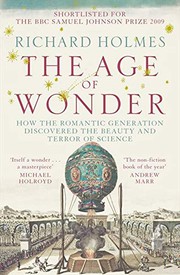
Herschel, Banks and Davy, and the Romantic generation who made science an adventure. Placed first here because it is history rather than mechanism, and it supplies the context — how experiment became a public activity — that the three books after it assume.
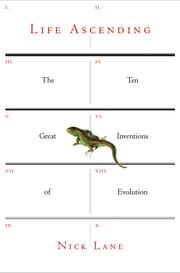
Ten inventions of evolution, from DNA to consciousness, with the biochemistry left in rather than waved at. The step up in density is real and deliberate; Lane is the best writer working on the origin of life and will not simplify past the point of honesty.
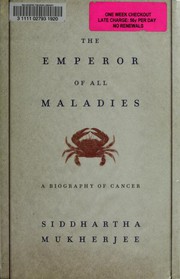
A biography of cancer, from ancient surgery to targeted therapy, by an oncologist who keeps returning to his own patients. Long but never technical for its own sake, and the best book here on how medical evidence is actually built and overturned.

A dismantling of the claim that testosterone explains the difference between men's and women's behaviour. Genuinely contested — several behavioural endocrinologists say Fine overstates it — so read it as the sharpest available statement of one side, not as a settled verdict, and notice how much of the argument is about study design.
The Hard End of the Shelf
BeginnerFinish with three winners that demand real concentration, and see how far a general-audience prize will go toward mathematics and theoretical physics.
▸ Study plan for this stage
Pace: Fourteen to eighteen weeks, and this stage should be paced deliberately. The Information is around 500 pages and conceptually demanding rather than mathematical; give it a month. The Elegant Universe is around 450 pages and is the clearest of the three. The Emperor's New Mind, catalogued with its fu
- The Information's arc from talking drums to Shannon's theory to the genome read as a message, which establishes information as a physical quantity rather than a metaphor
- Why it comes first here: information theory is the language the other two books keep reaching for, and having it makes both easier
- Entropy appearing in two apparently unrelated places — thermodynamics and information — and the fact that this is not a pun
- The Elegant Universe on the incompatibility of general relativity and quantum mechanics, and string theory as an attempted reconciliation. It remains the clearest popular statement of the underlying problem
- The honest caveat on that book. String theory's standing has weakened considerably since it was written, with sustained criticism over testability, so the exposition of the physics is excellent and the promise it conveys has not been fulfilled. Read the two parts separately
- The Emperor's New Mind arguing that consciousness cannot be a computation, by way of Gödel's incompleteness results, Turing machines and a proposed role for quantum gravity
- That argument is disputed by philosophers, computer scientists and physicists alike, and has been since publication. It is the strongest available statement of a minority position, and reading it means following a chain of reasoning you may well end up rejecting
- What the prize is willing to reward. Crowning a book most of its readers will not finish tells you something real about the judges' conception of popular science, and it is the right note on which to end
- What is information, in Shannon's sense, and why is that definition counterintuitive?
- Why does entropy appear in both thermodynamics and information theory? Give the connection rather than the coincidence.
- State the incompatibility between general relativity and quantum mechanics in your own words. What does string theory propose to do about it?
- Given the criticism string theory has attracted, how should a general reader hold a book that presents it so persuasively? There is no single right answer — argue one.
- Set out the Gödel-based argument in The Emperor's New Mind step by step, then identify the step you find weakest.
- Having read the whole path, what makes a book win this prize? Answer from the twelve books rather than from the prize's own description.
- Write a 300-word explanation of Shannon's definition of information for someone who has read none of this. The compression is the test.
- For The Elegant Universe, write two separate paragraphs — one on the physics problem, one on the proposed solution — and rate your confidence in each. Keeping them apart is the exercise.
- Work through the Gödel chapter of The Emperor's New Mind with a pen and reconstruct the argument in numbered steps. If you get stuck, note exactly where; that is useful information about the book and about yourself.
- Look up one published criticism of the consciousness argument and write 200 words on whether it engages the actual claim.
- Rank all twelve books on this path by how much you learned and separately by how much you enjoyed them. The two lists will not match, and the mismatch is the most interesting thing this path produces.
- Write your own one-paragraph judging criteria for the prize, then check them against the twelve winners you have read.
Next up: This is the end of the path — twelve prize winners read in order of difficulty rather than by year — and the natural next step is any current shortlist, which you can now read as a set of competing answers to the question of what popular science is for.
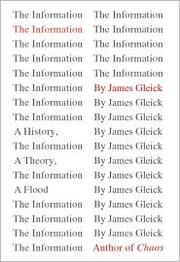
From talking drums to Shannon's theory of information to the genome as a message. The most conceptually demanding of the three and the least mathematical — read it first here, because information theory is the language the other two keep reaching for.
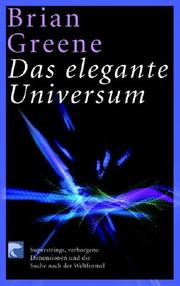
Relativity, quantum mechanics and the attempt to reconcile them with string theory. The clearest popular account of the problem, though it is worth knowing that string theory's status has weakened considerably since it won — read the physics as excellent and the promise as unfulfilled.
A Nobel physicist argues that consciousness cannot be computation, by way of Gödel, Turing machines and quantum gravity. By far the hardest book on this path — it contains actual mathematics — and the correct endpoint, because it shows the prize will reward a book most of its readers will not finish. Note that catalogue records for it usually carry the full subtitle rather than the bare title.
Discussion
Keep reading
Paths that share books, cover the same subject, or open a related topic.