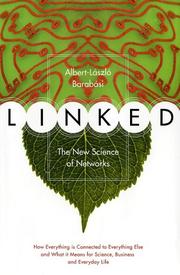
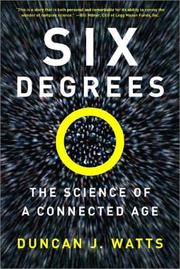
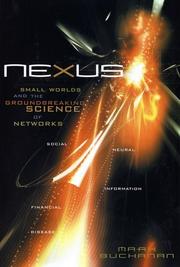
Start with Albert-László Barabási's Linked. Unusually for a field, the popular books came from the researchers who produced the results, so beginning with trade science here costs you nothing in rigour: hubs, power-law degree distributions, and why so many networks are robust to random failure and fragile to targeted attack are genuinely intuitive ideas, and Barabási is describing his own preferential-attachment model. Read Duncan Watts's Six Degrees second, from the author of the small-world model, because Watts is noticeably more careful about what the models establish — it functions as a corrective rather than a repetition. Mark Buchanan's Nexus is the journalist's version and the clearest of the three on the historical line from Euler through Erdős and Rényi to the 1998 results; take it if the first two moved too fast.
The caution to carry through the whole path is about identification. The strongest claims in the popular literature, particularly about social contagion, are contested — not on whether the correlations exist but on whether they can be separated from homophily and shared environment. The textbooks are where that distinction becomes visible, which is one reason not to stop at the trade books.
Networks in the wild
Nicholas Christakis and James Fowler's Connected argues that behaviours from obesity to happiness spread through social ties out to three degrees of separation. It is the most influential book in this stage and the most disputed: the Framingham analyses have been criticised at length by statisticians and social scientists who argue the design cannot distinguish contagion from people who were already similar or shared an environment. Read it, and read the criticism as part of the package rather than treating either side as settled.
Matthew Jackson's The Human Network is the most rigorous of the popular books — a leading formal theorist writing for a general reader on how network position produces inequality, immobility and polarisation. Niall Ferguson's Square and the Tower applies network thinking to five centuries of hierarchies and networks; read it for the range of historical cases and treat the network analysis as illustrative rather than quantitative, because Ferguson is not doing measurement. Barabási's Bursts covers the temporal side: human activity is bursty rather than random, which changes how anything spreading over a network behaves, and it is a useful bridge into the dynamics material at the end.
The first real textbooks
Networks A Very Short Introduction is roughly 120 pages that convert the popular material into precise definitions, and the cheapest way to find out whether you want to do this formally. First Course in Network Science by Filippo Menczer, Santo Fortunato and Clayton Davis is the best teaching text for people who want to compute rather than derive: it is built around Python notebooks and real datasets, and the prerequisite is programming rather than mathematics. Do the exercises — this is the stage where the field becomes usable. David Easley and Jon Kleinberg's Networks, crowds, and markets joins network structure to game theory, information cascades, auctions and search; it is deliberately written for undergraduates across disciplines and needs no more than algebra and clear thinking, which makes it the broadest book in the path.
The graduate texts
Mark Newman's Networks is the reference text of the field and the one to own if you own one, covering measurement, mathematics, models and algorithms in a single coherent treatment. The real prerequisite is linear algebra — the spectral results on the adjacency and Laplacian matrices are the core of the book — plus calculus and basic probability. Matthew Jackson's Social and economic networks is the complement: where Newman is physics-derived and structural, Jackson is economics-derived and strategic, with network formation modelled as choice, and it assumes game theory. Barabási's own Network Science, written with Márton Pósfai, is the most visually taught of the three and is built around the datasets that produced the results Linked describes; read it after Newman to see the same material argued by the person who found much of it.
End with Dynamical processes on complex networks by Alain Barrat, Marc Barthélemy and Alessandro Vespignani, on what happens when epidemics, opinions and failures propagate over a structured network. It assumes statistical physics and differential equations, and it is the book that turns the static structure of everything earlier into prediction.
Follow the full path for the stage notes, or browse more popular science reading.
Follow the full ordered path here: Best Books on Network Science, from Popular Science to the Graduate Texts.
Ready to learn something deeply?
Build a reading path — free