Black holes: an ordered reading path to truly understand them
This four-stage curriculum takes a beginner from vivid, jargon-free wonder all the way to the mathematical and cosmological frontier of black hole physics. Each stage builds the vocabulary, intuition, and conceptual scaffolding needed to absorb the next, so that by the end the reader genuinely understands event horizons, singularities, Hawking radiation, and the role black holes play in the universe — not just as metaphors, but as physical realities.
First Light — Wonder Before Equations
BeginnerBuild vivid intuition for what black holes are, why they exist, and why physicists find them so extraordinary — with no math required.
▸ Study plan for this stage
Pace: 4–5 weeks, ~25–30 pages/day. Start with Tyson's *Death by Black Hole* (approx. 400 pages, 2–2.5 weeks), then move to Hawking's *Black Holes and Baby Universes* (approx. 150 pages, 1.5–2 weeks). Allow 3–4 days at the end for review and synthesis.
- What a black hole is: a region of spacetime where gravity is so extreme that nothing—not even light—can escape once it crosses the event horizon
- Why black holes form: the inevitable endpoint of massive star collapse when nuclear fusion can no longer support the star against its own weight
- The event horizon as a point of no return: the boundary beyond which information and matter cannot escape, making black holes appear 'black'
- Hawking radiation and the surprising discovery that black holes are not completely black but emit particles and can eventually evaporate
- Black holes as cosmic laboratories: how they test the limits of physics and reveal deep connections between gravity, thermodynamics, and quantum mechanics
- The observational reality of black holes: evidence from X-ray binaries, galactic centers, and gravitational effects on nearby matter
- Spaghettification and tidal forces: the extreme physical effects near a black hole that would destroy any object
- Black holes as gateways to deeper physics: how they challenge our understanding and point toward a unified theory of quantum gravity
- What is an event horizon, and why is it the defining feature of a black hole?
- How do black holes form, and what determines whether a dying star becomes a black hole versus a neutron star or white dwarf?
- What is Hawking radiation, and why was its discovery surprising given what physicists previously believed about black holes?
- What evidence do we have that black holes actually exist in the universe, and how do astronomers detect them if they're invisible?
- What would happen to a person falling into a black hole, and why is the experience different depending on the black hole's size?
- Why do black holes represent a fundamental puzzle at the intersection of general relativity and quantum mechanics?
- Create a visual timeline: sketch or diagram the life cycle of a massive star from birth through collapse to black hole formation, labeling key stages and the conditions that lead to each.
- Write a 'survival guide' for an astronaut approaching a black hole: describe what they would observe, feel, and experience as they approach the event horizon, using Tyson's vivid descriptions of spaghettification and tidal forces.
- Debate the information paradox: after reading Hawking's essays, write a 1–2 page reflection on whether information truly disappears into a black hole or is preserved in Hawking radiation—what does this mean for physics?
- Map the evidence: create an annotated list of observational evidence for black holes (X-ray binaries, Sagittarius A*, gravitational lensing) with notes on how each observation works and what it tells us.
- Thought experiment journal: respond to 3–4 of Tyson's 'cosmic quandaries' with your own reasoning before reading his answer, then compare your intuition to his explanation.
- Teach someone else: explain to a friend or family member (without equations) what a black hole is, why it forms, and why Hawking radiation matters—record or write down their questions and your answers to identify gaps in your understanding.
Next up: This stage builds the conceptual foundation and intuitive grasp needed to engage with the mathematical and theoretical frameworks in the next stage, where you'll learn how spacetime curvature, the Schwarzschild metric, and thermodynamic laws actually describe black holes quantitatively.
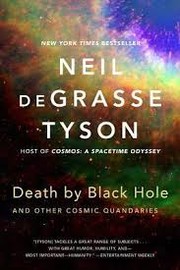
A warm, witty collection of essays that introduces gravity, stellar death, and the strangeness of black holes in plain language — the perfect on-ramp that makes the topic feel exciting rather than intimidating.

Hawking's own accessible essays give the reader a first taste of event horizons and the nature of time from the mind that shaped modern black hole theory, building curiosity for the deeper ideas ahead.
Foundations — Gravity, Space, and Time
BeginnerUnderstand special and general relativity at a conceptual level, grasping curved spacetime, the speed-of-light limit, and why massive objects warp the fabric of the universe — the essential physics beneath every black hole concept.
▸ Study plan for this stage
Pace: 8–10 weeks, ~25–30 pages/day (approximately 4–5 hours/week of focused reading)
- Special relativity: the constancy of light speed, time dilation, length contraction, and the equivalence of mass and energy (E=mc²)
- General relativity: gravity as the curvature of spacetime caused by mass and energy, not a force in the Newtonian sense
- The spacetime continuum: how space and time are woven together and cannot be separated
- The speed of light as a universal speed limit and its role in causality and the structure of the universe
- Curved spacetime geometry: how massive objects bend the fabric of spacetime, affecting the paths of objects and light
- Equivalence principle: the deep connection between acceleration and gravity, showing why gravity curves spacetime
- Hawking radiation and thermodynamic properties of black holes (conceptual introduction)
- Extra dimensions and string theory basics: how modern physics extends relativity to unify quantum mechanics and gravity
- Why does the speed of light remain constant for all observers, and what does this imply about the nature of time and space?
- How does general relativity redefine gravity compared to Newton's law of universal gravitation?
- What is the equivalence principle, and how does it lead to the conclusion that gravity curves spacetime?
- Explain what is meant by 'curved spacetime' and how massive objects create this curvature.
- Why is the speed of light a universal speed limit, and what prevents massive objects from reaching it?
- What is Hawking radiation, and why does it suggest that black holes are not entirely black?
- Create a visual timeline comparing Newtonian gravity, special relativity, and general relativity—note the key shift in how each describes gravity and motion.
- Work through a simple time dilation calculation (e.g., a spaceship traveling at 0.9c) using the Lorentz factor to see how time slows for moving observers.
- Draw spacetime diagrams (light cones) for events at rest and in motion; practice identifying which events can causally influence each other.
- Sketch the curvature of spacetime around a massive object (e.g., the Sun or Earth) and trace how a light ray or planet's orbit bends in response.
- Summarize the equivalence principle in your own words, then explain why an astronaut in a spinning space station experiences 'artificial gravity' in the same way as standing on Earth.
- Write a one-page explanation of why black holes form: connect the curvature of spacetime to the escape velocity exceeding light speed.
Next up: This stage establishes the relativistic framework—the mathematical and conceptual bedrock—that explains why black holes exist and behave the way they do, preparing you to explore black hole formation, properties, and observational evidence in the next stage.

The canonical popular introduction to cosmology and black holes; reading it here gives the learner a coherent narrative of singularities, event horizons, and Hawking radiation in Hawking's own words before tackling harder texts.

Greene's masterful exposition of relativity and quantum mechanics builds the two pillars — spacetime and the quantum world — whose tension is at the heart of Hawking radiation and the information paradox.
Going Deeper — Black Hole Physics Unpacked
IntermediateUnderstand the detailed physics of black holes — formation, types, thermodynamics, Hawking radiation, the information paradox, and observational evidence — with some quantitative reasoning but no advanced calculus.
▸ Study plan for this stage
Pace: 8–10 weeks, ~40–50 pages/day (with 2–3 days per week for reflection and exercises). Hawking's "Black Holes" (2 weeks), Susskind's "The Black Hole War" (3–4 weeks), Levin's "Black Hole Blues" (2–3 weeks).
- Black hole formation: stellar collapse, Schwarzschild radius, and event horizon geometry
- Types of black holes: stellar, supermassive, and their distinct formation pathways
- Thermodynamic properties: black hole temperature, entropy (Bekenstein-Hawking formula), and the no-boundary proposal
- Hawking radiation: mechanism, evaporation timescales, and implications for black hole lifecycles
- The information paradox: tension between quantum mechanics and general relativity, and proposed resolutions (holography, complementarity)
- Observational evidence: gravitational waves, accretion disks, shadow imaging, and detection methods
- Quantitative reasoning: working with Schwarzschild metric, mass-energy relationships, and order-of-magnitude calculations without advanced calculus
- What is the Schwarzschild radius, and how does it determine whether an object becomes a black hole?
- Explain the physical mechanism behind Hawking radiation and why it implies black holes have a finite lifetime.
- What is the information paradox, and why does it create a fundamental tension between quantum mechanics and general relativity?
- How do supermassive black holes differ from stellar black holes in formation and behavior, and what observational evidence supports their existence?
- Describe the holographic principle and complementarity as proposed resolutions to the information paradox.
- What gravitational wave signatures and electromagnetic observations confirm the existence of black holes, and how do these observations constrain black hole properties?
- Calculate the Schwarzschild radius for objects of different masses (Earth, Sun, supermassive black hole) using rs = 2GM/c²; interpret what these numbers mean physically.
- Create a timeline of black hole evaporation for a stellar-mass black hole vs. a supermassive black hole using Hawking's evaporation formula; discuss why supermassive black holes appear stable on cosmological timescales.
- Sketch and annotate the geometry of an event horizon and ergosphere; explain why information cannot escape from inside the event horizon in classical GR, and how Hawking radiation complicates this picture.
- Write a one-page summary comparing Susskind's complementarity proposal with the holographic principle as solutions to the information paradox; identify which aspects remain unresolved.
- Analyze a real gravitational wave detection (e.g., GW150914 from LIGO) or black hole shadow image (e.g., M87* from EHT); extract physical parameters (mass, spin) and compare to theoretical predictions.
- Design a thought experiment or diagram illustrating the 'black hole war' debate between Hawking and Susskind; explain why the stakes matter for fundamental physics.
Next up: This stage builds a comprehensive mental model of black hole physics grounded in observational reality and unresolved theoretical puzzles, preparing you to engage with cutting-edge research on quantum gravity, string theory approaches to black holes, or specialized topics like black hole thermodynamics and the AdS/CFT correspondence in the next stage.

A concise, focused treatment of black hole thermodynamics and information loss that bridges popular science and real physics, ideal as a stepping stone before longer technical treatments.

Susskind narrates his decades-long debate with Hawking over the information paradox, teaching holography, entropy, and quantum gravity through the drama of real scientific conflict — making abstract ideas viscerally concrete.

Follows the LIGO scientists who first detected gravitational waves from merging black holes, grounding the physics in human story and showing how black holes are now observed, not just theorized.
The Frontier — Relativity and Quantum Gravity
ExpertEngage with the mathematical structure of general relativity, the geometry of black holes, and the open questions at the boundary of quantum mechanics and gravity — approaching the level of a serious physics enthusiast or early graduate student.
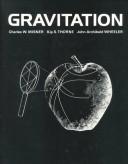
The definitive graduate-level bible of general relativity; by this stage the reader is ready to see the full tensor machinery, Schwarzschild geometry, and Penrose diagrams that make black hole physics precise.
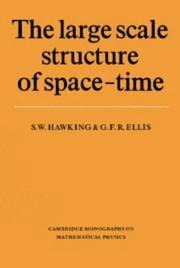
Hawking and Ellis's rigorous treatment of singularity theorems and causal structure is where the mathematical reality of event horizons and singularities is fully established — the capstone of the entire curriculum.
Discussion
Keep reading
Paths that share books, cover the same subject, or open a related topic.