How to learn Cosmology
This curriculum takes you from wide-eyed wonder at the night sky all the way to the mathematical and observational frontier of modern cosmology. Each stage builds the conceptual vocabulary, physical intuition, and technical depth needed for the next, so that by the end you can read current research literature with genuine comprehension.
First Light: Wonder & Orientation
BeginnerDevelop a vivid mental picture of the universe's scale, history, and major structures, and feel genuinely curious about the deep questions cosmology tries to answer.
▸ Study plan for this stage
Pace: 6–8 weeks total: Weeks 1–3 cover "A Brief History of Time" (~20–25 pages/day, including pausing to sketch diagrams and re-read dense passages); Weeks 4–7 cover "The Whole Shebang" (~25–30 pages/day, reading thematically by chapter cluster); Week 8 is a consolidation week for review, journaling, and
- The Big Bang as the origin of space and time itself — not an explosion into pre-existing space, as Hawking carefully distinguishes in A Brief History of Time
- The expanding universe: Hubble's discovery that galaxies are receding, and what redshift tells us about cosmic history
- Spacetime as a unified fabric — how gravity curves it, and why this replaced Newton's picture (grounded in Hawking's treatment of general relativity)
- The cosmic timeline: from the first fractions of a second (quarks, nucleosynthesis) through the formation of atoms, stars, and galaxies, as laid out across both books
- The large-scale structure of the universe — voids, filaments, galaxy clusters, and superclusters — which Ferris maps out vividly in The Whole Shebang
- Dark matter and dark energy as the dominant but invisible components of the universe, introduced by Ferris as the central unsolved puzzle of modern cosmology
- The cosmic microwave background (CMB) as a 'baby photo' of the universe, and why it is the single most important observational pillar of the Big Bang model
- The boundary questions cosmology pushes toward: What came before the Big Bang? Is the universe finite or infinite? — questions Hawking frames as genuinely open and philosophically profound
- In your own words, why does Hawking argue that asking 'what happened before the Big Bang?' may be a meaningless question — and what is the 'no-boundary proposal' he introduces?
- What is the observational evidence Ferris presents in The Whole Shebang that the universe is not only expanding but that its expansion is accelerating, and what does this imply about dark energy?
- How does the cosmic microwave background radiation serve as evidence for the Big Bang, and at what point in cosmic history was it released?
- What is the difference between ordinary (baryonic) matter, dark matter, and dark energy in terms of their share of the universe's total energy content, according to Ferris?
- How does Hawking use the concept of 'imaginary time' to sidestep the singularity problem, and why is this idea both powerful and controversial?
- After reading both books, how would you describe the large-scale structure of the universe — from the scale of our solar system out to the observable horizon — to someone who has never thought about it before?
- Scale walk: After finishing Hawking's early chapters on the expanding universe, build a physical scale model of the cosmos. Assign 1 mm = distance from Earth to the Sun (1 AU), then calculate and mark on a long paper strip where the nearest star, the galactic center, the Andromeda Galaxy, and the observable horizon would fall. The visceral shock of the numbers is the point.
- Timeline poster: Using the cosmic history laid out across both books, draw a single illustrated timeline from t=0 to today on a large sheet of paper. Label key events (quark epoch, nucleosynthesis, recombination/CMB release, first stars, galaxy formation, formation of the Sun, present day) with approximate times. Pin it somewhere visible for the rest of the curriculum.
- Question journal: After each reading session, write down one question the text raised that it did not fully answer. By the end of Stage 1 you should have 10–15 raw questions — these become your personal compass for the rest of the curriculum.
- Sketch the CMB: Find a public-domain image of the Planck satellite's CMB map online. Spend 15 minutes studying it, then close the tab and sketch it from memory with annotations explaining what the colors represent and why the map looks the way it does, using Ferris's explanation as your guide.
- Explain-it-back test: After finishing The Whole Shebang, give a 5-minute verbal explanation (to a friend, family member, or recorded voice memo) of dark matter and dark energy — what they are, why we think they exist, and why we can't see them. Identify every point where you stumbled; those are your gaps to revisit.
- Compare the authors: Write a one-page reflection contrasting how Hawking and Ferris each approach the same core topic — the Big Bang. Note differences in tone, depth, use of analogy, and what each author seems to think is most important. This builds the habit of reading sources critically rather than passively.
Next up: By the end of this stage the reader has a confident intuitive map of the universe and a list of burning unanswered questions — exactly the curiosity and vocabulary needed to engage with more mathematically and observationally rigorous treatments of cosmology in the next stage.

The classic entry point: it introduces the Big Bang, black holes, and the nature of time in plain language, giving beginners the essential narrative spine of modern cosmology.
A beautifully written survey of cosmological science as it stood at the close of the 20th century; it fills in the observational story — galaxies, dark matter, the expanding universe — that Hawking's book sketches only briefly.
Connects cosmic history to everyday matter in an accessible, enthusiastic voice, reinforcing the timeline and vocabulary you'll need before moving to more rigorous texts.
Foundations: Physics You Must Know
BeginnerGrasp the key physics pillars of cosmology — relativity, quantum ideas, and the nature of space-time — at a conceptual but precise level, without yet needing calculus.
▸ Study plan for this stage
Pace: 6–8 weeks total: Weeks 1–3 cover "Six Easy Pieces" (~20–25 pages/day, reading each of the 6 chapters twice — once quickly, once slowly with notes); Weeks 4–8 cover "The Elegant Universe" (~25–30 pages/day, pausing at the end of each part to review before continuing).
- The atomic hypothesis and the idea that all matter is made of interacting atoms — Feynman's foundational lens for all of physics
- Conservation laws (energy, momentum) as deep symmetries of nature, not just bookkeeping rules — grounded in Feynman's chapter on basic physics
- The nature of gravity as distinct from other forces, and why it is so difficult to unify with the rest of physics — introduced by Feynman and dramatically expanded by Greene
- Special relativity: the constancy of the speed of light, time dilation, length contraction, and the equivalence of mass and energy (E = mc²) — covered conceptually in both books
- General relativity: gravity as the curvature of space-time rather than a force, and how mass-energy warps the fabric of the universe — Greene's central setup for cosmology
- Quantum mechanics core ideas: wave-particle duality, the uncertainty principle, probability amplitudes, and the breakdown of classical determinism — Feynman's clearest conceptual gift to the reader
- The tension between general relativity (smooth, continuous space-time) and quantum mechanics (discrete, probabilistic) as the central unsolved problem motivating modern cosmology and string theory
- Extra dimensions and the geometry of space-time: Greene's argument that the universe may have more dimensions than we perceive, and what that means for the laws of physics
- In your own words, why does Feynman call the atomic hypothesis the single most important idea in science? What does it explain that a non-atomic view cannot?
- What does it mean to say that the speed of light is the same for all observers, and what are two concrete consequences of this fact for time and space (as explained by Greene)?
- How does Einstein's general relativity change our picture of gravity compared to Newton's — and why does Greene argue this picture is fundamentally incompatible with quantum mechanics?
- What is the uncertainty principle, and why does it imply that empty space is never truly empty? How does this create a problem for a smooth space-time?
- Greene introduces the idea that extra spatial dimensions could be 'curled up' and invisible at human scales. What is the analogy he uses, and why does this idea matter for unifying physics?
- After reading both books, how would you describe the 'job' of a theory of quantum gravity — what two descriptions of reality must it reconcile, and why is that so hard?
- **Feynman Compression Drill:** After finishing each of the six chapters in 'Six Easy Pieces,' write a single index card (max 5 sentences) summarizing the chapter's core idea in your own words. At the end of the book, lay all six cards out and draw arrows showing how the ideas connect.
- **Relativity Thought Experiment Journal:** As you read Greene's chapters on special and general relativity, recreate his thought experiments (the train, the rubber sheet, the light-clock) in a notebook using your own diagrams. Label every element and annotate what each part of the diagram represents physically.
- **Concept Collision Map:** Draw a two-column table — one column for 'General Relativity claims…' and one for 'Quantum Mechanics claims…' — and fill it in as you read Greene. By the end of Part II of 'The Elegant Universe,' you should have at least 5 rows showing direct contradictions.
- **Explain-It-Aloud Test:** Choose one concept per week (e.g., time dilation, wave-particle duality, space-time curvature) and explain it out loud for 2 minutes as if teaching a curious 16-year-old — no jargon allowed. Record yourself and listen back to identify gaps.
- **Scale-of-the-Universe Timeline:** After finishing both books, build a single visual that places key ideas on two axes: (1) size scale — from subatomic to cosmic, and (2) which theory governs that scale (quantum mechanics, general relativity, or 'unknown/both needed'). Use specific examples from both Feynman and Greene.
- **End-of-Stage Essay:** Write a 400–600 word response to the question: 'Why is a new theory of physics needed to understand the origin and large-scale structure of the universe?' Draw explicitly on arguments from both 'Six Easy Pieces' and 'The Elegant Universe.'
Next up: By internalizing the conceptual conflict between quantum mechanics and general relativity — and Greene's argument that the geometry of space-time itself may be the key — the reader is now primed to explore how cosmologists actually model the universe's origin, structure, and fate, where both pillars must be applied together.

Feynman's distilled lectures build rock-solid physical intuition about energy, gravity, and quantum behavior — the three pillars cosmology rests on.

Provides a thorough, lucid treatment of special and general relativity and then string/quantum ideas; reading it here gives you the relativistic framework essential for understanding an expanding, curved universe.
Going Deeper: The Standard Model of Cosmology
IntermediateUnderstand the ΛCDM model in detail — inflation, dark matter, dark energy, the CMB, and large-scale structure — and see how observations constrain theory.
▸ Study plan for this stage
Pace: 10–13 weeks total (~30–40 pages/day, 5 days/week): ~4 weeks for "The Fabric of the Cosmos" (~500 pp.), ~4 weeks for "The Inflationary Universe" (~360 pp.), and ~3–4 weeks for "Dark Matter and the Dinosaurs" (~400 pp.). Allow extra days at the end of each book for review and reflection.
- The ΛCDM model as the 'standard model' of cosmology — its components (ordinary matter, cold dark matter, cosmological constant Λ) and their relative contributions to the energy budget of the universe
- Cosmic inflation: the exponential expansion of the very early universe, how Alan Guth's 'inflationary universe' resolves the horizon, flatness, and magnetic-monopole problems, and the concept of the inflaton field
- The Cosmic Microwave Background (CMB): its origin at recombination, its near-perfect blackbody spectrum, and how temperature anisotropies encode the seeds of large-scale structure (as developed in Greene's 'The Fabric of the Cosmos')
- Dark matter: observational evidence (galaxy rotation curves, gravitational lensing, cluster dynamics), candidate particles (WIMPs, axions), and why baryonic matter alone cannot account for structure formation
- Dark energy and the cosmological constant Λ: the discovery of accelerating expansion, the tension between the vacuum energy predicted by quantum field theory and the observed value, and Λ's role in the universe's ultimate fate
- Large-scale structure formation: how quantum fluctuations during inflation are stretched to cosmic scales, seed density perturbations, and grow under gravity into the cosmic web of filaments, voids, and galaxy clusters
- The interplay between particle physics and cosmology: how Guth's work shows that high-energy physics (Grand Unified Theories, phase transitions) directly shapes cosmic history
- Lisa Randall's 'Dark Matter and the Dinosaurs' perspective: the hypothesis of a thin dark-matter disk in the galactic plane, its potential link to periodic comet impacts, and what it illustrates about how dark matter could have indirect astrophysical signatures
- After reading 'The Fabric of the Cosmos,' can you explain what the CMB is, why it is so uniform, and how its tiny temperature fluctuations are connected to the galaxies and clusters we see today?
- Based on 'The Inflationary Universe,' what three observational puzzles (horizon, flatness, monopole problems) motivated Guth to propose inflation, and how does a brief period of exponential expansion resolve each one?
- What is the 'graceful exit' problem with Guth's original inflation model, and what refinements (slow-roll inflation, new inflation) were proposed to address it?
- Drawing on all three books, what are the main independent lines of observational evidence for dark matter, and why do they collectively rule out modifications of gravity (like simple MOND) as a complete alternative?
- How does Lisa Randall's 'Dark Matter and the Dinosaurs' use the possibility of a dissipative dark-matter disk to connect cosmological physics to events in Earth's geological and biological history, and what does this illustrate about the reach of cosmological models?
- What is the cosmological constant problem, and why is the observed value of dark energy so surprising from the perspective of quantum field theory as discussed across these books?
- CMB anisotropy mapping: Visit the ESA Planck mission's public data portal or NASA's LAMBDA archive and download a CMB temperature map. Identify the dipole anisotropy, the acoustic peaks in the power spectrum, and annotate what physical process each feature corresponds to, using Greene's explanations as your guide.
- Inflation timeline diagram: After finishing 'The Inflationary Universe,' draw a detailed timeline of the universe from t=10⁻³⁶ s to t=1 s. Label the inflationary epoch, reheating, baryogenesis, and nucleosynthesis, and annotate each phase with the key physics Guth describes.
- Energy budget pie chart: Using current Planck satellite results (easily found online), construct a pie chart of the universe's energy budget (ordinary matter ~5%, dark matter ~27%, dark energy ~68%). Then write a one-paragraph explanation of each slice, grounding each in the arguments made across the three books.
- Rotation curve analysis: Find publicly available galaxy rotation curve data (e.g., for NGC 3198 or the Milky Way) from NASA/IPAC. Plot the observed curve versus the curve predicted from visible matter alone, and calculate roughly how much additional mass is needed — connecting the exercise directly to the dark matter evidence discussed in 'Dark Matter and the Dinosaurs.'
- Socratic discussion or written essay: Write a 500-word essay arguing either for or against Randall's dark-matter disk hypothesis, using the observational constraints and theoretical framework developed across all three books. Focus on what evidence would be needed to confirm or falsify it.
- Concept synthesis map: Create a visual concept map linking the following terms from all three books: inflation → quantum fluctuations → CMB anisotropies → large-scale structure → dark matter halos → dark energy → accelerating expansion. Annotate each arrow with the physical mechanism connecting the two nodes.
Next up: Mastering the ΛCDM framework and its observational pillars — inflation, the CMB, dark matter, and dark energy — equips the reader with the conceptual vocabulary and physical intuition needed to tackle the frontier questions of cosmology, such as quantum gravity, the multiverse, and the ultimate fate of the universe, which form the natural focus of a more advanced stage.
Builds directly on The Elegant Universe to tackle space, time, quantum reality, and cosmological inflation with greater depth, bridging popular science and serious physics.

Written by inflation's originator, this book gives an authoritative, insider account of how and why the inflationary paradigm was developed — essential for understanding the modern Big Bang picture.

Explores dark matter's role in cosmic structure with rigorous but accessible reasoning, deepening your understanding of the universe's invisible scaffolding.
Quantitative Cosmology: Equations & Structure
IntermediateWork through the actual mathematics of cosmology — the Friedmann equations, redshift, distance measures, and structure formation — and be able to follow derivations in the literature.
▸ Study plan for this stage
Pace: 14–18 weeks total. Weeks 1–8: Ryden's "Introduction to Cosmology" (~25–30 pages/day, 4–5 days/week), working carefully through every derivation with pencil and paper. Weeks 9–18: Weinberg's "Cosmology" (~20–25 pages/day, 4–5 days/week), a denser and more rigorous text — slow down for Chapters 1–6 an
- The Friedmann equations: derivation from GR (Weinberg) and Newtonian analogy (Ryden), and their physical interpretation in terms of expansion, curvature, and energy content
- Cosmological parameters: Ω_m, Ω_Λ, Ω_r, Ω_k, H_0, and how their values determine the fate and geometry of the universe
- Cosmological redshift and its distinction from Doppler shift; the scale factor a(t) and its relationship to redshift z
- Distance measures: comoving distance, proper distance, luminosity distance, and angular diameter distance — their definitions, interrelations, and observational uses as developed in both Ryden and Weinberg
- The Fluid and Acceleration equations: deriving them from the Friedmann equation plus energy-momentum conservation, and applying them to matter-, radiation-, and Λ-dominated eras
- Cosmic thermal history: the timeline of the hot Big Bang, recombination, decoupling, and the origin of the CMB as laid out in Ryden's later chapters and Weinberg's treatment
- Linear perturbation theory and the seeds of large-scale structure: growth of density perturbations δ(t), the Jeans instability criterion, and the transfer function as introduced in Weinberg
- Nucleosynthesis and the baryon-to-photon ratio: the physics of Big Bang Nucleosynthesis (BBN) and how light-element abundances constrain cosmological parameters, covered in depth by Weinberg
- Starting from the Friedmann equation as derived in Ryden (Newtonian approach) and Weinberg (GR approach), can you explain what each term represents physically, and show how the critical density ρ_c and Ω parameters emerge from it?
- Given a flat ΛCDM universe with specified Ω_m and Ω_Λ, how would you compute the age of the universe by evaluating the integral in Ryden Chapter 5? What approximations are valid in different eras?
- How do luminosity distance d_L and angular diameter distance d_A differ, and how are each measured observationally? Can you derive the relationship d_L = (1+z)² d_A using the definitions in Ryden and Weinberg?
- Walk through the physics of recombination and photon decoupling as described in Ryden. Why does the CMB have a blackbody spectrum, and what does its temperature tell us about the scale factor at decoupling?
- Using the perturbation growth equation from Weinberg, explain why density perturbations grow as a power law in a matter-dominated universe but stagnate during radiation domination. What is the Meszaros effect?
- How does Weinberg's treatment of BBN connect the neutron-to-proton freeze-out ratio to the observed helium abundance? What cosmological parameters does this constrain?
- Derivation drill (Ryden-first): Cover the right-hand side of Ryden and re-derive the Friedmann, Fluid, and Acceleration equations from scratch on paper. Then open Weinberg and reconcile the GR-based derivation with Ryden's Newtonian version, noting every point of correspondence.
- Numerical integration of a(t): Write a short script (Python/Julia) to numerically solve the Friedmann equation da/dt = H_0 * sqrt(Ω_r/a² + Ω_m/a + Ω_k + Ω_Λ a²) for a flat ΛCDM model. Plot a(t), identify matter–Λ equality, and compute the age of the universe. Compare to Ryden's analytic approximations.
- Distance measure calculator: Implement the comoving distance integral χ(z) and derive d_L(z) and d_A(z) from it. Plot all three distance measures from z=0 to z=10 and verify the Ryden result that d_A turns over and decreases at high z. Cross-check one numerical value against Weinberg's tables.
- CMB temperature scaling: Using Ryden's result T ∝ 1/a, calculate the redshift of matter–radiation equality z_eq and the temperature of the universe at that epoch. Then estimate the baryon number density at recombination and compare to Weinberg's discussion of the Saha equation.
- Parameter sensitivity study: Using your numerical Friedmann solver, vary Ω_Λ (0, 0.3, 0.7, 1.0) while keeping the universe flat. Plot the resulting a(t) curves on one figure and annotate: Big Crunch, coasting, accelerating expansion. Write a one-paragraph physical interpretation grounded in Ryden's Chapter 6 discussion.
- Literature derivation chase: Pick one derivation from Weinberg (e.g., the growth factor D(a) in Chapter 5 or the BBN helium yield in Chapter 3) and reproduce it line-by-line in your own notation. Identify every assumption made and note where Ryden provides the physical intuition that Weinberg's formalism compresses.
Next up: Mastering the Friedmann framework and perturbation theory in Ryden and Weinberg gives the reader the mathematical fluency needed to engage with advanced topics — such as inflation, CMB anisotropy power spectra, and dark energy models — where these equations appear as starting points rather than destinations.
The gold-standard undergraduate textbook: clear, concise, and mathematically honest. It translates everything from the previous stages into Friedmann equations, cosmological parameters, and observational tests.
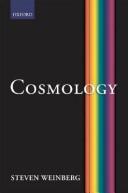
A rigorous, graduate-level treatment by a Nobel laureate that covers general relativistic cosmology, the CMB, nucleosynthesis, and dark energy in full mathematical detail — the bridge to research-level understanding.
The Frontier: Open Questions & Current Research
ExpertEngage with the unresolved edges of cosmology — the multiverse, quantum gravity, the nature of dark energy, and the fate of the universe — and read them critically as a trained thinker.
▸ Study plan for this stage
Pace: 10–13 weeks total: ~6–7 weeks on "The Road to Reality" (~40–45 pages/day, focusing deeply on Parts 1–3 and selected frontier chapters in Parts 4–5), followed by ~4–6 weeks on "Our Mathematical Universe" (~25–30 pages/day with extended reflection time for philosophical arguments).
- Penrose's geometrical and algebraic foundations of physical law — spinors, twistors, and the mathematical scaffolding underlying spacetime
- The tension between quantum mechanics and general relativity as the central unsolved problem in fundamental physics, as framed throughout 'The Road to Reality'
- Penrose's cyclic cosmology (CCC) and his critique of inflationary theory as speculative but untestable — reading these as argued positions, not settled facts
- The Weyl curvature hypothesis and the arrow of time: why the low-entropy Big Bang demands a physical explanation beyond the Standard Model
- Tegmark's Mathematical Universe Hypothesis (MUH): the claim that physical existence and mathematical existence are identical, and its implications for cosmology
- Tegmark's four-level multiverse hierarchy (Level I–IV) — distinguishing empirical extrapolation from philosophical conjecture at each level
- The nature of dark energy as a cosmological constant vs. a dynamic field (quintessence), and why neither is theoretically satisfying
- Critical reading of 'fringe-but-serious' science: how to evaluate falsifiability, theoretical motivation, and peer reception for ideas like the MUH or CCC
- According to Penrose in 'The Road to Reality', why is the reconciliation of quantum field theory and general relativity not merely a technical problem but a deep conceptual one — and what does he propose as a path forward?
- What is the Weyl curvature hypothesis, and how does Penrose use it in 'The Road to Reality' to argue that the Second Law of Thermodynamics points to a cosmological boundary condition requiring explanation?
- How does Tegmark define and distinguish the four levels of the multiverse in 'Our Mathematical Universe', and which levels does he consider scientifically grounded versus metaphysical?
- What is the Mathematical Universe Hypothesis as presented in 'Our Mathematical Universe', what is Tegmark's core argument for it, and what are its strongest philosophical vulnerabilities?
- How do Penrose and Tegmark differ in their attitudes toward the role of mathematics in physical reality — and where do their visions of the 'ultimate theory' fundamentally conflict?
- What does current cosmological research (as reflected in both books) suggest about the fate of the universe, and how do the authors' respective frameworks (CCC vs. Level I–IV multiverse) lead to radically different eschatologies?
- Concept map exercise: After finishing 'The Road to Reality', draw a single diagram connecting at least eight of Penrose's mathematical structures (e.g., Riemann surfaces, spinors, twistors, Hilbert space, Weyl curvature) to the physical phenomena they describe — annotate each link with one sentence explaining the connection.
- Steelman-and-critique journal: For each of Tegmark's four multiverse levels in 'Our Mathematical Universe', write one paragraph steelmanning the strongest evidence for it, then one paragraph identifying its most serious falsifiability problem. Use only arguments grounded in the text.
- Comparative position paper (1,000–1,500 words): Write an essay titled 'Does Mathematics Describe Reality or Is Reality Mathematics?' using Penrose's Platonic realism from 'The Road to Reality' and Tegmark's MUH from 'Our Mathematical Universe' as your two primary sources — argue for a defensible position of your own.
- Falsifiability audit: Go through Penrose's Conformal Cyclic Cosmology section and Tegmark's Level II multiverse chapter and list every empirical prediction each author makes. For each, research (via arXiv or NASA ADS) whether any observational test has been attempted since publication — write a one-paragraph update for each claim.
- Entropy and time thought experiment: Using Penrose's treatment of the Weyl curvature hypothesis and the arrow of time, write out in your own words a rigorous explanation of why a 'randomly chosen' universe would not have a low-entropy beginning — then explain what this implies for fine-tuning arguments in cosmology.
- Debate preparation: Prepare a 10-minute spoken argument (outline it in writing) for the position that the multiverse is a scientifically meaningful concept, and a separate 10-minute argument against it — drawing exclusively on 'The Road to Reality' and 'Our Mathematical Universe' for evidence and counterevidence.
Next up: Mastering the open questions and competing frameworks in these two books equips the reader to move into primary literature and review articles — the natural next stage is engaging directly with current cosmological research papers (e.g., on quantum gravity, CMB anomalies, and dark energy surveys) where the arguments of Penrose and Tegmark are tested, extended, or refuted in real time.

A sweeping mathematical journey through the physics underlying cosmology; at this stage you have the tools to tackle Penrose's demanding synthesis of geometry, quantum theory, and cosmological speculation.
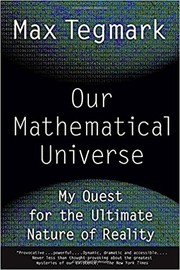
Tegmark, a leading cosmologist, lays out the frontier debates — inflation's multiverse, the nature of physical reality, and the ultimate structure of the cosmos — giving you a map of where the field is heading.
Discussion
Keep reading
Paths that share books, cover the same subject, or open a related topic.