Best Books on Breast Cancer, in Reading Order
Breast cancer is a disease, a research field, and a peculiarly public culture with its own colour scheme — and the literature on it is strongest when it holds all three together. This path begins with what the disease actually is and how oncology came to understand it, turns to writers who have described living with it, traces how treatment moved from radical surgery to targeted therapy, and ends with the politics of awareness campaigns and the clinical reference. It is a path for understanding a subject; nothing in it is medical advice, and no book here is a substitute for a conversation with an actual oncologist.
What the Disease Is
BeginnerBuild an accurate working picture of breast cancer — subtypes, staging, receptors, the difference between screening and diagnosis — and understand where it sits in oncology as a whole.
▸ Study plan for this stage
Pace: Three to four weeks. Dr. Susan Love's Breast Book is a 690-page reference and is not meant to be read cover to cover — work through the anatomy and benign-conditions chapters properly, then the chapters on pathology reports, staging and treatment options, and skim the rest as a lookup. The Emperor o
- The vocabulary of a pathology report — tumour grade, size, node status, margins — and why Love insists a patient should be able to read their own report before agreeing to anything
- Receptor status as the fork in the road: ER/PR positive, HER2 positive, and triple-negative are effectively different diseases with different treatments, and almost every later book in this path turns on that distinction
- The difference between screening and diagnosis, which Love treats at length and which is the source of most public confusion about mammography
- In situ versus invasive disease, and why DCIS is the hardest category to explain honestly — it is the seed of the overdiagnosis argument that returns in the fourth stage
- Mukherjee's organising idea that cancer is not one disease but a class of them, so 'a cure' was always the wrong shape of question
- The four therapeutic eras Mukherjee traces — surgery, radiation, cytotoxic chemotherapy, targeted therapy — with breast cancer serving as his recurring test case for each
- Why breast cancer specifically became oncology's proving ground: it is common, it is visible, it is operable, and it produced organised patients
- Given a pathology report with grade, size, node status and receptor status, can you say roughly what each field means and which of them most changes the treatment plan?
- What is the actual difference between DCIS and invasive ductal carcinoma, and why is that difference clinically awkward?
- In Mukherjee's account, what did Halsted believe about how cancer spreads, and how did that belief determine surgical practice for most of a century?
- What does 'targeted therapy' mean concretely, as opposed to chemotherapy, and what has to be true of a tumour for it to be an option?
- Why does Mukherjee argue that the search for a single cure was a category error, and do you find the argument convincing?
- Write out the meaning of each field on a standard breast pathology report from Love's explanation, in your own words, on one side of a page. This is the single most useful artefact you can make from this stage.
- Draw Mukherjee's four-era timeline of cancer treatment, marking where breast cancer appears in each era. Keep it — the third stage of this path is essentially a close-up of the same timeline.
- Look up the chapter in Love where she explains what a mammogram can and cannot detect, and write two sentences on why a normal mammogram is not the same as an absence of cancer.
- Note every claim in these two books that is stated as contested rather than settled. Mukherjee is careful about this and it is good practice for reading the more polemical books later in the path.
Next up: You now have the clinical vocabulary the next stage's writers are pushing back against — Lorde, Sontag and Boyer are all, in different ways, refusing the language you have just learned, and the refusal only lands if you know what is being refused.

The standard general reference, written by a breast surgeon and updated across many editions: anatomy, benign conditions, the actual meaning of a pathology report, and how treatment decisions are structured. Read it first for vocabulary — and read it as an explanation of how the field thinks, not as direction for any individual case.

A history of cancer generally, in which breast cancer is the recurring test case for surgery, chemotherapy, screening and targeted therapy. Read second: it supplies the wider oncology context that makes the breast-specific history in a later stage legible.
What It Is Like
BeginnerEncounter the illness as writers have described living it, and understand why several of them refused the language offered to them.
▸ Study plan for this stage
Pace: Two to three weeks, and short books do not mean fast reading here. The Cancer Journals is 77 pages, Illness as Metaphor 88, and The Undying 144 — together barely 300 pages, but all three are argumentative and Boyer's is deliberately difficult. Read Lorde in one or two sittings, sit with Sontag as an
- Lorde's refusal of the prosthesis, and her argument that being asked to look unchanged is a demand for silence rather than a kindness
- The specificity of Lorde's position — Black, lesbian, a poet, treated in the late 1970s — and her insistence that a universal 'cancer patient' is a fiction that erases exactly that
- Sontag's central claim: that cancer is loaded with metaphors of invasion, battle and hidden personality, and that these metaphors are not decorative but actively punitive to the ill
- The 'cancer personality' idea Sontag attacks — the notion that repressed emotion causes disease — and why blaming the patient survives even when the biology does not support it
- Boyer's extension of the argument past metaphor into money: insurance, employment, medical debt, and the data economy built around the sick
- The distinctive burden of triple-negative disease in The Undying — the subtype with no receptor to target, which is where the vocabulary from stage one becomes personal
- Why all three writers treat the demand to be a good, cheerful patient as a political demand and not a matter of temperament
- What exactly is Lorde refusing when she refuses the prosthesis, and what is the argument that this is a public act rather than a private preference?
- Which metaphors does Sontag identify as attached to cancer, and what concrete harm does she claim each one does?
- Where does Boyer agree with Sontag and where does she go further — what does she say the illness costs that Sontag's essay does not address?
- The Undying is triple-negative breast cancer. Using the receptor vocabulary from stage one, why does that subtype make Boyer's book harder than a comparable memoir of hormone-receptor-positive disease?
- All three writers reject the language they were offered. What language, if any, do they put in its place?
- Summarise Sontag's argument in 200 words without using the word 'battle'. If you cannot, that is the demonstration of her point.
- Find the passage in The Cancer Journals where Lorde describes being visited by the Reach to Recovery volunteer, and write a paragraph on what she objects to in that encounter.
- Make a two-column list: the metaphors Sontag identifies, and every instance of one you meet in the next week — in a news story, a fundraising page, an obituary. Most readers fill the second column within days.
- Boyer writes deliberately against the shape of the recovery memoir. Sketch the plot the conventional version of her book would have had, then mark where she refuses each beat.
- Reread the three or four pages of Love's book on mastectomy and reconstruction from stage one immediately after finishing Lorde. Note what the clinical account leaves out — not as a criticism of Love, but as a measure of what a reference book is for.
Next up: Lorde is writing in the immediate aftermath of the radical mastectomy era, so the next stage supplies the history behind her surgery — why that operation was standard, who dislodged it, and how long the dislodging took.

Lorde's journals after her mastectomy, and her refusal of prosthesis and silence. It is the founding text of first-person breast cancer writing, and almost every later memoir is in conversation with it.

Sontag's argument that the metaphors attached to cancer — the battle, the personality that invites it — do real harm to patients. Read it directly after Lorde, since both are refusing the same imposed narrative from different directions.

A contemporary poet's account of treatment for triple-negative breast cancer, written with Sontag's critique fully absorbed and extended to insurance, work and data. It is the hardest book of the three and belongs last.
How Treatment Changed
IntermediateFollow the specific history of breast cancer treatment from radical mastectomy through randomised trials to receptor-targeted drugs, and understand why each shift took so long.
▸ Study plan for this stage
Pace: Four to five weeks for about 840 pages, and this is the most demanding stretch of the path. Bathsheba's Breast (302pp) is a historian's book and rewards steady reading at 25 pages a session. Her-2 (214pp) is journalism and goes quickly. The Death of Cancer (324pp) is opinionated memoir and will make
- How the Halsted radical mastectomy became doctrine — Olson's account of a procedure justified by a theory of contiguous spread and sustained by surgical authority long after the theory weakened
- Bernard Fisher and the randomised trial as the instrument that finally displaced Halsted: the argument that only a trial, not a surgeon's judgement, could settle the question
- Why the change took decades rather than years — Olson's real subject is institutional inertia, professional identity and the difficulty of unlearning
- The HER2 story in Bazell: an amplified receptor found in the lab, a drug built against it, and the patient activism that pushed trastuzumab through when the commercial case was weak
- The date stamp on Her-2 — it was written at the moment of approval in 1998, so it has the drama of the discovery and none of the two decades of outcome data that followed
- DeVita's account of combination chemotherapy: the logic of hitting a tumour with several agents at once, and why it was resisted
- DeVita's contested thesis that the main obstacle to progress has been institutional rather than scientific — a claim from an interested party, and worth reading as advocacy as much as history
- What did Halsted believe about how breast cancer spreads, and what did that belief license surgeons to remove?
- How did Fisher's trials actually work, and why was randomisation the only thing that could have settled the radical-mastectomy question?
- In Bazell's account, what specifically did patient activists do that changed trastuzumab's development, and would the drug have arrived without them?
- Where is DeVita an unreliable narrator of his own field, and where is his insider position exactly what makes the book valuable?
- Olson, Bazell and DeVita each identify a different obstacle to progress. Name all three and say which one you find best supported.
- Build a single timeline from Halsted's 1894 procedure to trastuzumab's approval, marking on it the events Olson, Bazell and DeVita each treat as pivotal. Where they mark different events, you have found the disagreement between the three books.
- Write 200 words on why the radical mastectomy persisted for so long after evidence against it existed, using Olson's explanation rather than a general remark about conservatism.
- Find at least one point where DeVita's version of an episode conflicts with Olson's or Bazell's, and write down what each has at stake in his account.
- Take the receptor vocabulary from stage one and use it to explain, unaided, what trastuzumab does and which patients it can help. If you can do this without the book open, stage one has done its work.
- Reread the pages in The Cancer Journals describing Lorde's surgery with Olson's chapters on the radical mastectomy fresh. The two books are describing the same operation from opposite ends.
Next up: Bazell's account of activists forcing a drug through is the sympathetic version of organised breast cancer advocacy; the next stage examines what the same organising became once corporate money arrived.

A historian's account of breast cancer across centuries, and the best single explanation of how the Halsted radical mastectomy became doctrine and how it was finally dislodged. It is the historical spine of this stage.
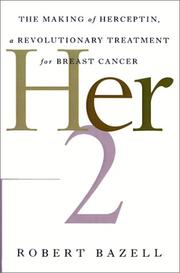
The development of trastuzumab, from laboratory receptor to approved drug, including the patient activism that pushed it. Read it as the concrete case of what targeted therapy actually required — and note it was written at the moment of approval, so it predates the long-term results.

A memoir-argument from one of the architects of combination chemotherapy, who is blunt about both the successes and the institutional obstruction. Read it last for an insider's contested view of why progress has been slower than the science allowed.
Awareness, Money and Politics
IntermediateUnderstand how breast cancer became the most heavily marketed disease in the world, and evaluate the arguments about what that has cost patients.
▸ Study plan for this stage
Pace: Three to four weeks for roughly 770 pages. Radical (325pp) is reported journalism and reads easily. Pink Ribbons, Inc. (208pp) is academic and slower per page — expect to reread paragraphs. Bright-sided (235pp) is a polemic and quick. Read Pickert first for the balanced survey, then King for the sha
- Overdiagnosis: the finding that screening detects disease that would never have harmed the patient, and why this is genuinely hard rather than a scandal with an obvious villain
- Pickert's dual position as reporter and patient, and how she uses it — she is inside the system she is auditing and says so
- Cause-related marketing as King's object of study: the mechanism by which a disease becomes a brand asset and philanthropy reorganises around what sells
- King's central claim that pink-ribbon culture redirects attention toward awareness and screening and away from prevention, environmental causes and metastatic disease
- The difference between funding for early-stage awareness and funding for stage IV research, and why the latter attracts less of the money the ribbon raises
- Ehrenreich's argument that compulsory positive thinking is a demand placed on patients — the teddy bears and the survivor script — and that it forbids anger
- How the three books' evidentiary standards differ: Pickert reports, King documents an argument, Ehrenreich generalises from her own case — a useful exercise in weighing sources that agree
- What is overdiagnosis, why does screening produce it, and what would an honest public message about mammography actually have to say?
- What does King mean by cause-related marketing, and what is her evidence that it changed where breast cancer money goes?
- Where does Pickert's reporting support King's thesis, and where does it complicate it?
- Ehrenreich claims the demand for positivity harms patients. What is the strongest counter-argument, and does she address it?
- Whose interests are served by the awareness industry, and which of these three authors makes that case most rigorously?
- Take one real pink-ribbon product or campaign and trace, as far as public information allows, what proportion of the price reaches research and what kind of research. King's framework tells you exactly which questions to ask.
- Write a 200-word public health message about screening that is accurate about both benefit and overdiagnosis. Notice how much harder it is than the version on the poster.
- List every claim King makes that Pickert also reports independently. What survives both is the load-bearing part of the critique.
- Reread Lorde on silence and Boyer on the economics of illness beside Ehrenreich's cancer chapter, and write a paragraph on what the three have in common and where Ehrenreich is doing something different from the other two.
- Separate the three books by evidence type — reporting, documented scholarship, personal argument — and write one line on what each type can and cannot establish.
Next up: You now have four books' worth of claims about what the evidence shows; the last stage puts you in front of the technical literature those claims are drawn from, so you can check them yourself.
A journalist diagnosed mid-reporting examines the whole apparatus — screening debates, overdiagnosis, research funding, the awareness industry. It is the most current and most balanced overview and the right place to start this stage.

The scholarly case that cause-marketing reshaped breast cancer philanthropy around corporate interests and away from prevention and environmental research. Read it after Pickert as the sharper, more academic version of the same critique.

Ehrenreich's chapter on her own diagnosis opens a broader attack on compulsory positive thinking and the demand that patients perform optimism. It closes the stage by connecting the marketing critique back to the first-person refusals in Lorde and Boyer.
The Clinical Reference
BeginnerSee how the specialty organises the evidence, and how much of the popular account survives contact with the technical literature.
▸ Study plan for this stage
Pace: Open-ended, and deliberately so. Diseases of the Breast is 1,562 pages of multidisciplinary specialist text and reading it through would be a mistake. Give it a week of structured dipping: find the sections on pathology, on the natural history of DCIS, on adjuvant systemic therapy and on HER2-direct
- How a clinical reference is organised — by discipline and by decision point, not by narrative — and how to navigate one without reading it
- The gap between a popular claim and its technical basis: what the primary literature actually supports versus how it was reported in the earlier books
- Absolute versus relative risk reduction, the single most consequential distinction between how trial results are published and how they are described to the public
- The structure of an adjuvant therapy recommendation: risk of recurrence, expected benefit, expected toxicity, and how a specialty formalises that trade-off
- Reading a reference by its date — noticing where a 2004 text is describing an open question that has since been settled, and where it is describing settled practice that has since moved
- Why the DCIS chapter is the most useful cross-check in the book against the overdiagnosis debate in the previous stage
- Take one specific claim from Pickert, King or DeVita and locate the technical territory it rests on. Does the reference support it as stated?
- What is the difference between a relative and an absolute risk reduction, and how does that difference change how a headline benefit figure sounds?
- How does the reference describe the natural history of DCIS, and how does that description sit beside the overdiagnosis argument?
- Which parts of this 2004 text are visibly dated, and how can you tell — what are the markers of a superseded section?
- After all six books, which questions do you now consider genuinely open in this field, and which ones only appear open because they are argued about in public?
- Pick three specific claims from earlier stages — one from Love, one from Bazell, one from King — and check each against the relevant section of the reference. Write one line on each verdict.
- Find the adjuvant therapy chapter and write out, in plain language, how a recommendation is constructed from risk, benefit and toxicity. This is the structure behind every treatment conversation described in the memoirs.
- Date-audit one chapter: mark every place the text describes something as under investigation, then note which of those you know to have since resolved. This teaches you to read any reference by its publication year.
- Write a final 300-word account of what you now understand breast cancer to be, and note honestly which of the six books you are relying on for each part of it.
Next up: This is the end of the path — from clinical vocabulary through first-person testimony, treatment history, the politics of awareness and the technical literature — and the natural next move is to reread Love's chapters on treatment decisions, which read very differently once you know what is behind them.
The standard multidisciplinary text — biology, pathology, imaging, surgery, radiation, systemic therapy — written for clinicians in training. Use it selectively to check specific claims made in the earlier books rather than reading it through, and remember it describes population evidence, not individual recommendations.
Discussion
Keep reading
Paths that share books, cover the same subject, or open a related topic.