Start with A short history of nearly everything. A travel writer decides to find out how the universe works and reports back, and the reason it is the right first book is that Bill Bryson began as ignorant as the reader: the book models the questions instead of assuming them. Nothing on this path needs less background.
The winner that will defeat you is The Emperor's New Mind, in which a Nobel physicist argues that consciousness cannot be computation by way of Gödel, Turing machines and quantum gravity. It contains actual mathematics, it is by a wide margin the hardest book here, and it is the correct endpoint rather than the entrance. Its catalogue record carries a mangled subtitle; on the shelf it is sold as Concerning Computers, Minds and the Laws of Physics.
What this prize is, and why nobody can find its list
Run by the Royal Society since 1988, it goes to a popular-science book written for a general reader and published in the UK, judged by a panel that mixes working scientists with writers and broadcasters. It has changed sponsor so often — Rhône-Poulenc, then Aventis, then Winton, then Insight Investment — that its own winners sit in catalogues under four different prize names, which is precisely why no single list of them circulates widely.
Its remit is also narrower than it looks: British publication, English language, and a strong historical lean toward biology and medicine over physics and mathematics. That bias is worth knowing before you read the list as a survey of science. It is a survey of science writing.
No science required
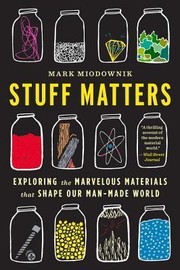
After Bryson, read Stuff Matters: ten chapters on the materials visible in one photograph of the author on a roof terrace — steel, paper, concrete, chocolate. It is the best short demonstration that good science writing is mostly about choosing the right frame. Then Entangled Life, on fungi and the argument that they force a rethink of what an individual organism even is. It pushes furthest past settled textbook material, so it benefits from the grounding the first two give you.
The big argument books
These three are making a case rather than surveying a field, and the skill to practise here is separating the evidence from the thesis.
Invisible Women stacks hundreds of small studies — crash-test dummies, phone sizes, drug trials, snow-clearing routes — into a single claim about a male default in design. Read it first in this group because the method is completely transparent. Guns, Germs, and Steel is the prize's most famous winner and by now its most criticised: historians and geographers have spent two decades disputing how much geography explains, and Jared Diamond has spent them replying. Read it as the strongest statement of a position that is genuinely contested, not as a settled account. The Invention of Nature recovers Alexander von Humboldt, who invented the idea of nature as a connected web and whom almost nobody in the English-speaking world now reads.
Real science, carefully explained
The age of wonder, by Richard Holmes — the catalogue files him surname-first — covers Herschel, Banks, Davy and the Romantic generation who made science a public adventure, and it supplies the historical context the next three books assume. Life Ascending is a real step up in density: ten inventions of evolution with the biochemistry left in rather than waved at. The Emperor of All Maladies is a biography of cancer written by an oncologist who keeps returning to his own patients, and the best book here on how medical evidence is actually built and overturned. It is history and explanation, not clinical guidance; nothing in it substitutes for a doctor.
Testosterone rex, published as Testosterone Rex, dismantles the claim that testosterone explains the difference between men's and women's behaviour. This one is contested — several behavioural endocrinologists argue Cordelia Fine overstates the case — so read it as the sharpest available statement of one side and let the disagreement stand.
The hard end of the shelf
The Information runs from talking drums to Shannon's theory to the genome as a message; read it first here, because information theory is the language the other two keep reaching for. The Elegant Universe is the clearest popular account of the problem string theory was invented to solve, though it is worth knowing that string theory's standing has weakened considerably since it won. Then The Emperor's New Mind, which shows exactly how far a general-audience prize is prepared to go.
Follow the full ordered path here: The Royal Society Science Book Prize: The Best Popular Science Books, in Order.