The Regeneration Trilogy Reading Order and Guide
This curriculum guides an intermediate reader through Pat Barker's Regeneration Trilogy in sequence, first grounding you in the historical and literary context of World War I, then reading the three novels in order, and finally deepening your understanding through critical and comparative works. Each stage builds the vocabulary, emotional register, and historical intuition needed to fully absorb the next.
Historical & Literary Foundations
IntermediateBuild a solid understanding of World War I's human cost, the trench experience, and the literary tradition Barker is writing within and against — so the trilogy's references, traumas, and tensions feel grounded rather than abstract.
▸ Study plan for this stage
Pace: 8–10 weeks total, reading roughly 20–25 pages per day. Suggested pacing: Weeks 1–3 for "Good-Bye to All That" (~350 pp., ~15–18 pp./day with journaling time); Weeks 4–6 for "Undertones of War" (~250 pp., ~12–15 pp./day — slower pace rewards close reading of Blunden's prose); Weeks 7–10 for "Wilfred
- The memoir as unreliable testimony: Graves openly rewrites, exaggerates, and performs in 'Good-Bye to All That' — understanding his self-mythologizing is essential to reading any WWI first-person account critically.
- The texture of trench life: rations, rotation, mud, gas, lice, 'going over the top,' and the psychological numbing that made survival possible — rendered concretely in both Graves and Blunden.
- Pastoral elegy as a WWI literary mode: Blunden's 'Undertones of War' uses the English countryside as a moral counterweight to industrial slaughter, establishing a tension between beauty and destruction that runs through all WWI literature.
- Shell shock and psychological trauma before clinical language existed: both memoirists describe breakdowns, neurasthenia, and emotional dissociation in ways that anticipate but predate the vocabulary Barker will use through Rivers and Sassoon.
- The officer class and its contradictions: loyalty to men vs. loyalty to the war, the guilt of survival, the absurdity of military hierarchy — Graves and Blunden both inhabit and critique this position.
- Wilfred Owen's poetic development as a case study in trauma and craft: Hibberd traces how Owen moved from Keatsian romanticism to the dissonant half-rhymes and pity-centered ethics of 'Dulce et Decorum Est' and 'Strange Meeting', showing that great war poetry was made, not simply suffered into exist
- The literary community of the war: Graves, Sassoon, and Owen knew each other — Hibberd's biography reveals the Craiglockhart encounter and Sassoon's mentorship of Owen as a historical event Barker will dramatize directly.
- Writing against the tradition: understanding what Brooke's idealism, Kipling's jingoism, and the 'old lie' looked like allows the reader to feel the force of Owen's and Blunden's counter-narratives — and later, Barker's counter-narrative to all of them.
- How does Graves use humor, irony, and selective memory in 'Good-Bye to All That' to construct a public persona, and why does this make the memoir both vivid and untrustworthy as historical record?
- What specific literary and rhetorical strategies does Blunden use in 'Undertones of War' to hold pastoral beauty and industrial horror in the same frame — and what emotional effect does that tension produce?
- Based on Hibberd's biography, what were the key biographical and literary turning points that transformed Owen from a conventional Romantic imitator into the poet of 'Dulce et Decorum Est'?
- How do Graves and Blunden each represent shell shock, emotional breakdown, or psychological damage — and how does their language for it differ from what a modern reader might expect?
- What does the historical Craiglockhart encounter between Sassoon and Owen, as reconstructed by Hibberd, tell us about the relationship between mentorship, class, and poetic voice in WWI literature?
- Across all three books, what picture emerges of the gap between the experience of the men in the trenches and the understanding of those at home — and how do the authors try to bridge or condemn that gap?
- **Comparative voice journal:** After finishing each book, write one page in the first person as if you are that author — imitating Graves's sardonic bravado, Blunden's elegiac precision, or Owen's anguished directness. Then write a paragraph analyzing what choices you made. This forces active attention to style, not just content.
- **Annotated poem pairings:** For each Owen poem Hibberd discusses in depth (e.g., 'Dulce et Decorum Est,' 'Anthem for Doomed Youth,' 'Strange Meeting'), find the full text and annotate it alongside the relevant pages of the biography. Mark where Hibberd's biographical context changes your reading of a specific image or line.
- **Shell shock vocabulary audit:** As you read Graves and Blunden, keep a running list of every word or phrase either author uses to describe psychological breakdown, fear, or emotional numbness (e.g., 'nerves gone,' 'neurasthenia,' 'jumpy'). At the end, analyze what the absence of clinical language reveals about how trauma was understood and communicated in 1914–1918.
- **Scene reconstruction:** Choose one episode from 'Good-Bye to All That' and one from 'Undertones of War' that describe the same type of event (e.g., a bombardment, a death of a comrade, relief from the line). Write a 300-word comparison of how each author renders the scene — what each includes, omits, and feels. This directly trains the close-reading muscle you'll need for Barker.
- **Timeline of the literary community:** Using details from all three books, build a simple timeline (a hand-drawn chart works well) mapping the key meetings, publications, and hospitalizations of Graves, Blunden, Sassoon, and Owen between 1914 and 1918. Note where their paths cross. This makes Barker's fictional world feel like a real social network rather than isolated characters.
- **'Old Lie' vs. counter-narrative essay:** Write a 400–500 word informal essay answering: 'What was the dominant public narrative about the war that these three authors were writing against, and what literary tools did each use to resist it?' This synthesizes all three books and primes you to ask the same question of Barker.
Next up: Having absorbed the lived texture of the trenches, the psychological vocabulary of trauma, and the literary relationships among Graves, Sassoon, and Owen as real historical figures, the reader is now equipped to enter the Regeneration Trilogy itself — recognizing Barker's characters not as inventions but as deliberate reimaginings of people and experiences already encountered on the page.
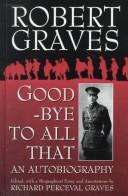
Graves is a real character in the Regeneration Trilogy; reading his own memoir first makes his fictional portrayal vivid and lets you see how Barker reimagines him. It also immerses you in the soldier's voice and the psychological toll of the Western Front.

Another firsthand officer's memoir that captures the pastoral-versus-war tension central to the period's poetry and prose. It deepens your feel for the emotional landscape Barker's characters inhabit.
Owen is the trilogy's most important real-life figure; this authoritative biography gives you his actual life, his time at Craiglockhart, and his relationship with Siegfried Sassoon — the exact historical core of Regeneration.
The Regeneration Trilogy — Read in Sequence
IntermediateExperience Barker's three novels in the order she wrote and intended them, following the psychological, moral, and historical arc from Craiglockhart in 1917 to the Armistice in 1918.
▸ Study plan for this stage
Pace: 10–12 weeks total, reading all three novels in sequence: Weeks 1–3 for Regeneration (~30 pages/day, ~250 pages); Weeks 4–6 for The Eye in the Door (~28 pages/day, ~280 pages); Weeks 7–10 for The Ghost Road (~25 pages/day, ~280 pages); Weeks 11–12 reserved for review, re-reading key passages, and com
- Shell shock, trauma, and the birth of modern psychiatry — Regeneration centers on W.H.R. Rivers's talking-cure sessions at Craiglockhart, dramatizing how psychological suffering was newly legitimized during WWI.
- The paradox of healing for war: Rivers's therapeutic goal of restoring men to combat-readiness forces both him and the reader to question whether 'curing' soldiers is an ethical act or a form of complicity.
- Dissociation and the divided self — The Eye in the Door deepens the trilogy's psychology through Billy Prior's dissociative episodes, showing trauma not as a single wound but as a fracturing of identity across class, sexuality, and loyalty.
- Surveillance, the state, and persecution — The Eye in the Door explores how wartime Britain policed dissent, homosexuality, and pacifism through the lens of the Pemberton Billing trial and Prior's work as an intelligence officer.
- The interweaving of historical and fictional characters — Barker places real figures (Siegfried Sassoon, Wilfred Owen, W.H.R. Rivers, Henry Head) alongside invented ones (Prior, Sarah Lumb), blurring the boundary between documented history and imaginative reconstruction.
- Rivers's anthropological memory and the Melanesian frame — The Ghost Road counterpoints the Western Front with Rivers's pre-war fieldwork among the Erer Gaua of Melanesia, using the dying headhunter Njiru to interrogate Western civilization's own rituals of sanctioned killing.
- The moral and narrative arc toward the Armistice — The Ghost Road moves the trilogy to its close in November 1918, with Prior's death on the Sambre–Oise Canal days before the ceasefire, forcing a reckoning with futility, sacrifice, and historical irony.
- Masculinity, class, and sexuality as sites of wartime tension — Across all three novels, Prior's working-class origins, bisexuality, and aggression make him the trilogy's most destabilizing figure, exposing the contradictions in British society that the war both concealed and intensified.
- In Regeneration, how does Rivers's therapeutic relationship with Sassoon evolve, and in what ways does treating his patients begin to change Rivers's own views on the war and his role in it?
- The Eye in the Door introduces Billy Prior's dissociative alter ego — how does Barker use this psychological device to explore the contradictions of loyalty, class identity, and state power in wartime Britain?
- How does Barker use the Pemberton Billing trial and the surveillance subplot in The Eye in the Door to argue that the home front was itself a kind of battlefield, with its own casualties?
- In The Ghost Road, what is the structural and thematic function of Rivers's memories of Melanesia and his relationship with Njiru? How do the Melanesian chapters reframe the meaning of the Western Front chapters?
- Prior dies on 4 November 1918, one week before the Armistice. How does the timing of his death, and the final image of the trilogy, shape Barker's overall argument about the war's meaning and legacy?
- Trace the character of Siegfried Sassoon across all three novels: how does his presence shift from central (Regeneration) to peripheral (The Eye in the Door and The Ghost Road), and what does that structural choice reveal about Barker's thematic priorities?
- Trauma journal: After finishing each novel, write a one-page entry from the perspective of W.H.R. Rivers reflecting on his most ethically difficult moment in that book — use the first person and draw directly on scenes in the text to ground the voice.
- Historical annotation: Identify five real historical figures or events referenced in the trilogy (e.g., Sassoon's 'Soldier's Declaration,' the Pemberton Billing trial, the Sambre–Oise Canal offensive) and research each briefly; write a short note on how Barker adapts or fictionalizes the historical record.
- Parallel passage analysis: Find one scene in Regeneration and one in The Ghost Road that deal with the same theme (e.g., a soldier's nightmare, a therapy session, a moment of dissociation) and write a 400-word comparative close reading showing how Barker's treatment of the theme evolves across the trilogy.
- Character arc map: Create a visual timeline or diagram tracking Billy Prior across all three novels — mark key turning points in his psychology, his relationships (Sarah, Rivers, Manning), and his sense of identity, noting which novel each event belongs to.
- Ethical debate: Write a structured 300-word argument for and against Rivers's decision to return his patients to active duty, drawing evidence from specific scenes in Regeneration and The Ghost Road; then write two sentences stating your own position.
- Reading log with thematic tags: As you read The Ghost Road, keep a running log of every scene set in Melanesia alongside every scene set on the Western Front, tagging each with 2–3 thematic keywords; at the end, review the log and write a paragraph on the pattern you notice.
Next up: Having experienced the full emotional and historical arc of the trilogy — from Craiglockhart's talking cure to Prior's death on the eve of the Armistice — the reader is now equipped to step back and engage with Barker's craft, sources, and critical reception at a deeper analytical level.
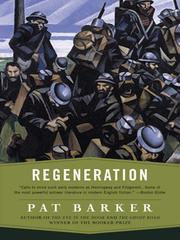
The first novel introduces Dr. W. H. R. Rivers, Siegfried Sassoon, and Billy Prior at Craiglockhart War Hospital, establishing the trilogy's central tension between duty, trauma, and conscience. Start here — everything else builds from it.

The second novel shifts focus to Billy Prior navigating the home front, surveillance, and fractured identity. Reading it immediately after Regeneration lets you track Prior's psychological deterioration and the widening social canvas Barker introduces.
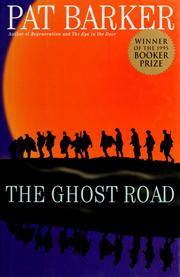
The Booker Prize-winning conclusion interweaves Rivers's anthropological memories with Prior's return to the Front. It pays off every thread laid in the first two novels and must be read last to land its devastating final pages.
Poetry of the Trenches — The Voices Behind the Fiction
IntermediateRead the actual war poetry of Sassoon and Owen that Barker quotes and alludes to throughout the trilogy, so you can hear the real voices beneath her fictional ones and appreciate her intertextual craft.
▸ Study plan for this stage
Pace: 3–4 weeks total: Week 1 — read Sassoon's "The War Poems" in full (~20–25 poems per sitting, 2–3 sittings); Week 2 — read Owen's "Poems" in full (~15–20 poems per sitting, 2–3 sittings); Weeks 3–4 — re-read selected poems from both collections slowly and comparatively, ~5–8 poems per session with ann
- Sassoon's satirical voice: his use of bitter irony, colloquial speech, and direct address to skewer civilian complacency and military incompetence
- Owen's elegiac and empathetic voice: his use of half-rhyme (pararhyme), sensory horror, and pity as a moral stance, most fully articulated in his preface ('My subject is War, and the pity of War')
- Trench realism vs. pastoral elegy: how both poets reject Romantic glorification of war while doing so through very different tonal registers — Sassoon's rage vs. Owen's grief
- Intertextuality with Barker's trilogy: recognizing specific poems (e.g., Sassoon's 'Suicide in the Trenches,' 'Base Details,' 'Does It Matter?'; Owen's 'Dulce et Decorum Est,' 'Anthem for Doomed Youth,' 'Disabled') as source material for scenes, characters, and themes in the fiction
- The therapeutic and political function of poetry: how writing and sharing these poems functions as trauma processing — directly mirroring the shell-shock treatment debates in Barker's narrative
- Shell shock and the body in verse: how both poets render psychological and physical breakdown in language — the stammers, nightmares, and dissociation that Barker fictionalizes
- The poet-soldier identity: the tension both men lived between duty to their regiment and duty to bear witness against the war, a tension Barker dramatizes through her fictional Sassoon and Prior
- Poetic craft as resistance: how formal choices (disrupted meter, ugly diction, anti-heroic imagery) are themselves acts of protest against official war rhetoric
- How does Sassoon's satirical method in poems like 'Base Details' and 'Does It Matter?' differ from Owen's empathetic method in 'Dulce et Decorum Est' and 'Anthem for Doomed Youth,' and what does each approach imply about the poet's relationship to his audience?
- Owen famously wrote that 'the Poetry is in the pity' — after reading his 'Poems,' what does this mean in practice? Identify at least three specific poems that enact this principle and explain how.
- Which poems in Sassoon's 'The War Poems' can you directly connect to scenes, dialogue, or character attitudes in Barker's trilogy, and what does Barker add, change, or complicate in her fictional rendering?
- How do both poets use the human body — wounded, gassed, shell-shocked, dead — as their primary poetic subject, and how does this corporeal focus relate to the medical and psychological themes Barker explores?
- What is the effect of Sassoon's choice to use rhyme and regular meter even in his most savage poems? Does formal control reinforce or undercut his satirical rage?
- How does Owen's use of pararhyme (e.g., 'groined/groaned,' 'nervous/novice') create a specific emotional effect, and how might Barker's prose style be seen as achieving something analogous?
- Create a 'poem-to-passage' map: go through the trilogy's key scenes (Sassoon's declaration, Prior's breakdowns, the hospital ward discussions) and find the specific poem from either collection that most directly illuminates each scene — write two or three sentences explaining the connection for each pairing.
- Choose one poem from Sassoon's 'The War Poems' and one from Owen's 'Poems' that deal with the same subject (e.g., a dying soldier, a home-front observer, a nightmare). Write a 400–500 word comparative close reading focusing on tone, diction, and form.
- Read Owen's 'Dulce et Decorum Est' and Sassoon's 'Suicide in the Trenches' aloud, recording yourself. Play them back and note where your voice naturally shifts — these are the poems' emotional pressure points. Annotate your text at those moments.
- Write a one-page 'poet's preface' as if you were either Sassoon or Owen, explaining why you wrote your war poems — then compare what you wrote to Owen's actual preface in 'Poems.' Where do you agree? Where does the real preface surprise you?
- Select any five poems from either collection and annotate them specifically for intertextual 'echoes' — moments where Barker seems to have borrowed an image, a phrase, a situation, or a moral dilemma. Compile these into a personal glossary of allusions.
- Draft a short (300-word) reflection on which poet's voice you find more present in Barker's narrative prose and why, using at least two quoted lines from the poems and two quoted passages from the trilogy to support your argument.
Next up: Having internalized the real poetic voices of Sassoon and Owen, the reader is now equipped to return to Barker's trilogy with a sharpened ear for how she translates, ventriloquizes, and transforms those voices into novelistic form — making the next stage's close reading of the fiction a genuinely intertextual experience rather than a surface one.
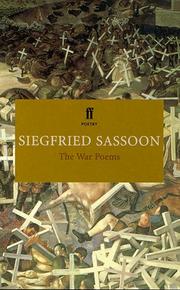
Sassoon's protest poems are quoted directly in Regeneration; reading the full collection after the trilogy reveals how faithfully and imaginatively Barker inhabits his voice and moral fury.
Owen's poems — 'Dulce et Decorum Est,' 'Strange Meeting,' 'Anthem for Doomed Youth' — are the emotional touchstones of the entire trilogy. Reading them now, knowing Owen's fictional and biographical story, transforms how they hit.
Critical Depth & Broader Context
ExpertEngage with scholarly and comparative perspectives on trauma, memory, shell shock, and the literary legacy of WWI to understand what makes the Regeneration Trilogy a landmark of late-20th-century fiction.
▸ Study plan for this stage
Pace: 6–8 weeks total: Weeks 1–4 cover "The Great War and Modern Memory" (~25–30 pages/day, reading in focused sittings of 45–60 minutes); Weeks 5–8 cover "Trauma and Recovery" (~20–25 pages/day, with slower, more analytical reading given its clinical and theoretical density). Allow one full review day pe
- Fussell's argument that WWI produced a fundamental ironic turn in modern literary consciousness, replacing heroic diction with bitter, disillusioned language
- The 'versus' habit of mind: Fussell's analysis of how soldiers constructed meaning through binary oppositions (us/them, front/home, light/dark) — directly mirrored in Barker's characterization of officers vs. enlisted men and Sassoon vs. Rivers
- The role of literary tradition (Romantic poetry, pastoral elegy) in shaping how WWI was experienced and remembered, and how Barker both invokes and subverts those traditions
- Herman's three-stage model of trauma recovery: Safety, Remembrance & Mourning, and Reconnection — the clinical scaffold underlying Rivers's therapeutic method in the trilogy
- Herman's concept of 'captivity' and its relationship to military service: the soldier as a person stripped of autonomy, unable to flee, subject to repeated traumatic exposure
- Traumatic memory as distinct from ordinary memory: intrusive, sensory, non-narrative, and resistant to integration — the theoretical basis for the nightmares, hallucinations, and mutism depicted in the trilogy
- The politics of testimony: Herman's argument that acknowledging trauma is always a political act, connecting shell-shock diagnosis to questions of class, authority, and the legitimacy of the war itself
- The intersection of gender and trauma: how both Fussell and Herman illuminate why shell shock was coded as 'feminine weakness' in a militarized masculine culture, and how Barker's characters negotiate this stigma
- According to Fussell, how did WWI transform the English literary imagination, and can you identify at least three specific techniques or tropes from the Regeneration Trilogy that reflect the ironic mode he describes?
- How does Fussell's analysis of the pastoral tradition and the 'versus' habit of mind help explain the tension between Craiglockhart's genteel setting and the horror its patients carry inside them?
- Using Herman's three-stage recovery model, map Prior's, Sassoon's, and Burns's arcs across the trilogy — which characters complete the stages, which stall, and why?
- Herman argues that trauma survivors require a witness who believes their account in order to begin healing. How does Rivers function as this witness, and what are the costs to him of occupying that role?
- Both Fussell and Herman deal with the problem of language failing in the face of extreme experience. How do their respective arguments illuminate the mutism, stammering, and poetic expression found throughout the trilogy?
- Herman frames recovery as inherently political. How does this lens reframe the ethical dilemma at the heart of the trilogy — curing men so they can be sent back to the front?
- Annotation dialogue: As you read Fussell, keep a running margin glossary of the literary devices and cultural myths he identifies (pastoral, elegy, irony, the 'versus' structure). After finishing the trilogy, return to this glossary and annotate each entry with a specific scene or passage from Barker that illustrates, complicates, or subverts it.
- Trauma stage mapping: Create a three-column chart (Safety / Remembrance & Mourning / Reconnection) using Herman's framework. Plot every significant therapeutic scene from the trilogy into the appropriate column, noting which stage is reached and which is blocked — then write a one-paragraph analysis of the pattern you observe.
- Comparative close reading: Choose one nightmare or hallucination scene from the trilogy and one soldier's account quoted in Fussell. Write a 400–600 word comparison analyzing how traumatic memory is rendered in each, using Herman's vocabulary (intrusion, constriction, hyperarousal) as your analytical toolkit.
- The politics of diagnosis essay: Drawing on Herman's chapter on captivity and Fussell's discussion of the soldier's relationship to authority, write a 500-word argumentative response to this question: 'Is Rivers healing his patients or serving the war machine?' Use evidence from both non-fiction texts to support your position.
- Ironic diction exercise: Fussell catalogs the euphemistic and ironic language that emerged from WWI. Compile a list of 10–15 moments in the trilogy where Barker uses irony, understatement, or euphemism in dialogue or narration. For each, write one sentence explaining what the irony conceals or reveals about trauma and class.
- Reading journal synthesis: At the end of each book, write a one-page 'letter' from that book's central argument to the Regeneration Trilogy — what would Fussell say to Barker? What would Herman? Then write Barker's imagined reply. This exercise forces active synthesis rather than passive absorption.
Next up: By grounding the trilogy in Fussell's literary-historical framework and Herman's clinical theory of trauma, the reader has now built the analytical vocabulary needed to engage with primary source memoirs, poetry, and comparative WWI fiction — the natural next frontier for deepening their understanding of the period and Barker's place within it.

The definitive cultural study of how WWI shaped literary language, irony, and myth. Barker is in direct conversation with Fussell's arguments; reading this reveals the intellectual tradition she both honors and challenges.
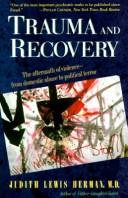
Rivers's therapeutic methods in the trilogy are rooted in real trauma psychology; Herman's landmark clinical work illuminates the theory behind his practice and gives the novels a powerful psychological framework.
Discussion
Keep reading
Paths that share books, cover the same subject, or open a related topic.