Robert Graves books in order: where to start with I, Claudius
Graves thought of himself as a poet who wrote prose to pay for the poetry, which is an inconvenient fact for a reading path built around I, Claudius. This one starts where almost everyone does — the two Claudius novels, in the order they must be read — then puts the First World War memoir immediately after, because Goodbye to All That is the experience the historical fiction keeps circling. Later stages cover the other historical novels, the mythographic work that made him famous and infuriated classicists, and finally the poetry he actually cared about.
Start here: the Claudius novels
IntermediateRead the pair as one book, which is what they are.
▸ Study plan for this stage
Pace: 894 pages for the pair — I, Claudius 427 and Claudius the god and his wife Messalina 467 — and about a month at a book a fortnight. Read them as one work, because that is what they are: Graves wrote a single story and the publisher split it, so stopping after the first volume leaves the tragedy unpa
- The secret-memoir device: an unreliable narrator who claims to be the only honest man in the room
- Dryness as a technique — atrocity reported flatly, so the reader supplies the horror
- Claudius as fool, survivor and historian, and how the three roles are the same survival strategy
- The historical-fiction voice this pair effectively invented, and how much later fiction is downstream of it
- A two-volume work split by publication, with the reign and its collapse held in the second half
- Graves's sources visible through the prose, which is the reason the last stage puts Suetonius on the path
- How does Claudius's narration make itself trustworthy while telling you it is partial?
- Where does the comedy stop working as comedy, and is that a controlled change?
- What does the second volume do that the first sets up but cannot deliver?
- How much of Claudius's stupidity is real and how much is performance? Point to evidence for both.
- What in this pair became the standard equipment of historical fiction afterwards?
- Mark three passages where a killing is reported in a single clause and note what the brevity does.
- Keep a list of the claims Claudius makes about his own motives, and check them against what he actually does.
- Note where the narrator addresses posterity directly; the frame is doing more work than it advertises.
- Before the next stage, write down what kind of man you think wrote this book. Goodbye to All That answers in the first person.
Next up: The disgust with authority that drives Claudius's narration is stated openly in the war memoir, which is why it comes next rather than later.
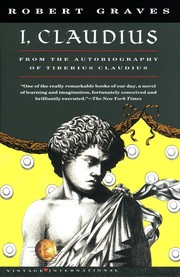
The 1934 novel that invented the modern historical-fiction voice: an emperor's secret autobiography, dry, gossipy and merciless. Start here without hesitation.
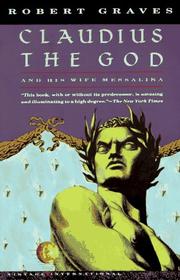
The direct continuation, covering Claudius's reign and Messalina; our record carries the full published title, Claudius the God and His Wife Messalina. Graves wrote the two as a single work and the second half is where the tragedy lands.
The war memoir behind everything
IntermediateRead the autobiography that Graves wrote to fund his exile, which is also one of the essential books about the First World War.
▸ Study plan for this stage
Pace: One book, 347 pages, and about a week — the shortest stage on the path and the one that most changes how everything around it reads. Read it directly after the Claudius novels rather than at the end. It moves from a school childhood to the trenches to a deliberate severing of every English tie after
- A memoir written to fund an exile, which shapes what it is willing to say
- The English public school and the regiment presented as the same institution with different uniforms
- Contempt for authority stated in the first person, and the same contempt working silently through the Claudius novels
- Revision by the author over decades, so the book has more than one text
- A primary account whose disputed points are part of its history rather than a reason to discount it
- The severance — 'goodbye to all that' as a programme, not a mood
- What exactly is Graves saying goodbye to, and how complete is the break he describes?
- How does the school material prepare the trench material structurally?
- Where can you see the book being written for an audience, and does that damage it?
- What does the memoir explain about the narrator of I, Claudius?
- How should a reader hold a disputed first-person account — as evidence of events, or of a point of view?
- Mark the transition from school to army and note how little the prose has to change.
- List three episodes that would be checkable against another account, and say what you would want to check them against.
- Write one paragraph connecting a specific attitude in the memoir to a specific scene in the Claudius novels.
- Note which chapters read as reportage and which as settling scores; the mixture is the book.
Next up: With the temperament established, the other historical novels show the same method applied to periods that gave Graves far less to lean on.
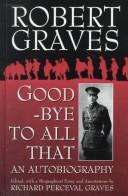
The 1929 memoir of a Charterhouse childhood, the trenches, and the deliberate severing of every English tie afterwards. Read it directly after the Claudius books: the disgust with authority that animates them is stated here in the first person. Our record uses the hyphenated Good-Bye to All That.
The other historical novels
IntermediateRead the historical fiction beyond Rome, where Graves ranges from Byzantium to the American Revolution.
▸ Study plan for this stage
Pace: The heaviest stage on the path: 2,011 pages across five — Count Belisarius 527, The golden fleece 464, King Jesus 424, Homer's daughter 244, Sergeant Lamb of the Ninth 352. Two to three months at one a fortnight. Read Count Belisarius first; it is the nearest thing to a third Claudius novel and the
- The servant-narrator, reused from Claudius, watching a great man from inside the household
- Graves's matriarchal-religion thesis running underneath the fiction, most visibly in The golden fleece and King Jesus
- Fiction as a vehicle for an argument the author could not make as scholarship
- Sergeant Lamb built from real memoirs, showing Graves working entirely without myth
- Homer's daughter as a playful counterfactual about authorship, and how lightly it wears its scholarship
- Retitled editions and duplicate records as a practical hazard across this bibliography
- What does Count Belisarius gain from being narrated by a household slave rather than by the general?
- Where in The golden fleece can you see the thesis directing the retelling?
- What is King Jesus arguing, and what would have to be true for the argument to hold?
- How does Sergeant Lamb differ in texture from the myth-driven books, and which is Graves better at?
- Is Homer's daughter a serious proposition about the Odyssey or a joke made at length?
- In Count Belisarius, mark every judgement the narrator makes about his master and see how the pattern shifts across 527 pages.
- List the points in The golden fleece where the retelling departs from the familiar version, and check each against the thesis.
- Read the first thirty pages of Sergeant Lamb and the first thirty of King Jesus and describe the two completely different relationships to evidence.
- Confirm which title your copy of The golden fleece carries before ordering anything else in this stage.
Next up: The thesis has been running under the fiction for 2,011 pages; the nonfiction is where Graves states it outright and asks to be believed.
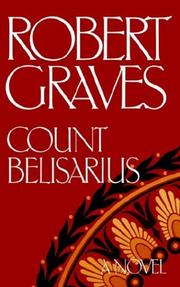
Justinian's general narrated by a household slave. The nearest thing to a third Claudius novel and the best of the non-Roman historicals.

The Argonauts, retold with Graves's matriarchal-religion thesis running underneath. Published in the United States as Hercules, My Shipmate, and two separate records exist — buy one.
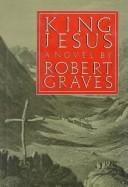
A historical novel of Jesus as a legitimate royal claimant, built on the same mythographic reading as The White Goddess. The most provocative book he wrote and still genuinely startling.
The Odyssey reimagined as the work of a Sicilian princess. Short, playful, and the most approachable of the later novels.
An Irish sergeant in the American Revolution, researched from real memoirs. Graves working entirely outside myth and doing it well.
Graves the mythographer
IntermediateRead the nonfiction that made him a cult figure and a scandal in classics departments.
▸ Study plan for this stage
Pace: Two lengths recorded and one not: The Greek myths 416 pages and The white goddess 511, with no page count held for The Twelve Caesars, Graves's translation of Suetonius. Note that our Greek myths record is one volume of a two-volume set, so the complete work runs longer than 416 pages. Six weeks, an
- A reference book that is also a polemic, and the discipline of using one without adopting the other
- The single-goddess thesis as the key to the whole later career, fiction included
- Poetic argument versus evidentiary argument — The white goddess is the former and says so
- A translation as a window on a novelist's method: Suetonius beside I, Claudius
- Why generations read Graves's retellings before the primary sources, and what that did to popular knowledge of Greek myth
- Reading an advocate honestly: taking the material and declining the conclusions
- Which parts of The Greek myths are retelling and which are interpretation? Can you always tell?
- What is the argument of The white goddess, stated in three sentences without using Graves's own vocabulary?
- What kind of evidence would count against the thesis, and does the book allow for any?
- Reading Suetonius after the novels, which of Claudius's most memorable scenes turn out to be Graves's invention?
- Does knowing the commentary is contested change how useful the retellings are?
- Take one myth from The Greek myths, read the retelling and then the commentary, and mark the exact sentence where interpretation begins.
- Read the Claudius chapters of Suetonius and list three episodes Graves dramatised and one he invented outright.
- Summarise The white goddess's central claim in your own words and then find the passage you think is its weakest support.
- Check one of Graves's mythological interpretations against a modern reference and note the difference without resolving it.
Next up: With the theory stated in his own voice, the poetry can be read as what Graves thought all the prose was in service of.
The two-volume retelling with commentary that generations read before the primary sources. Indispensable as a reference and unreliable as scholarship — the interpretations are Graves's own theory, not consensus, and you should read it knowing that.
His grammar of poetic myth: a single lunar goddess behind all true poetry, argued through Welsh and Irish material. Not a book of evidence, and one of the strangest important books of the century. Our record carries a wrong publication year; it is from 1948.

Graves's translation of Suetonius, and the source he mined for the Claudius novels. Reading it after them shows exactly how much of I, Claudius is invention.
The poet, and the social historian
IntermediateFinish with the work Graves would have wanted you to read first.
▸ Study plan for this stage
Pace: 1,697 pages across three, but the shape is unusual: Complete poems is 944 pages and is not a book to read front to back — read fifteen or twenty poems a sitting, and start with the later love poems rather than the early work, which Graves himself pruned hard. The long week-end at 472 pages is a soci
- A poet who wrote prose to pay for the poetry, which reverses the usual order of importance in this bibliography
- Lifelong revision and pruning: the Complete poems is a curated body of work, not an archive
- The love poems as the reason poets still read Graves, and their relation to the goddess thesis
- Popular social history as a genuine third mode, collaborative and unmythological
- Seven days in New Crete as the thesis made explicit in fiction, and what a satire concedes
- Fourteen books across five modes, and the question of whether one writer is visible in all of them
- What connects the love poems to the argument of The white goddess, and is the connection a strength of the poems?
- How does The long week-end's tone differ from everything else here, and what does the collaboration contribute?
- What does Seven days in New Crete concede about the goddess thesis by satirising it?
- Having read the poetry, do you accept Graves's own ranking of his work over his readers'?
- Across all fourteen books, is there one Robert Graves? Name the three titles that make your case.
- Read twenty of the later poems in one sitting and mark the recurring figure; then reread one paragraph of The white goddess and see whether it explains anything.
- Take one year covered by The long week-end and compare its account with a standard reference; note where the book is being funny rather than careful.
- Write a one-page argument for reading Graves as a poet who wrote novels, using only evidence from this stage.
- Choose the four books from the whole path you would keep and state which of Graves's five modes you are discarding.
Next up: This path covers fourteen books across five modes; anything further means the criticism and the later poetry collections rather than another novel.
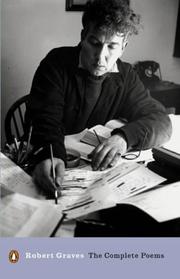
The poetry, which Graves revised and pruned his whole life. Start with the love poems of the 1950s and 1960s; they are the reason poets still read him.

A social history of Britain between the wars, written with Alan Hodge. Journalistic, funny and a good corrective to the mythographer.

A satirical novel about a future matriarchal society, effectively The White Goddess as fiction. Minor, and the clearest possible statement of what he believed.
Discussion
Keep reading
Paths that share books, cover the same subject, or open a related topic.