Domestic Violence: The Best Books on Coercive Control and Why It Persists, in Order
This path is for understanding intimate-partner violence as a sustained pattern of control rather than a sequence of assaults, which is the shift that reorganised research, policing and law over the last two decades. It moves from reported journalism to the clinical and sociological literature that reframed the field, then to lethality research and the law, and closes with first-person accounts and the trauma scholarship that explains their aftermath. It is a reading list for comprehension, not a safety-planning or intervention resource; anyone in danger should contact a domestic-violence service or emergency number rather than a bibliography.
The pattern, not the incident
BeginnerReplace the incident-by-incident picture of domestic violence with the pattern-of-control picture, using reported cases.
▸ Study plan for this stage
Pace: Four to five weeks, 784 pages. No Visible Bruises (Rachel Louise Snyder, 2019) is 320 pages and See What You Made Me Do (Jess Hill, 2019) is the longer at 464, and both are built from reported cases: they cover intimate-partner homicide, family annihilation, strangulation, and the deaths of children
- The reframing both books are built on: intimate-partner abuse as a sustained pattern of control, in which assaults are episodes rather than the phenomenon
- Snyder's reporting on danger assessment and fatality review teams — the institutional machinery built around predicting homicide
- Non-fatal strangulation as a specific and heavily weighted predictor of later killing
- Why 'why doesn't she leave' is the wrong question, and what both authors put in its place
- Hill's Australian frame and Snyder's American one: different legal systems, closely convergent findings
- Both authors are reporters advancing an argument, not neutral surveyors of the literature
- What is a domestic violence fatality review, and what did Snyder's reporting find that such reviews change?
- Which specific risk indicators do these books identify as predicting escalation to homicide, and where did those indicators come from?
- How does Hill account for perpetrator behaviour — what does she say abusers are seeking, and on whose research does she rely?
- What do both books say the criminal justice response typically measures, and why does that measurement miss the pattern?
- Where do Snyder and Hill differ in what they think would actually reduce the harm?
- Take one case Snyder follows from start to finish and list every institutional contact point in it — police, court, hospital, shelter, school — marking what each one saw and what each one recorded
- Write out the risk factors named in No Visible Bruises and check how many of them appear, under different names, in See What You Made Me Do; the overlap is the field's actual consensus
- Pick a chapter of Hill that discusses perpetrators and identify which claims are drawn from research and which from interview; the book moves between them and the distinction matters for the next stage
- After both books, write a paragraph defining domestic abuse without using the words 'violence', 'hit' or 'assault' — if it can be done, the reframing has landed
Next up: These two books deliver the pattern as reporting; the next stage supplies the technical vocabulary that the reporting is drawing on, from the person who built it.

Snyder reports the subject through specific American cases and the people who work them, and makes the central argument that these deaths are predictable and therefore preventable. The best single entry point because it earns its analysis through narrative rather than asserting it.

Hill's Australian investigation covers the same ground from a different legal system and pushes harder on the question of why perpetrators behave as they do. Read it second: it repeats enough to consolidate and differs enough to prevent one country's system from standing in for the whole subject.
The concept that reframed the field
IntermediateUnderstand coercive control as a technical concept, and what abusive behaviour looks like from the inside.
▸ Study plan for this stage
Pace: Seven weeks, 1,097 pages, and note that the three books are not the same kind of book. Coercive Control (Evan Stark, 2007) is a 458-page academic monograph by a forensic social worker and sociologist; it assumes some familiarity with feminist theory and with American case law, and it is the hardest
- Stark's core claim: that the harm is a liberty harm — the deprivation of autonomy, resources and movement — rather than an injury harm
- The three components Stark separates out: intimidation, isolation and control, and why he argues the last is both the most damaging and the least legible to law
- Micro-regulation of daily life — money, clothing, food, contact, time — as the mechanism, and why individual instances look trivial in a police report
- Bancroft's typology of abusive men and his central contention that the behaviour is driven by entitlement and belief rather than by anger or pathology
- Fontes's practical framing of the same material, including technology-facilitated monitoring, which post-dates Stark's book
- The evidentiary problem coercive control creates: a pattern offence in systems designed to charge incidents
- Bancroft is a programme practitioner writing from his own caseload, not a researcher reporting sampled data
- What exactly does Stark mean by coercive control, and how does his definition differ from the older 'battering' frame?
- Why does Stark argue that the injury model of domestic violence produced a legal response that could not work?
- What does Bancroft say is the function of an abuser's anger, and how does that cut against therapeutic explanations of abuse?
- Which forms of control does Fontes cover that Stark's 2007 book could not have anticipated?
- If coercive control is a pattern, what would a court need to be able to admit in evidence for it to be prosecutable?
- Build a two-column table of Stark's control tactics against Bancroft's descriptions of specific men, and see how many of Stark's abstract categories Bancroft supplies a case for
- Take Stark's distinction between intimidation, isolation and control and re-sort the tactics listed in Invisible Chains into those three buckets; the ones that resist sorting are worth arguing about
- Read Bancroft's chapter on abusers' explanations of their own behaviour and list each stated justification alongside what Bancroft says it is actually doing
- Write out one week of a controlled person's daily routine as the Fontes and Stark material would describe it, then note how many of those individual restrictions would constitute an offence on their own
Next up: Stark's reframing was a reaction to an earlier body of work, and the next stage reads that earlier work directly rather than through his summary of it.
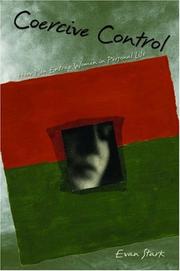
Stark's book is the one that moved the field from counting assaults to describing a liberty crime of surveillance, isolation, micro-regulation and deprivation. Dense and academic, and the source everything else in this path is arguing with.
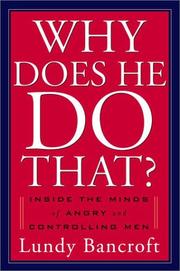
Bancroft ran perpetrator programmes for years and writes about the beliefs and entitlements that make abusers consistent rather than out of control. Read it after Stark so you see the individual psychology fitted into the structural account.
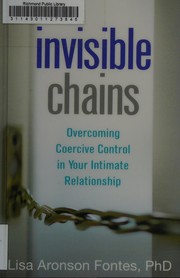
Fontes takes coercive control out of the academy and describes what the tactics look like day to day, including financial and technological control. The clearest bridge between Stark's theory and a recognisable relationship.
How the field got here
IntermediateTrace the research and the movement that made domestic violence a public problem rather than a private one.
▸ Study plan for this stage
Pace: Six weeks, 962 pages. The Battered Woman (Lenore E. Walker, 1979) is 270 pages and is a primary document of the field's founding rather than a current account — read it as history. Women, Violence and Social Change (R. Emerson Dobash, 1992) is a 380-page scholarly account of the battered women's mov
- Walker's cycle of violence and the learned helplessness model — enormously influential, later widely criticised, and the thing Stark was arguing against
- The battered women's movement as a movement: refuges, activism, and the transition from shelters run by survivors to services run by the state
- The Dobashes' account of what happened when the movement's demands were absorbed by police and courts
- Jones's argument that the vocabulary itself — 'domestic dispute', 'battered woman syndrome', 'family violence' — does political work
- Battered woman syndrome as a legal defence: its origin in Walker's work and the objections to it
- Why the historical sequence matters — each of these books is answering the one before it
- What is Walker's cycle of violence, on what evidence was it built, and what are the standard criticisms of both the cycle and learned helplessness?
- According to Women, Violence and Social Change, what did the battered women's movement gain and lose when the state took over service provision?
- What is Jones arguing against, specifically, and who is she arguing against?
- How did battered woman syndrome enter criminal defence, and why do later writers including Stark object to it?
- Reading these three in sequence, which of the field's current assumptions turn out to be forty years old and which are recent?
- Diagram Walker's cycle exactly as she presents it, then annotate the diagram with the specific objections Stark raises in the previous stage's reading
- From Women, Violence and Social Change, build a timeline of the movement's institutional milestones in Britain and the United States side by side and mark where they diverge
- Take five terms Jones attacks and, for each, write the plain-language phrase she would substitute and what the substitution changes
- Find a passage in Walker that would be written differently today and rewrite it in the coercive-control vocabulary from the previous stage; the parts that will not translate are the interesting ones
Next up: History established what the state was asked to do; the next stage examines what the homicide research now shows and how far criminal law has actually followed it.

Walker's 1979 book introduced the cycle-of-violence model and learned helplessness to a mass audience. Read it as the foundational text it is and as one the later work in this path substantially revises.
The Dobashes' study of how refuges, activism and criminal justice reform interacted across two countries. This is the institutional history that explains why systems respond the way they do.
Jones's polemic on how language, courts and media reframe men's violence as women's problem. Angry, precise, and the book that best explains why terminology in this field is fought over.
Lethality, law and the state's response
IntermediateLearn what the homicide research shows about escalation, and how criminal law has and has not absorbed it.
▸ Study plan for this stage
Pace: Six weeks, 948 pages, and this stage is the most technical. In Control (Jane Monckton-Smith, 2021) is the shortest at 256 pages, by a criminologist and former police officer, and sets out an eight-stage progression to homicide drawn from case-file analysis. When Men Murder Women (R. Emerson Dobash a
- Monckton Smith's eight-stage timeline from early relationship through escalation, a trigger, and change in thinking to the homicide itself
- Separation as the point of highest risk, and what that does to any advice premised on leaving
- The Dobashes' comparative method: what distinguishes men who kill intimate partners from men who kill other men, in their case-file data
- Stalking, coercive control and previous non-fatal strangulation as antecedents that appear in the case files rather than in the charge sheets
- Schneider's account of how feminist legal theory shaped and was constrained by American doctrine — self-defence, equal protection, privacy
- The gap between what homicide research identifies as predictive and what a legal system is structurally able to act on before the fact
- England and Wales criminalised controlling or coercive behaviour in 2015, which is the legislative backdrop to Monckton Smith's book
- What are the eight stages Monckton Smith identifies, and at which of them does she argue intervention is still possible?
- In the Dobashes' data, what actually distinguishes intimate-partner homicide from other homicide, and how confident is their sample?
- Why does separation raise rather than lower risk, and what does that imply about advice framed around leaving?
- What does Schneider say feminist lawmaking achieved in the United States, and where does she say the doctrinal structure defeated it?
- What would a legal system need to be able to prove for a pattern of control to be actionable before a serious assault occurs?
- Take a case described in No Visible Bruises from the first stage and map it against Monckton Smith's eight stages, noting which stages the reporting actually documents and which have to be inferred
- From When Men Murder Women, extract the specific comparative findings — offender histories, prior contact with services, weapon use — and write down which of them a police risk-assessment form would capture
- Read Schneider's treatment of self-defence doctrine and write out, in your own words, why the reasonable-person standard has caused the difficulty she describes
- List the risk factors named across all three books, mark which are observable by a third party and which only by the person at risk, and note what the split implies for who can act
Next up: The research and the law both look at this from outside; the final stage reads it from inside, and reads the trauma scholarship that explains what remains afterwards.

Monckton Smith's eight-stage homicide timeline is the most influential recent work on predicting escalation, built from case reviews of killings. The most directly consequential book here.

A systematic comparative study of intimate-partner homicide drawing on offender interviews and case files. Read it alongside Monckton Smith as the fuller research base behind the pattern she describes.

Schneider traces how battered-woman arguments entered American courts and what the law did to them on the way in. The book to read before forming an opinion on any proposed legal reform.
What it is like from inside, and what it leaves behind
IntermediateRead first-person accounts and the trauma scholarship that explains why leaving is neither simple nor the end of it.
▸ Study plan for this stage
Pace: Six weeks, 921 pages. Crazy Love (Leslie Morgan Steiner, 2009) is a 339-page memoir of an abusive marriage, written by the woman who lived it. In the Dream House (Carmen Maria Machado, 2019) is 280 pages, a memoir of abuse in a same-sex relationship told in short titled fragments that borrow differe
- The first-person account as primary source: Steiner and Machado are participants describing their own experience, not analysts of it
- Machado's specific intervention — that abuse in queer relationships was under-recorded and under-theorised, and her use of the archive as a structural device
- Herman's complex post-traumatic stress disorder: the distinct symptom picture produced by prolonged captivity or coercion rather than by a single event
- Herman's three-stage recovery model — safety, remembrance and mourning, reconnection — and why safety is first and not negotiable
- The correspondence between Herman's captivity literature and Stark's control literature, arrived at independently
- Why leaving marks the beginning of the aftermath rather than the end of the harm
- What does Steiner's account show about the sequence by which control was established, and how does it map onto Stark's categories from the second stage?
- Why does Machado structure In the Dream House as fragments in borrowed genres, and what does the form let her say that a linear memoir could not?
- What are the features of complex PTSD as Herman describes them, and how do they differ from a single-incident presentation?
- Herman draws on political imprisonment and hostage-taking alongside domestic abuse — what does that comparison establish, and what are its limits?
- Across this whole path, which of the two memoirs' experiences would have been visible to the institutions described in the fourth stage, and which would not?
- Read Crazy Love with Bancroft's typology from the second stage beside you and mark where the memoir confirms it, and where a real relationship does not fit the categories cleanly
- Pick five of Machado's fragment-genres and write one sentence each on why that particular form was chosen for that particular episode
- Map Herman's three recovery stages onto the closing sections of both memoirs and note where each author is, by their own account, at the end of the book
- Return to Stark's definition of coercive control from the second stage and test it against both memoirs line by line — record the parts of the lived accounts the definition does not reach
- Write a one-page summary of the whole path that a non-specialist could read, stating plainly what it explains and what, as a reading list, it cannot do for anyone in danger
Next up: This completes the path: the pattern, the concept, its history, the homicide and legal research, and the first-person and clinical accounts of what abuse leaves behind — comprehension only, with specialist support remaining the thing no bibliography replaces.

Steiner's memoir of a marriage that became violent, written by someone whose education and career made her feel exempt. Useful precisely because it dismantles the idea of a typical victim.

Machado's formally inventive memoir of an abusive relationship with another woman, and one of the few serious accounts of same-sex intimate-partner abuse. It also documents the archival silence around it.
Herman placed domestic abuse alongside captivity and combat as producing the same prolonged-trauma responses, which is why survivors' behaviour so often reads as inexplicable from outside. The clinical frame that closes the path.
Discussion
Keep reading
Paths that share books, cover the same subject, or open a related topic.