Understand trauma & how healing works
This curriculum moves from accessible, story-driven introductions to trauma's effects, through the leading scientific and therapeutic frameworks, and finally into advanced somatic and relational healing models. Each stage builds the vocabulary and emotional grounding needed for the next, so the reader arrives at the deeper science already fluent in the language of trauma and recovery.
First Light — What Trauma Is and How It Feels
BeginnerDevelop an intuitive, compassionate understanding of what trauma is, how it shapes everyday life, and that healing is genuinely possible — without yet needing clinical vocabulary.
▸ Study plan for this stage
Pace: 6–8 weeks total. Week 1–4: "The Deepest Well" (~20–25 pages/day, reading in sittings of 30–40 min). Week 5–8: "It Didn't Start With You" (~15–20 pages/day, with slower, more reflective reading due to the journaling exercises embedded in the text). Reserve one day per week as a rest/reflection day —
- Adverse Childhood Experiences (ACEs): Burke Harris introduces the landmark ACE Study and shows how specific categories of childhood adversity (abuse, neglect, household dysfunction) are dose-dependently linked to lifelong health outcomes — the higher the ACE score, the greater the risk.
- Toxic stress vs. normal stress: The book distinguishes between manageable stress responses and 'toxic stress' — chronic, unrelenting activation of the stress-response system that physically reshapes the developing brain and body.
- The body as a record-keeper: Burke Harris demonstrates through patient stories that trauma is not just a psychological event; it is written into biology — hormones, immune function, gene expression, and even organ health.
- Healing is possible and evidence-based: A central, hopeful thesis of 'The Deepest Well' is that identifying ACEs early and intervening with concrete supports (sleep, nutrition, mental health care, community) can measurably reverse harm.
- Inherited and ancestral trauma: Wolynn introduces the idea — grounded in epigenetics and family-systems research — that unresolved trauma can be transmitted across generations, showing up in descendants as fears, symptoms, or life patterns that feel inexplicably 'not mine'.
- The Core Language Approach: Wolynn's signature method teaches readers to listen carefully to their own words, images, and body sensations as clues pointing back to the original wound — often one that predates their own birth.
- Trauma as interrupted story: Both books frame trauma not as a permanent identity but as an unfinished biological or narrative process — something the system is still trying to complete, which is precisely why healing can happen.
- Compassion as a clinical and personal tool: Both authors model non-pathologizing language. Burke Harris treats patients as whole people shaped by circumstance; Wolynn invites readers to approach their symptoms with curiosity rather than shame.
- After reading 'The Deepest Well,' can you explain in plain language — as if to a friend — what an ACE score is, what it measures, and why Burke Harris argues it matters for physical health, not just mental health?
- Burke Harris describes the stress-response system as a 'smoke detector' that can get stuck in the 'on' position. What does this mean for a child growing up in a chronically unsafe environment, and what does it mean for that same person as an adult?
- Wolynn argues that we can carry trauma that did not originate in our own lifetime. What evidence — biological and psychological — does he offer for this claim, and does it change how you think about your own unexplained fears or patterns?
- What is the 'Core Language Approach' in 'It Didn't Start With You,' and how does Wolynn suggest using your own words and images as a diagnostic map to the source of suffering?
- Both books insist that healing is genuinely possible. What specific pathways or mechanisms of healing does each author point to, and what do those pathways have in common?
- How do the two books complement each other? Where does Burke Harris's focus on childhood biology end, and where does Wolynn's focus on inherited family patterns begin?
- ACE Inventory Reflection (Week 1–2): After reading Burke Harris's introduction of the ACE questionnaire, complete it privately and write a one-page, non-judgmental reflection — not to diagnose yourself, but to notice what feelings or resistances arise. There are no right answers; the goal is honest self-observation.
- Stress-Response Body Scan (Week 2–3): Twice a week, set a 5-minute timer and do a simple body scan: Where do you feel tension, numbness, or activation right now? Keep a brief log. After finishing 'The Deepest Well,' re-read your log and see if Burke Harris's descriptions of the stress-response system illuminate anything you noticed.
- Patient Story Mapping (Week 3–4): Choose two or three of Burke Harris's patient stories and draw a simple timeline for each: adverse event → biological/behavioral effect → adult outcome → intervention. This visual exercise makes the ACE-to-health pathway concrete and memorable.
- Family Sentence Completion (Week 5–6): Wolynn provides sentence stems (e.g., 'The most difficult thing I experienced was…'; 'What I fear most is…'). Work through at least one full set of his prompts in writing, then sit quietly with what surfaces. Do not try to analyze — just notice and record.
- Genogram Sketch (Week 6–7): Following Wolynn's guidance on family history, draw a simple three-generation family map. Mark any known losses, traumas, secrets, or early deaths. You do not need clinical detail — even rough knowledge is enough to begin seeing patterns Wolynn describes.
- Integration Letter (Week 8): Write a short, unsent letter to a younger version of yourself (or to an ancestor, if Wolynn's framework resonated more). Acknowledge what was hard, name what you now understand that you didn't before, and close with one sentence about what healing could look like. This synthesizes both books emotionally and prepares you for deeper clinical reading ahead.
Next up: By grounding you in the lived, felt reality of trauma — its biological roots in childhood (Burke Harris) and its reach across generations (Wolynn) — this stage builds the compassionate intuition and personal context you'll need to engage productively with more clinical and somatic frameworks in the next stage, without feeling overwhelmed or alienated by technical language.
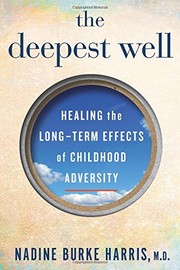
A warm, story-rich introduction to Adverse Childhood Experiences (ACEs) and their lifelong effects on health. Written for a general audience, it makes the science feel human and urgent without being overwhelming.

Gently introduces the idea that trauma can be inherited across generations, expanding the reader's frame before they dive into neuroscience. Its accessible tone and self-reflective exercises make it ideal early reading.
Foundations — The Mind and Body Under Trauma
BeginnerUnderstand the core neuroscience and psychology of trauma: how the brain and nervous system are hijacked, why talk therapy alone often falls short, and what the body remembers.
▸ Study plan for this stage
Pace: 8–10 weeks total. Weeks 1–6: "The Body Keeps the Score" (~25–30 pages/day, 4–5 days/week). Weeks 7–10: "Waking the Tiger" (~20–25 pages/day, 4–5 days/week — slower pace to allow somatic reflection after each session).
- The triune brain model (reptilian, limbic, neocortex) and how trauma disrupts communication between these layers, as detailed in 'The Body Keeps the Score'
- The role of the amygdala as a threat-detection alarm and how trauma keeps it in a state of chronic activation, causing hypervigilance and emotional flooding
- The Window of Tolerance: the optimal arousal zone for processing experience, and how trauma pushes survivors into hyperarousal (fight/flight) or hypoarousal (freeze/collapse)
- Why talk therapy alone is often insufficient: trauma is stored as sensory imprints and body memories, not as coherent verbal narratives — a central argument in van der Kolk's work
- Peter Levine's concept of 'thwarted survival responses': incomplete fight/flight/freeze cycles that become locked in the nervous system and generate ongoing trauma symptoms
- Titration and Pendulation (Levine): the therapeutic principle of approaching traumatic activation in small, manageable doses while oscillating between distress and safety/resource
- The role of the autonomic nervous system (sympathetic vs. parasympathetic branches) in trauma responses and the body's innate drive toward self-regulation and completion
- Trauma as an interruption of the organism's natural resilience — and the body's inherent capacity for healing when given the right conditions (Levine's core thesis in 'Waking the Tiger')
- According to van der Kolk, why do traumatized people often struggle to put their experiences into words, and what does this reveal about where trauma is stored in the brain?
- What is the 'Window of Tolerance,' and how do hyperarousal and hypoarousal each manifest in a trauma survivor's daily life and behavior?
- How does Levine's concept of 'thwarted survival responses' explain why a person can develop PTSD symptoms even long after a threatening event has passed?
- Both van der Kolk and Levine argue that the body is central to trauma and healing — what specific evidence or examples do each author use to support this claim?
- What does Levine mean by 'titration' and 'pendulation,' and why are these principles considered safer than directly re-exposing a person to traumatic memories?
- How do the two books complement each other — where does van der Kolk's neuroscientific framework connect with Levine's somatic and animal-behavior perspective?
- Body-scan journaling: After each reading session, spend 5–10 minutes scanning your body from head to toe and write down any sensations (tension, warmth, numbness, etc.) you notice. This builds the interoceptive awareness both authors identify as foundational to healing.
- Concept mapping: Draw a diagram linking the key brain structures van der Kolk describes (amygdala, prefrontal cortex, hippocampus, brain stem) with the symptoms he associates with each. Add Levine's autonomic nervous system concepts (sympathetic/parasympathetic) to the same map to see how the two frameworks integrate.
- Window of Tolerance self-assessment: Using van der Kolk's framework, keep a one-week log noting moments when you felt inside, above, or below your Window of Tolerance. Record the trigger, the physical sensation, and what (if anything) helped you return to baseline.
- Animal observation exercise (inspired by Levine): Watch a nature documentary or observe an animal (a pet works well) and note how it shakes, stretches, or orients itself after a stressful event. Write a short reflection connecting what you observe to Levine's theory of instinctual trauma completion.
- Comparative author analysis: After finishing both books, write a 1–2 page synthesis identifying (a) one major point of agreement, (b) one point of tension or difference in emphasis, and (c) one question neither book fully answers for you — to carry into the next stage.
- Grounding practice log: Practice one simple grounding technique from each book (e.g., van der Kolk's breath-awareness; Levine's 'felt sense' orientation to the present environment) for two weeks, logging what you notice in your nervous system before and after each session.
Next up: Having established how trauma is encoded in the brain and body, the next stage can now explore specific evidence-based therapeutic modalities — such as EMDR, Somatic Experiencing, and IFS — that directly address these neurobiological and somatic mechanisms identified by van der Kolk and Levine.
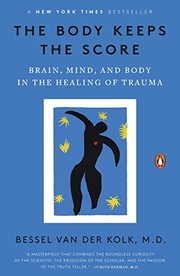
The definitive popular account of how trauma is stored in the body and brain. Reading it after Stage 1 means the reader already has emotional context, making the neuroscience land more deeply.

Introduces Somatic Experiencing — the idea that trauma is a physiological event that can be resolved through the body. Pairs perfectly with van der Kolk by offering a concrete healing model alongside the science.
Going Deeper — Attachment, Self, and Complex Trauma
IntermediateUnderstand how early relational trauma shapes identity, attachment patterns, and the inner world — and begin exploring evidence-based therapies designed for complex and developmental trauma.
▸ Study plan for this stage
Pace: 10–12 weeks total, reading ~25–35 pages per day, 5 days a week. Week 1–4: "Trauma and Recovery" (Herman) — dense, foundational; allow extra re-reading time for Part II. Week 5–8: "The Myth of Normal" (Maté) — broader societal lens; pair chapters thematically with Herman's relational framework. Week
- Herman's three-stage recovery model (Safety → Remembrance & Mourning → Reconnection) as the clinical backbone of complex trauma treatment
- Complex PTSD vs. simple PTSD: how repeated, inescapable relational trauma — especially in childhood — produces pervasive identity disruption, affect dysregulation, and distorted self-perception (Herman)
- The dialectic of trauma: the simultaneous pull toward intrusion/re-experiencing and constriction/numbing that keeps survivors stuck (Herman)
- Attachment theory in practice: how early caregiver relationships wire internal working models of self and others, and how insecure or disorganized attachment becomes a template for adult relationships (Maté & Perry)
- Maté's 'Myth of Normal' thesis: that many normalized behaviors, chronic illnesses, and personality adaptations in Western society are downstream expressions of unprocessed developmental trauma and disconnection
- The ACE (Adverse Childhood Experiences) framework and the dose-response relationship between early adversity and lifelong physical/mental health outcomes, as explored by Perry and Maté
- Perry's neurosequential model: the brain develops bottom-up (brainstem → limbic → cortex), so healing must also be sequenced — regulation before relationship before reason
- The role of community, co-regulation, and relational safety as prerequisites for trauma recovery — a thread woven through all three authors
- According to Herman, why is 'safety' a non-negotiable first stage — and what does genuine safety require beyond physical protection? What happens clinically when this stage is skipped?
- How does Herman distinguish 'complex traumatic stress disorder' from standard PTSD, and what are the seven domains of impairment she identifies in survivors of prolonged interpersonal trauma?
- Maté argues that many chronic diseases and mental health conditions are adaptations rather than disorders. What evidence and reasoning does he use, and where does his argument converge with or diverge from Herman's clinical framework?
- Perry describes the brain as developing in a 'use-dependent' way. How does this principle explain why early relational trauma has such wide-ranging effects, and what does it imply about what kinds of interventions can actually reach traumatized children and adults?
- All three authors emphasize relationship as central to healing. How does each author's conception of the healing relationship differ — Herman (therapist-survivor), Maté (self-compassion/societal), and Perry (co-regulation/community)?
- After reading all three books, how would you explain the difference between 'what is wrong with you?' and 'what happened to you?' as orienting frameworks — and why does that shift in question matter for treatment, policy, and self-understanding?
- Stage-mapping journal: After finishing Herman, map a personal or observed situation onto her three-stage recovery model. Where is the person (or character, or case study)? What would 'safety' concretely look like for them? Write 1–2 pages without clinical jargon.
- Attachment pattern reflection: Using Maté's and Perry's descriptions of early relational wiring, write a candid inventory of your own or a fictional person's 'internal working model' — beliefs about self-worth, expectations of others, and default responses to intimacy or conflict. Note which patterns feel like adaptations that once made sense.
- ACE score analysis exercise: Look up the original ACE questionnaire. Score a case study (a public figure, a literary character, or an anonymized person you know with their consent). Then, using Perry's neurosequential model, trace how those specific early experiences might have shaped brain development and later behavior — moving from brainstem regulation up to cortical function.
- Dialectic of trauma tracking: For one week, keep a simple log of moments when you notice the trauma dialectic (intrusion vs. numbing/avoidance) in yourself, in news stories, or in fiction. At the end of the week, review: which pole dominates? How does context shift the balance? Bring your observations into dialogue with Herman's Chapter 2.
- Myth-busting essay: Choose one 'normal' behavior or widely accepted cultural norm that Maté critiques (e.g., emotional stoicism, overwork, disconnection from the body). Write a 300–500 word argument — first defending the norm as society does, then dismantling it using Maté's and Perry's frameworks. Conclude with what a trauma-informed alternative might look like.
- Cross-author synthesis chart: Create a three-column table (Herman | Maté | Perry). For each of these rows — (1) root cause of trauma, (2) unit of healing, (3) role of the body, (4) role of community, (5) primary intervention — fill in each author's position using direct evidence from the text. Use the completed chart to write a one-paragraph synthesis of where they agree most and where the tension
Next up: Mastering how early relational trauma is formed and why it resists ordinary talk-based approaches — through Herman's clinical stages, Maté's societal lens, and Perry's neurodevelopmental model — directly prepares the reader to engage with the body-based, somatic, and parts-work therapies explored in the next stage, where the question shifts from *understanding* complex trauma to *treating* it at t
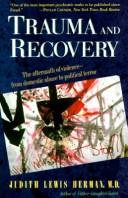
A landmark clinical text, now readable after the prior stages have built the vocabulary. Herman's three-stage recovery model is the backbone of modern trauma therapy and essential for any serious learner.
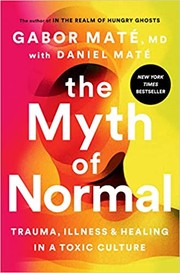
Connects trauma to culture, society, and chronic illness in a sweeping synthesis. Reading it here — after the neuroscience and clinical frameworks — allows the reader to see the bigger picture without losing grounding.
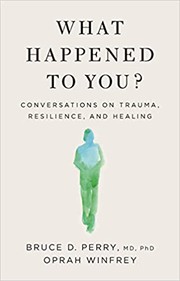
A dialogue-format book co-written with Oprah Winfrey that reframes behavior through the lens of developmental trauma. Its accessible style offers a compassionate counterbalance to the denser material in this stage.
Advanced Therapies — Leading Treatments in Depth
ExpertEngage with the specific, evidence-based therapeutic modalities — EMDR, IFS, and neurofeedback — at a level of detail sufficient to understand how and why they work, and to make informed choices about care.
▸ Study plan for this stage
Pace: 6–8 weeks total: Weeks 1–3 on "Getting Past Your Past" (~25–30 pages/day, including Shapiro's self-guided EMDR exercises which require slow, reflective re-reading); Weeks 4–6 on "No Bad Parts" (~20–25 pages/day, pausing after each part/chapter to journal); Week 7–8 reserved for integration — revisit
- Adaptive Information Processing (AIP) model — Shapiro's foundational theory that unprocessed traumatic memories stored in their original disturbing form drive present-day symptoms, and that EMDR works by unlocking the brain's natural information-processing system to metabolize these memories
- The eight phases of EMDR — History-taking, Preparation, Assessment, Desensitization, Installation, Body Scan, Closure, and Re-evaluation — as laid out by Shapiro, and why the sequence matters clinically
- Bilateral stimulation (BDS) — the role of eye movements, tapping, or auditory tones in EMDR; Shapiro's explanation of why BDS appears to facilitate dual attention and memory reconsolidation
- Touchstone memories and memory networks — how Shapiro shows that a single early 'touchstone' event can be the root node of a whole network of later triggers, and why targeting it produces generalized relief
- The IFS multiplicity premise — Schwartz's core claim in 'No Bad Parts' that the mind is naturally multiple and that this is healthy, not pathological; every 'part' has a positive original intent
- The three categories of parts — Managers (proactive protectors), Firefighters (reactive protectors), and Exiles (wounded parts carrying burdens) — and how their dynamics create the symptom patterns trauma survivors recognize
- Self energy and the 8 Cs — Schwartz's concept of the capital-S Self (characterized by Curiosity, Calm, Clarity, Compassion, Confidence, Creativity, Courage, and Connectedness) as the innate healing agent that is never damaged by trauma, only obscured by protective parts
- Unburdening — the IFS process by which Exiles release the beliefs, emotions, and sensations they took on at the moment of trauma, and why Schwartz argues this produces lasting rather than managed change
- According to Shapiro's AIP model, why do traumatic memories cause ongoing distress, and what does EMDR do at a neurological/informational level to resolve this — as she explains it in 'Getting Past Your Past'?
- Walk through the eight phases of EMDR in order: what is the clinical purpose of each phase, and which phases does Shapiro make accessible to general readers through self-guided techniques in the book?
- What is a 'touchstone memory' in Shapiro's framework, and how does identifying one change the treatment strategy compared to addressing each trigger individually?
- In 'No Bad Parts,' how does Schwartz distinguish between a 'part' and a symptom or defense mechanism as understood in traditional models — and why does that distinction matter for how a therapist or client relates to the behavior?
- Describe the relationship between Managers, Firefighters, and Exiles in IFS. Why do Managers and Firefighters resist letting a therapist or the Self access Exiles, and what does Schwartz say is needed to earn their trust?
- How do the healing mechanisms of EMDR (as described by Shapiro) and IFS (as described by Schwartz) differ in their theory of change — and in what ways might they be complementary when used with the same client?
- EMDR Safe/Calm Place installation (from 'Getting Past Your Past', Chapter 2): Follow Shapiro's step-by-step instructions to establish your own Safe Place using imagery, bilateral tapping, and a cue word. Practice activating it daily for one week and note in a journal how quickly and reliably it shifts your nervous system state.
- Touchstone mapping (from 'Getting Past Your Past'): Choose one current trigger or recurring negative belief (e.g., 'I am not safe' or 'I am not enough'). Use Shapiro's float-back technique to trace it back to its earliest memory. Draw a simple network diagram connecting the touchstone to later memories and present-day triggers to make the AIP model concrete.
- Parts inventory journal (from 'No Bad Parts'): After reading Part I of Schwartz, spend 20 minutes free-writing about a situation that recently activated a strong reaction. Identify at least two parts present (e.g., a part that wanted to withdraw, a part that felt rage). For each, write: What is it trying to protect you from? What does it fear would happen if it stopped?
- Self-energy check-in practice (from 'No Bad Parts'): Each morning for two weeks, sit quietly for 5 minutes and ask internally, 'Which parts are present right now?' without trying to change anything. Notice whether you can observe them with curiosity rather than being blended with them. Log the quality of presence — blended vs. Self-led — on a simple 1–5 scale.
- Comparative modality analysis (synthesis exercise): Create a two-column document. On one side, map Shapiro's EMDR phases onto the trauma recovery arc (safety → processing → integration). On the other, map Schwartz's IFS sequence (finding Self → unblending → witnessing Exiles → unburdening). Identify three specific points where the two models describe the same clinical phenomenon in different langu
- Informed consumer checklist: Using both books, draft a list of 8–10 questions you would ask a prospective EMDR or IFS therapist to assess their training, approach, and fit — grounded in what Shapiro and Schwartz each say a well-conducted session should include. This prepares you to translate reading into real-world care decisions.
Next up: By deeply understanding the mechanisms and internal logic of EMDR and IFS, the reader has built the clinical vocabulary and conceptual framework needed to critically evaluate broader or emerging evidence — such as neurofeedback, somatic therapies, or psychedelic-assisted treatment — and to situate any new modality within a coherent, integrated theory of trauma and healing.

Written by the developer of EMDR, this is the most authoritative and accessible account of how EMDR works and why. It belongs here, after the reader understands the nervous system well enough to appreciate the mechanism.

Introduces Internal Family Systems (IFS) therapy — one of the most influential modern approaches to trauma — in an engaging, self-applicable way. The reader's prior grounding in attachment and complex trauma makes this deeply resonant.
Discussion
Keep reading
Paths that share books, cover the same subject, or open a related topic.