Pulitzer Prize-Winning Biographies: The Best Ones to Read, in Order
Awarded since 1917 for a distinguished biography by an American author, this is the prize that decides which American lives get written at length and which get read. Two rules shape the list: the author must be American but the subject need not be, and until 2023 autobiography and memoir competed in the same category, which is why the older winners include personal memoirs that would now be judged separately. Its besetting habit is scale — the prize reliably rewards the enormous single-subject political life, which is why a reader who starts with the most famous winner starts with 1,300 pages and stops. This path is ordered by length and difficulty instead: readable lives first, then the biographies that widened what the prize would consider, then the big American subjects, and Robert Caro at the end, where he belongs.
The Ones That Read Like Novels
BeginnerStart with three winners that are genuinely propulsive, and learn what the prize means by narrative biography as opposed to scholarship.
▸ Study plan for this stage
Pace: Ten to twelve weeks for roughly 1,800 pages. John Adams is 751 pages and moves; four weeks at 25 pages a day. The Black Count is 432 and is the fastest thing on the whole path — a fortnight. Prairie Fires is 625 pages and slows in the middle where the argument takes over from the story; four weeks.
- What the prize means by narrative biography is on display here: a single life told forward in time, with scenes, dialogue drawn from letters, and an authorial voice that sustains momentum rather than adjudicating scholarship in the text.
- McCullough's John Adams runs largely on correspondence, above all the letters between Adams and his wife and the late-life reconciliation with Jefferson. The archive dictates the shape — Adams wrote constantly and candidly, which is why he is recoverable in a way many contemporaries are not.
- McCullough is also the clearest case of the sympathetic biographer. He is fond of his subject and gives Adams the benefit of the doubt on the episodes his critics press hardest, including the Alien and Sedition Acts. That is a defensible choice and it is a choice; notice it, because you will meet th
- The Black Count demonstrates the prize's actual rule: the author must be American, the subject need not be. Its subject was born in Saint-Domingue to an enslaved woman and a French nobleman, rose to general under the Revolution, fell out with Bonaparte in Egypt, and came home broken from years of im
- It is also a book about recovering a life from almost nothing — the research problem is part of the narrative, including the archival material the author had to physically get at.
- Prairie Fires sets the Little House books against the documented homesteading record: repeated crop failure, debt, dependence on relatives and relief, and land taken under a policy the books do not describe honestly.
- Its second argument concerns authorship — how much of the books was shaped by Wilder's daughter, and what her politics contributed. Fraser makes a case rather than settling the question, and it is worth reading as an argument about collaboration rather than as an exposure.
- All three are readable, and none of them is simple. That combination is what the prize is usually rewarding, and it is the standard against which the harder books later on should be measured.
- What does the Adams archive make possible that a sparser one would not? Name a specific effect on the book's structure.
- Where is McCullough most protective of Adams? Find the passage and say what a hostile biographer would do with the same material.
- The Black Count's subject was famous, then erased. What does Reiss identify as the mechanism of the erasure?
- In Prairie Fires, which specific facts of the Ingalls family's history do the Little House books alter, and in which direction?
- What is Fraser's case about the daughter's role in the writing, and what would settle it?
- All three books are about the gap between a public story and a documented record. Is that the prize's preference or a coincidence of this stage?
- For John Adams, keep a note of every chapter that leans on letters and every chapter that does not. The difference in texture is measurable.
- Write 300 words on the Alien and Sedition Acts as McCullough presents them, then 300 as an unsympathetic biographer would. Do not conclude which is right.
- For The Black Count, list the sources Reiss actually uses. It is a short list, and seeing it explains the book's shape.
- Take one Little House episode you remember and find Fraser's account of what happened. Write 200 words on the alteration and on what it was for.
- At the end of the stage, write your own one-paragraph definition of what this prize appears to reward. You will revise it three more times.
Next up: You have the prize on its most comfortable ground; the next stage is where its idea of a life worth six hundred pages widened, and where the biographer's temperament starts to matter more than the subject's.
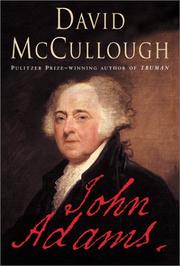
The unglamorous founder, rescued largely through his correspondence with Abigail. McCullough is the most readable biographer the prize has ever rewarded and the right first stop — this is the book that made an eighteenth-century politician a television series.
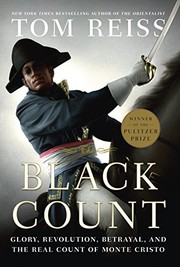
The life of Alex Dumas, son of an enslaved woman and a French nobleman, who became a general under the Revolution and whose son wrote The Count of Monte Cristo about him. Short, fast and the most surprising winner on this list — read it second, as proof that the prize is not confined to American subjects.
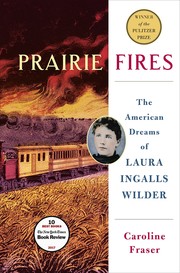
Laura Ingalls Wilder, and the enormous distance between the Little House books and the actual homesteading disaster they were built from, including her daughter's hand in writing them. A biography that quietly dismantles a national myth — the natural bridge to the harder books ahead.
The Lives the Prize Took Longer to Reward
IntermediateRead four winners whose subjects sit outside the American political establishment, and see how the prize's idea of a life worth 600 pages has widened.
▸ Study plan for this stage
Pace: Fourteen to sixteen weeks for about 2,550 pages. King is 679 pages and Malcolm X 650 — read them consecutively, three weeks each, because they are arguing about the same decade. Oscar Wilde is 680 pages and much denser; four weeks. The Pope and Mussolini is 549; three weeks.
- Eig's King is the first full-scale life of its subject in decades, and its distinguishing feature is access — FBI surveillance material, interview transcripts and files unavailable to earlier biographers, used to reconstruct a man rather than a monument.
- The book is deliberately unsparing about the last years, when King was widely unpopular, exhausted and moving toward economic questions that cost him support. That trajectory is the part the annual commemorations remove.
- The Payne biography of Malcolm X rests on nearly thirty years of interviews with people who knew him, many of whom were dead before it was published. The author died with the book unfinished and his daughter completed it, which is itself part of how to read it.
- Some of its most striking material rests on single interviews conducted decades after the fact, and specialists have questioned particular episodes. Reading it directly after Eig is the point — two books built from different evidence about overlapping years, and the disagreements between them are in
- Ellmann's Wilde is the book most often named when people argue that biography is an art. It is denser than anything before it here, structurally patterned rather than merely chronological, and it was finished by a man who was dying as he wrote.
- It also contains known errors, including a misidentified photograph in early printings and a claim about the cause of Wilde's death that later scholars have contested. That a book can be both the standard life and demonstrably wrong on specifics is a useful thing to sit with.
- Kertzer's book is a dual biography of a pope and a dictator, and it exists because the relevant Vatican archives were opened in the 2000s. It is the clearest demonstration on this path that a biography's verdict is a function of which archive happens to be open when it is written.
- Together the four make the point of the stage: as the subjects move away from the American political establishment, the evidence gets stranger — surveillance files, oral testimony, a closed archive — and the biographer's judgement about evidence becomes the book's real content.
- What does Eig's access to surveillance material let him show, and what are the ethical problems in using it? He addresses this; does his answer satisfy you?
- Where do Eig and the Paynes describe the same events differently? Pick two and identify the evidence behind each version.
- The Payne book rests heavily on interviews recorded decades later. What are the strengths of that evidence and what are its known weaknesses?
- What makes Ellmann's Wilde a work of art rather than a compilation? Point at a structural choice, not a stylistic one.
- How should a reader treat a standard biography with known factual errors in it? Does the error rate change what the book is good for?
- What could Kertzer write that nobody could have written twenty years earlier, and what does that imply about biographies written before an archive opens?
- Read King and The Dead Are Arising back to back and build a shared timeline of 1959-1965 with both books' accounts entered against each date.
- Write 400 words on one episode the two books disagree about, giving both accounts and the evidence for each, without deciding.
- For Ellmann, diagram the structure of any one section — what is grouped with what, and why it is not simply chronological.
- Look up the two best-known corrections to Ellmann's Wilde and write a paragraph on whether either affects the book's argument.
- For The Pope and Mussolini, list five claims that depend on the newly opened archive and note what the standard account said before.
- Revise your definition of what the prize rewards. It should be visibly different from the first version.
Next up: Having watched four biographers handle difficult evidence, the next stage returns to the prize's home ground at maximum length — which is the stamina test the final stage assumes.

The first full-scale biography of Martin Luther King in decades, using FBI files and interviews unavailable to earlier writers. Start here: it is the most recent winner on this path and the best model of what modern archival biography can do to a figure everyone assumes they know.

Malcolm X, built from nearly thirty years of interviews and finished by the author's daughter after his death. Read it directly after King — the two books are arguing with each other about the same decade, and reading them apart wastes that.
The standard life of Wilde, published posthumously by a biographer who was dying as he finished it. Denser than anything before it here, and the book most often named when people call biography an art rather than a compilation.
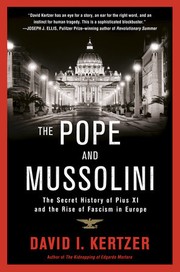
Pius XI and the fascist state, from Vatican archives opened only in the 2000s. A dual biography rather than a single life, and the clearest demonstration on this path of how much a biography's verdict depends on which archive happens to be open.
The Big American Lives
IntermediateTake on four long winners on the prize's home ground, and build the stamina the final stage requires.
▸ Study plan for this stage
Pace: Twenty to twenty-two weeks for roughly 3,700 pages, and there is no way to hurry this. Truman is 1,117 pages and is the easiest of the four; five weeks. Washington is 928 and slower; five weeks. American Prometheus is 721; four weeks. Peter the Great is 921; five weeks. Take a fortnight off somewher
- Truman is the demonstration that length is a matter of construction rather than endurance. A thousand pages on a failed haberdasher who became president reads faster than half the shorter books on this path, and working out why is the point of putting it first here.
- The book has to handle the atomic decisions, the Marshall Plan, the recognition of Israel, Korea and the removal of a popular general, and McCullough's method is to keep the reader inside the sequence of information available at the time rather than judging from outcomes.
- Chernow's Washington confronts a subject who spent his life constructing a public surface and left comparatively little private evidence. The biography's central technical problem is getting behind a man who did not want to be got behind.
- It also handles the enslaved people at Mount Vernon directly — including those who escaped, and the terms of the manumission in his will — where earlier biographies were evasive. Compare the space given to that material against its treatment in the older books on this path.
- American Prometheus took roughly twenty-five years and two authors, and its argument lives in the 1954 security hearing rather than in Los Alamos. The book is structured so that everything before the hearing becomes evidence in it.
- The hearing material is also where the biographers' judgement is most exposed: they are reconstructing a proceeding designed to reach a conclusion, from a transcript, with participants who had reasons to shape the record. Watch how they signal what is established and what is inferred.
- Massie's Peter the Great is the least American book in this stage and is here as a reminder that the prize's appetite for enormous narrative lives is not confined to Washington politics. Its subject is a ruler who forced a country to change by physical compulsion, and the book does not flinch from w
- Four books, four different solutions to the same problem — how to keep nine hundred pages moving. Naming each solution is more useful than ranking them.
- Why does Truman read faster than shorter books? Identify at least two structural devices McCullough uses.
- What evidence does Chernow rely on to reach a private Washington, and how far does he get?
- Compare Chernow on slavery at Mount Vernon with McCullough on the same institution in the Adams generation. What accounts for the difference — the subject, the evidence, or the decade the book was written?
- Why do Bird and Sherwin put the security hearing at the centre rather than the Manhattan Project?
- In the hearing chapters, where do the authors state a fact and where do they infer a motive? Find one example of each.
- What does Massie's book do with the human cost of Peter's programme, and is it doing anything a hostile biographer would not?
- For each of the four, write one sentence naming the device that keeps its length readable — pacing, scene, structure, or the withholding of an outcome.
- Take one hundred pages of Truman and mark every scene break. The rhythm should be visible as a pattern.
- For American Prometheus, reconstruct the hearing's sequence on one page from the book's account, then note which participants' motives are documented and which are reconstructed.
- Write 400 words comparing Chernow's Washington with McCullough's Adams as portraits of the same generation, with attention to what each biographer is willing to criticise.
- Time yourself over a week's reading and calculate your actual pages per hour on this stage. You need the number before committing to the last one.
Next up: You now have four thousand-page lives behind you and a realistic reading rate, which is exactly what the final stage requires and what makes it a destination rather than an obstacle.
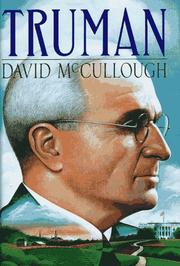
A failed haberdasher who became president and dropped the bomb. Nearly a thousand pages and the easiest thousand pages you will read here — return to McCullough after the denser books above precisely because he makes length feel like nothing.
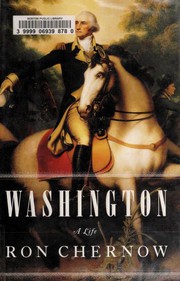
The full life of the least knowable founder, including the enslaved people at Mount Vernon whom earlier biographies handled evasively. Note that most catalogue records file this under the bare title Washington. Read it after Truman: same scale, considerably more resistance from the subject.
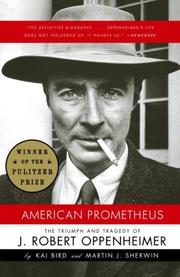
Twenty-five years of work on Robert Oppenheimer, from Los Alamos to the security hearing that destroyed him. Read it for the hearing, which is where the book's argument lives, and note the co-author Martin Sherwin, who shares the prize with Bird.

The tsar who forced Russia west, by an author who came to Russian history through his son's haemophilia and the Romanovs. The last of the big narrative lives here and the least American — a useful reminder before Caro that the prize's scale habit is not only about Washington politics.
The Destination: Caro
IntermediateFinish with the two Caro volumes, and understand why the prize's most admired winner is also the one nobody should read first.
▸ Study plan for this stage
Pace: Sixteen to twenty weeks for about 2,460 pages across two books. The Power Broker is 1,263 pages; eight to ten weeks at 20 pages a day, and do not skip the early chapters on the reformer Moses was before he was anything else. Master of the Senate is roughly 1,200; eight weeks, and read its long insti
- The Power Broker is about a man who was never elected to anything and remade a city anyway, and its real subject is stated in its opening pages: how power is acquired, held and used by someone with no electoral mandate.
- The mechanism at the centre is the public authority — an entity that raises its own money through bonds, is not dependent on annual appropriations, and is therefore substantially insulated from the officials who nominally created it. Caro's account of how that instrument was built and understood is
- The book's method is scale plus specificity: the East Tremont chapters follow one neighbourhood through the route decision that destroyed it, and they exist to make an abstraction about power land as a set of named households.
- Caro's portrait of Moses's transformation — from a young reformer with a doctorate and no patience for compromise into someone who mastered exactly the machinery he had set out to abolish — is the moral spine, and it is what makes the book more than an indictment.
- Not everything in it is uncontested. Specific claims, including the account of parkway bridge heights, have been disputed by later writers, and the book has no footnotes in the conventional sense though it does have extensive notes. Read it as a monumental argument rather than as a settled record.
- Master of the Senate is the third volume of a multi-volume Johnson biography and is self-contained enough to read alone. Its long opening history of the Senate as an institution — what it was designed to do, and how it had come to work by 1949 — is the best thing Caro has written and is the reason t
- The book's central narrative is the 1957 civil rights bill: a weak law passed by a man who wanted the presidency, and Caro's argument about what a legislator can and cannot achieve inside an institution designed to prevent action.
- Reading the two together is the point of the stage. One is about power outside electoral politics and one about power inside it, by the same author with the same question, and neither is the right first Pulitzer biography for anybody.
- State the thesis of The Power Broker in three sentences. It is explicit; do not paraphrase the plot instead.
- What is a public authority, and why is it more insulated from ordinary politics than a city department?
- Why does Caro spend so long on East Tremont? What would be lost if the chapter were three pages?
- At what point does Moses stop being a reformer, on Caro's account, and what does Caro say caused it?
- In Master of the Senate, what does the opening institutional history establish that the Johnson narrative then depends on?
- Caro's Johnson is capable of one thing and Caro's Moses of another. What is the common question the two books are asking?
- Before starting, set a page-per-day target based on the rate you measured in the previous stage, and write it down. Both books are finished by scheduling rather than by enthusiasm.
- Take Caro's account of the public authority and write 400 words explaining the mechanism to somebody who has not read the book.
- Follow the parkway bridge-height claim: read Caro's version, then find one published challenge to it, and write a paragraph on what kind of evidence would settle it.
- For Master of the Senate, summarise the institutional history in 500 words and then check how much of the subsequent narrative your summary predicts.
- Write a final 800 words on what the prize rewards, using every stage of this path, and compare it with the paragraph you wrote at the end of stage one.
- Pick the one book on this path you would give somebody who had read no biography at all. It should not be either Caro.
Next up: This is the end of the path: three readable winners, four books that widened what the prize would consider, four thousand-page American lives, and the two Caro volumes read last, where their scale is a reward rather than a barrier.
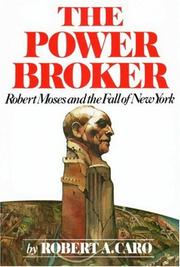
Robert Moses, who was never elected to anything and rebuilt New York anyway. Over a thousand pages, and the most influential American biography of the last half-century — read it as a book about how power is actually acquired and held, with Moses as the case study. Everything before this on the path was building the reading stamina it assumes.
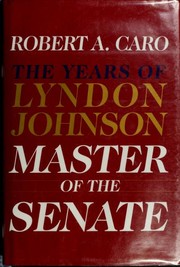
The third volume of Caro's Lyndon Johnson, and the one that took the biography prize. Read it after The Power Broker rather than starting the Johnson series in order: it is self-contained enough to stand alone, and its long central section on how the Senate really worked is the best thing Caro has written.
Discussion
Keep reading
Paths that share books, cover the same subject, or open a related topic.