The American Revolution: a reading path
This curriculum moves from vivid narrative introductions through analytical history and primary sources, ending with revisionist and biographical perspectives that reveal the founders as flawed, complex human beings. Each stage builds the factual scaffolding and vocabulary needed to engage critically with the more demanding works that follow.
Foundations: The Story Takes Shape
BeginnerGain a clear, chronological grasp of the causes, key events, and major figures of the Revolution — from colonial grievances through independence — in an accessible, story-driven way.
▸ Study plan for this stage
Pace: 10–12 weeks total, reading roughly 25–35 pages per day. Suggested pacing: "Liberty! The American Revolution" in weeks 1–2 (it is shorter and panoramic, setting the stage); "Paul Revere's Ride" in weeks 3–5 (more focused and detail-rich, ~30 pages/day); "John Adams" in weeks 6–12 (the longest book, ~
- Colonial grievances and the escalating tension with Britain — taxation without representation, the Stamp Act, Townshend Acts, and the Boston Massacre — as narrated panoramically in Fleming's 'Liberty!'
- The ideological foundations of the Revolution: Enlightenment ideas of natural rights, self-governance, and liberty that Fleming traces through colonial political culture
- The military and social landscape of 1775 New England: Fischer's 'Paul Revere's Ride' reveals how local militia networks, alarm systems, and community solidarity made the Lexington and Concord campaign possible
- The ride itself as a collective act: Fischer dismantles the Longfellow myth and shows that Revere was one of many riders, emphasizing the organized, community-driven nature of colonial resistance
- The transformation of John Adams from provincial lawyer to revolutionary statesman, as McCullough traces his role in the Continental Congress, the drafting of independence, and early American diplomacy
- The personal cost of revolution: McCullough's 'John Adams' foregrounds the sacrifices of family separation, financial hardship, and physical danger borne by Adams and Abigail, humanizing the founding generation
- The Declaration of Independence not as a sudden inspiration but as the product of years of argument, compromise, and political maneuvering — seen through Adams's eyes in McCullough
- The fragility and contingency of the Revolution: across all three books, the outcome was never inevitable — decisions by individuals, timing, and luck shaped the result at every turn
- According to Fleming's 'Liberty!', what were the three or four most consequential British policy decisions that turned loyal colonists into revolutionaries, and why did each one backfire?
- Fischer argues in 'Paul Revere's Ride' that the midnight alarm was a community effort, not a lone hero's deed. What specific structures — social, military, and communicative — made that collective action possible?
- How does McCullough's portrait of John Adams complicate or enrich the simpler narrative of the Revolution you encountered in Fleming's overview? What tensions or contradictions does Adams embody?
- By the end of 'John Adams,' what was Adams's own view of his most important contributions to the Revolution, and how does McCullough's biography either support or gently challenge that self-assessment?
- How do all three books together illustrate the gap between the mythology of the Revolution (lone heroes, inevitable victory, unified colonists) and the messier historical reality?
- What role did ordinary people — militiamen, farmers, townswomen, artisans — play across these three books, and how does each author balance their stories against those of famous figures?
- Create a master timeline: As you finish each book, add its key events to a single running timeline (on paper or a digital tool like Notion or a spreadsheet). Note the date, the event, the book it came from, and one sentence on its significance. By the end of the stage, you will have a unified chronological spine of the Revolution built from all three authors' perspectives.
- Myth vs. Reality log for 'Paul Revere's Ride': Keep a two-column journal as you read Fischer. In the left column, record the popular myth or assumption he is correcting; in the right column, write Fischer's evidence-based revision. Aim for at least 8–10 entries. This sharpens critical reading and prepares you for more analytical texts ahead.
- Character biography cards: For each major figure encountered across the three books (Adams, Abigail Adams, Revere, Hancock, Jefferson, Washington, etc.), write a 3×5 index card with: role in the Revolution, one decision that mattered, and one human detail that made them real to you. Use these cards to quiz yourself at the end of the stage.
- Comparative author reflection: After finishing all three books, write a 1–2 page informal essay answering: 'How did Fleming, Fischer, and McCullough each choose to tell the story of the Revolution differently? What did each author's focus reveal that the others left in the background?' This builds the habit of reading authors, not just books.
- Map the ride: Using a blank map of eastern Massachusetts (printable for free online), trace Revere's route and mark the towns that received the alarm, as described by Fischer. Annotate three or four towns with a note on how they responded. Spatial engagement with the text deepens retention of Fischer's core argument about collective action.
- End-of-stage discussion or journal prompt: Imagine you are John Adams writing a letter to Abigail after reading Fleming's panoramic account and Fischer's Revere book — books he never saw, but about events he lived. What would he agree with? What would he dispute? What would surprise him? This creative synthesis forces you to integrate all three books through a single human perspective.
Next up: Having absorbed the Revolution's arc through vivid, story-driven narrative, the reader is now ready to move into more thematically focused or analytically rigorous works that interrogate specific dimensions — such as the Revolution's social contradictions, its contested legacy, or its military complexity — with the chronological and biographical foundation these three books have firmly established

A companion to the acclaimed PBS documentary, this is a highly readable narrative overview that introduces all the major players and turning points without overwhelming a newcomer. It establishes the full arc of the Revolution before deeper reading begins.
By zooming into one famous night, Fischer teaches the reader how to read Revolutionary history — examining social networks, geography, and motivation. It builds analytical habits while remaining a gripping story.
This Pulitzer Prize-winning biography humanizes the founding generation through one man's life, covering the Continental Congress, the war, diplomacy, and the early republic. Reading it third cements the timeline while introducing the founders as real, fallible people.
The Road to Revolution: Causes and Context
IntermediateUnderstand WHY the Revolution happened — the ideological, economic, and political forces that turned loyal British subjects into revolutionaries — and begin to see competing colonial perspectives.
▸ Study plan for this stage
Pace: 8–10 weeks total: ~4–5 weeks per book. For Bailyn's "Ideological Origins" (~400 pp.), aim for 15–20 pages/day, reading slowly and annotating heavily — the prose is dense and argument-driven. For Wood's "Radicalism" (~450 pp.), pace at 20–25 pages/day; the narrative is more fluid but conceptually ric
- The 'Country' (Whig/Radical Whig) ideological tradition: how 18th-century British opposition thought — centered on fears of corruption, tyranny, and the erosion of liberty — was transplanted and radicalized in the colonies (Bailyn)
- The role of pamphlets and print culture as the primary vehicle through which colonists articulated and spread revolutionary ideology, turning local grievances into a coherent political worldview (Bailyn)
- The concept of 'conspiracy': how colonists came to interpret British taxation and parliamentary acts not as blunders but as a deliberate ministerial plot to enslave them, and why that interpretive leap was ideologically decisive (Bailyn)
- The transformation of the meaning of key terms — 'liberty,' 'representation,' 'sovereignty,' and 'tyranny' — and how colonial thinkers stretched and redefined inherited English concepts to justify resistance (Bailyn)
- The distinction between a 'conservative' and a 'radical' revolution: Wood's central argument that the Revolution was not merely a political separation but a profound social revolution that dismantled a hierarchical, deferential, monarchical world (Wood)
- The concept of 'republicanism' as a social and moral order — not just a form of government — requiring virtuous, independent citizens, and the tension between classical republican ideals and the emerging realities of democratic commerce and individualism (Wood)
- The collapse of the older patron-client, rank-and-deference social structure in colonial America, and how this pre-existing social loosening made revolutionary ideology so explosive and resonant (Wood)
- The competing colonial perspectives: how elites, middling colonists, and ordinary people each had different stakes in the Revolution, and how Wood shows the movement ultimately escaped the control of the gentlemen who started it (Wood)
- According to Bailyn, what specific strand of English political thought most shaped colonial revolutionary ideology, and why was it more alive in the colonies than in Britain itself by the 1760s?
- How does Bailyn explain the colonists' leap from resenting specific taxes (Stamp Act, Townshend Acts) to believing in a systematic conspiracy against their liberties — and what does this tell us about the power of ideology over material grievance?
- What does Wood mean when he calls the American Revolution 'radical,' and how does his argument challenge the older view that it was a conservative or purely constitutional revolt?
- How did the Revolution transform the social relationship between 'gentlemen' and ordinary people, according to Wood, and why did this transformation ultimately surprise and unsettle many of the Founding generation?
- How do Bailyn and Wood complement each other? Where does Bailyn's ideological story end and Wood's social story begin — and do they ever contradict each other?
- What tensions existed within revolutionary ideology itself — between liberty and order, between classical republicanism and democratic individualism — and how do both authors suggest these tensions shaped the post-revolutionary world?
- **Annotated Pamphlet Comparison (Bailyn):** Using Bailyn's framework, find and read one primary-source pamphlet from the revolutionary era (e.g., James Otis's *Rights of the British Colonies* or John Dickinson's *Letters from a Farmer in Pennsylvania*, freely available online). Annotate it specifically for the Radical Whig themes Bailyn identifies — corruption, conspiracy, slavery, liberty. Write
- **Concept-Definition Journal:** As you read both books, keep a running glossary of politically charged terms (liberty, virtue, tyranny, representation, deference, republicanism). For each term, write: (1) what it meant in traditional British usage, (2) how colonists redefined it per Bailyn, and (3) how Wood shows its social meaning evolved post-Revolution. This directly trains the vocabulary-shift
- **Argument Mapping:** After finishing each book, draw a one-page cause-and-effect diagram. For Bailyn: map the chain from Radical Whig ideology → colonial print culture → conspiratorial interpretation → revolutionary commitment. For Wood: map the chain from colonial social structure → republican ideology → Revolution → social transformation. Then overlay the two maps: where do the chains connect?
- **Steelman Debate:** Write two short paragraphs (half a page each) — one arguing that the Revolution was *primarily ideological* (Bailyn's case), one arguing it was *primarily social* (Wood's case). Then write a third paragraph adjudicating between them using specific evidence from both books. This forces genuine engagement with historiographical tension rather than passive absorption.
- **'Who Benefits?' Perspective Grid:** Create a simple grid with rows for three groups (colonial elites/gentry, middling farmers/artisans, urban laborers/poor) and columns for Bailyn's ideological causes and Wood's social causes. Fill in each cell: what did each group stand to gain or fear? This operationalizes Wood's point about competing colonial perspectives and prevents a monolithic view of 'th
- **Stage Synthesis Essay (500–700 words):** After completing both books, write a short essay answering: 'By 1776, what had turned loyal British subjects into revolutionaries — and was this transformation more a revolution of ideas or of society?' Cite specific arguments from both Bailyn and Wood. This is your capstone artifact for the stage and a reference point for all later stages.
Next up: By establishing the ideological grammar (Bailyn) and the social dynamite (Wood) that made revolution thinkable and unstoppable, this stage equips the reader to move from asking *why* the Revolution happened to asking *how* it unfolded — the military campaigns, political decisions, and human drama of the war itself.
Bailyn's Pulitzer-winning masterwork argues that a radical Whig ideology — fear of tyranny and corruption — drove the colonists to revolt. This is the essential intellectual framework for understanding revolutionary thought and is best read once you have the narrative baseline.
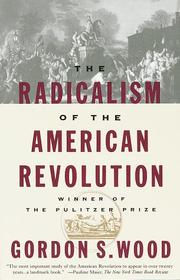
Wood builds on Bailyn to argue the Revolution was far more socially transformative than a mere political rebellion. Reading it after Bailyn lets you see the debate between two giants of the field and deepens your understanding of what 'revolution' really meant.
The War and the Founding Documents
IntermediateFollow the military and political struggle for independence in detail, and engage directly with the founding texts — the Declaration, the Federalist Papers, and the Constitution — as living arguments.
▸ Study plan for this stage
Pace: 10–12 weeks total: ~3 weeks on "Washington's Crossing" (~25–30 pages/day), ~3–4 weeks on "The Federalist Papers" (~15–20 pages/day, with re-reading of key papers), and ~4 weeks on "Plain, Honest Men" (~25 pages/day). Allow extra buffer days after each book for reflection and exercise completion.
- The turning-point thesis: how the winter campaign of 1776–77 (Trenton, Princeton) reshaped the will and strategy of both sides, as argued by Fischer in 'Washington's Crossing'
- Military culture and morale: Fischer's contrast between the Hessian professional army and the Continental/militia forces, and how ideology and desperation shaped battlefield decisions
- The Declaration's implicit promises and the gap between revolutionary ideals and the realities of war — a tension that runs from Fischer into the constitutional debates
- Publius's theory of republican government: separation of powers, federalism, the extended republic argument (Federalist No. 10), and the dangers of faction as Hamilton and Madison frame them in 'The Federalist Papers'
- Ratification anxiety: why the Founders feared both tyranny and anarchy, and how that dual fear structured every major argument in 'The Federalist Papers'
- The Philadelphia Convention as a political negotiation: Beeman's portrait in 'Plain, Honest Men' of the competing state interests, slavery compromises, and procedural maneuvering that produced the Constitution's final text
- The Great Compromise and the Three-Fifths Compromise: how Beeman shows these were not inevitable but contingent outcomes of specific delegates' choices and pressures
- The Constitution as a living argument: reading the document not as a finished monument but as a set of unresolved tensions — between large and small states, liberty and order, federal and state power — that the Convention left deliberately ambiguous
- According to Fischer in 'Washington's Crossing,' what specific tactical, cultural, and moral factors allowed Washington's forces to survive and strike at Trenton and Princeton — and why does Fischer argue this moment was genuinely decisive rather than merely symbolic?
- How does Madison's argument in Federalist No. 10 turn the conventional wisdom about republics on its head, and what does his theory of the 'extended republic' claim about the relationship between size and political stability?
- Which three structural conflicts in the Philadelphia Convention does Beeman identify as most threatening to the entire enterprise, and how were they resolved — or deferred?
- How do 'The Federalist Papers' and 'Plain, Honest Men' together reveal a tension between the public, philosophical case for the Constitution and the private, interest-driven bargaining that actually produced it?
- In what ways does Fischer's account of the army's suffering and Washington's leadership in 1776 foreshadow the problems of a weak central government that Hamilton and Madison would later diagnose in 'The Federalist Papers'?
- How does Beeman characterize the role of slavery at the Convention, and in what sense does his account complicate any straightforward narrative of the Founding as a triumph of Enlightenment principle?
- **Annotated close reading:** Select three non-consecutive Federalist Papers (e.g., Nos. 10, 51, and 70) and annotate them by hand — mark every claim, every analogy, and every fear the author is responding to. Then write a one-paragraph 'counter-argument' that an Anti-Federalist might have made against each paper, drawing on the anxieties Beeman describes among Convention dissenters.
- **Fischer's battle map exercise:** Using the maps in 'Washington's Crossing,' reconstruct the Trenton–Princeton campaign on paper or a digital tool. For each decision point (crossing the Delaware, the night march, the Princeton flanking), write two sentences: one explaining the military logic and one explaining the political/morale stakes Fischer assigns to it.
- **Constitutional clause hunt:** After finishing 'Plain, Honest Men,' take the actual text of the U.S. Constitution and, article by article, annotate which clauses Beeman explicitly traces to a specific debate, delegate, or compromise at the Convention. Note which clauses he flags as deliberately vague or contested.
- **Comparative argument essay (500–700 words):** Write an essay answering: 'Did the men who won the Revolution in the field and the men who designed the government in Philadelphia share the same vision of what they were building?' Use specific evidence from Fischer's portrait of Washington's army and Beeman's portrait of the Convention delegates.
- **Federalist Papers debate simulation:** Choose one major structural feature of the Constitution (e.g., the Senate, the Electoral College, or executive veto power). Write two short position statements — one in the voice of a Federalist using arguments from 'The Federalist Papers,' one in the voice of a skeptical delegate using concerns Beeman surfaces in 'Plain, Honest Men' — then write a one-para
- **Stage synthesis timeline:** Create a single annotated timeline spanning 1776–1789 that integrates all three books: mark key military events from Fischer, key Federalist Papers publication dates and their argumentative targets, and key Convention moments from Beeman. Draw at least three arrows connecting an event in one book to a consequence or echo in another.
Next up: By grounding the reader in both the physical struggle for independence (Fischer) and the intellectual and political architecture of the new republic (Hamilton and Beeman), this stage creates the essential foundation for examining how the constitutional framework was tested, contested, and transformed in the decades after ratification — the natural focus of any subsequent stage on the Early Republi

Fischer's Pulitzer winner reconstructs the desperate winter campaign of 1776–77 with extraordinary detail, showing how the Revolution was nearly lost and what it took — in human terms — to save it. It makes the war viscerally real.

The primary source at the heart of American constitutional thought. After reading narrative and analytical history, you are now equipped to engage Hamilton, Madison, and Jay arguing in real time for ratification. Start with Federalist Nos. 10, 51, and 78.
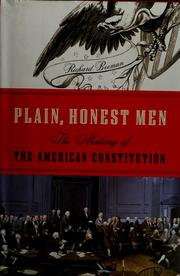
A blow-by-blow account of the Constitutional Convention of 1787, this book makes the Federalist Papers come alive by showing the messy human negotiations behind every clause. It is the ideal companion read immediately after the Papers.
Other Voices: Race, Class, and the Limits of Liberty
ExpertCritically examine who was left out of the founding promise — enslaved people, women, Native Americans, and the poor — and understand the Revolution's contradictions through multiple perspectives.
▸ Study plan for this stage
Pace: 10–13 weeks total. Book 1 — "The Hemingses of Monticello" (656 pages): ~7 weeks at ~45–50 pages/day, 5 days/week. Book 2 — "A People's History of the United States" (chapters 1–7, covering the colonial era through the Revolution, ~180 pages): ~3 weeks at ~30 pages/day, 4–5 days/week. Reserve a final
- The foundational contradiction of liberty: How the Revolution's rhetoric of natural rights and freedom coexisted with — and in some ways depended upon — the institution of slavery, as made viscerally concrete through the Hemings family's life at Monticello.
- Enslaved people as historical agents: Gordon-Reed's methodology insists on treating the Hemingses as full human beings with interior lives, strategies, and relationships, not merely as footnotes to Jefferson's biography — a model for how to read history from the margins.
- Jefferson's hypocrisy as a structural problem, not just a personal failing: The Sally Hemings–Thomas Jefferson relationship forces readers to grapple with how power, race, and intimacy were entangled in the founding era, and why this matters for interpreting the Declaration of Independence.
- Class conflict within the Revolution: Zinn's chapters reveal that the Revolution was partly an elite project to manage and redirect popular discontent — the grievances of poor white colonists, tenant farmers, and debtors were co-opted rather than resolved by independence.
- Native Americans as dispossessed peoples: Zinn frames the Revolution as accelerating Indigenous displacement, since British policy (e.g., the Proclamation of 1763) had actually restrained westward expansion — American independence removed that restraint.
- Women's exclusion from the founding promise: Both books illuminate how the language of universal liberty was explicitly and deliberately not extended to women, and how women's labor and lives undergirded the revolutionary economy.
- Historiography and whose story gets told: Gordon-Reed's forensic use of fragmentary evidence and Zinn's explicit counter-narrative methodology together teach readers to interrogate which sources historians rely on, who produced those sources, and what silences they contain.
- The Revolution's legacy as contested terrain: Understanding that the founding documents were simultaneously radical (in aspiration) and conservative (in practice) is essential for evaluating later struggles — abolition, suffrage, labor rights — as unfinished revolutionary business.
- According to Gordon-Reed, what specific strategies did members of the Hemings family use to navigate their enslavement at Monticello, and what does this reveal about enslaved people's agency within an inherently coercive system?
- How does the Sally Hemings–Thomas Jefferson relationship, as reconstructed by Gordon-Reed, complicate or enrich your reading of Jefferson as the author of 'all men are created equal'? Can the Declaration be separated from its author's life?
- Zinn argues that the American Revolution served the interests of a colonial elite as much as — or more than — it served ordinary people. What evidence does he marshal for this claim, and where do you find it most and least persuasive?
- How did the Revolution's outcome differ for enslaved African Americans, Native Americans, poor white colonists, and women? Using both books, construct a comparative account of at least three of these groups.
- Gordon-Reed and Zinn use very different methodological approaches — one a deep biographical/archival study, the other an explicitly ideological counter-narrative. What are the strengths and limitations of each approach for recovering marginalized voices?
- If the founding promise of liberty was always partial and exclusionary, does that undermine the Revolution's historical significance, or does it reframe what that significance should be? Defend a position using evidence from both books.
- Parallel document analysis: Read the Declaration of Independence alongside the excerpts from Jefferson's writings about slavery that Gordon-Reed discusses. Annotate both, marking every tension or contradiction you find. Write a one-page reflection on what the juxtaposition reveals.
- Perspective reconstruction journal: After finishing 'The Hemingses of Monticello,' write three short diary entries (1 paragraph each) from the perspective of three different Hemings family members — e.g., Betty Hemings, James Hemings, and Sally Hemings — set at a pivotal moment Gordon-Reed describes. Focus on interior experience, not just events.
- Zinn counter-argument exercise: Choose one of Zinn's central claims (e.g., that the Revolution was engineered to protect elite interests). Research one piece of evidence that supports it and one that complicates or challenges it using what you already know from earlier stages of the curriculum. Write a structured paragraph presenting both sides.
- Historiographical comparison essay (500–700 words): Compare Gordon-Reed's and Zinn's methods for recovering the experiences of marginalized people. Address: What sources does each use? What assumptions do they bring? What can each method do that the other cannot?
- Mapping exclusion: Create a simple chart or visual map with four columns — enslaved people, Native Americans, women, poor whites. For each group, fill in: (1) what the Revolution promised rhetorically, (2) what it delivered in practice, and (3) one specific example from either book. Use this as a study reference.
- Socratic seminar preparation (solo or group): Draft five discussion questions of your own — beyond those listed in this plan — that you would bring to a seminar on these two books. For each question, write two sentences explaining why it matters and what tension it surfaces.
Next up: By exposing the Revolution's internal contradictions and the experiences of those it excluded, this stage raises the urgent question of how subsequent generations attempted to redeem, expand, or betray the founding promise — making the reader ready to trace the Revolution's long aftermath through the antebellum period, the Civil War, and beyond.
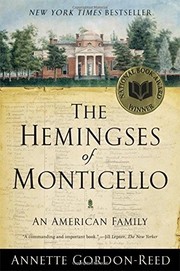
This Pulitzer and National Book Award winner traces the enslaved Hemings family across generations, placing slavery at the center of the founding story. It fundamentally reframes Jefferson and forces a reckoning with the Revolution's deepest contradiction.
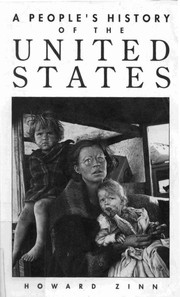
Zinn's landmark work deliberately tells history from the bottom up — through the eyes of the colonized, enslaved, and dispossessed. Reading it last, after absorbing the traditional narrative, allows you to engage its provocations critically and complete a genuinely multi-perspectival education.
Discussion
Keep reading
Paths that share books, cover the same subject, or open a related topic.