Robert Caro Reading Order: Where to Start
This curriculum guides an intermediate reader through Robert Caro's complete major works in the order that best builds comprehension and stamina. It begins with contextual grounding in mid-20th century American power and biography craft, moves through The Power Broker as the essential Caro foundation, and then advances sequentially through all four published volumes of The Years of Lyndon Johnson — each volume building on the political vocabulary, characters, and themes established before it.
Orientation: Understanding Caro's World
IntermediateBuild the historical and biographical context — New Deal America, urban power, and Texas politics — so that Caro's references, characters, and arguments land with full force from page one.
▸ Study plan for this stage
Pace: 3–4 weeks total: spend the first 2 weeks on "The Making of the President, 1960" (~25–30 pages/day), then 1–1.5 weeks on "Working" (~20–25 pages/day, reading more slowly and reflectively given its memoir-essay format). Reserve 2–3 days at the end for review, note consolidation, and completing exercis
- The mid-20th-century American political machine: how power was brokered through party bosses, delegates, money, and backroom deals — the world Caro's subjects inhabited and manipulated
- The texture of postwar American ambition: White's portrait of Kennedy's 1960 campaign illustrates how personal narrative, image, and momentum are manufactured — a lens for reading Caro's own subjects
- Narrative political journalism as a craft: White pioneered the 'making of' genre, and understanding his method (immersive reporting, scene-setting, character study) helps the reader recognize and appreciate what Caro inherited and transformed
- The geography of American power: New Deal-era federal programs, Texas oil money, New York City's physical infrastructure — the regional power bases that shaped both LBJ and Robert Moses
- Caro's self-described obsession with power — what it is, how it is obtained, and what it does to people — as laid out in his own words in 'Working'
- The research process as moral commitment: in 'Working,' Caro explains his years-long immersions (moving to the Hill Country, walking Robert Moses's parks) as ethical acts of understanding, not just fact-gathering
- The role of place in Caro's work: 'Working' repeatedly shows how physical landscapes — the Texas Hill Country, the canyons of New York — are not backdrop but argument
- How biography becomes history: Caro's insistence, explained in 'Working,' that one man's life can illuminate the broader mechanisms of American democracy and its failures
- After reading White's account of the 1960 campaign, how would you describe the informal rules and power structures that governed mid-20th-century American politics — and why does understanding them matter before opening a Caro biography?
- In 'Working,' Caro describes the central question driving all of his books. What is that question, and how did it first crystallize for him while reporting on Robert Moses?
- White and Caro are both immersive, narrative non-fiction writers working in the same broad tradition. Based on 'Working,' how does Caro distinguish his own ambitions and methods from conventional political journalism?
- How does Caro explain the importance of physical place and landscape in his research and writing? Give at least two specific examples he discusses in 'Working.'
- What does 'Working' reveal about the personal and professional sacrifices Caro made in pursuit of his books, and what does this suggest about the standard of evidence and depth the reader should expect in his major works?
- Having read both books, how would you explain to another reader why this stage is called 'Orientation'? What context do White and Caro together provide that a reader would otherwise lack?
- **Political landscape map:** After finishing White, draw or diagram the key power brokers, factions, and deal-making nodes of the 1960 Democratic primary. Label each with their regional base and source of leverage. Keep this map — you will add LBJ and Robert Moses to it later.
- **Caro's thesis in his own words:** In 'Working,' Caro returns repeatedly to his core argument about power. Find and copy out 3–5 passages where he states or implies it most directly. Write a single synthesizing sentence in your own words: 'Robert Caro believes that power…'
- **Method comparison journal:** As you read 'Working,' keep a running two-column log — one column for research methods Caro describes (e.g., interviewing, walking the land, archival digging), one column for the insight each method unlocked. Aim for at least 8 entries.
- **Place-as-argument exercise:** Choose one place Caro discusses in 'Working' (the Hill Country, a Moses parkway, a Senate corridor). Research one photograph or map of that place from the relevant era. Write a short paragraph (150–200 words) explaining what the physical reality of that place argues about the power dynamics Caro is investigating.
- **White-to-Caro bridge essay:** Write a 300–400 word informal essay answering: 'What does Theodore White's portrait of 1960 American politics teach me about the world Robert Caro's subjects were operating in?' Use at least one specific scene or detail from each book.
- **Vocabulary and context glossary:** While reading both books, collect 10–15 terms — political, historical, or geographic — that feel essential to Caro's world (e.g., 'seniority system,' 'Hill Country,' 'Title I,' 'cloture'). Write a one-sentence definition for each in your own words, building a personal reference sheet for the major works ahead.
Next up: By grounding the reader in mid-century American power structures through White's journalism and in Caro's own investigative philosophy through 'Working,' this stage ensures that the characters, arguments, and moral stakes of Caro's major biographies — The Power Broker and The Years of Lyndon Johnson — will register immediately and fully, rather than requiring hundreds of pages of catch-up.
White essentially invented the modern American political narrative book, and his immersive, character-driven style is the closest precursor to Caro's. Reading it first calibrates your expectations for long-form political biography and introduces the Democratic Party world LBJ inhabited.

Caro's own memoir of his research methods is short, gripping, and the single best primer on how and why he writes. Reading it before his major works transforms every subsequent page — you understand the obsessive sourcing and moral stakes behind each sentence.
The Foundation: The Power Broker
IntermediateMaster Caro's central argument — that power, accumulated outside democratic accountability, reshapes cities and lives — and develop the stamina and analytical habits required for the LBJ volumes.
▸ Study plan for this stage
Pace: 10–12 weeks, ~45–55 pages/day (5 days/week); treat the book's seven major sections as natural checkpoints, pausing at the end of each to review notes and revisit key concepts before continuing
- Unaccountable power: how Moses accumulated authority through obscure public authorities, bond covenants, and legal structures that insulated him from elected officials and voters
- The weaponization of infrastructure: how highways, parks, bridges, and housing projects were used as instruments of racial exclusion, neighborhood destruction, and class segregation — not merely neutral public works
- The biography of power vs. the biography of a person: Caro's method of using one man's life to expose systemic failures in democratic governance
- Political longevity through institutional design: how Moses outlasted 12 governors and 5 mayors by making himself indispensable and structurally irreplaceable
- The human cost of 'progress': Caro's insistence on centering the displaced, the poor, and the powerless — the 500,000+ people Moses evicted — as the true measure of Moses's legacy
- Narrative journalism as history: Caro's use of exhaustive primary-source research, oral histories, and scene-by-scene reconstruction to produce argument-driven nonfiction
- The corruption of idealism: Moses's arc from Progressive Era reformer to autocratic power broker as a case study in how good intentions can be overtaken by the appetite for power
- Scale and stamina as analytical tools: how Caro uses accumulation of detail — not just individual anecdotes — to build an overwhelming, irrefutable argument
- How did Moses use the legal structure of public authorities — rather than elected office — to make himself immune to democratic removal, and why did this matter more than any title he held?
- Choose one specific neighborhood or community destroyed by a Moses project (e.g., the South Bronx expressway corridor, the East Tremont neighborhood). What does Caro show about the human cost, and how does he use that example to indict the broader system?
- Caro argues that Moses's power was not simply personal but structural — it would have survived even if Moses himself had been removed. What evidence in the book supports or complicates this claim?
- How does Caro handle the tension between Moses's genuine early accomplishments (the state parks, the early parkways) and his later destructive legacy? Does Caro resolve this tension, or leave it open?
- What role does race play in Caro's argument? Identify at least three specific design or policy decisions Moses made that Caro presents as racially motivated, and evaluate the strength of the evidence Caro provides.
- What does The Power Broker reveal about the limits of investigative biography as a form — what can Caro prove, what must he infer, and where do you see the seams in his argument?
- Checkpoint summaries: At the end of each of the book's seven major sections, write a 200-word summary of the central power mechanism Caro has exposed in that section — track how Moses's toolkit of control evolves from section to section
- Power-mapping exercise: Draw a diagram of Moses's overlapping titles, authorities, and funding streams at the peak of his power (roughly the 1950s). Annotate each node with the specific mechanism that made it hard to dismantle. This forces you to understand the architecture of unaccountable power concretely
- Close-reading drill: Select any single chapter focused on a displaced community (e.g., the East Tremont chapters). Annotate it for (a) Caro's sourcing, (b) his rhetorical moves, and (c) the specific details he chooses to include or omit. Write one page on what this chapter reveals about his method
- Counterargument journal: After every 100 pages, write a brief 'devil's advocate' entry defending Moses against Caro's argument using only evidence from the text. This sharpens your ability to distinguish Caro's interpretation from documented fact — a skill essential for the LBJ volumes
- Comparative timeline: Build a side-by-side timeline of (a) Moses's accumulation of power and (b) the political careers of the governors and mayors he outlasted. Note the moments where each politician tried and failed to rein him in, and annotate why each attempt failed
- Final synthesis essay: Write a 500-word response to this prompt — 'Is The Power Broker ultimately a book about Robert Moses, about New York City, or about the nature of power itself?' Use specific evidence from the text and commit to a clear argument
Next up: Mastering Moses's story — Caro's argument that power hoarded outside accountability destroys democratic life — gives you the analytical lens and the reading stamina to follow Caro into the LBJ volumes, where the same thesis plays out on a national stage, with a subject who operated inside democratic institutions rather than around them, making the corruption of power simultaneously more subtle and
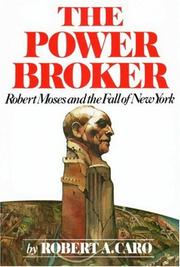
This is the essential Caro text and must be read before the LBJ series. It establishes his thesis about how power actually works in America, introduces his signature techniques (deep geography, oral history, structural irony), and builds the reader's endurance for 700–1,000 page volumes.
LBJ: Rise from Texas
IntermediateTrace Johnson's origins, his mastery of the Hill Country's poverty, his entry into Congress, and his first ruthless accumulation of political power — understanding the man before the Senate.
▸ Study plan for this stage
Pace: 10–12 weeks total: ~6–7 weeks for "The Path To Power" (~30–35 pages/day, ~900 pages) and ~4–5 weeks for "Means of Ascent" (~25–30 pages/day, ~500 pages), with one buffer week between books for reflection and note consolidation.
- The Hill Country as crucible: How the grinding poverty, isolation, and lack of electricity in the Texas Hill Country shaped Johnson's obsessive drive, his empathy for the powerless, and his ruthless hunger to escape his origins — as documented in Caro's opening chapters of The Path To Power
- The Johnson family legacy: The rise and fall of Sam Ealy Johnson Jr. as a Texas legislator and the shame of financial ruin, which instilled in LBJ both a terror of failure and a model of political ambition to surpass
- Mastery through observation: Johnson's almost preternatural ability — first visible at Southwest Texas State Teachers College and then in Washington as a congressional secretary — to read people, identify what they want, and exploit that knowledge for personal advancement
- The 'Treatment': The physical and psychological domination Johnson deployed in one-on-one encounters, combining flattery, intimidation, mimicry, and relentlessness — a technique already visible in his earliest political relationships in The Path To Power
- Transactional loyalty and the Brown & Root alliance: How Johnson's relationship with the Brown brothers and their construction empire established the template of exchanging political favors for campaign money, funding his rise from congressman to Senate candidate
- The 1941 Senate race as a masterclass in fraud and defeat: Caro's detailed account in The Path To Power of how Johnson nearly stole the 1941 special Senate election — and what his failure revealed about the limits of his methods at that stage
- The 1948 Senate campaign and 'Ballot Box 13': The central narrative of Means of Ascent — how Johnson stole the Democratic primary runoff against Coke Stevenson through systematic ballot fraud in Jim Wells County, and what this reveals about his willingness to destroy democratic norms for power
- Coke Stevenson as moral counterpoint: Caro's portrait of Stevenson in Means of Ascent as an almost mythically honest, self-made Texan — deliberately constructed to sharpen the moral indictment of Johnson's methods and force the reader to weigh ends against means
- According to Caro in The Path To Power, in what specific ways did growing up in the Texas Hill Country — its poverty, its landscape, its lack of basic infrastructure — directly produce the psychological traits that defined Johnson's political career?
- How did Johnson's tenure as a congressional secretary in Washington, D.C., function as a political education? What specific skills and relationships did he develop, and how did Caro use this period to foreshadow Johnson's later Senate mastery?
- What was the role of Brown & Root in Johnson's congressional career as depicted in The Path To Power, and why does Caro treat this relationship as foundational rather than merely transactional?
- Caro presents the 1941 Senate race in The Path To Power as a pivotal turning point. What did Johnson learn from his defeat, and how did those lessons directly shape the strategy he employed in 1948?
- In Means of Ascent, how does Caro construct Coke Stevenson's biography and character, and what is the literary and moral purpose of that portrait within the larger argument of the book?
- Based on both books, how would you define Johnson's relationship to democratic legitimacy? Does Caro suggest Johnson saw electoral rules as constraints to be respected or obstacles to be overcome, and what evidence from the texts supports your answer?
- Annotated timeline: Build a chronological timeline spanning both books (c. 1908–1948) marking key events — LBJ's birth, college years, arrival in Washington, congressional elections, 1941 race, WWII interlude, 1948 primary — and annotate each entry with one sentence on what it reveals about Johnson's character development.
- Character relationship map: Draw a network diagram of Johnson's key relationships in The Path To Power (Sam Rayburn, the Brown brothers, Richard Kleberg, Lady Bird, his father Sam Ealy) with labeled edges describing the nature of each bond — what Johnson gave, what he took, and how each relationship advanced his power.
- Close-reading comparison: Select one passage in which Caro describes Johnson using 'the Treatment' or a manipulation tactic, and one passage describing Coke Stevenson's conduct in an equivalent situation. Write a 400–600 word comparative analysis of Caro's prose choices — word selection, sentence rhythm, framing — and what they reveal about his authorial stance.
- Fraud reconstruction exercise: Using only Means of Ascent, reconstruct the mechanics of the Ballot Box 13 fraud in a step-by-step outline: who was involved, what was altered, when, and how it was nearly exposed. Then write a one-paragraph reflection on what Caro's level of detail argues about the importance of this event.
- Debate preparation: Write two short position statements (150–200 words each) — one arguing that Johnson's ends (rural electrification, eventual Great Society legislation) justify the means Caro documents in these two books, and one arguing they do not. Use specific evidence from both texts.
- Predictive reading journal: Before beginning Means of Ascent, write a one-page prediction of how Johnson will attempt to win the 1948 Senate race based solely on what you learned about his character in The Path To Power. After finishing, revisit your prediction and annotate where Caro confirmed, complicated, or surprised your expectations.
Next up: By the end of these two books the reader understands the raw, unscrupulous machinery Johnson used to reach the Senate — the next stage will reveal how he transformed that same ruthlessness into legislative genius, making the Senate itself an instrument of personal and national power.
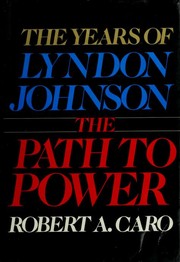
Volume I of The Years of Lyndon Johnson covers LBJ's Texas roots through his failed 1941 Senate race. Read first in the series: it establishes every major theme — ambition, cruelty, idealism, and the grinding poverty that shaped Johnson's drive.

Volume II covers the stolen 1948 Senate election — one of Caro's most forensic and morally charged investigations. It must follow Volume I because it resolves the cliffhanger of Johnson's political survival and deepens the portrait of his ruthlessness.
LBJ: Master of the Senate
ExpertUnderstand how Johnson seized control of the U.S. Senate — an institution Caro explains from its constitutional origins — and passed the first civil rights legislation in 82 years, revealing LBJ at the peak of legislative genius.
▸ Study plan for this stage
Pace: 10–12 weeks, ~35–40 pages/day (the book runs ~1,200 pages including endnotes); plan for 5 reading days per week, reserving weekends for review, note consolidation, and exercise work. Break the book into four natural arcs: (1) The Senate's constitutional history and its decay (pp. 1–130); (2) Johnson
- The Senate as a constitutional institution: Caro's deep dive into how the Founders designed the Senate, how the filibuster evolved, and why the body had become a graveyard for civil rights legislation for 82 years before 1957
- The Seniority System and the 'Inner Club': how informal power structures — committee chairmanships, the 'Senate Establishment,' and Richard Russell's Southern bloc — actually governed the chamber far more than formal rules
- Johnson's acquisition of power through the Policy Committee and the Democratic caucus: his transformation of the previously powerless Majority Leader role into the central nervous system of the Senate
- The 'Treatment' and interpersonal intelligence: Caro's portrait of LBJ's preternatural ability to read individuals — their fears, vanities, and needs — and deploy flattery, intimidation, favors, and information as legislative tools
- The legislative mechanics of the Civil Rights Act of 1957: jury-trial amendments, Title III deletions, the negotiation with Richard Russell, and how Johnson threaded the needle between Northern liberals and Southern conservatives
- The moral ambiguity of legislative genius: Caro forces the reader to hold simultaneously LBJ's genuine desire for historical legacy, his cynical weakening of the bill, and the real-world consequences for Black Americans in the Jim Crow South
- Power and the institution: how Johnson's methods — centralizing information, controlling floor scheduling, managing individual senators one by one — permanently altered the Majority Leader role
- Caro's biographical method at scale: the use of oral histories, archival documents, and structural historical context (the Senate's full history) to illuminate a single man's exercise of power
- How did the constitutional design of the Senate, combined with the evolution of the filibuster and the seniority system, make it structurally resistant to civil rights legislation — and how does Caro use that institutional history to frame Johnson's achievement?
- What specific levers of power did Johnson seize upon becoming Majority Leader, and why had previous leaders left those levers untouched? What does this reveal about the relationship between institutional rules and individual agency?
- How did Johnson's relationship with Richard Russell both enable and constrain his pursuit of the Civil Rights Act of 1957, and what does Caro suggest about the price Johnson paid — politically and morally — for that relationship?
- In what ways did Johnson weaken the Civil Rights Act of 1957 to secure its passage, and how does Caro ask the reader to weigh a compromised law against no law at all? Where does Caro himself seem to land?
- What is 'the Treatment,' and what does Caro's detailed reconstruction of it reveal about Johnson's theory of political power — specifically, his belief that power is ultimately personal and psychological rather than structural?
- How does Caro's decision to open the book with a sweeping history of the Senate (rather than with Johnson himself) shape the reader's understanding of what Johnson's Senate mastery actually means?
- Institutional mapping: Draw a diagram of the Senate's actual power structure as Caro describes it circa 1949–1957 — formal roles (Majority Leader, committee chairs, whips) alongside informal ones (the Inner Club, Russell's Southern bloc, the Policy Committee). Annotate each node with how Johnson either captured, neutralized, or worked around it.
- The Treatment journal: Select three senators Caro depicts Johnson lobbying individually (e.g., Hubert Humphrey, Paul Douglas, Richard Russell). For each, write a one-page analysis: What did Johnson know about this person? What leverage or appeal did he use? Did it work, and why?
- Legislative timeline: Build a chronological timeline of the Civil Rights Act of 1957's journey through the Senate — key votes, amendments offered, cloture attempts, backroom deals — and annotate each event with the behind-the-scenes maneuvering Caro documents. Compare this to the public record to appreciate what Caro's research surfaces.
- Counterfactual essay (500–700 words): Argue what would have happened to the Civil Rights Act of 1957 if Johnson had not weakened it (removing Title III, adding the jury-trial amendment). Use Caro's own evidence — vote counts, Southern bloc positions, Eisenhower's stance — to ground your argument.
- Caro's method analysis: Choose one chapter from the Senate's constitutional history section and one chapter from the legislative climax. Write a comparative note on Caro's sourcing: What kinds of evidence does he use in each? How does he signal confidence vs. inference? What does this reveal about the challenges of writing political biography at this scale?
- Contemporary resonance reflection: Research one modern Senate episode (e.g., a filibuster fight, a reconciliation maneuver, a Majority Leader's procedural gambit) and write a one-page memo connecting it to the structural and personal dynamics Caro describes. Which of Johnson's insights about Senate power still apply, and which do not?
Next up: Mastering Johnson's Senate years — his willingness to compromise principle for passage, his accumulation of personal political capital, and his complex relationship with civil rights — sets the essential foundation for understanding the explosive contradictions that will define his Vice Presidency and Presidency, where the same man who weakened the 1957 Act will sign the Civil Rights Act of 1964 a
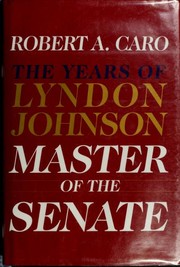
Volume III is widely considered Caro's greatest single achievement. It requires the prior two volumes to fully appreciate how far Johnson has traveled. Its opening history of the Senate as an institution is essential reading on its own terms.
LBJ: The Presidency
ExpertWitness Johnson's ascent to the presidency through assassination, his Great Society triumphs, and the catastrophe of Vietnam — completing the full arc of a man who both enlarged and damaged American democracy.
▸ Study plan for this stage
Pace: 6–8 weeks, ~40–50 pages/day — The Passage of Power runs ~700 pages of dense narrative; allow extra days for the pivotal Dallas and first-100-days sections, which reward slow, annotated reading
- The transition of power after JFK's assassination — how LBJ seized institutional control within hours and what that reveals about his lifelong preparation for the presidency
- The 'Treatment' and legislative mastery — Johnson's unparalleled ability to read, pressure, and persuade individual senators, demonstrated most dramatically in passing the Civil Rights Act of 1964
- The paradox of the 'Great Society' launch — how Johnson used Kennedy's martyrdom as political capital while simultaneously pursuing an ambitious domestic agenda that was authentically his own
- LBJ's humiliation as Vice President — the Kennedy years as a study in powerlessness, and how that experience sharpened his hunger and shaped his governing style
- The 1960 Democratic primary and the Kennedy–Johnson relationship — the complex rivalry, mutual contempt, and ultimate political marriage that defined both men
- Speed and momentum as governing philosophy — Johnson's deliberate strategy of passing as much legislation as possible before the 'honeymoon' window closed, revealing his deep understanding of political time
- The seeds of Vietnam — Caro's careful documentation of the early escalation decisions made in the transition period and first term, foreshadowing the catastrophe to come
- Power as both instrument and end — how The Passage of Power crystallizes Caro's master thesis that Johnson's character simultaneously enabled historic good and carried the roots of historic destruction
- How did Johnson's behavior during the Kennedy Vice Presidency illustrate the psychological and political costs of powerlessness, and how did those years change him?
- What specific legislative and political maneuvers did Johnson employ in the first weeks after Dallas to transform grief into governing momentum — and what does this reveal about his theory of power?
- Caro argues that Johnson's passage of the Civil Rights Act was both a moral act and a masterwork of political manipulation. How does The Passage of Power support or complicate that dual claim?
- In what ways does the 1960 primary battle between Kennedy and Johnson foreshadow the tensions of the Vice Presidential years and the post-Dallas transition?
- How does Caro use the contrast between LBJ's impotence as VP and his explosive effectiveness as President to advance his broader argument about the relationship between power and character?
- Where in The Passage of Power do you first see the decision-making patterns that will lead to Vietnam, and what does Caro suggest about whether those patterns were inevitable?
- Annotate the Dallas and Air Force One sequence (chapters covering November 22, 1963) with margin notes tracking every decision LBJ makes within the first 24 hours — then write a one-page analysis of what those decisions reveal about his character under pressure
- Create a two-column 'Power Ledger' for LBJ's Vice Presidential years vs. his first 100 days as President: list specific actions, relationships, and outcomes in each column to make Caro's contrast visceral and concrete
- Select one major piece of Great Society legislation introduced in The Passage of Power and research its real-world legislative history using primary sources (Congressional Record, LBJ Library archives online) to test and deepen Caro's account
- Write a 500-word character study of Robert Kennedy as portrayed in The Passage of Power — then argue whether Caro's portrayal is fair, using specific textual evidence
- Map the 1960 Democratic primary as a timeline, noting each turning point Caro describes; then write a short counterfactual: what happens to American liberalism if Johnson wins the nomination?
- Draft a 750-word critical essay responding to this prompt: 'The Passage of Power suggests that Johnson's greatest strengths and his greatest failures share the same root. Do you agree?' — use at least four specific scenes from the book as evidence
Next up: By completing The Passage of Power, the reader has witnessed Johnson at the absolute apex of his power and purpose, making the eventual Vietnam catastrophe and his 1968 withdrawal — the subjects of Caro's forthcoming final volume — feel not like a surprise but like a tragic inevitability rooted in everything this stage has revealed about his character.
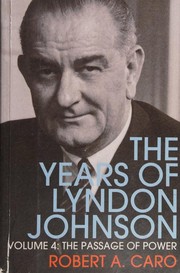
Volume IV covers 1958–1964, including the Kennedy years, the assassination, and LBJ's stunning first months as president. It must follow Master of the Senate to feel the full shock of Johnson's fall to the Vice Presidency and his explosive return to power.
Discussion
Keep reading
Paths that share books, cover the same subject, or open a related topic.