Ron Chernow Reading Order: Where to Start
Ron Chernow writes very long biographies of Americans who built institutions, and the practical question for a new reader is not chronology but stamina — most of these books run past eight hundred pages. This path starts with the two founding-era lives that are his most read, moves to the finance and business books where he began, then takes on the two late doorstops, and finishes with the deeper cuts. There is no series order to respect, so the sequence here is about building appetite rather than continuity.
The Best Entry Points
IntermediateStart with the founding-era biographies, which are his most narratively propulsive and the ones with the clearest arcs.
▸ Study plan for this stage
Pace: 13-17 weeks for about 1,760 pages (Alexander Hamilton 832, Washington 928). Set expectations honestly before you begin: every book on this path except one runs past 800 pages, and this stage alone is longer than most people's annual reading. Thirty to forty pages a sitting is the sustainable rate an
- Chernow's subject is always institution-building: the interesting question is not what the man felt but what he constructed and what it cost
- Hamilton as immigrant outsider - illegitimate, self-made, permanently insecure - and Chernow's argument that this explains both the achievement and the self-destruction
- The design of American public finance: assumption of state debts, the national bank, the mint, and why Hamilton thought credit was the foundation of a nation
- The Hamilton-Jefferson conflict as a genuine argument about what kind of country to build, not a personality clash
- Washington's opacity is Chernow's central technical problem, and the solution is accumulation - thousands of small documented actions in place of introspection
- Washington's relationship to slavery is handled at length and without evasion, and it is the hardest material in the book
- Chernow's method is archival exhaustiveness rendered as narrative, which is why the books are long and why they read faster than their length implies
- The musical drew on the Hamilton biography, and separating Chernow's Hamilton from the stage version is worth doing consciously
- What did Hamilton actually build, and which of his institutions still operate in recognisable form?
- Chernow argues Hamilton's origins explain his character. Where is that argument strongest and where does it become circular?
- How does Chernow make Washington legible without inventing an interior life for him?
- What is Chernow's assessment of Washington on slavery, and does the book's structure let that assessment carry proper weight?
- After 1,760 pages, what is Chernow's implicit theory of what makes a founder consequential?
- Decide your daily page target before you start and write it down. At this scale, pacing is the difference between finishing and stalling at page 400.
- Keep a one-page timeline for Hamilton. The financial legislation is the spine and it is easy to lose among the personal drama.
- Read the Hamilton-Jefferson exchanges as a pair, in sequence. Chernow gives both sides and the argument is more balanced than his sympathies suggest.
- After Washington, write 300 words on whether Chernow succeeded in making him a person rather than a monument. It is the book's own stated goal and it is fair to grade it.
- If you know the musical, note three places where Chernow's Hamilton differs materially. It is a useful check on how much of your prior sense of the man came from a stage adaptation.
Next up: Hamilton built the machinery of American finance; the next stage goes to the people who inherited it and shows you where Chernow's own career actually started.
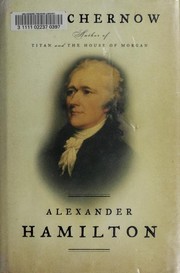
The book behind the musical, and the best possible introduction: an immigrant outsider, a genuinely dramatic life, and Chernow's argument for Hamilton as the architect of American finance.
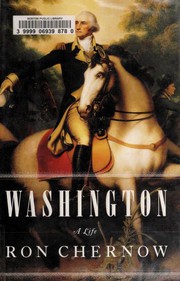
His Pulitzer winner, and the book that makes a famously opaque man legible. Read after Hamilton, where Washington is already a supporting character you will want explained.
The Business Books
IntermediateGo back to the financial histories where Chernow started, and see the institutional interests that shape all his later work.
▸ Study plan for this stage
Pace: 12-16 weeks for about 1,640 pages (Titan 832, The House of Morgan 812). Titan is a single-life biography and reads at roughly the same rate as Hamilton. The House of Morgan is materially harder: four generations, two continents, and a hundred years of banking, so the cast is enormous and the through
- Rockefeller as a study in ruthlessness and piety in the same person, with neither treated as a mask for the other
- Standard Oil's construction: rebates, horizontal consolidation, and the invention of the modern trust, explained clearly enough for a non-specialist
- The antitrust response and the breakup, which is where a business biography becomes a political history
- Philanthropy on an industrial scale as both genuine conviction and reputational engineering, and Chernow's refusal to resolve the two
- The House of Morgan was his first book and traces four generations of Morgan banks from Victorian London through the Depression to the modern era
- An institution as protagonist: the book's real subject is how private banking power operated before the state took over the role
- The 1907 panic, the creation of the Federal Reserve, and the long argument about who should be the lender of last resort - which is the same argument Hamilton started
- These two books are where the financial fluency that the later biographies assume actually gets built
- How did Standard Oil actually work, mechanically? Explain it in five sentences without using the word monopoly.
- Is Chernow's Rockefeller a hypocrite? What would count as evidence either way in his account?
- What did the Morgan banks do that no institution could do today, and what replaced them?
- How does writing an institution's biography change Chernow's technique compared with writing a man's?
- How do these two books change your reading of Hamilton's financial arguments now that you have seen what the system became?
- Draw the Standard Oil structure as Chernow describes it. The trust is a legal contraption and drawing it is the fastest way to understand what was novel about it.
- Keep the Morgan family tree in front of you throughout. The book assumes you can distinguish the generations and it is easy to conflate them.
- Track one crisis - 1907 is the best - from the first sign of trouble to the resolution. It shows exactly what private banking power meant in practice.
- Write a paragraph connecting Hamilton's national bank to the Federal Reserve's creation. Chernow does not draw the line explicitly and drawing it yourself is the payoff for reading the books in this order.
Next up: With the finance and the founding both in place, the two longest books can be read as what they are: reassessments that assume you already know the standard account.

John D. Rockefeller, and the best of his business biographies: a portrait of ruthlessness and piety in the same person. It pairs naturally with the Hamilton view of American capital.
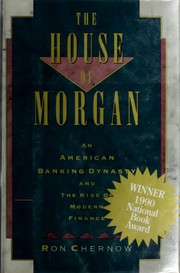
His first book and a National Book Award winner — four generations of the Morgan banks across a century of finance. Denser than the single-life biographies, so read it once you trust him.
The Late Doorstops
IntermediateTake on the two longest and most recent books, both of which reassess a reputation.
▸ Study plan for this stage
Pace: 17-22 weeks for about 2,320 pages (Grant 1104, Mark Twain 1220). These are the two longest books Chernow has written and together they are a serious multi-month project - at 35 pages a sitting, Grant alone is eight weeks. Both are reassessments: Grant argues against a century of historiography, and
- Grant's argument: that Ulysses S. Grant was a far better general, president and man than a century of Lost Cause historiography allowed
- Grant's alcoholism handled as a lifelong medical and personal fact rather than a scandal or an excuse
- Reconstruction as the centre of the presidential case - Grant's enforcement against the Klan is the strongest evidence Chernow marshals
- Command as a subject: Washington and Grant together let you see Chernow's consistent interest in how authority is actually exercised
- Mark Twain shifts the method from institutions to a career made of performance, lecturing, debt and self-invention
- Twain's business disasters and bankruptcies give Chernow his familiar financial material inside a literary life
- A literary biography from a writer trained on financiers is an experiment, and judging whether it works is the real interest of this stage
- Both books are revisionist in tone, which means reading them alongside an awareness that the older consensus had its own reasons
- What is Chernow's case for Grant's presidency, and what does he concede to the traditional critics?
- How does the book handle Grant's drinking without either minimising it or letting it become the story?
- What does Reconstruction look like from Grant's desk, and why has that view been so hard to see?
- Does Chernow's institutional method work on a writer? What does he attend to in Twain that a literary critic would not?
- Which of these two reassessments is more persuasive, and is that about the argument or about the subject?
- Read a short summary of the traditional view of Grant's presidency before starting. A revisionist book is much more interesting when you know what it is revising.
- Track Grant's finances across his life - the failures, the presidency, the memoir written against the clock. It is the thread that connects him to every other Chernow subject.
- In Mark Twain, note every business venture and its outcome. The pattern is startling and it is the most Chernow-ish thing in the book.
- Compare a chapter of Washington with a chapter of Grant on the same kind of scene - a battlefield decision or a cabinet argument. Seven years apart, the technique is nearly unchanged, which is either consistency or formula and you should decide which.
- Give yourself a scheduled break between the two books. Four thousand pages of Chernow without a pause is how readers end up abandoning the shelf.
Next up: The major books are done, and the remaining two show you the darkest thing he wrote and the shortest, both of which only make sense with the rest behind them.
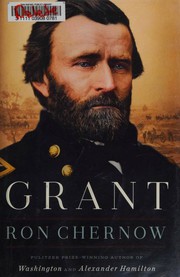
A thousand pages arguing that Ulysses S. Grant was a far better president and man than a century of historians allowed. Richer if Washington has already shown you how Chernow handles command.

His most recent life, and his first literary subject, which shifts the method from institutions to a career made of performance. A rewarding late read, not a starting point.
The Deeper Cuts
IntermediateFinish the shelf with the two remaining books, including the short one most readers never find.
▸ Study plan for this stage
Pace: 8-11 weeks for about 980 pages, almost all of it in one book (The Warburgs 850, The Death of the Banker 130). The Warburgs is the least read of his major works and the darkest, following a German-Jewish banking dynasty through the rise of Nazism and after; it presumes the financial fluency The House
- The Warburgs traces a German-Jewish banking family across the century that destroyed the world they built
- The book's hardest material is the period when assimilated, patriotic German bankers could not believe what was happening to them - and Chernow refuses hindsight's comfort
- Family and firm are inseparable here, which makes it the fullest version of the dynasty-biography form he began with the Morgans
- Emigration, restitution and the postwar afterlife occupy the final section, and it is unusually unresolved for a Chernow ending
- The Death of the Banker compresses his argument about how financial power moved from banks to institutional investors
- That short book is effectively the thesis underlying The House of Morgan and The Warburgs, which is why it reads as a summary rather than an introduction
- Reading the shelf in this order means you finish with the argument stated plainly after 6,000 pages of evidence
- What made the Warburgs' position in German society so precarious, and why was it so hard for them to see?
- How does Chernow handle the moral question of a family that continued doing business under the Nazi regime?
- How does The Warburgs differ from The House of Morgan as a dynasty biography, and what does the difference come down to?
- What is the thesis of The Death of the Banker, and is it borne out by the histories you have just read?
- Having read the whole shelf, what does Chernow consistently believe about the relationship between individual character and institutional power?
- Keep the Warburg family tree open throughout. Three branches across two countries is more genealogy than any other book on this path demands.
- Note the dates at which each family member concluded that Germany was no longer survivable. The spread of those dates is the book's most devastating implicit argument.
- Read The Death of the Banker in one sitting and then check its claims against The House of Morgan. It is a thesis with a 812-page appendix and you have now read the appendix.
- Write your own ranked reading order for Chernow, with the entry book defended. Having finished roughly 6,700 pages you are among a small number of readers qualified to argue about it.
Next up: The shelf ends here, and the natural continuations are the other long-form American biographers Chernow is read alongside, or the subjects themselves in their own words.

A German-Jewish banking dynasty across the rise of Nazism and its aftermath. The least read of his major books and the darkest, and it presumes the financial fluency The House of Morgan builds.

A brief lecture-length book compressing his argument about how financial power shifted from banks to investors. Slight next to the biographies, but a useful summary once you have read them.
Discussion
Keep reading
Paths that share books, cover the same subject, or open a related topic.