The Manhattan Project: essential books on building the atomic bomb
This curriculum traces the Manhattan Project from its human drama and historical context through its deep science, moral reckoning, and long nuclear shadow. Starting with accessible narrative histories, the path moves through intimate biographical portraits, primary-source accounts, and finally into scholarly and philosophical works that interrogate the bomb's legacy — each stage building the vocabulary, context, and critical lens needed for the next.
Foundations: The Story Before the Science
BeginnerGain a vivid, accessible narrative understanding of what the Manhattan Project was, who drove it, and how it unfolded — building the historical scaffolding and key names needed for everything that follows.
▸ Study plan for this stage
Pace: 8–10 weeks, ~40–50 pages/day (Rhodes' book is ~900 pages; breaks recommended every 2–3 weeks to consolidate narrative threads)
- The scientific foundations of nuclear physics (Rutherford, Bohr, Fermi, and the race to understand the nucleus) and how theoretical breakthroughs made the bomb conceivable
- The historical catalysts: the rise of Nazi Germany, the refugee scientists fleeing Europe, and the fear that Hitler might develop the bomb first
- The key figures and their personalities: Oppenheimer as scientific leader, Groves as military administrator, Einstein's role, and the tensions between scientists and the military
- The Manhattan Project's organizational structure: how the U.S. government mobilized industry, science, and the military into an unprecedented secret enterprise
- The technical challenges and breakthroughs: uranium enrichment, plutonium production, and the engineering problems solved at Oak Ridge, Hanford, and Los Alamos
- The human cost and moral dimensions: the lives disrupted, the ethical dilemmas faced by scientists, and the weight of creating a weapon of mass destruction
- The race against time: the genuine uncertainty about whether Nazi Germany was pursuing the bomb, and how this fear drove the entire project forward
- What were the key scientific discoveries in nuclear physics (1900s–1930s) that made the atomic bomb theoretically possible, and who were the main physicists involved?
- Why did European scientists, particularly Jewish refugees, become central to the Manhattan Project, and what role did their fear of Nazi Germany play?
- Who were the major figures in the Manhattan Project (Oppenheimer, Groves, Fermi, Lawrence, etc.), and what were their primary responsibilities and personalities?
- How was the Manhattan Project organized as a secret government enterprise, and what were the main production sites (Oak Ridge, Hanford, Los Alamos) designed to accomplish?
- What were the primary technical obstacles in building the bomb (uranium enrichment, plutonium production, weapons design), and how were they overcome?
- What moral and ethical concerns did the scientists grapple with during the project, and how did these tensions play out?
- Create a timeline of key scientific discoveries (1900–1945) that made the bomb possible, marking each with the scientist(s) responsible and the core insight they contributed
- Build a character map of 8–10 major figures (Oppenheimer, Groves, Fermi, Lawrence, Einstein, Bohr, etc.), noting their background, role in the project, and one key decision or conflict they faced
- Draw a diagram of the Manhattan Project's organizational structure, showing how the three main production sites (Oak Ridge, Hanford, Los Alamos) connected and what each produced
- Write a 2–3 page narrative account of a single pivotal moment from Rhodes' book (e.g., the decision to launch the project, a breakthrough at Los Alamos, the Trinity test) from the perspective of one participant
- Create a 'fear map' showing the anxieties that drove the project forward: What did American leaders fear about Nazi Germany? What did scientists fear about their own creation?
- Compile a list of 5–6 ethical dilemmas faced by scientists in the book (e.g., continuing work despite moral doubts, secrecy vs. scientific openness) and note how different figures responded
Next up: This stage establishes the historical narrative, key personalities, and organizational reality of the Manhattan Project, providing the essential context and human framework needed to dive into the technical physics, engineering challenges, and the scientific decision-making that will be examined in depth in the next stage.
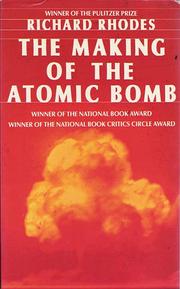
The definitive, Pulitzer Prize-winning starting point — a sweeping narrative that covers the physics, the personalities, and the politics from the discovery of fission to Hiroshima. Reading it first gives you the full map of the subject.
The Scientists: Portraits from the Inside
BeginnerUnderstand the inner lives, motivations, and moral struggles of the key scientists — Oppenheimer, Feynman, and their colleagues — through biography and memoir.
▸ Study plan for this stage
Pace: 8–10 weeks, ~40–50 pages/day. American Prometheus (680 pages): 3–4 weeks. Surely You're Joking, Mr. Feynman (350 pages): 2 weeks. The Martians of Science (400 pages): 2–3 weeks. Build in 1 week for reflection and synthesis across all three texts.
- Oppenheimer's intellectual trajectory, personal ambitions, and the tension between scientific curiosity and moral responsibility
- Feynman's unconventional approach to physics, his playful skepticism, and his method of learning through direct observation and questioning
- The émigré scientists' backgrounds, displacement, and how their European heritage shaped their worldview and contributions to the Manhattan Project
- The psychology of genius: how brilliant minds approached problems differently and navigated the pressure of wartime scientific work
- Moral ambivalence and ethical reckoning: how scientists justified, rationalized, or struggled with their role in building the atomic bomb
- The social and personal networks among Manhattan Project scientists—mentorship, collaboration, and intellectual community
- The contrast between public persona and private doubt: how these scientists presented themselves versus their inner conflicts
- What were Oppenheimer's primary motivations for leading the Manhattan Project, and how did his personal ambitions intersect with his moral concerns?
- How did Feynman's approach to learning and problem-solving differ from that of his contemporaries, and what does this reveal about his character?
- What role did the émigré scientists' European backgrounds and experiences play in shaping their scientific outlook and their decisions during the war?
- How did the three books portray the scientists' moral struggles regarding the atomic bomb—did they express regret, justification, or ambivalence?
- What patterns emerge across the three texts about how genius operates: what habits, personalities, or methods do Oppenheimer, Feynman, and the Martians share or differ on?
- How did personal relationships and mentorship networks influence the scientists' work and ethical choices during the Manhattan Project?
- Create a timeline of Oppenheimer's life (from American Prometheus) marking key intellectual, personal, and moral turning points; annotate how each shaped his later decisions.
- Write a 2–3 page character sketch of Feynman based on Surely You're Joking, Mr. Feynman, focusing on his methods of learning and his attitude toward authority and rules.
- Compile a comparative table of 4–5 émigré scientists from The Martians of Science, listing their origins, displacement experiences, and contributions; reflect on how displacement may have shaped their resilience or ambition.
- Select one moral dilemma or moment of doubt from each book (one from Oppenheimer, one from Feynman, one from The Martians) and write a short analysis of how each scientist rationalized or grappled with it.
- Conduct a close reading exercise: choose one passage from each book that reveals the author's (or subject's) view of the scientist's inner life, and analyze what it tells you about motivation versus public image.
- Create a visual map or diagram showing the relationships and mentorships among the scientists mentioned across all three books; note who influenced whom and how ideas or concerns flowed between them.
Next up: This stage establishes the human and psychological foundation for understanding the Manhattan Project—you now know the scientists as individuals with competing motivations, moral frameworks, and intellectual styles—preparing you to examine the scientific, technical, and historical forces that shaped the project's trajectory and outcome.

The authoritative biography of J. Robert Oppenheimer, the project's scientific director — essential for understanding the man at the center of Los Alamos and the tragic postwar security hearings.
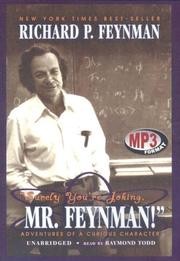
Feynman's own irreverent memoir includes vivid firsthand glimpses of life at Los Alamos, humanizing the project from a junior physicist's perspective and making the science feel alive.
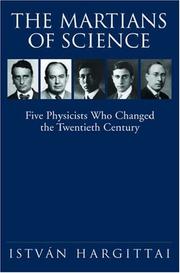
Profiles the five Hungarian émigré physicists — including Szilard, Teller, and von Neumann — whose refugee experience and genius were indispensable to the bomb, adding a crucial European dimension to the story.
Secrecy, Espionage & the Machinery of the Project
IntermediateExamine the vast organizational, intelligence, and security apparatus behind the project — the spies, the generals, the secret cities — and understand how secrecy shaped both the bomb and postwar America.
▸ Study plan for this stage
Pace: 8–10 weeks, ~40–50 pages/day. "109 East Palace" (weeks 1–3, ~350 pages), "Dark Sun" (weeks 4–10, ~650 pages). Allocate 1–2 days per week for reflection and exercise completion.
- The role of Dorothy McKibbin and the Santa Fe office as the human gateway to Los Alamos, and how individual administrators managed secrecy in practice
- The compartmentalization strategy: how the Manhattan Project fragmented information across sites (Oak Ridge, Hanford, Los Alamos) to limit what any one person knew
- Soviet espionage networks (the Rosenberg ring, Klaus Fuchs, Ted Hall) and how spies penetrated the project despite security measures
- The tension between scientific openness and military secrecy: how physicists navigated collaboration while under surveillance
- General Leslie Groves' command structure and his methods for controlling both the bomb's development and its political narrative
- The creation and maintenance of secret cities (Los Alamos, Oak Ridge, Hanford) as closed communities with their own governance and culture
- How wartime secrecy established precedents for Cold War security states and the postwar nuclear arms race
- The human cost of secrecy: compartmentalization's effect on scientists' autonomy, families' knowledge, and postwar accountability
- What was Dorothy McKibbin's role in the Manhattan Project, and how did her position at 109 East Palace exemplify the human infrastructure of secrecy?
- How did the compartmentalization strategy work across Oak Ridge, Hanford, and Los Alamos, and what were its strengths and vulnerabilities?
- Who were the major Soviet spies who infiltrated the Manhattan Project (as detailed in 'Dark Sun'), and how did they access classified information?
- How did General Groves balance the need for scientific collaboration with the imperative to maintain absolute secrecy, and what tensions did this create?
- What were the characteristics of the secret cities built for the Manhattan Project, and how did life in these closed communities shape the scientists and workers?
- How did the secrecy apparatus of the Manhattan Project establish patterns that would define Cold War security culture and the nuclear arms race?
- Create a detailed organizational chart of the Manhattan Project based on 'Dark Sun,' showing reporting lines from Groves down through regional commanders, and annotate it with the compartmentalization barriers between sites.
- Write a 2–3 page character study of Dorothy McKibbin from '109 East Palace,' analyzing how her role as a civilian administrator bridged the gap between the scientific community and military security apparatus.
- Map the Soviet espionage network described in 'Dark Sun' (Fuchs, the Rosenbergs, Ted Hall, etc.), showing recruitment chains, information flows, and the counterintelligence failures that allowed them to operate.
- Conduct a comparative analysis: select one scientist from '109 East Palace' and one from 'Dark Sun' and write a 3–4 page essay on how secrecy affected their scientific autonomy, moral agency, and postwar lives differently.
- Design a hypothetical security audit of the Manhattan Project: identify 3–4 critical vulnerabilities in Groves' compartmentalization strategy that Soviet intelligence exploited, and propose alternative safeguards.
- Create a day-in-the-life narrative (2–3 pages) for a worker or scientist in one of the secret cities (Los Alamos, Oak Ridge, or Hanford), drawing on details from both books to show how secrecy shaped daily existence.
Next up: This stage reveals how secrecy and organizational control shaped the bomb's creation and embedded nuclear weapons into Cold War geopolitics; the next stage will examine the scientific and moral reckoning that followed—how physicists confronted their role in creating weapons of mass destruction and what responsibility they bore for the postwar world.
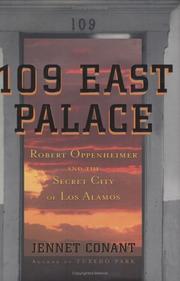
Tells the story of Los Alamos through Dorothy McKibbin, the project's Santa Fe gatekeeper, revealing the human texture of secrecy and community life inside the hidden laboratory.
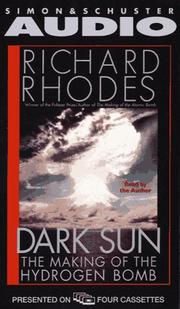
Rhodes's follow-up to his first masterwork focuses on Soviet espionage and the race for the hydrogen bomb, showing how Manhattan Project secrets were stolen and the Cold War arms race ignited — a natural next step after the foundations.
Hiroshima: Impact, Survivors & Moral Reckoning
IntermediateShift perspective from the makers to the victims and witnesses, confronting the human consequences of the bomb and the ethical debates that have never been fully resolved.
▸ Study plan for this stage
Pace: 6–7 weeks, ~40–50 pages/day. "Hiroshima" (140 pages) in weeks 1–2; "Downfall" (700+ pages) in weeks 3–7, with reflection days built in.
- Immediate human devastation: Hersey's six survivors' accounts reveal the atomic bomb's physical and psychological toll on ordinary civilians in real time
- Civilian vs. military perspectives: contrasting Hersey's ground-level witness testimony with Frank's strategic analysis of why the bomb was dropped
- Moral ambiguity and competing justifications: weighing the bomb's role in ending the war against the ethical cost of mass civilian casualties
- Long-term consequences: understanding radiation sickness, trauma, and the lasting social stigma faced by hibakusha (bomb survivors)
- Historical contingency: recognizing how different decisions, intelligence assessments, and military calculations could have altered the outcome
- The limits of rationalization: confronting how institutional logic and military necessity arguments can obscure human suffering
- Testimony as evidence: understanding how survivor narratives and eyewitness accounts function as historical and moral documents
- How do the six survivors Hersey profiles—their injuries, losses, and immediate responses—illustrate the indiscriminate nature of the atomic bomb's destruction?
- What are the main arguments Frank presents for why the U.S. military leadership believed the bomb was necessary, and what evidence does he examine to evaluate those claims?
- How do Hersey's accounts of radiation sickness and long-term suffering complicate or challenge the military rationales discussed in 'Downfall'?
- What role did Japanese military resistance, casualty estimates, and the Soviet entry into the war play in the decision to use the bomb, according to Frank?
- How does reading Hersey's intimate survivor narratives before Frank's strategic analysis change your understanding of the ethical stakes in the decision to drop the bomb?
- What evidence does Frank present about alternative paths to Japanese surrender, and how do those alternatives reframe the necessity argument?
- Character mapping: Create detailed profiles of Hersey's six survivors (name, age, occupation, location at detonation, injuries, immediate losses). Track how each person's story unfolds across the book and note which details most powerfully convey human cost.
- Timeline reconstruction: Build a chronological timeline of events in 'Downfall' from the spring of 1945 onward—key military decisions, intelligence reports, casualty estimates, and diplomatic moves—to visualize the decision-making context Frank examines.
- Counterargument analysis: For each major justification Frank discusses (invasion casualties, Soviet entry, Japanese refusal to surrender), write a one-page summary of his evidence, then identify gaps or alternative interpretations.
- Survivor testimony close reading: Select three powerful passages from Hersey describing survivors' experiences (physical injury, loss, psychological impact) and analyze how the language conveys moral weight and human particularity.
- Comparative perspective essay: Write a 3–4 page reflection comparing how Hersey and Frank each answer the question 'Why was the bomb dropped?' What does each author emphasize, and what does each downplay?
- Moral deliberation dialogue: Write a fictional conversation between one of Hersey's survivors and a U.S. military planner from Frank's account, using specific details from both books to ground the exchange in historical reality.
Next up: This stage grounds you in the human and strategic realities of the bomb's use, preparing you to examine how societies, nations, and individuals have grappled with the bomb's legacy in the decades since—including nuclear policy, Cold War tensions, and ongoing debates about weapons of mass destruction.
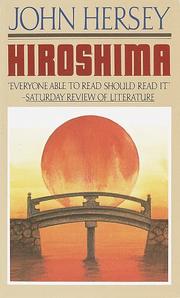
The landmark 1946 New Yorker account following six survivors — essential primary-source journalism that makes the abstract horror of the bomb viscerally real and morally undeniable.

A rigorous historical analysis of the decision to use the bomb and the alternatives considered, providing the strategic and political counterweight to Hersey's human testimony.
The Nuclear Age: Legacy, Ethics & the Long Shadow
ExpertSynthesize everything into a broader philosophical and historical understanding of how the Manhattan Project created the nuclear age, reshaped science's relationship with the state, and left moral questions that endure today.
▸ Study plan for this stage
Pace: 8–10 weeks, ~25–30 pages/day (alternating between both books; start with *The Fate of the Earth*, then *Command and Control* for deeper institutional context)
- Nuclear deterrence as a philosophical paradox: how mutual assured destruction became the foundation of Cold War strategy and the precarious logic of 'balance of terror'
- The extinction threshold: Schell's argument that nuclear weapons represent an unprecedented threat to human civilization and the biosphere itself, not just military targets
- The militarization of science and the state: how the Manhattan Project permanently fused scientific research with government control, secrecy, and weapons development
- Systemic risk and human error: Schlosser's examination of how accidents, miscalculation, and mechanical failure created repeated near-catastrophes throughout the nuclear arsenal's history
- Moral responsibility and complicity: the ethical burden on scientists, military officers, and policymakers who inherited or perpetuated nuclear weapons systems they did not create
- The long shadow of secrecy: how classified information, compartmentalization, and institutional opacity prevented public understanding and democratic accountability
- Technological determinism vs. human choice: whether nuclear weapons were inevitable once the physics was understood, or whether different political decisions could have altered the nuclear age
- What is Schell's central argument about why nuclear weapons represent a qualitatively different threat than conventional weapons, and how does he define the concept of 'extinction'?
- How does Schlosser use historical accident narratives (e.g., Goldsboro, Damascus) to challenge the assumption that nuclear command-and-control systems are fail-safe?
- What is the relationship between secrecy and accountability in nuclear weapons programs, and how did compartmentalization affect decision-making at different levels of the military and government?
- How did the Manhattan Project's model of state-directed scientific research reshape the relationship between scientists and government authority, and what ethical tensions did this create?
- What does Schell mean by the 'second death' of humanity, and how does this concept complicate traditional deterrence theory?
- According to Schlosser, what systemic vulnerabilities in nuclear command-and-control systems persist despite decades of safety improvements, and why are they difficult to eliminate?
- Create a two-column comparison chart: list Schell's philosophical arguments about nuclear extinction on one side, and Schlosser's concrete historical examples of near-misses on the other. Identify where they reinforce or complicate each other.
- Write a 1,500-word synthesis essay: 'The Manhattan Project's Unfinished Business.' Argue whether the moral and strategic problems Schell and Schlosser identify are inherent to nuclear weapons or could be resolved through better governance and transparency.
- Map the decision-making chain in one major nuclear incident from *Command and Control* (e.g., the 1980 Damascus accident or the 1995 Norwegian rocket incident). Identify where human judgment, technical failure, and institutional secrecy each played a role.
- Debate exercise: Prepare arguments for both sides of this proposition: 'Given what Schell and Schlosser reveal, nuclear deterrence is a rational strategy that has prevented war, OR it is an irrational gamble that has repeatedly nearly destroyed civilization.'
- Research and write a 1,000-word case study on a scientist or military officer featured in either book (e.g., a Manhattan Project physicist, or a Minuteman launch officer from Schlosser's narrative). Analyze their moral reasoning and what their choices reveal about complicity and conscience.
- Create an annotated timeline of key moments in nuclear history (1945–present) that illustrates both Schell's philosophical concerns and Schlosser's documented near-catastrophes. Write 2–3 sentences of analysis for each entry explaining its significance to the 'legacy' question.
Next up: This stage synthesizes the historical origins, technical realities, and ethical stakes of the nuclear age, positioning you to explore either the proliferation question (how nuclear weapons spread globally), the disarmament debate (whether elimination is possible), or the future of nuclear deterrence in a multipolar world.

A profound philosophical meditation on nuclear annihilation and human responsibility — best read last, when the reader has the full historical and scientific context to engage its moral arguments seriously.
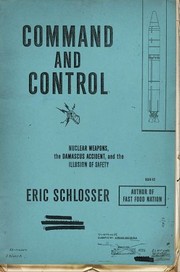
Investigates the terrifying accidents and near-misses of the nuclear arsenal from the Cold War onward, showing that the dangers born at Los Alamos never ended — a sobering, essential capstone to the curriculum.
Discussion
Keep reading
Paths that share books, cover the same subject, or open a related topic.