The Prague Spring: books to read, in order
For eight months in 1968 the Czechoslovak Communist Party tried to prove that a one-party socialist state could be made free, and then five Warsaw Pact armies arrived to prove it could not. This path builds from the country's Stalinist decades into the reform programme itself, then reconstructs the August invasion from the Soviet side and from inside the kidnapped Czechoslovak leadership, and ends with 'normalisation' — the twenty grey years that followed, which are the real subject of the Prague Spring's afterlife.
Czechoslovakia Before the Thaw
BeginnerUnderstand how the most industrialised, most democratic country in central Europe became a Stalinist state, and why reform pressure built inside the Party rather than against it
▸ Study plan for this stage
Pace: 6 weeks for about 1,530 pages. Heimann's Czechoslovakia (432pp) in two weeks, Albright's Prague Winter (474pp) in two weeks, Applebaum's Iron Curtain (627pp) in two weeks. Albright covers the German occupation, the Protectorate and the destruction of the Czech and Slovak Jewish communities, includin
- Czechoslovakia in 1938 was the most industrialised and the most durably democratic state in central Europe. Everything about 1948 and 1968 turns on that inheritance and on what the country believed about itself because of it.
- Heimann writes against the standard story of a blameless democracy destroyed by outsiders, arguing that the First Republic's treatment of its German, Slovak and Hungarian minorities was part of what came apart. The book was badly received in Prague and reading it first is deliberate — it inoculates
- Munich in 1938 is the founding grievance: the country was dismembered by an agreement its government was not party to. That is the specific reason the Communist Party's Soviet orientation had real domestic support in 1945 to 1948.
- The Communists won 38 per cent in the free 1946 election, the largest share of any party. The February 1948 takeover was not imposed on an unwilling population from outside in the way the later account has it, and Applebaum's regional survey shows why the Czechoslovak case is unusual.
- The Slánský trial of 1952 was the most severe of the bloc's show trials and was explicitly antisemitic. It is the specific crime the 1960s reformers were confronting when they began investigating the 1950s.
- Applebaum's argument is that Sovietisation was institutional first: youth movements, radio, police, associations, captured one at a time. Note which of those institutions Dubcek's team would later try to unpick.
- The reform pressure of the mid-1960s came from inside the Party — economists, writers, and the commissions rehabilitating the victims of the 1950s. This is the fact popular accounts of 1968 most often get wrong.
- What is Heimann's charge against the First Republic, and what evidence does she bring? Where do you think she presses it too hard?
- Why did the Communist Party have genuine electoral support in 1946, and what does Munich have to do with it?
- Describe the February 1948 events. What was constitutional about them and what was not?
- What was the Slánský trial, and why did investigating it in the 1960s destabilise the Party leadership?
- Name three institutions Applebaum shows being Sovietised and say what unpicking each would have involved by 1968.
- Build a one-page timeline from 1938 to 1967 with Munich, the Protectorate, the 1945 expulsions, 1946, February 1948, the Slánský trial and the 1963 rehabilitations on it. You will extend it through 1968 and 1989 by the end of the path.
- Trace one claim across two authors who disagree: Heimann's account of interwar Czechoslovakia against Albright's more sympathetic one. Find the passage where each treats the German minority, and write which is arguing and which is remembering.
- Albright's book is part history and part family memoir. Mark three places where the memoir shapes the historical judgement, and decide in each case whether it strengthens or weakens the account.
- Take Applebaum's chapter on a single institution and write 200 words on how it would have to be reformed to produce the free press Czechoslovakia briefly had in 1968. The answer explains why censorship was the first thing abolished.
Next up: You know what the reformers inherited and what they were trying to undo; now read the programme itself.

A deliberately unsentimental history that refuses the standard story of a blameless democracy crushed by outsiders. It is contested and was received badly in Prague, but reading it first inoculates you against the romanticism that surrounds 1968.
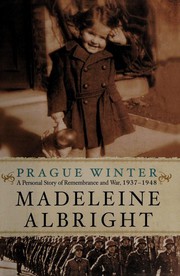
Albright's account of Czechoslovakia from 1937 to 1948, part history and part family memoir, covering Munich, the occupation and the Communist takeover. It supplies the emotional and political inheritance the 1968 reformers were arguing with.
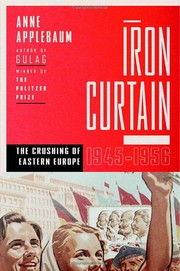
How Sovietisation was actually imposed across Eastern Europe between 1944 and 1956, institution by institution. Read it before the reform programme so you can see precisely which of those institutions Dubcek's team was trying to unpick.
Socialism with a Human Face
IntermediateFollow the reform programme itself — the Action Programme, the abolition of censorship, the economic debates — and understand what Dubcek believed he was doing
▸ Study plan for this stage
Pace: 3 weeks for about 850 pages. Williams's The Prague Spring and Its Aftermath (270pp) is the scholarly anchor and takes a careful week and a half. Shawcross's Dubcek (281pp) reads in three or four evenings. Dubcek's Hope Dies Last in a week.
- Williams's central finding, from Czech and Slovak archives, is that reform came from within the Party apparatus rather than from a society pushing against it. Everything in the popular narrative of 1968 has to be checked against that.
- The Action Programme of April 1968 is the document. Learn what it actually proposed — a leading role for the Party retained, federalisation of the Czech and Slovak halves, economic decentralisation, freedom of assembly and of the press — and what it did not propose, which was a multi-party system or
- Censorship was effectively abolished in March 1968, and the resulting press is what made the experiment visible and what alarmed Moscow most. The Two Thousand Words manifesto in June went beyond the leadership's position and is a good measure of how fast the ground moved.
- Ota Sik's economic reforms and the Slovak question — Gustav Husak's federalism — were running alongside the political liberalisation and had constituencies of their own.
- Dubcek was an apparatus man, Slovak, Moscow-trained, who believed a Communist party could be made popular by being made free. Shawcross wrote close to the events and captures how he was read at the time; the hindsight version flattens him into a symbol.
- Dubcek's memoir was dictated shortly before his death in 1992 and is self-serving in places, as memoirs by defeated leaders are. It is the only first-person account of the reform decisions from the man who signed them.
- 'Socialism with a human face' was a slogan the reformers used and a phrase their opponents used against them. Watch how the three books here treat it — as a programme, as a hope, or as an evasion.
- Summarise the Action Programme's main provisions. Which one do you think Moscow found most threatening, and why?
- What does Williams establish from the archives that contradicts the popular account of 1968?
- What did the Two Thousand Words manifesto say, and how did the leadership respond to it?
- Reading Dubcek's memoir against Shawcross: what is Dubcek defending, and on which decisions?
- Was the reform programme compatible with Warsaw Pact membership as Moscow understood it? Argue both sides using the Action Programme's own text.
- Find the Action Programme itself and read it. It is available in English, it is not long, and no secondary account substitutes for the primary text at the centre of the subject.
- Trace one claim across two authors: Williams's argument that reform was intra-Party against the popular framing of a society throwing off the Party. Find where Williams states it, list what he cites, and note where Dubcek's memoir supports or undercuts him.
- Take three decisions Dubcek made between January and August 1968 and, for each, write what he says about it and what Williams's archival account shows. The gaps are the memoir.
- Write down what a Politburo member in Moscow reading the Czechoslovak press in June 1968 would have concluded. You will check this against the actual Soviet documents in the next stage.
Next up: You have the reformers' case; the next stage puts you in the rooms where it was destroyed, with the documents.

The standard scholarly account in English, and the anchor of this path. Williams uses Czech and Slovak archives to show that reform came from within the Party apparatus, which is the fact most popular accounts get wrong.
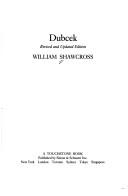
A biography written close to the events by a journalist who covered them, so it captures how Dubcek was read at the time rather than in hindsight. Short, and the fastest route to understanding a man usually reduced to a symbol.

Dubcek's own memoir, dictated shortly before his death in 1992. Self-serving in places, as memoirs by defeated leaders are, but the only first-person account of the reform decisions from the man who signed them.
August: The Invasion and the Documents
IntermediateReconstruct the Warsaw Pact decision to invade, the week of the occupation, and the Moscow Protocol that ended the experiment, using both memoir and primary documents
▸ Study plan for this stage
Pace: 6 weeks. The Czech Black Book is a compilation and reads fast — a few days. Mlynar's Nightfrost in Prague (300pp) in ten days. Navratil's The Prague Spring 1968 (648pp) is a documentary reader and should be worked through selectively over two weeks. Bischof, Karner and Ruggenthaler's edited volume (
- The Czech Black Book was compiled at the time from broadcasts, leaflets and eyewitness reports during the seven days of the invasion, and smuggled out. Read it before the analytical volumes so the week arrives as it was experienced rather than as it was later explained.
- The invasion of 20 to 21 August 1968 involved forces from the Soviet Union, Poland, Hungary and Bulgaria; Romania refused to take part. The occupation met no armed resistance from the Czechoslovak army, which had been ordered not to fight.
- The Bratislava and Cierna nad Tisou meetings in late July and early August, and the letter of invitation from Czechoslovak hardliners, are the immediate diplomatic run-up, and the invitation letter was only confirmed after 1989.
- Mlynar was a Party secretary flown to Moscow under arrest with Dubcek and was present when the leadership was broken into signing the Moscow Protocol. Nothing else puts you in that room.
- The Moscow Protocol ended the experiment: the leadership returned in place but bound, and the reforms were dismantled over the following year rather than at once. Frantisek Kriegel alone refused to sign.
- Navratil's reader — Politburo minutes, Brezhnev-Dubcek correspondence, invasion orders — is the evidence base beneath everything you have read so far. Reading a Soviet Politburo transcript directly is a different experience from reading a summary of one.
- Bischof's edited volume is where the interpretive arguments are actually conducted, across the Soviet, East German, Polish and American sides. It belongs last because it assumes you know the narrative.
- Jan Palach set himself on fire in Wenceslas Square in January 1969 in protest at the population's acquiescence. The date belongs to the next stage's subject as much as this one's.
- Reconstruct the week of 20 to 27 August with dates: the crossing, the arrest of the leadership, the clandestine Fourteenth Party Congress, the Moscow talks, the return.
- What does the invitation letter show, when did it surface, and what does its late confirmation tell you about the pre-1989 literature?
- What is in the Moscow Protocol, and what does Mlynar say about how it was obtained?
- Take one Politburo transcript from Navratil. What were the Soviet leadership's stated reasons, and do they match the reasons attributed to them in the accounts you have read?
- Where does the post-archival scholarship in Bischof correct the pre-1989 consensus, and on what points does it leave it standing?
- Check a claim against the source it cites: take Williams's account of the Soviet decision to invade from the previous stage, find the document in Navratil that he relies on, and read it whole. Note what the document supports and what it does not.
- Read the Czech Black Book's material for a single day, then read the analytical account of that same day in Bischof. Write 200 words on what each can establish and what each cannot.
- Trace one claim across two authors who disagree: whether the Soviet decision was driven by fear of contagion in Ukraine and Poland, or by the East German and Polish leaderships pressing Moscow. Both are argued in the Bischof volume; find them and set out the evidence for each.
- Compare Mlynar's account of the Moscow talks with the documentary record of the same meetings in Navratil. This is the clearest available demonstration of what an insider memoir adds and where it can be checked.
- Go back to the note you wrote in stage two about what a Moscow reader would have concluded from the Czechoslovak press. Compare it with the actual Politburo language. Write down what you got wrong.
Next up: The tanks are the famous part; the twenty years afterwards are the part that explains 1989.
A contemporaneous compilation, smuggled out at the time, of broadcasts, leaflets and eyewitness reports from the seven days of the invasion. Read it before the analytical volumes so the week arrives as it was experienced rather than as it was later explained.

The insider account. Mlynar was a Party secretary flown to Moscow with Dubcek under arrest and present when the leadership was broken into signing. Nothing else gives you that room.
The Cold War International History Project's documentary reader — Politburo minutes, correspondence between Brezhnev and Dubcek, the invasion orders. The evidence base underneath every account you have read so far.

An edited volume of post-archival scholarship covering the Soviet, East German, Polish and American sides of the decision. It is where the interpretive arguments are actually being conducted, so it belongs after you know the narrative.
Normalisation and What Came of It
IntermediateUnderstand the twenty years of enforced conformity after 1968, the dissident response, and how 1968's defeat shaped 1989
▸ Study plan for this stage
Pace: 4 weeks for about 1,045 pages, and this is the most rewarding stage on the path. Bren's The Greengrocer and His TV (264pp) in a week. Havel's The Power of the Powerless (228pp in the Keane-edited collection) is short and should be read twice. Skilling's Charter 77 and Human Rights in Czechoslovakia
- Normalisation was the twenty-year restoration after 1968: roughly half a million people expelled from the Party, mass dismissals from professional jobs, and Gustav Husak's regime trading political silence for consumer goods and private life.
- Bren's argument, built around television, the weekend cottage and the shop counter, is that normalisation worked because it made ordinary life tolerable and depoliticised. That is a harder and more useful explanation than fear alone.
- Havel's 1978 essay turns on a greengrocer who puts a sign in his window that he does not believe. Living within the lie is Havel's name for the arrangement Bren describes from the outside, and the essay asks what refusing it costs.
- Charter 77 was a human-rights initiative, not a political programme: it demanded the regime observe the covenants it had itself signed at Helsinki. Skilling is the scholarly history of the movement, by a Canadian historian who knew its members.
- The dissident community was tiny — a few thousand signatures at most — which is precisely the fact Havel's essay is written to address.
- Garton Ash was in the room with Havel during the Velvet Revolution and wrote The Magic Lantern immediately afterwards, across Warsaw, Budapest, Berlin and Prague. It is eyewitness journalism by a historian, with the strengths and limits of both.
- 1968 and 1989 are directly connected: the reformers of 1968 became the dissidents of the 1970s, and the failure of reform from within the Party is why 1989 was organised entirely outside it.
- Whether 1968 could have succeeded had 1989's conditions existed is the closing question, and none of these books answers it for you.
- What did normalisation actually consist of, in policy terms? Name four measures.
- What is Bren's explanation for twenty years of public quiet, and what does it leave out?
- Explain living within the lie using Havel's own example, then say what he claims changes when one person stops.
- What did Charter 77 demand, on what legal basis, and why was that basis chosen?
- What does Garton Ash's presence in the room let him report, and where does it limit him?
- Having finished the path: was the Prague Spring a lost opportunity, a doomed attempt to reform an unreformable system, or the necessary rehearsal for 1989? Defend one and say what it cannot account for.
- Read Bren's account of the greengrocer's world first and Havel's essay immediately afterwards, in the same week. Then write 300 words on whether Havel's demand is reasonable given what Bren has just described.
- Find the Charter 77 declaration itself and read it against Skilling's history. Note how carefully it is worded, and write down why every clause is legalistic rather than political.
- Trace one claim across two authors: Bren treats normalisation as a functioning social contract; Havel treats the same arrangement as a moral catastrophe. They are describing identical behaviour. Write out what each thinks is the relevant fact about it.
- Extend the timeline you began in stage one through 1968, 1969, 1977 and 1989. Then mark on it every person who appears at two or more of those dates. The overlap is the argument of this stage.
- Write 500 words for someone starting this path tomorrow: what the Prague Spring was, what it attempted, why it ended, and which two books you would give them first. Name at least four books from the path.
Next up: The path closes on the connection between the defeat of 1968 and the success of 1989, which is the reason the eight months are still worth four stages of reading.

A cultural history of normalisation built around television, consumption and the private life the regime traded for political silence. The best answer to why an occupied population went quiet for twenty years.

Havel's 1978 essay, whose greengrocer gives Bren her title, on living within the lie and what refusing it costs. Read it directly after Bren so the argument lands against the world she has just described.

The scholarly history of the dissident movement that grew out of normalisation, by the Canadian historian who knew its members. Fills the gap between Havel's essay and the political movement it helped create.
An eyewitness account of 1989 in Warsaw, Budapest, Berlin and Prague, written by a historian who was in the room with Havel during the Velvet Revolution. The closing of the circle 1968 opened.
Discussion
Keep reading
Paths that share books, cover the same subject, or open a related topic.