The Hungarian Revolution of 1956: books to read, in order
For twelve days in October and November 1956 a Soviet satellite state effectively overthrew its government, formed workers' councils, declared neutrality and left the Warsaw Pact — and was then crushed by a second Soviet intervention while the West watched. This path takes the twelve days first as narrative, then supplies the Hungarian history that makes them intelligible, then hands the story to the people who were there, and ends with the archive-based scholarship and the still-uncomfortable question of how far Western broadcasting encouraged a rising nobody intended to defend.
The Twelve Days
BeginnerFollow the sequence — the students' demands, the shooting at the radio building, the first Soviet withdrawal, Nagy's neutrality declaration, the 4 November invasion — and grasp why a rising this successful lasted less than a fortnight.
▸ Study plan for this stage
Pace: 3 weeks for about 920 pages. Sebestyen's Twelve Days (368pp) in ten days, Lendvai's One Day That Shook the Communist World (320pp) in a week, Korda's Journey to a Revolution (231pp) in three or four evenings. All three describe the fighting in Budapest, the shooting of unarmed demonstrators at the P
- The sequence is the thing to fix first: the students' sixteen points on 22 October, the march on 23 October, the shooting at the radio building, the toppling of the Stalin statue, Nagy's installation, the first Soviet withdrawal on 30 October, the neutrality declaration and Warsaw Pact renunciation
- There were two Soviet interventions, not one. The first was ordered on 23 October and withdrawn; the second was decided in Moscow at the end of the month. Any account of why the rising failed turns on why the Presidium changed its mind.
- Workers' councils, not the party or the army, were the revolution's most durable institution, and they kept striking after 4 November. Sebestyen and Lendvai weight them differently.
- Imre Nagy did not lead the rising; it arrived at him. He was a reform Communist installed by the crowd's demand who ended up declaring neutrality, and holding both facts at once is the key to reading everything about him.
- Lendvai was a young Budapest journalist in 1956 and writes with the bloc in view — the effect on Poland, on Western Communist parties, on the Soviet leadership's later calculations.
- Korda was an Oxford undergraduate who drove to Budapest during the rising. He is not an authority and does not claim to be; his value is texture — what the streets, the queues and the border crossing physically were.
- The Suez crisis was running simultaneously and is the standing explanation for Western inaction. Note how much weight each of these three authors puts on it, because stage four disputes it.
- Reconstruct the twelve days from memory, dating at least six events. If you cannot, reread before going on — the later stages assume the chronology.
- Why did the Soviet leadership withdraw at the end of October and then invade on 4 November? What do these three authors offer as the decisive factor?
- What did the workers' councils demand, and how did their demands differ from the students' sixteen points?
- How does Korda's eyewitness account differ in what it can establish from Sebestyen's archival one, and where would you trust each?
- What does Lendvai claim the revolution meant for the Soviet bloc as a whole, and is that a claim about 1956 or about 1968 and 1989?
- Build a dated timeline of the twelve days on one page from Sebestyen, then check it against Lendvai and mark every point where the two accounts differ in emphasis or in fact. Keep the page; you will test it against the documents in stage four.
- Take the events at the Republic Square party building on 30 October. Read all three accounts of it and write out what each author does with it — whether it is a stain on the rising, a symptom of what the secret police had done, or evidence the revolution was losing control.
- Sebestyen and Lendvai both use Soviet material. Pick one Presidium decision each cites and check what document it rests on, then note where an account moves from evidence to inference.
- Write a paragraph arguing the rising could not have succeeded under any circumstances, and a paragraph arguing it could have. Use only what these three books establish. You will revisit both in stage four.
Next up: You have the twelve days as narrative; now acquire the century that made a nation behave that way, without which the rising looks like an event with no causes.
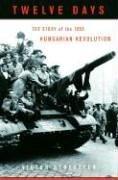
The best narrative account in English, written by a Hungarian-born journalist with access to Soviet and Hungarian archives. Start here for the story told well and told once.
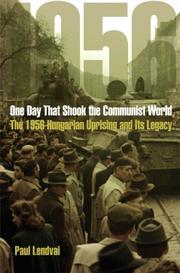
Lendvai was a young Budapest journalist in 1956 and later a leading commentator on Central Europe; his account is stronger than Sebestyen's on the revolution's meaning for the bloc as a whole. Read second.
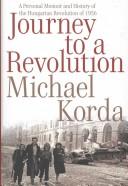
Korda drove to Budapest from Oxford with three friends during the rising and wrote about it fifty years later. A short, vivid outsider's account that makes the fortnight physical rather than schematic.
Where Hungary Was Coming From
BeginnerUnderstand the Hungary of Trianon, the Horthy years, the war and Rákosi's terror, and how Soviet control was actually imposed across the region — without which 1956 looks like a spontaneous event with no history.
▸ Study plan for this stage
Pace: 5 weeks for about 1,590 pages, and it is the heaviest stage on the path. Lendvai's The Hungarians (590pp) is a thousand years told briskly — two weeks. Molnár's A Concise History of Hungary (370pp) is drier and better organised; ten days. Applebaum's Iron Curtain (627pp) covers 1944 to 1956 across E
- Trianon is the inheritance. The 1920 treaty removed roughly two-thirds of the territory of the Kingdom of Hungary and left large Hungarian populations outside the borders — the grievance that shaped interwar politics and that every later regime had to speak to.
- The Horthy years, the wartime alliance with Germany, the 1944 German occupation and Arrow Cross rule, and the destruction of Hungarian Jewry are the immediate background to 1945. Lendvai and Molnár handle the question of Hungarian responsibility differently, and the difference is worth naming.
- Mátyás Rákosi's 'salami tactics' — slicing off opposition parties one at a time — is Applebaum's model case for how Sovietisation actually worked, and she generalises it across the region.
- Applebaum's argument is that Sovietisation was institutional before it was ideological: the youth organisations, the radio, the police and the associations were captured first.
- The Rajk trial in 1949 and Rajk's reburial in October 1956 bracket the whole period. The reburial drew a huge crowd six days before the rising and is the hinge between this stage and the last.
- Nagy's first premiership in 1953 to 1955 — the New Course, the closure of camps, then his removal — is why there was a named alternative for the crowd to demand in 1956.
- Lendvai is a storyteller and Molnár is a compiler. Use Molnár to check dates and structures against Lendvai's narrative rather than reading them as interchangeable.
- What did Trianon do, and how was the grievance used by the interwar regime, by the wartime one and then by the Communists?
- Describe salami tactics using the actual Hungarian sequence of parties and years.
- What did Rákosi's system do to ordinary people that turned into the rage of October 1956? Name three specific mechanisms.
- Why was Rajk's 1956 reburial politically explosive rather than merely symbolic?
- Applebaum argues Sovietisation followed a common regional template. Where does Hungary fit the template and where does it not?
- Cross-check three dates and three figures from Lendvai against Molnár. Where they differ, note which one gives a source. This is the fastest way to learn what a popular national history is and is not for.
- Take Applebaum's account of one institution — the youth movement, the radio, the police — and follow the same institution in the 1956 narrative from stage one. It appears in both, and seeing the continuity is the point of reading them together.
- Write out the sixteen points from stage one and, next to each, the grievance from this stage it answers. Any point you cannot source to a specific policy is one you have not understood yet.
- Trace one claim across two authors: Lendvai and Molnár on Hungary's wartime conduct and its responsibility for the deportations of 1944. Find both passages and write which is arguing and which is narrating.
Next up: With the regime's actual record established, participants' testimony stops being colour and becomes evidence you can weigh.

A thousand years of Hungarian history in one accessible volume, and the most efficient way to acquire the national self-understanding that 1956 drew on. Read it for Trianon and the sense of abandonment above all.
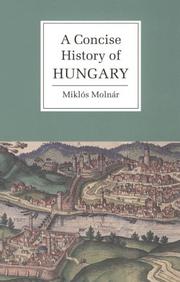
Shorter, drier and better organised than Lendvai's, and stronger on the twentieth-century political detail. Use it as the reference against which to check Lendvai's storytelling.
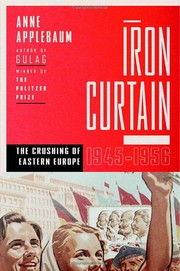
How Soviet control was constructed across Eastern Europe between 1944 and 1956, Hungary among the case studies. It supplies the regional machinery — the salami tactics, the show trials, the youth organisations — that the revolution was reacting against.
Voices From Inside
IntermediateRead the revolution and the years before it through participants and refugees, and learn to weigh testimony collected under Cold War conditions against later archival evidence.
▸ Study plan for this stage
Pace: 4 weeks for about 1,280 pages. Faludy's My Happy Days in Hell (468pp) is the substantial one — two weeks. Michener's The Bridge at Andau (259pp) and Fischer's Under the Frog (250pp) are a week for the pair; Nagy's On Communism (306pp) is political prose and slow going, so allow a week. Faludy's acco
- Faludy was a poet imprisoned at Recsk, and his memoir is the fullest account in English of what the Rákosi regime did to people it had detained. It is also a literary performance, and both facts matter when you use it as evidence.
- Michener interviewed refugees crossing into Austria in the winter of 1956 to 1957. The book is a primary collection and simultaneously a document of how the West chose to hear the story — the framing is Cold War advocacy and is not concealed.
- Nagy's On Communism was written in internal exile before the revolution, arguing for a national road to socialism within a Communist framework. It is the best evidence about what the man who declared neutrality actually believed beforehand.
- Nagy was tried in secret and executed in June 1958, along with Pál Maléter and others; several hundred people were executed in the reprisals that followed the rising. He never disavowed his position at trial.
- Fischer's Under the Frog is a novel, based on his father's experience touring Hungary with a basketball team, and it carries the absurdity and boredom of life under Rákosi that the memoirs and histories both flatten.
- Testimony collected under Cold War conditions is not thereby false, but it was gathered by people with an interest in what it showed. Learning to hold both is the skill this stage exists to teach.
- Set each of these voices against the archival account from stage four when you get there, and note which details survive and which do not.
- What does Faludy establish about Recsk that a state document could not, and what would you still want a document for?
- Reading Michener: what is he clearly trying to make an American reader in 1957 feel, and does that purpose distort any specific claim?
- What kind of socialism does Nagy argue for in On Communism, and how far is it from what he ended up declaring on 1 November 1956?
- Why include a novel on a history path? What does Under the Frog convey that the other three books do not?
- How would you weigh a refugee interview given in December 1956 against a Party document opened in 1990 that contradicts it?
- Take one factual claim from a Michener interview — a name, a location, an incident — and see whether Sebestyen or the scholarly accounts in stage four corroborate it. Do this twice. The exercise is about method, not about catching Michener out.
- Read Nagy's own words in On Communism against Sebestyen's characterisation of him from stage one. Write out where the biography and the self-presentation diverge.
- Faludy is a poet writing a memoir and Fischer is a novelist writing his father's life. Pick one scene from each and write down which techniques are shared. This is the clearest available lesson in why literary quality and evidentiary value are separate axes.
- Write the opposing case in a paragraph: that a refugee testimony collection assembled by a bestselling American novelist during a propaganda contest is not usable evidence. Then argue back with specifics from the book.
Next up: You now have the testimony; the last stage sets it against the archives and against the argument about what the West said and did.

The poet's memoir of the Rákosi years, including the Recsk labour camp, and the best account of what the regime the revolution overthrew actually did to people. Read it first here: it explains the rage.

Michener interviewed refugees crossing into Austria within weeks of the defeat. A powerful primary collection and, equally usefully, a document of how the West chose to hear the story at the time.
Nagy's own essays, written in internal exile before the revolution made him its prime minister, arguing for a national road to socialism. The clearest evidence about what the man who declared neutrality actually believed. The author field carries the inverted library form of his name.

A novel about a Hungarian basketball team in the years leading to 1956, based on Fischer's father's experience, and the only book here that captures the absurdity of daily life under Rákosi. Included deliberately as fiction, at the end of the stage.
The Scholarship and the Argument About the West
IntermediateWork with the archive-based accounts of Soviet and American decision-making, and take a position on whether Radio Free Europe and Washington's rhetoric of liberation encouraged a rising they never intended to support.
▸ Study plan for this stage
Pace: 3 weeks. Litván's The Hungarian Revolution of 1956 (221pp) is the scholarly anchor and is compressed — read it slowly over a week. Gati's Failed Illusions (280pp) in a week. Békés's The 1956 Hungarian Revolution and World Politics is a short Cold War International History Project piece rather than a
- Litván's volume comes out of the Institute for the History of the 1956 Hungarian Revolution and rests on Hungarian material unavailable before 1989. It is the evidentiary base against which every popular account in stage one should be checked.
- Gati's charge is threefold: Washington's rhetoric of liberation was empty, Radio Free Europe broadcasts encouraged expectations of help that was never coming, and Nagy hesitated fatally at the decisive moments. He fled Hungary in 1956 and later advised the State Department, and writes as someone wit
- Békés, writing as a Hungarian diplomatic historian, places the rising inside the Suez crisis and superpower relations and concludes the West's real options were narrower than Gati's indictment implies.
- The Radio Free Europe question is the most contested single issue in the literature and turns on what specific broadcasts said, in Hungarian, on which days. Treat any claim about it that does not quote a transcript as inference.
- The Presidium's reversal between 30 October and 4 November is the other pivot, and post-1990 Soviet material is what made a serious answer possible.
- The difference between these three books is substantially a difference in standpoint — an institute in Budapest, an émigré adviser in Washington, a diplomatic historian working the international archive. Identify each before weighing the arguments.
- None of this literature is settled, and it is not supposed to be. Finishing the path means being able to state the competing cases and say which evidence would move you.
- What does Litván's account establish that Sebestyen's and Lendvai's narratives could only assert?
- State Gati's case against Washington in three sentences, and state Békés's reply in three.
- What is actually known about what Radio Free Europe broadcast in late October 1956, and what is inferred?
- Was there a decision the United States could have taken in the first week of November that would have changed the outcome? Answer using the constraints Békés identifies rather than the rhetoric Gati criticises.
- Where does Gati's criticism of Nagy conflict with what you read in On Communism and in the narratives from stage one?
- Take the timeline you built in stage one and check it line by line against Litván. Mark every correction. The number of corrections is a fair measure of how much popular narrative depends on interpretation.
- Trace one claim across two authors who disagree: Gati on American culpability versus Békés on Western constraint. Find the passage in each, list what each cites, and write down which one is arguing from documents and which from counterfactual reasoning.
- Go back to the two paragraphs you wrote in stage one on whether the rising could have succeeded. Rewrite both with the archival evidence you now have, and note which one changed more.
- Find one claim made by a stage-three witness that this stage's archival material contradicts, and one that it confirms. Write a short note on what that tells you about using testimony.
- Write 300 words for a reader who knows nothing about 1956, stating the three main interpretive disputes and where you now stand on each, naming the books you are relying on.
Next up: The path closes on an unresolved argument about responsibility, which is the honest condition of the subject and the equipment you need to read the next book published on it.
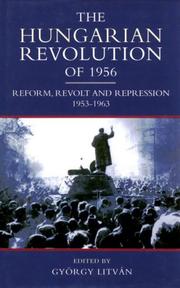
The standard Hungarian scholarly history, produced by the Institute for the History of the 1956 Revolution using material unavailable before 1989. The evidentiary base for everything in this stage.
Gati, who fled Hungary in 1956 and later advised the State Department, makes the hardest case: that Washington's liberation rhetoric was empty, that Nagy hesitated fatally, and that the illusions were on all sides. The central argument of this stage.
A Hungarian diplomatic historian places the revolution inside the Suez crisis and superpower relations, and concludes the West's options were narrower than Gati's critique implies. Read last, as the answer to Gati. Note: this is a 31-page Cold War International History Project working paper, not a monograph — an afternoon's reading.
Discussion
Keep reading
Paths that share books, cover the same subject, or open a related topic.