Anne Applebaum Reading Order: Where to Start
Anne Applebaum has written a small, tightly connected body of work: three big archival histories of Soviet repression, two short recent books about the present, and one early travel book that turns out to contain the seed of everything else. Start with the history, not the polemic — the recent books about authoritarianism are much more convincing once you have read the archives they rest on. This path goes Gulag first, then outward in both directions.
Start Here
IntermediateRead the book that established her, and get the documentary method that underlies all the later work.
▸ Study plan for this stage
Pace: Four to six weeks for Gulag alone — 672 pages, and not pages to hurry. A plain warning first: this is a book about a system built to work people to death, and it contains sustained, specific accounts of starvation, forced labour, execution and the destruction of families, drawn from survivor testimo
- The camps as an economic system rather than only a punishment: Applebaum's central argument is that the Gulag was an industrial project that happened to consume people, which explains its scale and its persistence
- The archival turn — this book was written in the window after the Soviet archives opened in the 1990s, which is why it can cite orders, quotas and internal correspondence rather than only memoir
- Documents against the official narrative: the method that runs through all six of her books is setting a regime's own paperwork beside the testimony of people it processed
- Chronology plus theme, her standard structure: a historical spine at either end and a thematic middle that follows a prisoner's path from arrest to release or death
- The distinction between the camps and the Holocaust, which Applebaum draws carefully — different purposes, different logics, and the comparison is made rather than assumed
- Survivor testimony used as evidence, with attention to who survived to write and what that selects for
- The afterlife of the camps in Russian memory, and the fact that no reckoning comparable to Germany's ever occurred — the argument that sets up everything she writes later
- What was the Gulag for, in Applebaum's account, and how does the economic explanation change what you assume about it?
- What did the opening of the Soviet archives make possible that Solzhenitsyn could not do?
- How does she use survivor memoirs given that survivors are, by definition, an unrepresentative sample?
- How does she distinguish the camps from the Nazi extermination system, and is the distinction convincing?
- Why does she think Russia never reckoned with this history, and what does she say the consequences are?
- Read the thematic middle in prisoner order — arrest, transport, arrival, work, punishment — rather than skipping around. The structure is doing argumentative work.
- Keep a note of every institutional euphemism the documents use. The vocabulary of the paperwork is one of the book's quietest and most damning threads.
- After finishing, write down the three facts that most surprised you. This is the reference point against which the later books in this path should be tested.
- Pace yourself deliberately. Six weeks at 30 pages a night finishes this book; three weeks at 60 usually does not.
Next up: You now know both the system and her method for reconstructing it, which is exactly what the next two books assume — they take the same apparatus and follow it outward, into countries the Soviet Union did not yet control.
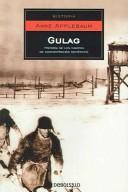
The Pulitzer-winning history of the Soviet camp system, built from newly opened archives and survivor testimony. Start here: it is her most complete book and it teaches you how she uses documents against official narratives.
The Postwar Empire
IntermediateFollow the same method outward — how Soviet control was imposed on Eastern Europe, and what it did to Ukraine.
▸ Study plan for this stage
Pace: Eight to ten weeks for Iron Curtain (627 pages) and Red Famine (592) — about 1,220 pages of dense archival history and the heaviest stretch in the path. Red Famine in particular is a book about the deliberate starvation of millions of people, including detailed accounts of what starvation does to a
- Totalitarianism installed institution by institution: Iron Curtain's method is to show the takeover of radio, youth groups, police and civil society one at a time, in Poland, Hungary and East Germany
- The speed of the process — 1944 to 1956 — and how much of it was accomplished with local collaborators rather than Soviet troops
- Civil society as the target. Applebaum's argument is that the destruction of ordinary voluntary organisations mattered more than the arrests
- Comparative structure: three countries examined side by side, which lets her separate what was Soviet policy from what was local circumstance
- The Holodomor in Red Famine — the 1932-33 Ukrainian famine — argued as a deliberate act of policy directed at a nation rather than a class
- Grain requisition, blacklisted villages and internal passports as the specific mechanisms, documented from Soviet orders
- Why Red Famine is the single most useful book she has written for understanding the present war, and how it depends on the archival groundwork of the first two
- In Iron Curtain, which institutions were taken over first, and why those?
- How much of the Sovietisation of Eastern Europe was carried out by local communists, and what does that complicate?
- What is Applebaum's evidence that the Ukrainian famine was directed at Ukrainians specifically rather than at peasants generally?
- How does she handle the historiographical dispute over whether the Holodomor was genocide — where does she come down, and on what grounds?
- What does Red Famine let you understand about Russian and Ukrainian politics since 2014 that news coverage does not?
- Read Iron Curtain with the three countries kept separate in your notes. The comparative argument dissolves if you let Poland, Hungary and East Germany blur together.
- In Red Famine, mark the passages drawn from Soviet orders as against those drawn from testimony. Applebaum alternates deliberately and the alternation is the argument.
- Put the timeline of Red Famine (1932-33) beside the timeline of Gulag's expansion. They are the same years and the same policy apparatus.
- Give yourself a gap between the two books. This is not a stage to read continuously, and pretending otherwise is how readers abandon the path.
Next up: With three archival histories behind you, you are equipped to do the thing the next stage requires — read her contemporary arguments critically, against the evidence rather than merely agreeing or disagreeing with the politics.
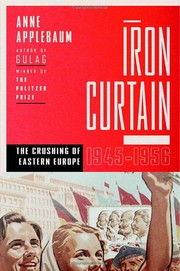
How totalitarian systems were installed in Poland, Hungary and East Germany between 1944 and 1956, institution by institution. Read after Gulag: it shows the same apparatus being exported.

The Holodomor, the 1932-33 Ukrainian famine, and the argument that it was a deliberate act of policy. The single most useful book she has written for understanding the present war, and it assumes the archival groundwork of the first two.
The Present Tense
IntermediateTurn to her short contemporary books and judge whether the historical evidence supports the argument she now makes.
▸ Study plan for this stage
Pace: Two to three weeks for Twilight of Democracy (224 pages) and Autocracy, Inc. (240) — under 500 pages between them and both readable in a few evenings each. These are essays rather than histories, and the shift in register is abrupt after 1,900 pages of archival work. That contrast is the reason they
- Twilight of Democracy as memoir as much as analysis — the book is organised around Applebaum's own friends, in Poland, Britain and the United States, who became authoritarian nationalists
- The clerc trahison question: why intellectuals in particular defect to authoritarian movements, which is her actual subject rather than the movements themselves
- Thinner evidence by design. She is writing about the present, without archives, and it is worth being explicit that this is a different epistemic situation from Gulag
- Applebaum's own position as a participant — married to a Polish foreign minister, inside the politics she describes — which is a strength and a limitation at the same time
- Autocracy, Inc.'s core claim: today's autocracies cooperate as a networked business, sharing surveillance technology, money laundering and propaganda, without sharing an ideology
- Kleptocracy as the organising principle, which is a genuinely different diagnosis from Cold War models of ideological blocs
- The continuity with the histories — every recent argument rests on the mechanisms she documented in the archives, which is why the path is ordered this way
- What does Twilight of Democracy actually explain, and what does it only describe?
- How does Applebaum's personal proximity to her subjects affect the book's reliability, in both directions?
- What is the evidence for the claim in Autocracy, Inc. that autocracies operate as a network, and how strong is it compared with the evidence in her histories?
- If today's autocracies are not ideological, what does that change about how they could be opposed?
- Does the archival work support the contemporary arguments, or is she drawing on authority earned elsewhere? Answer honestly — this is the question the whole path was built to let you ask.
- Write down, before reading, what you expect her contemporary argument to be. Comparing it afterward is the best guard against reading these books as confirmation.
- For each major claim in Autocracy, Inc., note what kind of evidence supports it — document, interview, reporting, or inference. The mix is very different from Gulag's.
- Read one substantive critical review of Twilight of Democracy after finishing it. It is a contested book and the criticisms are worth engaging with.
- Identify one place where a mechanism she documented in Iron Curtain reappears in the present-day analysis. There are several and finding them is the payoff for the reading order.
Next up: Having followed her from the archives to the present argument, the last stage goes back to the beginning — the first book, written before any of this, where the whole preoccupation started.
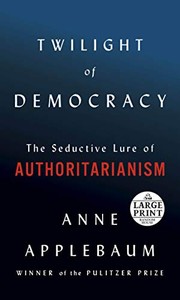
A short, personal essay on why some of her own friends became authoritarian nationalists. Read it after the histories — it is a memoir of a political circle as much as an analysis, and it is thinner on evidence by design.
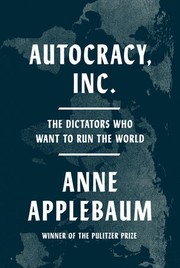
Her most recent argument: that today's autocracies operate as a networked business rather than an ideological bloc. The natural end point, and the clearest statement of where her thinking has arrived.
The Book Before the Books
IntermediateGo back to the beginning and see the borderlands that every later book returns to.
▸ Study plan for this stage
Pace: Two to three weeks for Between East and West, 336 pages and by far the easiest reading in the path — travel writing rather than history, and a genuine relief after 2,400 pages of archives and argument. Read it last, deliberately. Taken first it is a pleasant 1990s travel book; taken sixth it is an o
- The borderlands as the unit of analysis: a journey from the Baltic to the Black Sea through territory that has changed nationality repeatedly within living memory
- 1991 to 1993 as the moment — the Soviet Union has just collapsed, nothing has settled, and she is talking to people before the current narratives hardened
- Kaliningrad, Vilnius, Lviv, Chernivtsi, Odesa: towns whose Polish, Jewish, German, Lithuanian and Ukrainian histories are all present at once and mutually incompatible
- Memory as contested territory, encountered in conversation rather than in archives, which is where her later documentary method plainly comes from
- The Ukrainian material read from now, which is the strongest reason to save the book for last — she was in these places thirty years before they were headlines
- A younger, looser voice than the historian's, and worth noticing as a writer rather than only as an analyst
- The whole body of work as one project: six books, one region, and a single question about what happens to people when a state decides what they are
- Which places in this book have you since read about in Red Famine or Iron Curtain, and how does the travel account differ from the archival one?
- How do the people she meets in 1991 explain their own history, and how do those explanations conflict with one another?
- What does she notice in the early 1990s that turned out to matter?
- How does the voice differ from the historian's voice in Gulag, and did anything survive from it?
- Having read all six books, what would you now say the single question is that Applebaum has been asking her whole career?
- Trace her route on a map, marking which country each stop is in now and which it was in in 1930. The exercise is the book's whole argument in visual form.
- Pick one town she visits and find out what has happened there since 2022. This is the most direct demonstration available of why the reading order puts this book last.
- Compare a passage of description here with a passage of description in Red Famine. Thirty years of the same landscape by the same writer, in two entirely different modes.
- Write one paragraph answering whether the historian's later arguments are visible in the young travel writer's observations. That is the actual test of calling this an origin story.
Next up: This is the end of the path — the whole arc from a 1990s road trip to the present-day argument, read in the order that makes each book explain the next — and the natural next step is Red Famine again, which reads very differently now that you know where she started.

Her first book, a 1990s journey down the borderlands from the Baltic to the Black Sea just after the Soviet collapse. Read it last: knowing what she went on to write turns a travel book into an origin story.
Discussion
Keep reading
Paths that share books, cover the same subject, or open a related topic.