The Arab Spring: books to read, in order
The 2011 uprisings produced an enormous amount of writing, most of it published before anyone knew how the story ended, and reading it well means keeping track of when each book was written. This path opens with the region-wide accounts and one participant's memoir, moves country by country through Egypt, Tunisia and Syria, and closes with the retrospective scholarship written after the counter-revolutions, the wars and the one surviving transition.
The region-wide account, written in the moment
BeginnerUnderstand what happened across the Arab world in 2011, why it spread so fast, and what the satellite-television and social-media argument does and does not explain.
▸ Study plan for this stage
Pace: 2-3 weeks. Lynch's The Arab Uprising first (2012), then Filiu's The Arab Revolution (2011), then Ghonim's Revolution 2.0 (2012). All three were written before anyone knew how the story ended, and reading them in publication order is the point: Filiu is writing while Libya and Syria are still open qu
- The pan-Arab public sphere — satellite television, above all Al Jazeera, and then social media — as a mechanism of diffusion rather than a cause
- Diffusion and demonstration effects: why Tunisia's success in January 2011 made Egypt thinkable and why the same script failed elsewhere
- The distinction between the mobilisation phase and the transition phase, and why success at the first predicts nothing about the second
- The authoritarian bargain — subsidy and employment in exchange for quiescence — and its fiscal exhaustion
- Filiu's argument that 2011 was the culmination of decades of Arab political contestation, not a rupture
- The limits of a participant's account as evidence, and its value as a record of what people believed at the time
- What exactly does Lynch claim the pan-Arab public sphere did? Is it a claim about causation or about speed?
- Filiu wrote in 2011 and Lynch in 2012. Name a specific expectation in each that the following decade did not bear out, and say what each author had reason to believe at the time.
- Revolution 2.0 has been read as evidence that social media caused the uprising. What does Ghonim actually claim, and where do his readers overstate him?
- Why did the uprisings spread so fast across states with very different economies, demographics and regimes?
- What would you need to know about a country in December 2010 to predict whether a protest there would topple the government?
- Build a diffusion timeline from mid-December 2010 to March 2011: every country, the date protests began, the date of the regime's first major concession or crackdown. Then mark which of Filiu's ten propositions the timeline supports.
- Take one causal claim about social media from Revolution 2.0 and check it against how Lynch describes the same period. Write a paragraph on what a participant can see that an analyst cannot, and the reverse.
- Write the two-paragraph forecast for 2015 that Filiu's book implies, then the one Lynch's implies, then note which parts of each were wrong and whether they were wrong for the same reason.
- Identify a country where the 2011 script was attempted and failed early. Using only these three books, write the strongest available explanation for the failure and mark where you are extrapolating.
Next up: The regional pattern established, the path now slows down and takes one country all the way through — including the part where the revolution loses.

The best contemporaneous analysis, and the one that takes the pan-Arab public sphere seriously as a mechanism rather than a slogan. Written in 2012, so read it knowing it does not have the ending.
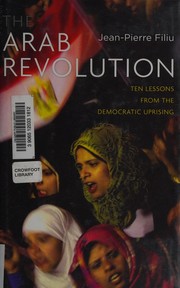
Filiu's ten propositions on the uprisings, published in 2011, arguing they were the culmination of decades of Arab political history rather than a rupture. The most useful early framing and a good counterweight to the technology-first explanations.

The memoir of the Google executive behind the Facebook page that helped call people to Tahrir. Read it as a primary document of what participants believed in 2011, not as an account of what actually determined the outcome.
Egypt, the central case
IntermediateFollow one country from pre-revolutionary stagnation through Tahrir, the Muslim Brotherhood's year in power, and the 2013 coup.
▸ Study plan for this stage
Pace: 4 weeks. Osman's Egypt on the Brink first for the pre-history, Cook's The Struggle for Egypt second for the institutional argument, and Kirkpatrick's Into the Hands of the Soldiers third. The publication dates do the work here: Osman was written before the uprising and revised after it, Cook appeare
- The Nasser settlement and its long decay through Sadat's infitah and Mubarak's crony capitalism
- The military as an economic actor as well as a political one, and why that makes it structurally different from a normal army
- The Muslim Brotherhood's organisational strength and the electoral consequences of being the only mobilised opposition
- The eighteen days as a coalition and the speed with which the coalition broke
- Morsi's year: what the government actually did, and how much of its failure was self-inflicted
- July 2013 as a coup with mass support, and the analytical difficulty that creates
- American policy as a set of constraints on Egyptian actors rather than a determinant of outcomes
- What is Cook's account of the military's role in Egyptian politics since 1952, and how well does it predict the army's behaviour in 2011 and 2013?
- Why did the Brotherhood win the elections, and why did it lose power so quickly?
- Kirkpatrick was reporting from inside; Cook is writing as a political scientist. Where do their explanations of July 2013 diverge, and is the difference evidence or method?
- Was the Egyptian revolution defeated, or did it never take the state in the first place? Argue it either way from these three books.
- Osman wrote about Egypt's economic and social stagnation before 2011. How much of what he described has changed since?
- Build a two-track timeline of 2011-2013: street events on one line, institutional decisions — SCAF declarations, court rulings, constitutional drafts — on the other. The gap between the tracks is the argument of this stage.
- Take Cook's claim about the military's economic holdings and check it against the specific figures and sources he cites. Write down how firm the evidence actually is.
- Write the Brotherhood's own defence of its year in power in a paragraph, using facts from Kirkpatrick, and then the strongest case against it from the same book.
- Trace one individual — an activist, an officer, a Brotherhood figure — through all three books and record how each author positions them. Note where the characterisations are incompatible.
Next up: Egypt supplies the model of a revolution that lost; the next stage puts you inside the activist networks and then explains the single country where the transition held.

Written before the uprising and revised after it, this explains the Nasser-to-Mubarak inheritance that made Egypt combustible. Read it first so Tahrir has a fifty-year backstory.

Cook's political history from 1952 to 2011, published just as the revolution began, and the most rigorous account of the military's permanent role in the Egyptian state.

The New York Times Cairo bureau chief's account of 2011 through 2013, including American policy toward the coup. Written after the outcome was clear, so it is the retrospective correction to the hopeful early Egypt books.
The revolutionary experience and the one success
IntermediateSee the uprisings from inside the activist networks, and understand why Tunisia produced a democratic transition when nowhere else did.
▸ Study plan for this stage
Pace: 3 weeks. Cambanis's Once Upon a Revolution first — it follows two Egyptian revolutionaries over years and is best read directly after the Egypt stage while the chronology is fresh — then Masri's book on Tunisia, which our catalogue displays under the bare title Tunisia. Masri is the denser of the tw
- Revolutionary organisation as an actual problem: how a leaderless movement makes decisions, and what it cannot do
- The cost of refusing to form a party, and the arguments activists made for and against it
- Bourguiba's reforms — mass education, the Code of Personal Status, the position of women — as the long-run explanation of Tunisian exceptionalism
- The role of the UGTT labour federation and organised civil society in brokering the Tunisian transition
- The Ennahda-Nidaa Tounes accommodation and the difference between an Islamist party that shares power and one that does not
- Why a small, ethnically homogeneous country with a weak army and no oil is an unrepresentative case — and what that does to the lessons drawn from it
- What specific decisions did Cambanis's subjects face, and which of them were genuinely open at the time rather than obvious in hindsight?
- Masri argues that Tunisia's outcome was set long before 2011. State his causal chain in four steps and identify its weakest link.
- Compare the Tunisian and Egyptian armies. How much of the divergent outcome is explained by that difference alone?
- If Masri is right, what does the Tunisian case actually teach about anywhere else?
- Tunisia's democracy came under severe strain after 2021, outside the window these books cover. Which parts of Masri's argument does that development test?
- List every organisational decision Cambanis's revolutionaries take, and for each write the counterfactual and its likely consequence. Then say which one you think was the mistake.
- Map Masri's institutional variables — literacy, women's legal status, army size, union strength — onto Egypt using figures from the previous stage. Write down where Egypt scores differently and by how much.
- Take the claim that the UGTT was decisive in 2013 and find what Masri's evidence for it actually is. Write a paragraph assessing whether the case is demonstrated or asserted.
- Write the opposing case in one paragraph: that Tunisia's outcome was contingent and could easily have gone the other way. Use Cambanis's picture of how thin revolutionary organisation is.
Next up: Two countries where the state survived and one where it partly transformed; Syria is the case where the state and the country came apart together.

Cambanis followed two Egyptian revolutionaries for years, which turns the abstraction of a revolution into the specific decisions activists actually faced. The best book on what the movement felt like from within.

Open Library displays this record under the bare title Tunisia. Masri argues that a century of educational and legal reform, not 2011, explains the country's exceptional path — the essential counterexample to the failure narrative.
Syria, and the wars that followed
IntermediateTrace the path from peaceful protest to civil war and regional conflict, through reporting done at considerable personal risk.
▸ Study plan for this stage
Pace: 3-4 weeks. Burning Country first, Assad or We Burn the Country second, The Morning They Came For Us last and in one or two sittings — it is short, it is dispatches, and it is genuinely hard to read. Yassin-Kassab and al-Shami write from within the opposition and say so; Dagher had unusual access to
- The 2011 protest movement and the local coordination committees that organised it
- The regime's escalation as a strategic choice — sectarianising the conflict, releasing jihadists, choosing the enemy it preferred
- Militarisation and the fragmentation of the opposition into competing armed groups with external patrons
- The local councils and civil institutions in opposition-held areas, which the war coverage largely buried
- Regional and great-power intervention: Iran, Russia, the Gulf states, Turkey, and the internationalisation of a civil war
- Displacement, siege and starvation as instruments of policy
- Reporting under these conditions — what a correspondent can verify, what they cannot, and how they say so
- What is the evidence that the regime deliberately sectarianised the conflict? Set out Dagher's account and Yassin-Kassab and al-Shami's, and say where they rest on the same facts.
- Burning Country documents opposition civil institutions in detail. Why did those institutions receive so little international attention, and what follows from that neglect?
- At what point, if any, did a negotiated outcome stop being available? Identify the decision and say who made it.
- Both authors of Burning Country are committed to the opposition. Where does that commitment shape the account, and does it make the book less reliable or only more explicit than most?
- Di Giovanni is writing about individual people under siege. What does her book establish that the two analytical accounts cannot?
- Build a timeline of escalation from March 2011 to the end of 2012 and mark each point where the regime chose escalation over an available alternative, citing the page in Dagher.
- Take one incident described in both Burning Country and Assad or We Burn the Country and write the two versions in parallel columns. Then note precisely which facts are contested and which are only differently framed.
- Trace the claim that the regime released jihadist prisoners in 2011 across both books to the sources each cites. Write down how strong the documentation is.
- Write the regime's own account of 2011-2012 in one paragraph, as its officials gave it to Dagher, and then annotate every sentence with what the other two books contradict.
Next up: With three national outcomes in hand — restoration, transition and disintegration — the final stage asks what the decade actually amounted to.

Yassin-Kassab and al-Shami write from inside the Syrian opposition, documenting the local councils and civil activism that the war coverage buried. Read it first here, because it recovers the revolution before the war.

A reporter with rare access to the regime's inner circle on how Assad chose escalation. The best account of the decisions on the other side of Yassin-Kassab's story.

Catalogued with its full subtitle, this is a war correspondent's dispatches from the collapse. Short, hard to read and the necessary human record beneath the political analysis.
The retrospective verdict
IntermediateAssess the decade after 2011 with the outcomes known, and test the assumption that the uprisings simply failed.
▸ Study plan for this stage
Pace: 3 weeks. The New Arab Wars first, and read it directly against your notes on The Arab Uprising from stage one — this is the same author revising his own argument four years later, and the comparison is the most instructive thing on the path. Then A Rage for Order, then Arab Winter, which is short an
- The regional proxy war — Saudi Arabia, the UAE, Iran, Qatar, Turkey — as the frame that replaced the domestic-uprising frame
- Counter-revolution as an organised project with money and media behind it, not merely an absence of change
- The authoritarian learning curve: how surviving regimes adapted their surveillance, media and repression after 2011
- Worth's method — tracing individual lives across four countries — and what biography can establish that structural analysis cannot
- Feldman's argument that the uprisings were genuine acts of political agency whose outcomes, including the catastrophic ones, belong to the people who made them
- Hindsight bias in retrospective history, and how to read a book that knows the ending
- What 'failure' means when applied to a political event, and who gets to apply it
- Where exactly does Lynch in 2016 abandon or qualify what Lynch argued in 2012? Quote the earlier claim and the later revision.
- Feldman insists on agency where most accounts emphasise structure. What is his argument, and what would it take to refute it?
- How did surviving authoritarian regimes change their methods after 2011? Name three specific adaptations.
- Worth writes about individuals; Lynch writes about states. Which explains the decade better, and on what criterion are you judging?
- Was the Arab Spring a failure? Give the strongest case for yes and for no, each in a paragraph, citing a book for each.
- These three books were all written by outsiders to the region. What does that select for in the questions they ask?
- Put The Arab Uprising and The New Arab Wars side by side, list Lynch's five main claims from the first, and record for each whether the second sustains, revises or drops it.
- Take one country from A Rage for Order and write the structural account of the same events from Lynch, then say what Worth's individual-level story adds and what it obscures.
- Write the strongest one-paragraph rebuttal to Arab Winter using material from the Syria stage, and then Feldman's reply to it.
- Return to the predictions you recorded in stage one and grade every one. For each miss, write whether the author lacked information or reasoned badly — those are different failures.
- Choose one country covered on this path and write a 300-word account of 2010-2020 that a reader of all fourteen books would accept, marking every point where the sources genuinely disagree.
Next up: This closes the path: you can now date any book on the Arab Spring by its argument and say what it could not have known.

Lynch returning to his own 2012 argument four years later to explain the regional proxy conflicts and the resurgence of authoritarianism. Reading it directly against The Arab Uprising is the single most instructive exercise on this path.

Worth traces individual lives across Egypt, Libya, Yemen and Syria to show how the collapse of order reshaped them. The most literary of the retrospective books and the best on sectarianism as a consequence rather than a cause.

A short, argumentative closing book: Feldman insists the uprisings were genuine acts of political agency whose outcomes, including the terrible ones, belong to the people who made them. The corrective to asking only why it failed.
Discussion
Keep reading
Paths that share books, cover the same subject, or open a related topic.