Solidarity and the fall of communism in Poland: books to read, in order
Solidarity was a ten-million-member trade union in a one-party state, and understanding it means holding two kinds of book together: eyewitness accounts written while the outcome was unknown, and scholarship written after 1989 that knows how it ended. This path gives you the Polish background first, then the reporting from 1980 and 1981, then the movement's own thinkers, then the sociology of why a workers' revolt took the shape it did, and finally the retrospective histories of 1989 and after.
Poland before August 1980
BeginnerUnderstand partition, the war, the imposition of communism and the 1956, 1968, 1970 and 1976 revolts that Solidarity inherited.
▸ Study plan for this stage
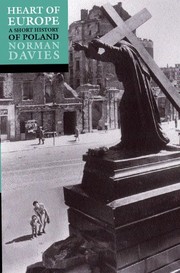
Pace: Four to five weeks, and the two books are different in kind. Davies's Heart of Europe (536 pages) is retrospective scholarship written for general readers and revised after 1989, so it knows how the story ends: three weeks at 30 pages a day. Ascherson's The Polish August (320 pages) is contemporary
- The partitions and the long Polish experience of nationhood without a state
- The Second World War, the Warsaw Rising, Katyn, and the westward shift of the borders
- The imposition of communism, and the failure of agricultural collectivisation that left land in private hands
- The Catholic Church as the one large institution outside party control
- The revolt cycle: Poznan 1956, the student protests of March 1968, the Baltic coast shootings of December 1970, Radom and Ursus in 1976
- KOR, the Workers' Defence Committee, and the alliance it built between intellectuals and workers
- The 1979 papal pilgrimage as a demonstration of numbers before any union existed
- Why did Polish agriculture stay largely in private hands, and what did that failure of collectivisation mean for the party's grip?
- What changed between 1970 and 1976 in how the opposition organised, and why was that change decisive?
- What was KOR's innovation, and why does it matter that it framed itself as defence rather than as leadership?
- Davies writes Polish history in reverse; what does that ordering make visible that a conventional chronology would bury?
- Ascherson was writing in 1981: which of his expectations turned out wrong, and was there information available to him that should have warned him?
- Build a timeline of the four revolts with, for each, the trigger, the regime's response, the concession extracted, and what the opposition learned
- Read the twenty-one Gdansk demands in translation and trace each one back to a grievance from an earlier revolt
- Start a table of every book in this path with its publication year and whether it is contemporary reporting or retrospective scholarship; you will add to it at each stage and use it in the last
- Write 400 words on the church's position in Polish society by 1979 without using the word inevitable
Next up: You now know what Solidarity inherited; the next stage is the sixteen months in which it existed legally, read through people who were standing in the shipyard.

Davies tells Polish history backwards, starting from the communist period, which is exactly the orientation this path needs. The best single volume of background and the right first book.
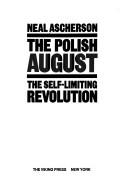
Ascherson traces the line from the 1970 Baltic coast shootings and the 1976 workers' committees to the Gdansk strike. Written in 1981, so it is also the first of the contemporary accounts in this path.
Gdansk, 1980 and 1981, as it happened
IntermediateFollow the shipyard occupation, the Gdansk Agreement and the sixteen months of legal Solidarity through reporters who were there before martial law.
▸ Study plan for this stage
Pace: About 6 weeks, and the mix of sources is the point of the stage. Garton Ash's The Polish Revolution (388 pages, 1983) and Weschler's Solidarity: Poland in the Season of Its Passion (221 pages, 1982) are contemporary reporting written within months of the events by men who were there; they know that
- The Lenin Shipyard occupation strike and the dismissal of Anna Walentynowicz that triggered it
- The Inter-Factory Strike Committee and the twenty-one demands, which extended far beyond one workplace
- The Gdansk Agreement and the registration of an independent, self-governing trade union inside a communist state
- The sixteen legal months: Bydgoszcz, the first National Congress, and the deliberate restraint of a self-limiting movement
- Martial law on 13 December 1981, the internments, and the destruction of the legal union
- Walesa's role, its ambiguity, and how differently the three books assess it
- How a single strike became a membership of roughly ten million
- Which of the twenty-one demands were economic and which political, and which did the regime concede in the Gdansk Agreement?
- Why did the strike committee refuse to become a political party, and was that a moral choice or a calculation about Soviet tanks?
- What did Garton Ash and Weschler not know in 1982 and 1983 that Szporer's witnesses know, and how does that change what each source is good for?
- Where do the oral testimonies contradict the contemporary reporting, and which source would you trust on what kind of question?
- How far was martial law imposed under Soviet pressure and how far chosen in Warsaw, and what can each of your three sources actually settle?
- Read the text of the Gdansk Agreement alongside the twenty-one demands and mark what was won, what was diluted and what was dropped
- Take one episode, the Bydgoszcz beatings of March 1981, and write out Garton Ash's account, Weschler's account and the account given by Szporer's witnesses, then a paragraph on why they differ
- For each of the three books write one sentence naming something the author could not have known at the time of writing, and add it to your publication-date table
- Find one contemporary photograph or newsreel of the shipyard gate and list what it shows that none of the three prose accounts mentions
Next up: The reporters describe what people did; the next stage reads what the movement's own thinkers said they were doing, and who got left out of that account.
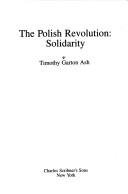
The standard eyewitness history of Solidarity's legal period, written by a reporter with unusual access. First-draft history and still the best narrative of what actually happened between August 1980 and December 1981.
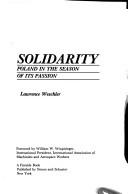
Weschler's New Yorker reporting from the same months, closer to the ground than Garton Ash and better on the texture of the movement. Read them as a pair.

Open Library displays this record under the bare title Solidarity. It is an oral history assembled decades later from the strike participants themselves, and it corrects and deepens the contemporary reporting above with what the strikers said once it was safe to say it.
The movement's own arguments
IntermediateRead the dissident intellectuals and the church whose ideas gave a strike committee a political programme, and recover the people the standard narrative leaves out.
▸ Study plan for this stage
Pace: About 3 months, with four books doing four different jobs. Michnik's Letters from Prison (354 pages) and The Church and the Left (301) are primary texts: essays by a participant, several written from internment, arguing rather than describing, and best read one essay at a sitting. Weigel's Witness t
- New evolutionism and self-limiting revolution: pressure on the state from an organised society rather than a bid for power
- Michnik's ethic of refusing revenge, and the arguments he makes for it from inside a prison cell
- The secular left's deliberate alliance with the Catholic Church, and what each side had to concede
- The 1979 papal pilgrimage as a rehearsal of collective self-recognition
- The underground press after 13 December, and the logistics that kept Tygodnik Mazowsze appearing
- The gendered division of the underground: who did the organising and who was named in the histories
- The difference between reading a participant's argument and reading a historian's description of it
- What is self-limiting revolution, and what would have counted as its success on Michnik's own terms?
- Why did Michnik, a secular Jewish intellectual, argue for the alliance with the church, and what did he ask the church to concede in return?
- What does Weigel's authorised position let him see that a critical biographer would miss, and what does it stop him from seeing?
- What is Penn's evidence that women ran the underground and were then written out, and what does that erasure tell you about how movements narrate themselves?
- Whose account of the movement's ideas would the strikers of the previous stage have recognised as their own?
- Read Michnik's essay The New Evolutionism (1976) and Letter from the Gdansk Prison, reconstruct his argument as a numbered chain of premises, and then attack the weakest one
- Compare Weigel's account of the 1979 pilgrimage with Ascherson's and Garton Ash's, and mark every causal claim each makes about its effect on what followed
- List the named organisers in Penn's book and check how many of them appear in the indexes of Garton Ash and Weschler
- Write 500 words on what Michnik's rejection of revenge cost Poland after 1989, and what it may have saved
Next up: You have the movement's own account of itself; the next stage sets that normative story against a structural one written by sociologists who were watching the same events.
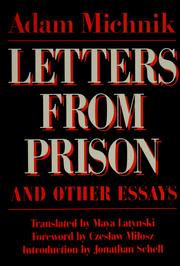
Michnik's essays, several written in internment after the crackdown, arguing for self-limiting revolution and against revenge. The intellectual core of the whole movement and the most important primary text here.
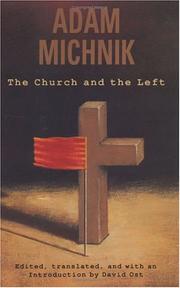
Michnik, a secular Jewish leftist, arguing that the Polish opposition had to make common cause with the Catholic church. Read after Letters from Prison, since it explains the alliance that made Solidarity possible.
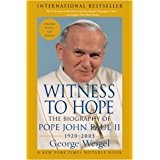
The authorized biography of John Paul II, and the fullest account of the 1979 papal pilgrimage that preceded the strikes. Openly sympathetic to its subject, so read it as the church's own case rather than as neutral history.
The women who ran the underground press and the communication networks after martial law, and who were written out of the heroic account. Read last in this stage as a deliberate corrective to the previous three books.
Why it took that form
IntermediateMove from narrative to analysis: the sociology of a self-limiting revolution, and the political theory of anti-politics as a strategy against a party-state.
▸ Study plan for this stage
Pace: Two to three months, and neither book is a narrative. Staniszkis's Poland's Self-Limiting Revolution (368 pages) is dense sociology written inside Poland by an adviser to the Gdansk strike committee; it is simultaneously a participant's document and a theoretical argument, and single paragraphs repa
- Self-limitation as a structural condition imposed by geopolitics, not only as a moral choice
- The corporatist and moral-symbolic register of the workers' demands, and what Staniszkis makes of it
- Where the union's leverage actually lay in a state-socialist economy dependent on its own workers
- Anti-politics: constructing a parallel society and living as if free, rather than contesting state power directly
- Civil society as a strategy in the 1980s and its later career as a travelling concept
- The gap between a movement's account of what it is doing and a structural account of what it is doing, and whether both can be true
- Is Staniszkis's self-limitation a description of a choice or of a constraint, and does the distinction change how you judge the movement?
- What does Ost mean by anti-politics, and what does that strategy assume about the durability of the party-state?
- Where do Staniszkis and Ost disagree about the source of the union's power, and what evidence would settle it?
- The movement's own thinkers gave a normative account and these two give structural ones; are they competing explanations or different levels of description?
- What does the anti-politics strategy have to offer once the party-state it was designed against no longer exists?
- Write Staniszkis's central argument as a one-page abstract, then check your abstract against her own concluding chapter and correct what you got wrong
- Set Michnik's new evolutionism against Ost's anti-politics and identify precisely where the participant's account and the analyst's account diverge
- Take one event from the previous stage, the September 1981 Congress for instance, and explain it first in Garton Ash's narrative terms and then in Staniszkis's structural terms
- Write 500 words on what Staniszkis, writing in 1984, could not yet know, and whether her argument depends on it
Next up: Both analyses were written before the party-state fell; the final stage brings in 1989 and the much harder question of what the victory actually delivered.
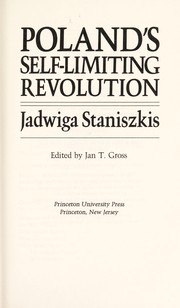
The classic sociological analysis, written from inside Poland by an adviser to the strike committee, on why the movement deliberately refused to seize power. Dense, and the most original argument in the path.
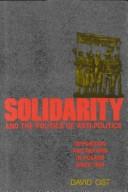
Ost's account of the opposition's strategy of building a parallel society rather than contesting the state directly. The scholarly complement to Michnik's essays.
1989 and the reckoning
IntermediatePlace Solidarity inside the wider collapse of communism, and confront the retrospective question of what the movement's victory actually delivered.
▸ Study plan for this stage
Pace: Eight to ten weeks, with the three books again split by kind. Kenney's A Carnival of Revolution (352 pages, 2002) is comparative scholarship built on interviews across the region. Garton Ash's The Magic Lantern (167 pages, 1990) is contemporary reporting once more, written from inside the round tabl
- The 1980s underground and the new youth movements Kenney recovers, including Orange Alternative and Freedom and Peace
- The Round Table talks and the partly free election of June 1989
- The regional wave of 1989 and what was and was not contagious between countries
- Shock therapy and the Balcerowicz plan as the economic settlement of the transition
- The union leadership's turn toward liberal economic reform, and its distance from its own membership
- Ost's argument connecting unrepresented worker anger to the later shape of Polish politics
- Who gets to narrate a revolution afterwards, and how the narration changes what it meant
- What does Kenney's comparative frame reveal about Poland that a purely national history conceals?
- Garton Ash was in the room in 1989; what does that access buy his account, and what does it cost it?
- Ost argues that Solidarity's leaders defeated their own base; what is his evidence, and what would count against the claim?
- Can the moral achievement described in the third stage and the economic outcome Ost describes both be accepted, or does one undercut the other?
- How would each author in this path answer the question did Solidarity win, and what does the spread of answers tell you?
- Read the terms of the Round Table agreement and the June 1989 election results, and work out how a partly free election produced a non-communist prime minister
- Take Ost's central claim about worker anger and test it against a specific post-1989 election result or strike wave, using published data
- Write 1,500 words answering the question did Solidarity win, citing at least four books from this path and dating each citation
- Complete the publication-date table you started in the first stage, mark each book as contemporary or retrospective, and write a paragraph on how fixing those dates changed your reading of at least two of them
Next up: This is the end of the path: you can now read any new work on 1989 and immediately place it, by date and by kind, against the eyewitness accounts and the retrospective scholarship it is arguing with.
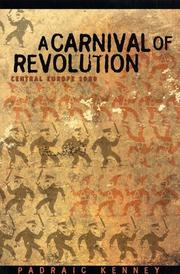
The best comparative scholarship on Central European opposition in the 1980s, showing Solidarity alongside the Czech, Hungarian and Slovene movements. Read it to stop treating Poland as a special case.
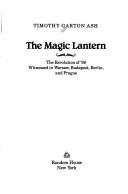
Garton Ash back on the ground for the round-table talks, Prague and Berlin in 1989. The closing chapter of the story his Polish Revolution began, and again first-draft history.
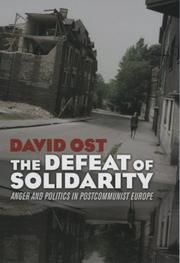
The hardest and most necessary final book: Ost argues that the union's leaders embraced a market transition that broke the workers who built it, and traces the anger this left behind. Retrospective scholarship that deliberately unsettles the triumphal ending.
Discussion
Keep reading
Paths that share books, cover the same subject, or open a related topic.