The Prague Spring is easy to summarise and easy to misunderstand. In January 1968 Alexander Dubček became first secretary of the Czechoslovak communist party; censorship collapsed, the reformers promised socialism with a human face, and in August around half a million Warsaw Pact troops ended it. That is the story most people know, and it is where most reading lists stop.
Stopping there is the mistake. The Prague Spring was a reform inside the party, not a rising against it — which is why the personal collapse of the reformers under Soviet pressure is the heart of the drama. And what followed, the twenty-one years of normalisation, produced both the most sophisticated dissident writing in the Eastern bloc and the velvet revolution that finished the job. Read the invasion without the aftermath and you get a tragedy; read both and you get an argument about how societies live under a regime nobody believes in.
The country, first
Czechoslovakia by Mary Heimann is the sceptical single-volume history of the state from 1918 to 1992, and it is worth flagging that it is a revisionist book: Heimann is unsparing about the interwar republic's treatment of its minorities and about the national myths, and it was received with real anger in Czech reviews. Read it as a strong argument rather than a settled account, and it will inoculate you against the usual sentimentality.
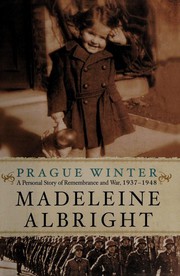
Prague winter is Madeleine Korbel Albright on 1937 to 1948 — Munich, occupation, her own family's flight and hidden Jewish origins, and the communist takeover. It is memoir and history together, and it supplies the twenty years before the story starts.
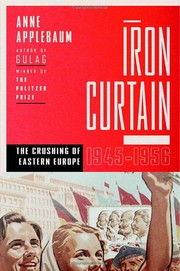
Iron Curtain is Anne Applebaum's account of how Soviet control was built across Eastern Europe after 1944. It explains the machinery the reformers of 1968 were trying to modify from inside.
Eight months, and the invasion
The Prague spring and its aftermath is Kieran Williams's scholarly standard, and the book to read carefully: it is unusually strong on the party politics, on Soviet decision-making, and on the normalisation that followed, which most accounts treat as an epilogue.
Dubcek is William Shawcross's biography of the man who gave the reform its face and then signed the Moscow Protocol. Hope Dies Last is Dubček's own memoir, dictated late in life, and it is the necessary companion — evasive in places, and the evasions are informative.
The Czech Black Book is the documentary record of the invasion week itself, compiled by the Czechoslovak Academy of Sciences and smuggled out: broadcasts, resolutions, leaflets, hour by hour. It is the closest thing to standing in Wenceslas Square in August 1968.
Nightfrost in Prague is the essential insider account. Zdeněk Mlynář was one of Dubček's own circle, flown to Moscow with the abducted leadership, and he describes the negotiations at which the reformers capitulated. Nothing else conveys as well how the thing actually ended.
The Prague Spring 1968 is Jaromír Navrátil's National Security Archive documents reader — Soviet Politburo minutes, correspondence, the record from the other side of the table. The Prague Spring and the Warsaw Pact invasion of Czechoslovakia in 1968 is Günter Bischof's scholarly collection setting the crisis in its international context, including the American non-response.
The long aftermath
The greengrocer and his TV is Paulina Bren on normalisation-era culture — the television serials, the weekend cottages, the small consumer comforts that bought two decades of quiet. It is the best book on how a regime nobody believed in kept working, and it takes its title from Havel's famous parable.
The Power of the Powerless is that essay, and it is the most influential piece of political writing to come out of the Eastern bloc: Václav Havel on living within the lie, on the greengrocer who puts the slogan in his window, and on what it costs to stop. Read it directly after Bren.
Charter 77 and Human Rights in Czechoslovakia is H. Gordon Skilling's account of the dissident movement that grew from that argument. The Magic Lantern closes the path with Timothy Garton Ash watching the revolutions of 1989 from inside the rooms where they were negotiated, Prague included.
Related reading paths are indexed on Discover.
Follow the full ordered path here: The Prague Spring: The Best Books to Read First.