Polish History: The Best Books to Read, in Order
This curriculum takes an intermediate learner on a structured journey through Polish history, from the medieval Piast dynasty to the post-communist transformation. Each stage builds on the last: the first establishes a confident narrative spine across all eras, the second deepens understanding of the most catastrophic and defining periods (partitions, the World Wars, and the Holocaust on Polish soil), and the third engages with scholarly and primary-source-level works on communism and Poland's remarkable modern rebirth.
The Grand Narrative — Poland from Start to Finish
IntermediateBuild a confident, chronological mental map of Polish history from the medieval Piast kingdom through the fall of communism, establishing the key dynasties, turning points, and national themes that all deeper reading will reference.
▸ Study plan for this stage
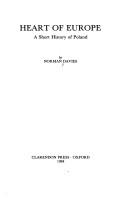
Pace: 12–14 weeks, ~40–50 pages/day (God's Playground is ~900 pages; Heart of Europe is ~500 pages). Allocate 8–9 weeks to God's Playground, then 3–4 weeks to Heart of Europe, with 1 week for review and synthesis.
- The Piast dynasty and the Christianization of Poland (10th–14th centuries) as the foundation of Polish identity
- The Polish-Lithuanian Commonwealth (1569–1795) as a unique federal state and its role as a major European power
- The three partitions of Poland (1772, 1793, 1795) and the loss of sovereignty, and how Poles maintained national consciousness under foreign rule
- The 19th-century struggle for independence: insurrections, Romanticism, and the tension between Russian, Prussian, and Austrian occupation zones
- The interwar Second Polish Republic (1918–1939): independence regained, internal conflicts, and the rise of authoritarianism
- World War II and the Holocaust in Poland: occupation, resistance, and catastrophic loss
- Communist Poland (1945–1989): Soviet domination, Solidarity, and the path to 1989 and freedom
- The persistence of Polish national identity and culture across all periods of partition and foreign rule as a unifying theme
- What role did the Piast dynasty and Christianization play in establishing Poland as a distinct European entity, and how did early Polish history shape later national identity?
- How did the Polish-Lithuanian Commonwealth function as a federal state, and why is it considered a high point in Polish history despite its eventual weakness?
- What were the three partitions of Poland, which powers were involved, and how did Poles maintain their sense of nationhood during the 123 years of partition?
- How did the 19th-century insurrections (1794, 1830–31, 1863–64) reflect Polish Romantic ideals, and why did they ultimately fail?
- What were the main achievements and failures of the interwar Second Polish Republic, and how did authoritarianism take root after 1926?
- What was the scale and nature of Poland's experience during World War II, and how did the Holocaust specifically impact Polish Jewish life and Polish society?
- How did Poland experience Soviet domination after 1945, and what role did Solidarity play in the collapse of communism in 1989?
- What are the recurring patterns or themes in Polish history that Davies emphasizes across different periods, and how do they explain Poland's resilience?
- Create a detailed chronological timeline on a large sheet of paper or digital document, marking all major dynasties, partitions, insurrections, wars, and regime changes from the 10th century to 1989. Update it as you read.
- After finishing God's Playground, draw or sketch a map of Poland showing its borders at five key moments: 1370 (Piast peak), 1600 (Commonwealth peak), 1795 (after final partition), 1918 (Second Republic), and 1945 (post-WWII). Annotate which powers controlled which regions during partitions.
- Write a one-page summary of each major period (Piast, Jagiellonian, Commonwealth, Partition era, Second Republic, WWII, Communist era) that captures the central political, cultural, and social dynamics Davies describes.
- Select three key turning points from God's Playground (e.g., the 1795 partition, the 1863 insurrection, the 1939 invasion) and write a 2–3 page analytical essay on why each was pivotal and what it reveals about Polish resilience or vulnerability.
- Read Heart of Europe immediately after God's Playground and create a comparison chart: for each major historical period, note how Davies in Heart of Europe reflects on how that past shapes contemporary Poland (post-1989 to present).
- Conduct a 'character study' of three major Polish historical figures mentioned across both books (e.g., Casimir the Great, John III Sobieski, Józef Piłsudski, Lech Wałęsa). Write 1–2 pages on each, explaining their historical moment and legacy.
- Create a visual or written analysis of the recurring theme of Polish national identity under foreign rule. How did Poles preserve their culture, language, and sense of self during partition and occupation? Use specific examples from both books.
Next up: This stage establishes the chronological backbone and major themes of Polish history that all subsequent, deeper reading will build upon—whether focusing on specific periods (medieval Poland, the Commonwealth, the 19th century), particular aspects (culture, economics, diplomacy), or comparative contexts (Poland within Europe).

The single most celebrated English-language history of Poland, covering a thousand years in two volumes with narrative flair. Starting here gives the learner the full chronological skeleton—medieval kingdom, partitions, wars, communism—onto which every later book adds flesh.
Davies revisits Polish identity thematically rather than chronologically, reinforcing the grand narrative with an analysis of how history lives in Polish culture, religion, and politics. Reading it second cements what the first book established.
The Medieval Kingdom and the Age of Partitions
IntermediateUnderstand the rise of the Piast and Jagiellonian dynasties, the unique Polish-Lithuanian Commonwealth, and the catastrophic 18th-century partitions that erased Poland from the map for 123 years.
▸ Study plan for this stage
Pace: 8–10 weeks, ~40–50 pages/day (with 1–2 rest days per week). Stone's work (~400 pages) takes 5–6 weeks; Lukowski's focused study (~250 pages) takes 2–3 weeks. Allow 1 week for review and synthesis.
- The Piast dynasty's establishment of a centralized Polish state and its consolidation through the 10th–12th centuries
- The Jagiellonian dynasty's rise through the 1386 Polish-Lithuanian Union and its expansion into a major European power
- The unique federal structure of the Polish-Lithuanian Commonwealth: two nations, two diets, shared monarch, and the liberum veto system
- The Commonwealth's religious tolerance (the 1573 Warsaw Confederation) as a distinctive feature of early modern Europe
- The decline of the Commonwealth through the 17th–18th centuries: wars, internal paralysis, and loss of great-power status
- The three Partitions (1772, 1793, 1795) orchestrated by Russia, Prussia, and Austria as the geopolitical catastrophe that erased Poland
- The role of the liberum veto and szlachta (nobility) interests in preventing effective Commonwealth reform
- How partition-era policies of Russification, Germanization, and Austrianization attempted to erase Polish identity
- How did the Piast dynasty establish and consolidate the Polish state, and what role did Christianity play in that process?
- What were the key terms and consequences of the 1386 Polish-Lithuanian Union, and how did it transform both nations?
- Explain the structure of the Polish-Lithuanian Commonwealth: how did the dual-nation system, shared monarchy, and liberum veto function in practice?
- Why was the Warsaw Confederation of 1573 significant for religious tolerance in early modern Europe, and how did it reflect Commonwealth values?
- What internal and external factors led to the Commonwealth's decline from the 17th century onward?
- Describe the three Partitions of Poland (1772, 1793, 1795): which powers were involved, what territories did each acquire, and what were the immediate consequences?
- How did Russia, Prussia, and Austria attempt to suppress Polish identity and culture in their respective partition territories?
- Create a timeline (1000–1795) marking major Piast and Jagiellonian rulers, key military victories/defeats, and constitutional moments; annotate with Stone's key interpretations.
- Draw a detailed map of the Commonwealth at its height (c. 1600) and overlay the three partition boundaries (1772, 1793, 1795); label territories by acquiring power and note population shifts.
- Write a 500-word comparative analysis of the liberum veto system: how it protected szlachta interests, why it prevented reform, and how Lukowski explains its role in partition vulnerability.
- Construct a table comparing the three Partitions: date, powers involved, territories acquired, population affected, and immediate political/cultural responses (use both Stone and Lukowski).
- Read and annotate Lukowski's analysis of the 1795 Final Partition; write a 300-word reflection on whether the Commonwealth's collapse was inevitable or contingent on specific decisions.
- Create a visual chart of the Commonwealth's major wars (Swedish invasions, Cossack uprisings, Russo-Polish conflicts) and their impact on territorial integrity and state capacity, drawing on Stone's narrative.
Next up: This stage establishes the historical trauma and geopolitical erasure of Poland, setting up the next stage's exploration of how Poles resisted partition-era oppression, preserved national identity, and ultimately reclaimed independence in 1918.
A focused, scholarly yet accessible account of the Commonwealth at its height and its slow collapse. It provides the political and constitutional detail that Davies's survey necessarily compresses.
The definitive short study of the three partitions, explaining the diplomatic, military, and internal failures that allowed Poland's neighbors to divide it. Essential for understanding the trauma that defines modern Polish identity.
War, Occupation, and the Holocaust in Poland
IntermediateGrapple with the two World Wars and the Holocaust as experienced on Polish soil—the most devastating period in Polish history—understanding both Polish suffering and the moral complexities of occupation.
▸ Study plan for this stage
Pace: 8–10 weeks, ~40–50 pages/day (with 2–3 reflection days per week). Week 1–2: White Eagle Red Star (~350 pages); Week 3–4: Forgotten Bastards (~400 pages); Week 5–7: Neighbors (~250 pages, slower pace for moral complexity); Week 8–10: synthesis and review.
- The Polish-Soviet War (1919–1920) as a foundational conflict that shaped Poland's borders, national identity, and relationship with the Soviet Union for decades
- The Eastern Front in WWII as a zone of ideological and existential warfare between Nazi Germany and the Soviet Union, with Poland caught in the middle and suffering catastrophic losses
- The Holocaust on Polish soil: the scale of Jewish persecution, the role of Polish bystanders, collaborators, and rescuers, and the moral ambiguities of survival under occupation
- Occupation as a lived experience: how ordinary Poles navigated survival, resistance, complicity, and moral choice under Nazi rule
- The concept of 'neighbors' as perpetrators: how local communities participated in or enabled violence against Jews, complicating narratives of Polish victimhood
- Soviet and Nazi occupation as distinct but equally devastating forces that reshaped Polish territory, demographics, and collective memory
- The long-term psychological and social legacy of war and genocide on Polish society and memory
- What were the causes, key battles, and outcomes of the Polish-Soviet War, and why did it matter for Poland's future relationship with the Soviet Union?
- How did the Eastern Front differ from the Western Front in terms of ideology, tactics, and human cost, and what role did Poland play in this conflict?
- What were the mechanisms and scale of the Holocaust in Poland, and how did the Nazi occupation specifically target Polish Jews?
- What does Gross argue in Neighbors about the role of Polish communities in the persecution and murder of Jews, and what evidence does he present?
- How did ordinary Poles experience occupation, and what were the range of responses—resistance, collaboration, complicity, rescue, and indifference?
- How do these three books together complicate a simple narrative of Poland as a victim nation, and what moral complexities emerge?
- Create a timeline of Polish-Soviet relations from 1919–1945 using White Eagle Red Star and Forgotten Bastards, marking key turning points and explaining their significance.
- Map the territorial changes of Poland across the three books (borders, occupation zones, ghettoes, concentration camps). Annotate with casualty figures and demographic shifts.
- Write a 2–3 page analytical response to Gross's central argument in Neighbors: Do you find his evidence convincing? What counterarguments exist, and how do you weigh them?
- Compare the experience of occupation under Nazi Germany vs. the Soviet Union using specific examples from all three books. What were the similarities and differences in how Poles suffered?
- Select one specific event or location mentioned across the books (e.g., the Warsaw Ghetto, a particular town in Neighbors, a battle from the Polish-Soviet War) and research it further using primary sources or documentaries. Write a 1–2 page synthesis.
- Conduct a 'moral inventory' exercise: identify 5–7 different types of moral choices Poles faced during occupation (resistance, rescue, collaboration, indifference, survival) and find specific examples from the books for each. Reflect on what you would have done.
Next up: This stage establishes Poland's experience of total war, genocide, and moral reckoning in the 20th century, providing the historical and emotional foundation to understand how Poland rebuilt itself, reclaimed its identity, and grappled with memory and justice in the post-1945 era.
The forgotten war that shaped interwar Poland and foreshadowed the Soviet domination to come. Reading this first establishes the geopolitical trap Poland found itself in by 1939.

Illuminates the brutal Eastern Front context in which Poland was destroyed and redrawn, providing the Allied and Soviet perspectives that frame Poland's wartime fate.
A landmark, controversial study of the Jedwabne massacre that forces a reckoning with Polish-Jewish relations during the Holocaust. Essential for any serious student of this period; its arguments have shaped decades of debate.
Communism, Solidarity, and the Road to 1989
ExpertUnderstand how Soviet-imposed communism reshaped Polish society, how the Solidarity movement became the first crack in the Iron Curtain, and how Poland led the peaceful revolutions of 1989.
▸ Study plan for this stage
Pace: 8–10 weeks, ~40–50 pages/day. Start with "The Spring Will Be Ours" (4–5 weeks, covering 1945–1980), then transition to "The Magic Lantern" (3–4 weeks, covering 1989 and the revolution's immediate aftermath).
- Soviet imposition of communism in Poland after 1945 and the mechanisms of political control under Stalinist and post-Stalinist regimes
- The role of the Catholic Church and Polish nationalism as sources of resistance to communist ideology
- The emergence of Solidarity in 1980 as a mass movement rooted in workers' grievances and intellectual dissent
- The declaration of martial law (1981–1983) and its impact on Polish society and the underground opposition
- The economic crisis of the 1980s and the delegitimization of communist rule
- Timothy Garton Ash's eyewitness account of the 1989 revolution and the collapse of communist authority
- The peaceful, negotiated character of Poland's transition compared to violent upheaval elsewhere in Eastern Europe
- The role of intellectuals, workers, and the Church in forging a broad coalition that toppled communism
- How did the Soviet Union impose and maintain communist rule in Poland after 1945, and what were the key mechanisms of state control?
- What role did the Catholic Church and Polish national identity play in sustaining resistance to communism throughout the postwar period?
- What were the immediate causes of the Solidarity movement's emergence in 1980, and why did it gain such rapid mass support?
- How did martial law (1981–1983) reshape the opposition movement, and what strategies did Solidarity adopt during this period?
- What economic and political factors in the 1980s delegitimized communist rule and made negotiated change possible?
- According to Garton Ash's account, what were the key moments and turning points in the 1989 revolution, and how did Poland's peaceful transition influence other Eastern European countries?
- Timeline construction: Create a detailed chronology of major events from 1945–1989 (Soviet takeover, key purges, 1956 uprising, 1968 events, 1970 strikes, Solidarity's founding, martial law, Round Table talks, 1989 elections) with 2–3 sentence explanations of each.
- Character analysis: Identify and profile 5–6 key figures across both books (e.g., Gomułka, Gierek, Wałęsa, Michnik, John Paul II) and explain their roles in shaping Poland's communist and post-communist trajectory.
- Comparative document study: Read and annotate 3–4 primary source excerpts (e.g., Solidarity's founding charter, martial law proclamations, Round Table agreements) cited in the books to understand how actors articulated their positions.
- Thematic essay: Write a 1500–2000 word essay answering one of the study questions, using specific evidence from both Paczkowski and Garton Ash to support your argument.
- Garton Ash's eyewitness method: Select 2–3 vivid scenes from 'The Magic Lantern' and analyze how Garton Ash uses personal observation and dialogue to convey the texture of the 1989 moment; reflect on what this approach reveals that a purely analytical account might miss.
- Comparative analysis: Create a chart comparing the strategies, goals, and outcomes of opposition movements in Poland versus another Eastern European country (Hungary, Czechoslovakia, East Germany) to understand what made Poland's path distinctive.
Next up: This stage equips you with a deep understanding of how Poland became the vanguard of peaceful communist collapse, positioning you to explore how post-1989 Poland navigated the challenges of democratic consolidation, economic transformation, and European integration in subsequent stages.
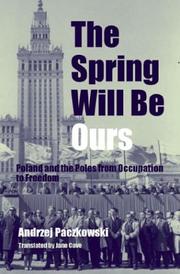
Written by Poland's foremost historian of the communist period, this is the authoritative account of Poland from 1939 to 1989. It bridges the wartime stage and the communist era with scholarly rigor.
A firsthand account of the 1989 revolutions across Eastern Europe, with Poland at the center. Reading this last gives the curriculum a powerful, eyewitness conclusion to Poland's long road to freedom.
Discussion
Keep reading
Paths that share books, cover the same subject, or open a related topic.