Ancient China: dynasties, thought & invention
This curriculum takes a beginner from a vivid, story-driven first encounter with ancient China all the way to a sophisticated understanding of its philosophy, political thought, and world-historical significance. Each stage builds on the last: narrative first, then cultural and philosophical depth, then primary sources and specialist analysis — so no concept ever arrives without the context to understand it.
First Encounter: The Big Picture
BeginnerGain a confident, chronological overview of ancient Chinese civilization — its major dynasties, key turning points, and defining cultural achievements — so that every later book has a mental map to land on.
▸ Study plan for this stage
Pace: 8–10 weeks total. Week 1–4: Read "The Story of China" by Michael Wood (~25–30 pages/day, treating it as a narrative journey — pause at each dynasty chapter before moving on). Week 5–10: Read "China: A History" by John Keay (~20–25 pages/day, a denser analytical text — read in half-chapter increments
- The dynastic cycle: how Chinese dynasties rose, consolidated power, decayed, and fell — a repeating pattern that structures all of ancient Chinese history
- The foundational dynasties and their sequence: Shang → Zhou (Western & Eastern) → Qin → Han → the later imperial succession, as laid out across both Wood and Keay
- The role of the Yellow River (Huang He) and geography in shaping early Chinese civilization, agriculture, and state formation
- Confucianism, Daoism, and Legalism as competing philosophical frameworks that emerged during the Zhou period and defined governance and culture for millennia
- The Qin unification (221 BCE) as a pivotal turning point: standardization of script, weights, measures, and the creation of a centralized imperial state
- The Han Dynasty as the consolidating golden age — expansion of territory, the Silk Road, the civil service ideal, and the definition of 'Chinese' identity
- The concept of the 'Mandate of Heaven' (Tianming) as the ideological justification for dynastic legitimacy and the moral logic behind dynastic change
- Key cultural achievements: oracle bone script and the origins of Chinese writing, bronze-age ritual culture, the Great Wall, and early technological innovations (paper, silk, iron)
- After reading Wood and Keay, can you narrate — without notes — the sequence of major dynasties from the Shang through the Han, including one defining characteristic of each?
- How does Michael Wood's storytelling approach to the same historical periods differ from John Keay's more analytical framework, and what does each method reveal that the other misses?
- What is the Mandate of Heaven, and how did both Wood and Keay use it to explain the logic of dynastic transition?
- What were the three major philosophical schools that emerged during the Zhou period, and how did each propose to bring order to a fragmented society?
- How did the Qin emperor Shi Huangdi's centralizing reforms — as described by Keay — permanently alter the structure of Chinese civilization, even though the dynasty itself lasted only 15 years?
- In what ways did the Han Dynasty, as portrayed across both books, serve as the template for what 'China' would mean culturally and politically for the next two thousand years?
- Build a personal dynasty timeline: After finishing Wood, draw a hand-drawn chronological chart listing each major dynasty, its approximate dates, capital city, and one 'signature' achievement or event. Update and annotate it as you read Keay.
- Write a one-page 'dynasty snapshot' for three dynasties of your choice (e.g., Shang, Qin, Han) — covering origins, peak achievements, and cause of collapse — using only what you learned from Wood and Keay, in your own words.
- Map it out: Sketch a rough outline map of China and mark the key geographic features both authors reference (Yellow River, Yangtze River, North China Plain, the steppe frontier). Then add the capitals of at least four dynasties. No atlas required — use only the geographic clues in the texts.
- Comparative reading journal: After finishing each major section in Keay that overlaps with Wood (e.g., the Qin unification, the Han expansion), write 3–5 sentences comparing how the two authors frame the same event. Note where they agree, where they emphasize differently, and what questions arise.
- The 'Mandate of Heaven' test: Choose any two dynastic transitions described in either book and write a short paragraph explaining each through the lens of the Mandate of Heaven — then evaluate whether you find that framework convincing as a historical explanation.
- Teach-back exercise: At the end of the stage, close both books and spend 15 minutes verbally explaining (aloud, to yourself, a friend, or recorded on your phone) the full arc of ancient Chinese history from the Shang to the Han, as if introducing it to someone who knows nothing. Note where you hesitate — those are your gaps to revisit.
Next up: With a confident chronological skeleton and the dynastic cycle firmly in mind from Wood and Keay, the reader is now ready to zoom into specific eras, themes, or primary sources — moving from the "big map" to the detailed terrain of particular periods, figures, or ideas in ancient Chinese civilization.

A richly illustrated, narrative-driven sweep through Chinese history from earliest times to the modern era. Wood's accessible storytelling gives beginners a vivid chronological spine before any deeper reading begins.

A single-volume history that covers the dynasties in clear, well-paced prose. Reading it second reinforces the chronology from Wood while adding political and institutional detail that prepares the reader for thematic study.
Philosophy & Belief: Confucius, Laozi, and the Hundred Schools
BeginnerUnderstand the core ideas of Confucianism, Daoism, and Legalism — the three great intellectual traditions that shaped every dynasty — and be able to read the primary texts with confidence.
▸ Study plan for this stage
Pace: 8–10 weeks total. Week 1–2: Read Schuman's "Confucius" (~20–25 pages/day) as your biographical and historical foundation. Weeks 3–5: Read "The Complete Analects of Confucius" slowly and reflectively (~10–15 pages/day, re-reading difficult passages); keep a dedicated notebook. Weeks 6–7: Read the "Ta
- Rén (仁) — Benevolence/Humaneness: the supreme Confucian virtue, the inner quality that makes one truly human and the foundation of all ethical relationships
- Lǐ (禮) — Ritual Propriety: the outward expression of rén through correct behavior, ceremony, and social roles, as emphasized throughout the Analects
- The Five Relationships (wǔlún): ruler–subject, parent–child, husband–wife, elder–younger sibling, friend–friend — the social architecture Confucius believed ordered a harmonious society
- The Junzi (君子) — the 'Exemplary Person' or 'Noble Man': Confucius's ideal of the morally cultivated individual, contrasted with the petty person (xiǎorén), a recurring figure in the Analects
- Dào (道) — The Way: in Laozi's Tao Te Ching, the ineffable, nameless source and underlying principle of all reality, fundamentally different from Confucius's use of the same word
- Wú Wéi (無為) — Non-Action or Effortless Action: the Daoist principle of acting in harmony with the natural flow of the Dào rather than forcing outcomes, central to the Tao Te Ching
- The historical context of the 'Hundred Schools of Thought': the Warring States period (475–221 BCE) as the crucible of Chinese philosophy, explained through Schuman's biographical account of Confucius's life and era
- Legalism as a contrasting tradition: understanding how the Legalist emphasis on law, punishment, and state power stands in deliberate tension with both Confucian virtue-ethics and Daoist naturalism
- According to Schuman's biography, what personal hardships and political failures did Confucius experience, and how did those experiences shape the teachings recorded in the Analects?
- What does the Analects reveal about Confucius's teaching method? Why does he give different answers to the same question when asked by different disciples?
- Choose any three of the Five Relationships. Using specific passages from the Analects, explain what obligations Confucius believed each party in the relationship owed the other.
- The opening line of the Tao Te Ching states 'The Tao that can be told is not the eternal Tao.' What does this paradox reveal about the nature of the Dào, and how does it differ from the Confucian concept of the Dào (the moral Way)?
- How does the Daoist concept of wú wéi challenge or complement the Confucian emphasis on ritual practice and active self-cultivation? Can the two philosophies coexist, or are they fundamentally opposed?
- If a Legalist ruler, a Confucian scholar, and a Daoist sage were each asked 'How should a state be governed?', what would each answer — and what evidence from these three books supports each position?
- Biographical timeline: After reading Schuman's 'Confucius,' draw a timeline of Confucius's life mapping key events (birth, years of wandering, political appointments, exile, death) alongside the major political events of the Spring and Autumn period. Annotate it with Analects passages that seem to reflect each life stage.
- Analects commonplace book: As you read the Analects, copy out 10–15 passages that surprise, confuse, or move you into a dedicated notebook. For each, write 2–3 sentences in your own words explaining what you think Confucius means, then write one question the passage raises for you.
- Concept comparison chart: Create a three-column table with the headers 'Confucianism,' 'Daoism,' and 'Legalism.' Fill in rows for: view of human nature, role of the ruler, purpose of law, ideal society, and attitude toward tradition. Use only evidence drawn from the three books in this stage.
- Tao Te Ching slow-read ritual: For each of the 81 chapters of the Tao Te Ching, read the chapter once silently, once aloud, then write one sentence summarizing its central image or idea. At the end, identify the five chapters you find most puzzling and write a short paragraph on each.
- Dialogue writing exercise: Write a one-page imagined dialogue between Confucius and Laozi on the question 'What is the best way for a person to live?' Root every argument each figure makes in a specific passage from the Analects or the Tao Te Ching, citing the book and chapter.
- Self-reflection journal: At the end of each week, write a half-page reflection answering: 'Which idea from this week's reading challenged my existing assumptions the most, and why?' Revisit all eight entries at the end of the stage to trace how your thinking evolved.
Next up: By internalizing the philosophical vocabulary — rén, lǐ, dào, wú wéi — and understanding the competing visions of social order from Confucianism, Daoism, and Legalism, you are now equipped to recognize exactly how these ideologies were selectively adopted, rejected, or synthesized by real rulers and institutions as you move into the study of China's great dynasties.
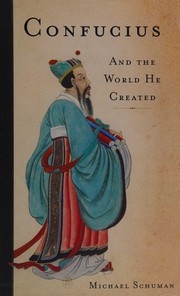
A highly readable modern biography and intellectual portrait of Confucius that explains his ideas in their historical context. Reading this before the primary text makes the Analects far less cryptic.
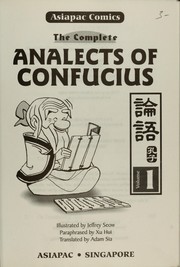
The foundational text of Confucianism, presented as short dialogues and sayings. After Schuman's framing, the reader can engage the original source directly and see how its ideas about virtue, ritual, and governance permeate all of Chinese civilization.
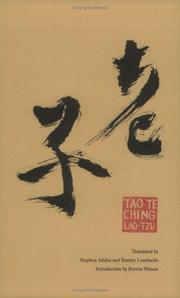
The eighty-one brief verses that define Daoist thought. Placed after the Analects, the contrast between Confucian social order and Daoist naturalness becomes immediately clear and intellectually productive.
Society, Invention & Daily Life
IntermediateMove beyond rulers and philosophers to understand how ordinary and elite Chinese people actually lived — and how China's great inventions (paper, printing, gunpowder, the compass) changed the world.
▸ Study plan for this stage
Pace: 8–10 weeks total: Weeks 1–4 on "The Genius of China" (~25–30 pages/day, 4–5 days/week); Weeks 5–10 on "Daily Life in Traditional China" (~20–25 pages/day, 4–5 days/week), allowing extra time for Benn's denser social detail and note-taking.
- The 'Needham Question': why China pioneered so many technologies centuries before the West yet did not produce an industrial revolution
- The Four Great Inventions (paper, printing, gunpowder, compass) as traced through Temple — their origins, mechanisms, and global transmission
- Technology as social infrastructure: how Chinese innovations in agriculture (iron plows, seed drills), hydraulics, and medicine shaped everyday survival and state power
- Tang Dynasty social hierarchy as reconstructed by Benn — the nine-rank aristocracy, the merchant class, peasants, and the role of women across strata
- The imperial examination system as both a meritocratic ideal and a lived daily reality: preparation, ritual, anxiety, and consequence
- Urban life in Tang Chang'an: ward systems, markets, entertainment quarters, food culture, and the cosmopolitan mixing of peoples along the Silk Road
- Material culture and domestic life — clothing, housing, diet, medicine, and religious practice as windows into Chinese values and world-view
- The interplay between elite and popular culture: how Confucian ideals, Buddhist practice, and Daoist folk belief coexisted in ordinary households
- According to Temple, which Chinese invention had the single greatest transformative effect on world history, and what evidence does he marshal for that claim?
- How does Benn use primary sources (Tang legal codes, poetry, official records) to reconstruct daily life, and what are the limitations he acknowledges in that method?
- In what ways did the ward (fang) system of Chang'an reflect Tang imperial ideology, and how did ordinary residents navigate — or subvert — its restrictions?
- How did the status of women vary across social classes in Tang China as described by Benn, and which aspects of Temple's technological chapters might have directly affected women's domestic labor?
- What mechanisms allowed Chinese inventions described by Temple (e.g., printing, the compass) to travel westward, and what social or political structures either accelerated or impeded that transfer?
- After reading both books together, how would you characterize the relationship between technological ingenuity and social conservatism in traditional China?
- Invention timeline poster: Create a visual timeline mapping each major invention from Temple onto the corresponding dynasty and social context described by Benn — note which inventions appear (or are conspicuously absent) in Benn's daily-life scenes.
- A day in Tang Chang'an: Using Benn's chapters on urban life as your script, write a first-person journal entry for one full day as a specific character (a female merchant, a examination candidate, a foreign trader) — incorporate at least three material-culture details Benn provides.
- Comparative technology audit: Choose any two inventions from Temple and research their approximate date of independent development in Europe; write a one-page reflection on what Temple's and Benn's books together suggest about why the gap existed.
- Primary-source dialogue: Find one Tang poem (Du Fu or Bai Juyi are accessible) that touches on a theme Benn discusses (famine, urban crowds, women's roles). Annotate it line by line using Benn's social context as your commentary.
- Concept-mapping the Needham Question: Draw a mind-map with 'Why no Chinese Industrial Revolution?' at the center; populate branches using evidence from both Temple (technological capacity) and Benn (social, legal, and economic structures).
- Teach-back session: Summarize Temple's chapter on one invention and Benn's most relevant social chapter in a 10-minute verbal explanation to a friend, family member, or study partner — then field two questions you cannot immediately answer and research them.
Next up: Grounding yourself in how ordinary Chinese people lived and how their inventions spread prepares you to examine China's interactions with the outside world — setting up the next stage's focus on trade networks, foreign relations, and China's place within a broader Eurasian and global history.

A landmark popular account of China's scientific and technological inventions, based on Joseph Needham's monumental research. It concretely shows why ancient China was the most technologically advanced civilization on Earth for over a millennium.
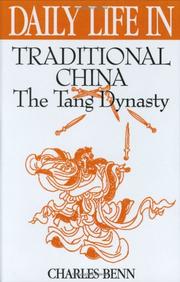
A meticulously researched portrait of life during the Tang — food, fashion, religion, commerce, and entertainment. It grounds the reader in lived experience after the big-picture histories and philosophical texts.
Power, Empire & the Art of War
IntermediateUnderstand how Chinese states were built, fought over, and governed — from the Warring States period through the Qin and Han empires — and engage with the strategic thought that shaped it all.
▸ Study plan for this stage
Pace: 6–8 weeks total. Week 1: Read "The Art of War" in full (it is short — ~100 pages with commentary); re-read it once slowly, annotating every chapter. Weeks 2–5: Read "The Early Chinese Empires" at ~25–30 pages/day, pausing at the end of each chapter to review notes. Weeks 6–8: Synthesis, review, and
- The Five Factors and strategic calculus in Sun Tzu (Tao, Heaven, Earth, Command, Doctrine) — the idea that war is won before it is fought
- Deception, adaptability, and the concept of 'shi' (strategic advantage/momentum) as the engine of Sun Tzu's system
- The Warring States period as the crucible of Chinese statecraft: how interstate competition drove military, administrative, and philosophical innovation
- Legalism as the ideological backbone of Qin unification — the role of Shang Yang's reforms in transforming a feudal state into a centralized war machine
- The Qin imperial project: standardization of weights, measures, script, and law as instruments of political control
- The Han synthesis — how the Han dynasty blended Legalist administrative structures with a Confucian public ideology to create a durable imperial model
- The role of the bureaucracy, the examination ideal, and the 'outer court vs. inner court' tension in Han governance (as analyzed by Lewis)
- Warfare, logistics, and the relationship between military power and state-building across the Qin and Han periods
- According to Sun Tzu, what are the five constant factors that determine victory, and how does each one map onto real decisions a commander must make?
- What does Sun Tzu mean by 'shi' (勢), and how does it differ from brute force? Can you find a passage in 'The Art of War' that illustrates it?
- How did the Legalist reforms described by Lewis — particularly those associated with the Qin state — translate Sun Tzu's abstract strategic principles into concrete state policy?
- Lewis argues that the Han empire was built on a tension between centralization and delegation. What were the main institutional mechanisms the Han used to manage this tension, and where did they break down?
- In what ways did the Qin's rapid collapse after unification validate or contradict the strategic principles laid out in 'The Art of War'?
- How did the Han dynasty's treatment of the military differ from the Qin's, and what does Lewis suggest this reveals about the long-term relationship between warfare and Chinese imperial legitimacy?
- **Annotation map:** As you read 'The Art of War,' create a one-page concept map linking each of the 13 chapters to a single core principle. Then, after finishing Lewis, revisit the map and annotate each principle with a concrete historical example from Qin or Han history.
- **Strategic case study:** Choose one military or political event from Lewis (e.g., the Qin conquest of the six states, the Chu-Han contention, or the Han campaigns against the Xiongnu) and write a 500-word analysis using Sun Tzu's vocabulary — shi, deception, terrain, command — to explain what happened and why.
- **Comparative timeline:** Build a side-by-side timeline with two tracks: (1) major political/military events from Lewis (Warring States → Qin unification → Han consolidation), and (2) the strategic principles from 'The Art of War' that seem most relevant to each event. Look for patterns and contradictions.
- **Legalism vs. Sun Tzu debate:** Write a short (300-word) argument for the following prompt: 'Sun Tzu and the Legalists share the same theory of power.' Then write a 300-word rebuttal. Use specific passages from 'The Art of War' and specific policies described by Lewis as evidence.
- **Vocabulary deep-dive:** Identify 8–10 key Chinese terms introduced across both books (e.g., 道/Tao, 勢/shi, 法/fa, 德/de, 郡县/commandery-county system). Write a definition for each in your own words and explain how each term functions differently in a military context (Sun Tzu) versus an imperial governance context (Lewis).
- **Synthesis essay:** After completing both books, write a 600–800 word essay answering: 'To what extent was the Qin-Han imperial state a practical application of the strategic worldview found in The Art of War?' Cite both texts directly.
Next up: By mastering how Chinese states were built and fought over — and the strategic and administrative logic that held them together — the reader is now equipped to explore the philosophical and cultural systems (Confucianism, Daoism, Buddhism) that gave Chinese civilization its deeper moral and cosmological framework in the stages ahead.
The most influential military and strategic text in world history, written during the Warring States period. Read at this stage, after the historical and philosophical foundations are in place, its ideas about deception, terrain, and leadership resonate far more deeply.
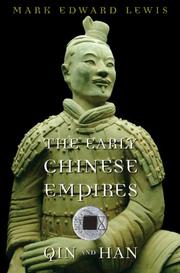
A scholarly yet accessible account of how the first true Chinese empires were constructed — their bureaucracies, armies, economies, and ideologies. Lewis shows how Confucianism, Legalism, and military power were woven together into a governing system.
Deep Synthesis: China and the World
ExpertStep back and assess ancient China's place in world history — its connections to other civilizations, the long roots of its cultural identity, and why it matters for understanding the world today.
▸ Study plan for this stage
Pace: 6–8 weeks, ~25–35 pages/day — Fairbank's text is dense with historiographical argument and sweeping synthesis, so pace yourself to allow reflection; plan 1–2 slower "consolidation days" per week to review notes and revisit key passages rather than pushing forward.
- The 'China-centered' historiographical framework — Fairbank's deliberate shift away from Western-impact models toward understanding China's internal dynamics and self-perception
- The concept of the 'Sinic world order' — how China projected cultural, diplomatic, and economic influence across East and Southeast Asia through the tribute system rather than direct conquest
- Dynastic cycle theory — Fairbank's analysis of the recurring pattern of consolidation, peak, decline, and collapse, and its structural (not merely political) causes
- Continuity vs. rupture — the tension between China's extraordinary civilizational continuity (writing, bureaucracy, Confucian ethics) and the genuine transformations wrought by conquest dynasties, trade, and ideology
- The role of geography — how the North China Plain, the steppe frontier, river systems, and coastal access shaped political unity, vulnerability, and economic development across millennia
- Confucianism as a governing technology — not merely a philosophy but a practical system of elite formation, social hierarchy, and state legitimacy that persisted across radically different regimes
- China's relationship with 'barbarian' peripheries — the complex, symbiotic, and often transformative interactions with nomadic and semi-nomadic peoples (Xiongnu, Mongols, Manchu) that repeatedly reshaped the empire
- Long-run relevance — Fairbank's argument that understanding ancient and imperial China is indispensable for interpreting modern Chinese nationalism, statecraft, and China's re-emergence as a global power
- According to Fairbank, why is the 'Western impact / Chinese response' model insufficient for understanding Chinese history, and what does a China-centered approach reveal that the older model obscures?
- How did the tribute system function as both a diplomatic and an economic institution, and in what ways did it define China's relationship with neighboring states and peoples?
- What structural forces does Fairbank identify as driving the dynastic cycle, and how does this framework hold up when applied to conquest dynasties such as the Yuan and Qing?
- In what ways does Fairbank argue that Confucian ideology served the practical interests of the imperial state, and where did it create tensions or contradictions within the system?
- How does Fairbank trace the roots of modern Chinese national identity — including attitudes toward sovereignty, territorial integrity, and foreign relations — back to imperial-era institutions and worldviews?
- What does Fairbank's synthesis suggest about ancient China's place in world history — was it an isolated civilization, a regional hegemon, or something more complex, and what evidence supports your answer?
- Annotated timeline: As you read, build a master timeline tagging each dynasty with (a) its geographic extent, (b) its primary external threat or partner, and (c) one institutional innovation — then review it at the end to identify patterns Fairbank explicitly names and ones he implies.
- Comparative essay (500–700 words): Choose one other ancient civilization you have studied (Rome, Persia, the Maurya Empire, etc.) and write a structured comparison with imperial China using Fairbank's framework — focus on how each managed its frontier peoples and projected cultural influence.
- Tribute system map: Draw or annotate a map of East and Southeast Asia marking the states that participated in the Chinese tribute system at its height; for each, note what they sent to the Chinese court and what they received in return, drawing directly on Fairbank's descriptions.
- Historiographical reflection journal: After finishing the book, write a 1-page entry answering: 'How has Fairbank changed or complicated the mental model of ancient China I held before this stage?' Be specific about which arguments or examples produced the biggest shifts.
- Concept stress-test: Select two dynasties Fairbank covers in depth (e.g., Han and Qing) and test the dynastic cycle model against each — note where the model fits cleanly, where it requires modification, and where Fairbank himself hedges.
- Synthesis presentation (solo or with a study partner): Prepare a 10-minute verbal summary of Fairbank's core argument as if presenting to someone who has never studied Chinese history — this forces you to distinguish his central thesis from supporting detail and to articulate why ancient China matters for the world today.
Next up: Fairbank's sweeping synthesis equips the reader with a confident, critically examined mental map of ancient China's structures and world-historical significance — the ideal foundation for moving into more specialized or contemporary scholarship that interrogates, updates, or challenges his framework in specific domains.
A revisionist, evidence-driven history that challenges the myth of Chinese isolation, showing how trade, religion, and ideas flowed in and out across the Silk Road and beyond. It synthesizes everything the reader has learned into a global perspective.
The capstone of the curriculum — a magisterial work by the dean of American China studies. Read last, it rewards the reader who now has the vocabulary, chronology, and conceptual tools to appreciate its full analytical depth.
Discussion
Keep reading
Paths that share books, cover the same subject, or open a related topic.