Start with The Poppy War. There is no ambiguity here — the trilogy is a strict sequence with a single protagonist, Rin, and it was written and published in order. Anyone telling you to read the history first has the relationship backwards: the history is what the novels are metabolising, and it lands harder once you know what Kuang did with it.
The one thing to know before you open book one is what kind of book it is. It begins as a familiar military-academy fantasy and then, roughly halfway through, becomes an unflinching fictional treatment of the Second Sino-Japanese War, including a siege modelled closely on the 1937 Nanjing massacre. There is sustained atrocity, sexual violence, drug addiction and chemical warfare. This is not a bait-and-switch to complain about; it is the book's argument. But readers who expect a magic-school novel are routinely blindsided, and you should not be.
The trilogy, in order
- The Poppy War — academy, then war. The tonal break is deliberate.
- The Dragon Republic — the middle book, and the one most readers find slowest. It is largely political: alliances, betrayals, a fleet, a republic that is not what it advertises. It is also where Rin stops being a protagonist you can comfortably root for.
- The Burning God — the conclusion, and unusually willing to follow its own logic to an ending most series flinch from.
Read them back to back if you can. The trilogy is one long argument about what victory does to the victor, and spacing it out blunts the effect.
Where Babel fits (it does not)
Babel is a separate, standalone novel — same author, entirely different world, Oxford and colonial linguistics rather than the Nikara empire. It shares the trilogy's preoccupations with empire and complicity and none of its continuity. Read it before, after, or instead; nothing depends on the order. It is the better book to hand someone who wants Kuang's thinking without the battlefield.
The history worth reading alongside
Treat this as optional enrichment, ideally between books rather than before book one. The Rape of Nanking by Iris Chang is the direct source for the trilogy's most harrowing sequence; its scholarship has been argued over in places, but its central account is not in dispute and reading it will change how you see the novel. China A History by John Keay gives the long background — the dynastic collapses and provincial fault lines Kuang compresses into Nikan. The Opium War by Julia Lovell is the essential companion for the trilogy's drug politics, and Opium nation by Fariba Nawa carries the same subject into the present day.
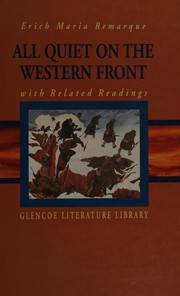
For the war-writing lineage, The Things They Carried by Tim O'Brien and the catalogue's edition of All quiet on the western front are the two obvious ancestors of Kuang's refusal to make combat legible or redemptive. The Art of War is worth an hour simply because the trilogy's generals quote its logic constantly.
Where to stop
Almost nobody should stop mid-trilogy — book two ends on a fracture that is unbearable as a resting place. If you finish The Poppy War and know you cannot take more, stopping at one is defensible; the first novel has a real ending. Otherwise finish all three.
For more series built on the same read-in-order logic, browse The Broken Earth trilogy.
Follow the full ordered path here: The Poppy War Reading Order and Guide.
Ready to learn something deeply?
Build a reading path — free