James Clavell Asian Saga books in order: where to start
The six novels of the Asian Saga span three and a half centuries and were written in almost the reverse of that order, which is why the first question every new reader asks is which sequence to use. The answer this path gives is publication order with one deliberate exception: start with Shogun. It is the third book published and the first chronologically, it is by a wide margin the best of them, and it is the only one that will decide for you whether you want the other five. Internal chronology runs Shogun (1600), Tai-Pan (1841), Gai-Jin (1862), King Rat (1945), Noble House (1963), Whirlwind (1979); the Struan family thread connects Tai-Pan, Gai-Jin, Noble House and Whirlwind, so those four do reward being read in that order. A note on the records: three of these are catalogued with truncated marketplace strings, and Whirlwind resolves as Volume One of a two-volume paperback split rather than as the single fat novel.
Start with these two
BeginnerRead the best novel Clavell wrote and the one he lived, and understand what the saga is actually doing before committing to a thousand pages more.
▸ Study plan for this stage
Pace: 7 to 8 weeks. Shogun is 1,136 pages and Clavell writes in short scenes, so 30 pages a day is comfortable and gets you through in about six weeks. King Rat is 391 pages and reads in ten days. King Rat is set in Changi, a Japanese prisoner-of-war camp in Singapore, and deals in detail with starvation,
- Shogun is set in 1600 and follows an English pilot wrecked on the coast of Japan into the succession struggle that produced the Tokugawa shogunate. It was published third in the Asian Saga and set first, and it is the entry point for everyone.
- The method Clavell uses in every later book is fully formed here: an outsider who must learn the local rules to survive, long stretches of negotiation rather than action, and multiple point-of-view characters including several on the other side.
- Clavell has been criticised for his portrayal of Japan — for a version of bushido and of Japanese thought shaped by a Western outsider writing in the 1970s, and for making his Japanese characters carriers of a philosophy rather than individuals. Historians and Japanese readers have made this objecti
- King Rat is the debut and the autobiographical root. Clavell spent three years in Changi, and the camp's economy — trading, hierarchy, what men will do for food — is the seed of every later novel's interest in survival and in the outsider who learns the rules.
- The American corporal at the centre of King Rat thrives by trading in a place where trading is the only power available. Clavell never resolves whether that makes him admirable, and the refusal is the point of the book.
- Clavell is a participant on this material, not a neutral observer. King Rat is fiction built from what he saw, which makes it evidence of a kind and unreliable in the specific ways memory is unreliable.
- Shogun needs no other book in the saga, and it decides the question for you: if 1,136 pages of this do not hold you, the remaining four thousand will not either.
- What does Blackthorne have to give up before Toranaga can use him, and at what point in the novel does he stop resisting?
- Shogun alternates between English and Japanese points of view. What does Clavell allow you to know that Blackthorne never learns?
- What is the specific criticism made of Clavell's Japan, and where in the novel can you see the thing being objected to?
- In King Rat, what exactly is the King's power based on, and what happens to it the moment the war ends?
- Both books are about an outsider learning a system. What does King Rat do with that situation that Shogun does not?
- Keep a list of the Japanese terms Shogun teaches you and the point in the book each one is first explained. Clavell teaches vocabulary the way the novel teaches Blackthorne, and the list is the curriculum.
- Mark every scene in Shogun where Toranaga is shown thinking. Reading only those scenes in sequence afterwards gives you the political plot stripped of the romance, and it is a different and tighter book.
- In King Rat, write down each trade the King makes and what he gets for it. The novel is an economy, and laid out as a ledger it becomes obvious what Clavell thinks the camp turned men into.
- Read the last twenty pages of King Rat immediately after finishing, then go back to the first chapter. The ending reframes the whole book, and the reread is where the point of it lands.
Next up: You now have Clavell's method and his autobiographical source, which is what the four-book family chronicle assumes you have already absorbed.

An English pilot wrecked on the coast of Japan in 1600, drawn into the succession struggle that produced the Tokugawa shogunate. Published third, set first, and the correct entry point for everyone — it needs no other book, and if it does not hold you the rest will not either.

The debut, and the shortest and hardest book here: a Japanese prisoner-of-war camp in Singapore where an American corporal thrives by trading. Clavell spent three years in Changi as a prisoner, and this is the autobiographical root of every later novel's interest in survival and in the outsider who learns the local rules. Read it second, while Shogun's method is fresh.
The Struan century
BeginnerFollow the Struan and Brock families from the founding of Hong Kong to the boardroom fights of the 1960s, in internal chronological order.
▸ Study plan for this stage
Pace: About 5 months, and there is no honest way to compress it: Tai-Pan 663 pages, Gai-Jin 1,232 and Noble House 1,174 comes to just over 3,000 pages. At 30 pages a day that is roughly three weeks, six weeks and six weeks, plus recovery time between them. Gai-Jin is the slog — if you are going to abandon
- Tai-Pan is Hong Kong in 1841, founded on the opium trade by Dirk Struan of the Noble House, and it is the origin of the whole family thread. Read it before Noble House or half of Noble House is lost.
- The Struan-Brock feud is the engine of all four books. It starts as a personal grudge in 1841 and is still being fought in a boardroom in 1963.
- Our catalogue records for Tai-Pan and Gai-Jin both carry truncated marketplace strings that leave the series note unclosed. They are the 1966 and 1993 novels respectively.
- Gai-Jin is Yokohama in 1862, with the Struan heir among the foreigners in a Japan violently unwilling to have them. It was the last novel Clavell published and it is the weakest of the saga — slower, repetitive, and audibly written by a man in poor health.
- Gai-Jin's function in the sequence is structural: it sits between Tai-Pan and Noble House in the family story and fills the gap. That is the only reason to read it in place.
- Noble House is Hong Kong in 1963, a thousand pages covering roughly a week, and the most purely enjoyable book of the six — a corporate takeover fight crossed with espionage, bank runs and a hillside collapse.
- Clavell's sympathies are with the traders. The opium business, the compradore system and the colonial arrangement are rendered as the conditions of an adventure rather than as an argument, which is exactly what the history stage later pushes back on.
- What does Dirk Struan want Hong Kong to become, and how much of that has actually happened by 1963?
- Trace one Brock grudge from Tai-Pan to Noble House. What is it still about a century later?
- Where does Gai-Jin repeat material Tai-Pan already covered, and what, if anything, does the repetition add?
- Noble House takes a thousand pages to cover a week. What does that ratio let Clavell do that the century-spanning books cannot?
- How does each of the three books present the opium trade, and does the presentation change across twenty-seven years of Clavell's writing?
- Draw the Struan and Brock family trees as you read Tai-Pan, and add a generation each time one of the later books introduces one. By Noble House there are four generations in play and the novel does not recap them.
- Keep a single running note of every deal, debt and contract in Tai-Pan that is still being referred to in Noble House. That list is the actual continuity of the saga.
- Before starting Noble House, reread the last thirty pages of Tai-Pan. Half the pleasure of the 1963 book is watching the 1841 grudges still running, and it only works if that ending is fresh.
- In Noble House, mark the point in the week at which each of the four or five plot strands begins. Clavell is running them in parallel across a single seven-day clock, and seeing the timetable is the clearest look at his construction anywhere in the saga.
Next up: With the family thread in hand you can judge the last two books on the question the saga finally fails at, which is length.
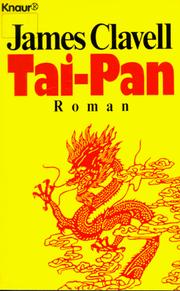
Hong Kong in 1841, founded on the opium trade by Dirk Struan of the Noble House. The origin story for the whole family thread, and the book you must read before Noble House. Catalogued under a truncated string that leaves the series note unclosed; it is the 1966 novel.
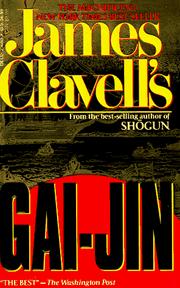
Yokohama in 1862, with the Struan heir among the foreigners in a Japan violently unwilling to have them. The last novel Clavell published and the weakest of the saga — slower, and it repeats itself — but it sits between Tai-Pan and Noble House in the family story and fills the gap. Also catalogued with a truncated title.
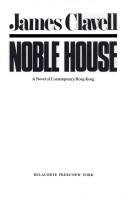
Hong Kong 1963, a thousand pages covering roughly a week, and the most purely enjoyable book of the six: a corporate takeover fight crossed with espionage, bank runs and a hillside collapse. It is far better if Tai-Pan is fresh, since half its pleasure is watching the 1841 grudges still running.
The last of the saga
IntermediateFinish the sequence, and see where Clavell's method finally outruns him.
▸ Study plan for this stage
Pace: 6 to 7 weeks, almost all of it Whirlwind. The catalogue record is 1,147 pages and is Volume One of a two-volume paperback split, so the complete novel is longer again; six weeks at 30 pages a day covers the volume in hand. The Children's Story is 93 pages and takes one sitting. Whirlwind is set duri
- Whirlwind follows a helicopter company trying to get its aircraft and crews out of Iran during the 1979 revolution. It is the longest and most sprawling of the six and the one most readers abandon.
- Our catalogue record is Whirlwind, Volume One — many paperback printings split the novel in two. Check what you are buying, and know that finishing the volume is not finishing the book.
- Clavell later cut one storyline out of Whirlwind and republished it separately as Escape. It is not a new novel and you do not need it.
- The failure mode is visible here: the technique that made Noble House exhilarating over one week is applied to a country in collapse over three, and the parallel strands stop reinforcing each other and simply accumulate.
- Whirlwind is also the book in which Clavell's method meets events within living memory of its first readers, which changes what the reader will forgive.
- The Children's Story is a short parable written in 1963 and published two decades later, in which a new teacher reshapes a classroom of American children in twenty-five minutes.
- It is nothing like the novels and it is the clearest statement Clavell made of what he believed about institutions, obedience and how quickly people can be reorganised — which is the thread running under every book in the saga.
- How many separate strands is Whirlwind running, and which of them would you cut? Justify each cut from the plot rather than from length.
- Compare Whirlwind's handling of a society in upheaval with Shogun's. What does Clavell do well in 1600 that he cannot do in 1979?
- What is the helicopter company actually trying to protect — the aircraft, the contracts, or the crews — and does the novel keep the answer straight?
- The Children's Story takes twenty-five minutes of classroom time. What does the teacher do first, and why does Clavell make that the first move?
- Does The Children's Story explain anything about the six novels, or is it a separate preoccupation? Argue it either way from the text.
- Keep a strand tracker for Whirlwind — one line per plot thread, updated whenever it advances. Nothing else makes the structural problem so plain, and it is the fairest way to judge the common complaint.
- Read the first fifty pages of Whirlwind, then the first fifty of Noble House. The prose is the same and the effect is not; write two sentences on why.
- Read The Children's Story in one sitting without stopping, then reread it immediately marking every point at which a child agrees to something. There are only a handful, and they are the argument.
- Set The Children's Story beside the camp hierarchy in King Rat. Both are about how fast people accept a new arrangement, and reading them together is the most useful thing on this stage.
Next up: You have now read all six novels as Clavell wrote them, which is the necessary condition for reading the histories that show where he invented.

Iran during the 1979 revolution, following a helicopter company trying to get its aircraft and crews out. The longest and most sprawling of the six, and the one most readers abandon. Note the catalogue record is Whirlwind, Volume One — many paperback printings split it in two — and that Clavell later cut one storyline out and republished it separately as Escape, which is not a new book.

A short parable, written in 1963 and published two decades later, in which a new teacher reshapes a classroom of American children in twenty-five minutes. Nothing like the novels and readable in one sitting; worth it as the clearest statement of what Clavell believed about institutions and obedience.
The history the novels are built on
IntermediateRead the real events behind each novel, and learn where Clavell simplified, invented or got it wrong.
▸ Study plan for this stage
Pace: 10 to 12 weeks. Milton's Samurai William is 368 pages and Morris's Hong Kong 328 — both narrative popular history, a week to ten days each. Lovell's The Opium War is 456 pages and Daws's Prisoners of the Japanese 462; both are scholarly works written for general readers and both need two to three we
- Sadler's The Life and Times of Tokugawa Ieyasu is the standard English biography of the warlord Clavell fictionalised as Toranaga, and it is where the Shogun plot comes from. It is a scholar's book, not a popular one, and our catalogue holds it under the reissued title.
- Reading Sadler shows how closely Clavell followed the record and where he compressed decades into months. The compression is the single largest liberty the novel takes.
- Giles Milton's Samurai William is popular narrative history about the real William Adams, the English pilot who became a samurai and was the model for Blackthorne. Short, fast, and the quickest way to see how much of Shogun's premise was true.
- Julia Lovell's The Opium War is a scholarly history written accessibly, and its distinctive contribution is the Chinese sources Clavell's generation of novelists did not use, plus the war's long afterlife in Chinese national memory.
- Lovell reframes the trade the Struans built their fortune on. Clavell's fondness for his opium traders reads differently once you have read what the trade was and what it was for.
- Jan Morris's Hong Kong is a portrait rather than a history — impressionistic, personal, written before the handover — and it covers exactly the span from 1841 to the 1980s that Tai-Pan and Noble House bracket.
- Gavan Daws's Prisoners of the Japanese is documented history of Allied prisoners in the Pacific, including Changi, built from records and survivor testimony. It is harsher and less romantic than King Rat and it is the most important corrective on this stage.
- Taken together these five do two different jobs: Sadler and Lovell test the novels against the record, Milton and Morris supply the texture, and Daws supplies what Clavell, writing about his own captivity, could not.
- What did Ieyasu actually do between 1598 and 1603, and how much of it does Shogun compress into its few months?
- Where does Milton's William Adams diverge most sharply from Clavell's Blackthorne, and what did Clavell gain by the change?
- What does Lovell say the Opium War was fought over, and how does that compare with the version of the trade in Tai-Pan?
- Morris and Clavell are both writing about Hong Kong as a place with a character. What does each think that character is?
- Daws and King Rat describe the same camp system. Name three specific things Daws documents that the novel does not, and consider why a former prisoner writing fiction might leave them out.
- Build a two-column chronology for the year 1600: Sadler's dated record on the left, Shogun's sequence of events on the right. The gaps and the compressions become visible immediately and are the best single exercise on this path.
- Read Milton's chapters on Adams's later life — the part after the point where Shogun ends — and write a paragraph on what the novel avoided by finishing where it did.
- Take Lovell's account of the opium trade's mechanics and check it against the specific business Dirk Struan is shown conducting in Tai-Pan. Note every point at which the novel's version is incomplete rather than wrong.
- Read Daws's chapters on Changi immediately after rereading the first hundred pages of King Rat. Keep a list of what the novel dramatises, what it mentions once, and what it omits.
- Finally, write half a page answering the question the whole path has been building to: which of Clavell's six novels survives contact with the history behind it, and which does not.
Next up: You have now read the saga and the record it stands on, which is the point at which you can recommend Clavell to someone else honestly rather than enthusiastically.

The standard English life of the warlord Clavell fictionalised as Toranaga. Sadler's biography is where the Shogun plot comes from, and reading it shows how closely Clavell followed the record and where he compressed decades into months. Catalogued under its reissued title, Shogun: The Life and Times of Tokugawa Ieyasu.
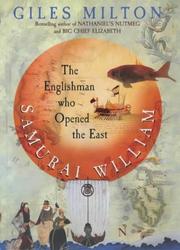
The actual William Adams — the English pilot who became a samurai and was the model for Shogun's Blackthorne. Short, narrative, and the fastest way to see how much of the novel's central conceit was true.

The war that made Hong Kong and therefore Tai-Pan, told with the Chinese sources Clavell's generation of novelists did not use. It reframes the trade the Struans built their fortune on, and Clavell's fondness for his opium traders reads differently afterwards.
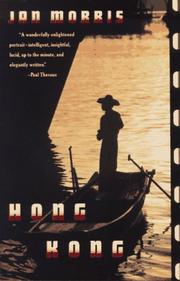
Morris's portrait of the colony, written before the handover and covering the whole span from 1841 to the 1980s — precisely the period Tai-Pan and Noble House bracket. The best single account of the place the saga keeps returning to.
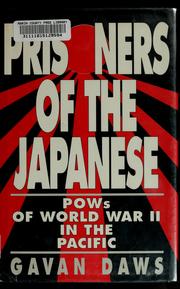
The documented history of Allied prisoners in the Pacific war, including Changi. It is a corrective as well as a context: Daws's account of what the camps did to men is harsher and less romantic than King Rat, and reading the two together is the most useful thing on this stage.
Discussion
Keep reading
Paths that share books, cover the same subject, or open a related topic.