James Clavell's Asian Saga Reading Order: Where to Start
James Clavell wrote six novels about the collision between Europe and Asia, and the order he wrote them in bears almost no relation to the order the story happens in: King Rat came first in 1962 but sits fifth in the timeline, while Shogun opens the whole saga in the year 1600 and was published thirteen years later. This path reads them chronologically by setting, because the linked families and trading houses only make sense forward, and it explains what publication order gets you instead.
1600: Start with Shogun
BeginnerBegin at the earliest point in the saga's timeline, which is also its best book. ORDER CHOSEN: chronological by setting, not publication order. The saga's publication sequence is King Rat (1962), Tai-Pan (1966), Shogun (1975), Noble House (1981), Whirlwind (1986), Gai-Jin (1993); its internal sequence is Shogun, Tai-Pan, Gai-Jin, King Rat, Noble House, Whirlwind. Chronological wins here because the Struan family and the Noble House itself are founded in Tai-Pan and inherited forward, and because
▸ Study plan for this stage
Pace: Six to eight weeks on its own. Shogun is 1,136 pages and there is no way to make that a quick read, but it is unusually well-suited to a steady daily pace — the chapters are short and the plot restarts its tension constantly, so 40 to 50 pages an evening for five or six weeks works far better than t
- Japan in 1600 as a functioning social system with its own internal logic, taught to the reader through a foreigner who keeps getting it wrong
- The historical scaffolding: Blackthorne is built on the real English pilot William Adams, and Toranaga on Tokugawa Ieyasu
- Rank, obligation and face as the mechanics that actually drive the plot, more than violence does
- Portuguese and Jesuit interests in Japan, and why an English Protestant pilot's arrival is a political event
- Translation and interpretation as instruments of power — nearly every crucial conversation passes through someone with an agenda
- What Clavell does with a viewpoint character who is competent at sea and helpless on land
- Blackthorne is repeatedly told he has behaved shamefully. Pick three of those moments and state what rule he broke and how the book made you understand it.
- Mariko translates almost everything. Name a scene where her rendering changes the outcome, and say whether the novel signals it or leaves you to catch it.
- Toranaga's plan is withheld from the reader for most of the book. When you look back, at what point was the information available?
- The novel makes 1600s Japan admirable and appalling in the same paragraphs. Is it doing that deliberately, and where can you show it?
- What does Clavell assume his 1975 American reader believes about Japan, and how does the book use that assumption?
- Keep a running name list from page one with rank and allegiance beside each entry; the political plot is unfollowable without one and building it is the single highest-value thing you can do while reading.
- Mark every scene where Blackthorne is deliberately misinformed, then check at the end how many of those misinformations were Toranaga's and how many the Jesuits'.
- Find a short account of Sekigahara and read it after finishing; the battle the novel builds toward is real and the comparison is the point of the next stages.
- Write down, at the halfway mark, what you think Toranaga wants — then check it against the ending and note which clues you had already been given.
Next up: Shogun stands alone in time by more than two centuries; the next stage picks the saga up in the nineteenth century, where the trading dynasty that everything later depends on is actually founded.

An English pilot wrecked on the coast of Japan in 1600, based on the real William Adams, and the book that made Clavell's name. First by setting and first by quality — nothing else in the saga is as good at teaching a reader a foreign social system from the inside.
The China Trade and the Treaty Ports
BeginnerRead the two nineteenth-century novels that found the trading dynasty everything later in the saga depends on, in the order their events occur.
▸ Study plan for this stage
Pace: Three to four months, and this is where a reader has to be honest about scale: Tai-Pan is 663 pages and Gai-Jin is 1,232, so the stage is 1,895 pages, more than Shogun on its own. Tai-Pan is the faster of the two and the more essential — if you read only one book in this stage, read Tai-Pan, because
- The founding of the Struan trading house in 1841 Hong Kong, and why it is the saga's load-bearing event
- The tai-pan as a role rather than a person — succession to that title is the thread running to Noble House
- Treaty ports as a legal arrangement: extraterritoriality, and what it meant that foreigners were not subject to local law
- The opium trade as the actual business under the romance, and how the novel frames it
- Gai-Jin's Yokohama in 1862 and the Japanese factions on either side of the coming Meiji Restoration
- Generational inheritance as Clavell's structural device — grandchildren in Gai-Jin, descendants in Noble House
- Why publication order buried the direct Tai-Pan sequel until 1993
- Tai-Pan opens days after the First Opium War. What does the novel say the war was about, and what does it leave out?
- Trace the succession of the tai-pan title through the book. Is the succession decided by competence, blood, or something else?
- Gai-Jin returns to Japan, 262 years after Shogun. What has changed in the Japanese side's position, and how does the novel show it rather than state it?
- Both novels have European protagonists in Asian settings. Compare how much interiority Clavell gives Asian characters in each.
- If you skipped Gai-Jin, what specifically would you not know when reading Noble House? Answer before deciding whether to skip it.
- Draw the Struan family tree as you read Tai-Pan and extend it through Gai-Jin; the saga is a genealogy and the diagram is the fastest route through it.
- List every commodity named in Tai-Pan's trade transactions and mark which of them are legal in the period the book covers.
- Set the Yokohama foreign settlement in Gai-Jin against Blackthorne's position in Shogun: both are Europeans in Japan, and the difference in leverage is the argument of the two books together.
- Decide in writing, at the end of Tai-Pan, whether you are reading Gai-Jin or moving straight to Noble House, and record the reason — this path considers either choice legitimate.
Next up: With the trading house founded and inherited, the next stage jumps to the twentieth century, where the same family runs a modern Hong Kong and Clavell's own war finally enters the saga.
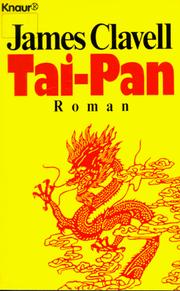
Hong Kong in 1841, immediately after the First Opium War, and the founding of the Struan trading house. Second chronologically and the load-bearing book of the whole saga: Noble House is unreadable as a family story without it. Our catalogue record displays a truncated title, Tai-Pan (Asian Saga.
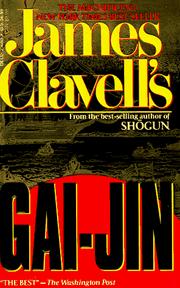
Yokohama in 1862, with the grandchildren of Tai-Pan's characters and Japan on the edge of the Meiji Restoration. It was published last but sits third in the timeline, and it is the direct sequel to Tai-Pan that most readers never realise exists. The catalogue record is likewise truncated, Gai-Jin (Asian Saga.
The Twentieth Century
IntermediateFollow the saga into the war, the post-war Hong Kong boom and the Iranian revolution — the three modern books, in setting order rather than the order Clavell wrote them.
▸ Study plan for this stage
Pace: Four to six months for 2,712 pages, and the longest stage on the path by a wide margin. The order inside it matters more than the pace. Start with King Rat: at 391 pages it is by far the shortest of the six novels and the only one that can be read in a week, and placing it here rather than first — i
- Changi as autobiography — King Rat is the one book in the saga written from direct experience, and it reads differently for it
- Survival economics: the camp black market as a complete moral system, and the American corporal who runs it
- Noble House as the saga's convergence — the Struan inheritance, a bank run and a takeover fight compressed into one week
- Financial warfare as plot mechanism, and how Clavell makes a stock manoeuvre carry the tension a battle would
- 1963 Hong Kong as a Cold War frontier as much as a commercial one
- Whirlwind's Iran in 1979 and the evacuation-under-collapse structure, and the practical fact that our edition is split into volumes
- Where a reader can legitimately stop, and why Noble House is the natural stopping point
- King Rat gives its most competent character the least admirable methods. Does the novel judge him, and where?
- Clavell was a prisoner at Changi. Which details in King Rat read as remembered rather than researched, and what makes you say so?
- Noble House is set in one week. List what Clavell has to do structurally to fit a family saga into seven days.
- Name three things in Noble House that only mean anything if you have read Tai-Pan. Was the chronological order worth it?
- Whirlwind leaves the China-and-Japan axis entirely. Is it still the same saga, and on what grounds?
- While reading King Rat, list every item traded in the camp and its price in rice or cigarettes; the economy is fully specified and writing it out is the fastest way to see what the book is arguing.
- Keep a one-page character sheet for Noble House organised by company rather than by family — the loyalties in that book are corporate first.
- After Noble House, go back to the founding chapters of Tai-Pan and mark every element that survived 122 years of the saga's internal time.
- Before starting Whirlwind, check that you can obtain the second volume; our record covers Volume One only, and deciding this in advance saves stopping halfway.
- Write a paragraph deciding whether you are finishing Whirlwind or ending the saga at Noble House, and what each choice costs.
Next up: With the novels done, the remaining two stages step outside the fiction — first to the one short Clavell that is not part of the saga and to the historians who answered Shogun directly.

Changi prison camp, Singapore, 1945, drawn directly from Clavell's own three years as a Japanese prisoner of war. Chronologically fourth but the first book he published; read it here and its harshness reads as the saga's centre of gravity rather than as a debut.
Hong Kong in 1963, the Struan house under a modern tai-pan, and a week of financial warfare. Fifth chronologically and the direct payoff of Tai-Pan — this is the book that most rewards having read the saga in this order.

Iran in 1979, a helicopter company trying to get its aircraft out during the revolution. Last in the timeline and the longest book of the six. Our catalogue record is Whirlwind, Volume One — the novel is split across volumes in that edition, so expect to need the second half separately.
Clavell Outside the Saga, and the Scholarship on Shogun
IntermediateRead the one short Clavell that is not part of the saga, then check the novels against what historians say — starting with the academic volume written specifically to answer Shogun.
▸ Study plan for this stage
Pace: About a fortnight for 624 pages, and a deliberate change of gear after six very long novels. The Children's Story is the shortest item on the entire path — our record runs to 93 pages for what is a very short fable in an illustrated edition — and can be read in one sitting. Learning from Shōgun is 1
- The theme underneath all six novels stated plainly in The Children's Story: how quickly people accept a new order
- What Learning from Shōgun says Clavell invented, and what it concedes he got right
- The novel as a teaching object — Shogun taught more Americans about Japan than any curriculum did, which is why historians wrote a book to answer it
- William Adams's documented life against Blackthorne's fictional one, and where the fiction departs unnecessarily
- The difference between a historical error and a novelist's compression, and how the essayists distinguish them
- Reading a novel's scholarship as a check on your own confidence in what you now think you know
- The Children's Story is a fable with a clear thesis. State it in one sentence and then find it operating in Shogun, Tai-Pan and King Rat.
- Which specific inventions does Learning from Shōgun identify in the novel, and which of them would you have believed indefinitely?
- Where do the essayists concede Clavell was right? What does that tell you about how he worked?
- Compare Adams's real career after 1600, as Milton gives it, with Blackthorne's arc. Which departures serve the novel and which are gratuitous?
- After these three, how much of what you feel you know about 1600 Japan can you actually source?
- Before opening Learning from Shōgun, write down ten things you believe about Japan in 1600 on the strength of the novel; check each against the essays and count.
- Read The Children's Story in one sitting and then write its thesis as a single sentence you could apply to King Rat's prison camp.
- Track Adams's documented movements from Samurai William on a rough timeline, and mark where Shogun's plot diverges from it.
- Pick the single essay in Learning from Shōgun that changed your reading most, and summarise its argument in five lines.
Next up: Having tested Shogun against the historians, the final stage does the same for the trading novels, where the stakes are higher because Clavell's tai-pans are heroes and the trade they ran was not heroic.

A short fable about a new teacher taking over an American classroom after a conquest. Not part of the saga at all, but the clearest statement of the theme underneath every one of the six: how quickly people can be persuaded to give up what they believed. Our record is a 93-page illustrated edition of what is a very short text.
A collection of essays by Japan historians written in 1980 in direct response to the novel and the miniseries, sorting what Clavell got right from what he invented. The single best companion to the saga, and it exists because Shogun taught more Americans about Japan than any course did.
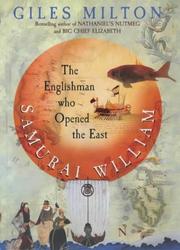
A narrative biography of William Adams, the real pilot Blackthorne is based on. Read it after Shogun and after Smith to see how far the novel departed from a documented life — and where it did not need to.
The History the Novels Compress
IntermediatePut the trading-house books against the real record of the opium trade and of Hong Kong, so the saga's romance of the tai-pans is read with its politics visible.
▸ Study plan for this stage
Pace: Three to four weeks for 784 pages, the shortest stage after the scholarship stage and the right place to finish. The Opium War is 456 pages of narrative history built from British and Chinese sources; read it first, because it covers the war Tai-Pan opens immediately after and it is the direct count
- What was actually being traded: the opium economy that funded the Struan-style trading houses
- The Chinese memory of the war as a live political fact, treated by Lovell as evidence in its own right rather than as an epilogue
- The gap between a novel's sympathetic protagonist and the historical role that protagonist occupies
- Hong Kong's development from 1841 to the handover as one continuous story, which is the saga's own timeline seen from outside
- Colonial administration, land and money as the substrate the fiction dramatises
- How to hold a novel you enjoyed and a history that indicts its premise at the same time
- State the causes of the First Opium War as Lovell gives them. How many of them appear in Tai-Pan at all?
- Lovell devotes substantial attention to how the war has been remembered in China. Why does that belong in a history of the war rather than in a separate book?
- Morris covers the same decades as Tai-Pan and Noble House. Which of Clavell's set pieces have a recognisable counterpart in her account?
- Clavell's traders are heroes. Having read Lovell, is that a distortion, a point of view, or a genre convention?
- What is the honest summary of what this saga taught you about Asia, once the two histories have been subtracted?
- List Tai-Pan's principal characters and, using Lovell, write beside each the historical role they occupy rather than the one the novel gives them.
- Build a single timeline from 1841 to 1963 with Morris's events in one column and the saga's novels in the other; the overlaps are where Clavell was working from the record.
- Find one claim about the opium trade that Clavell's narration makes and check it against Lovell's account, noting whether it is wrong or merely selective.
- Write a closing paragraph you would give another reader on whether to read the saga chronologically or in publication order, now that you have done one of them.
Next up: This is the end of the path: six novels read in the saga's internal chronology, the scholarship that answers Shogun, and the histories that answer Tai-Pan — the natural next step is Clavell in publication order only if you want to watch a writer develop, since the story itself is now complete.

The war that Tai-Pan opens just after, told from both British and Chinese sources and with the Chinese memory of it taken seriously. Essential counterweight: Clavell's traders are heroes, and this is what they were trading.
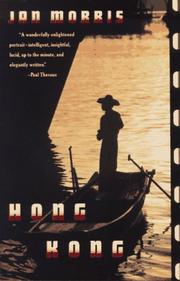
Morris's history of the colony, from the barren rock of 1841 to the run-up to the handover. Read last: it covers the entire span from Tai-Pan through Noble House in one continuous account and makes the saga's timeline legible as real history.
Discussion
Keep reading
Paths that share books, cover the same subject, or open a related topic.