Patrick Radden Keefe Reading Order: Where to Start
Patrick Radden Keefe has written five books, which makes this a short and unusually clear reading order. The two big narrative histories are the reason to be here and should come first, in either order but for a specific reason in the one given below. After them, the New Yorker collection shows the reporting engine at magazine length, and the two early books show a writer who had the obsessions before he had the scale. Nothing here is a series, so nothing spoils anything.
Start Here: The Two Big Ones
BeginnerRead the two books that define him — a disappearance that unlocks a war, and a family that built an epidemic — and learn how he uses one narrative thread to carry decades of history.
▸ Study plan for this stage
Pace: 4–5 weeks. Say Nothing is 536 pages and Empire of Pain 720, and both are dense with names, dates and institutions. About 40 pages a day is sustainable; do not try to read either in short scattered sittings, because the pay-off depends on holding a large cast in mind. Read Say Nothing first: it is th
- Say Nothing hangs the Troubles on a single 1972 disappearance — Jean McConville, a widowed mother of ten taken from her flat in Divis Flats — and lets the war arrive through it
- The book's spine is the Boston College oral-history tapes, recorded on a promise of confidentiality that the courts later broke; that betrayal is both a source and a subject
- Dolours Price and Brendan Hughes are the load-bearing characters, and Radden Keefe's method is to make you understand people whose actions he never excuses
- Empire of Pain is a three-generation family history — Arthur, Raymond and Mortimer Sackler and their children — that treats OxyContin as the outcome of a marketing philosophy invented decades earlier
- The Sacklers largely refused to cooperate, so the book is built from depositions, court filings, internal memos and letters; watch how he signals the difference between documented and inferred
- Both books withhold the answer that ordinary journalism would open with — who killed McConville, who knew what about addiction rates — and the withholding is the structure
- The recurring subject is institutional silence: an organisation that agrees never to say something, and what happens to the people inside it who eventually do
- Why does Say Nothing begin with McConville rather than with the political history, and what would be lost by reversing that?
- How does Radden Keefe write about violence committed by people he has made sympathetic without endorsing it? Point to a specific passage.
- What exactly did the Boston College tapes promise, what happened, and what does the episode say about oral history as a source?
- In Empire of Pain, what is the through-line from Arthur Sackler's medical advertising to OxyContin's marketing? Could you state it in three sentences?
- Where does each book have to speculate, and how visible does he make that seam?
- Keep a running name list while reading Say Nothing — it has a large Belfast cast and confusion in the middle third is the commonest reason readers stall.
- For Empire of Pain, note every fact that comes from a court document rather than an interview. The book's authority is mostly documentary and it repays noticing.
- Write the last chapter of Say Nothing's revelation in one sentence, then look back at where it was first hinted. It is planted much earlier than most readers see.
- Compare the two closing chapters. Both end on accountability that never quite arrives, and the difference in how each handles that is the writer's signature.
- Read the source notes of one chapter in each book. They are unusually detailed and they are half the education.
Next up: With the two long narratives read, the magazine collection shows the same reporting engine at a tenth of the length — and shows which pieces were the seeds of these books.
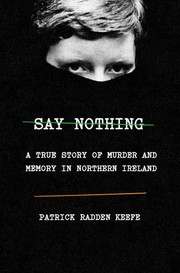
The abduction of Jean McConville in 1972 Belfast, opening out into the whole of the Troubles and the IRA's afterlife. Start here: it is the tighter book, it requires no background, and its final chapter is the best argument for his method.

Three generations of the Sackler family, from a 1950s medical-advertising firm to OxyContin. Bigger, colder and more documentary than Say Nothing; read it second, once you trust him to hold hundreds of names in order.
The Magazine Work
BeginnerSee the same reporting instincts at 10,000 words instead of 400 pages, and understand which of his subjects grew into books.
▸ Study plan for this stage
Pace: 1–2 weeks. Rogues collects twelve New Yorker pieces, each self-contained at roughly magazine length. One or two a sitting is ideal; read straight through and they start to blur into a single tone.
- The twelve pieces cover arms dealing, wine fraud, a Swiss banking whistleblower, a television chef, a cartel escape, an Amsterdam crime family and a death-row lawyer, among others
- The subject selection is consistent with the books: a person operating in the space between legal systems, and the institutional blindness that lets them
- At this length he cannot build a decades-long structure, so the pieces show the other half of the craft — access, scene, and the single revealing interview
- Several pieces are visibly the origin of a book or of a book's method; reading them after Say Nothing and Empire of Pain lets you see which obsessions were worth expanding
- The collection also shows what does not scale: the shortest pieces resolve, while the books deliberately refuse to
- Rogues is the right place to see how he handles subjects who are still alive, litigious and talking to him
- Which of the twelve pieces could have become a book, and what would it have needed that the article lacks?
- What does he do in the opening two paragraphs of each piece? The pattern is remarkably consistent.
- How does his treatment of a living subject who cooperated differ from one who did not?
- Is there a moral position shared across all twelve, or only a shared taste in subject matter?
- Which piece is the weakest, and does it fail on reporting or on structure?
- Rank the twelve by how much you trust the subject's own account, then check that ranking against how much direct quotation each gets.
- Take one piece and outline how it would have to be restructured to run at 400 pages.
- Write the first paragraph of a Radden Keefe piece about a story you already know well. The exercise makes his openings' machinery obvious.
Next up: The last stage goes backwards to the two pre-fame books, where the same preoccupations — surveillance, smuggling and the state's blind spots — are already fully formed.

Twelve New Yorker profiles of grifters, arms dealers, a wine forger and a chef. The natural third read: several pieces are the seeds of the books above, and the short form shows the structure more nakedly.
The Early Books
IntermediateGo back to the two pre-fame books to see the preoccupations — surveillance, smuggling, organised crime and the state's blind spots — already fully formed.
▸ Study plan for this stage
Pace: 3 weeks for The Snakehead (432 pages) and Chatter (320). Read The Snakehead first; it is the better book and the closer ancestor of Say Nothing. Chatter is now partly dated by events and should be read as a period document, at whatever pace suits.
- The Snakehead follows Sister Ping's Chinatown human-smuggling network and the 1993 grounding of the Golden Venture off Queens, and it is structurally the first version of his signature method
- It is unusually good on immigration enforcement as a system — the asylum courts, the detentions, the political decisions — rather than only on the criminal network
- Chatter, published in 2004, is about signals intelligence and mass eavesdropping, written years before the Snowden disclosures made the subject public
- Chatter is the outlier on the shelf: more essayistic, more speculative, less narrative, because the subject would not yield characters
- Read backwards, the two early books make the point that his obsessions never changed — only his access and his structural control did
- Patrick Radden Keefe has written five books in total, which is why this path is short: the shelf is small, and every title on it is here
- What in The Snakehead's structure already resembles Say Nothing, and what does it not yet do?
- Is Sister Ping treated as a criminal, a service provider or both? How does the book manage that ambiguity?
- Which of Chatter's concerns have been confirmed by later events, and which have not?
- Why does Chatter have no central character, and what does its difficulty tell you about what his method requires?
- Having read all five, what makes a subject a Radden Keefe subject? Test the definition against a story currently in the news.
- Map the Golden Venture passengers' outcomes as reported in The Snakehead. The dispersal of a single boatload is the book's most damning material.
- List the surveillance capabilities Chatter describes and mark which are now public, obsolete or understated.
- Rank all five books by structural control rather than subject interest, and note that the ranking is close to chronological.
- Since the shelf is finished, write down the three living reporters you would read next and what each does that he does not.
Next up: That is the complete shelf — five books — so the natural continuation is a different reporter working at the same depth, such as Michael Lewis for institutions or Peter Hessler for long-residence reporting.
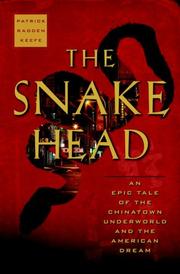
Sister Ping, the Golden Venture shipwreck, and the Chinatown human-smuggling networks of the 1990s. The clearest ancestor of Say Nothing, and a genuinely good book that most readers never reach.
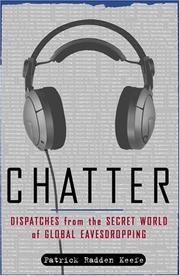
His first book, on Echelon and global signals intelligence, written before Snowden. Read it last and read it as history: it is the least polished of the five, but it explains the reporter's interest in what states prefer not to say.
Discussion
Keep reading
Paths that share books, cover the same subject, or open a related topic.