The Opium Wars carry a double weight. They are a set of events in the 1840s and 1850s, and they are also the origin story of China's "century of humiliation," invoked constantly in Chinese public life since. Read a book that collapses the two and you will come away well informed about one and confused about the other.
There is a second complication. Neither war was mainly about opium in the way the name suggests. The drug was the flashpoint; the underlying dispute was over trade access, jurisdiction over foreigners, and whether the Qing court would accept diplomatic relations on European terms. Sequencing matters because the diplomatic prelude runs decades before the first shot.
Start with the war and its afterlife
The Opium War by Julia Lovell is the right first book. She narrates the 1839–42 conflict with real attention to the Chinese side — Lin Zexu, the court's information problems, the coastal officials who lied upward — and then, unusually, follows the war's use as political memory into the twentieth and twenty-first centuries. That second half is what most accounts leave out.
Then read Imperial Twilight, Stephen Platt's account of the decades before the war. It is largely a story of merchants, missionaries, and near-misses, and its argument is that the war was contingent rather than inevitable — that there were repeated points where the drift toward conflict could have broken the other way. Read after Lovell, it works as an explanation rather than a spoiler.
Then the drug and the second war
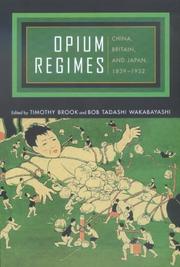
Opium regimes, edited by Timothy Brook, is a scholarly collection on the opium trade across China and Japan: cultivation, distribution, taxation, and how states came to depend on the revenue they were nominally suppressing. It is drier than the narrative books and it is where the economics stop being hand-waved.
Douglas Hurd's The Arrow War covers the second conflict of 1856–60, which ended with the burning of the Summer Palace and the treaties that opened the interior. It is an older, briskly written diplomatic history by a British politician rather than an academic, so use it for the sequence of events and read Lovell alongside for the Chinese perspective.
Set it inside the Qing collapse
William Rowe's China's last empire is the standard modern survey of the Qing, and it is the corrective to treating the dynasty as simply decaying. It shows a state with real administrative capacity that was simultaneously handling the Taiping Rebellion — a civil war that killed vastly more people than both Opium Wars combined — while conceding to foreign powers on the coast.
Jonathan Spence's The search for modern China extends the story from the late Ming to the present, and remains the most readable long survey; if you want one book to carry you past 1860, take this one. Finally, Peter Perdue's China Marches West looks the other direction entirely, at the Qing conquest of Central Eurasia, and it reframes the whole period: this was an expanding empire on its western frontier at the same time it was losing on its eastern coast.
The imperial and diplomatic frame connects to the wider literature in the political science hub if you want the comparative angle.
Read them in this order and the Opium Wars become a specific, contingent crisis rather than a morality tale in either direction. Follow the full path to keep the sequence.
Follow the full ordered path here: Best Books on the Opium Wars, in Reading Order.