Newbery Medal Winners: The Best Ones to Read, in Order
The Newbery, awarded since 1922 by American librarians, is the oldest children's book award in the world, and it goes to the writing only — illustration has its own medal, the Caldecott. Its official remit is the most distinguished contribution to American literature for children, with children defined as up to age fourteen, which is why the winners run from books a seven-year-old can read alone to novels about death, war and slavery. Two things are worth knowing before you start: the medal sells books in enormous numbers, so the list has real power over what American children are given, and its earliest decades contain winners with racial caricature so blunt that libraries now shelve them with commentary. This path is ordered by reading age and difficulty, not by year, and says plainly which winners have aged badly.
Roughly Ages 7 to 9
BeginnerStart with three short winners a newly confident reader can finish alone, and see that a medal book is not automatically a heavy one.
▸ Study plan for this stage
Pace: Three to four weeks for all three, and the gaps between them matter more than the pace. Sarah, Plain and Tall is about 70 pages and a newly confident reader can finish it in two or three sittings, which is precisely why it goes first. Shiloh is 144 pages and takes a week. The Tale of Despereaux is 2
- What the medal actually is: awarded since 1922 by American librarians for the most distinguished contribution to American literature for children, with children defined as up to age fourteen — which is why the winners range from books a seven-year-old reads alone to novels about war and death
- That the Newbery is for the writing only. Illustration has its own award, the Caldecott, and the separation explains a great deal about what wins
- Sarah, Plain and Tall as the shortest winner in the medal's history: a whole story with a beginning, middle and end, in very plain sentences, which is the ideal demonstration that short is not the same as slight
- MacLachlan's compression — a prairie marriage, two motherless children and an entire emotional arc in sixty-odd pages, with almost every feeling conveyed by an object or a small action
- Shiloh's moral problem, which is the first genuinely hard thing on this path: Marty is right about the dog and dishonest with everyone, and the book refuses to let him be only one of those
- That a book for eight-year-olds is willing to leave a child in the wrong for most of its length, which is unusual and is the sort of thing the medal rewards
- DiCamillo's intrusive narrator in The Tale of Despereaux, addressing the reader directly, asking questions and withholding — a formal device introduced at exactly the age a reader can start enjoying it
- Three plot strands running separately and converging, which is the structural skill the whole next stage depends on
- In Sarah, Plain and Tall, how do you know the children want Sarah to stay? MacLachlan almost never says it — find the places she shows it instead.
- Is Marty right to hide Shiloh? The book makes him both right and dishonest. Can you hold both, or do you have to pick?
- What does the deal Marty makes at the end cost him, and would you have made it?
- In The Tale of Despereaux, why does the narrator keep interrupting? What would be lost if the story were told straight?
- The three strands of Despereaux — mouse, rat, servant girl — are told separately before they meet. Which did you find hardest to stay with, and why?
- These three are all short and all won the same medal as books three times their length. What do you think the librarians were rewarding in each?
- Read Sarah, Plain and Tall in one sitting and then count the pages. The gap between how much happened and how few pages it took is the whole craft lesson.
- Write down, after Shiloh, the moment Marty first lies. Then find the moment he first knows he will keep lying. They are pages apart and the space between them is the book.
- Read one chapter of The Tale of Despereaux aloud, including the narrator's asides to the reader. The asides are almost inert on a silent page and come alive spoken, which is a fact about a great deal of children's writing.
- Start a one-line ledger you will keep for the whole path: title, roughly what age it suits, one sentence on what the medal seems to have rewarded. Three rows now, thirteen by the end.
Next up: A reader who can hold three converging plot strands and sit with a character who is doing something wrong for good reasons is ready for the four winners most American adults still remember, which ask for both at once and at greater length.
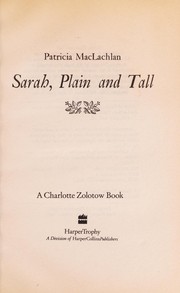
A mail-order bride comes from Maine to a prairie farm, in about sixty pages of very plain sentences. The shortest winner in the medal's history and the ideal first one — a whole story with a beginning, a middle and an end, at a length that does not intimidate.
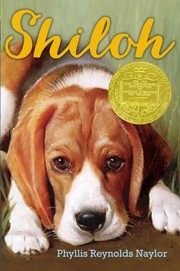
A West Virginia boy hides a mistreated beagle from its owner and has to lie to everyone. Read it second because it is the first book here with a genuine moral problem — the child is right and dishonest at the same time — and it handles that at an age where most books would not try.

A mouse in love with a princess, a rat in love with light, and a narrator who keeps interrupting to address you directly. Slightly longer and much odder than the two before it, and the best bridge into books that expect a reader to hold several plots at once.
Roughly Ages 9 to 11
BeginnerRead the four winners most American adults still remember reading, and get comfortable with full-length novels that reward attention rather than speed.
▸ Study plan for this stage
Pace: Five to seven weeks. Holes is 240 pages and reads fast; a week to ten days, and it must go first. From the Mixed-Up Files is 162 pages and about a week. Number the Stars is 147 pages and short but not quick — it is set under occupation and deserves to be read a chapter or two at a time over a week r
- Holes as the best-constructed winner of the last thirty years: three stories a century apart that turn out to be one, with every apparent coincidence paid off
- Sachar's method of giving the reader information in the wrong order on purpose, so that working out the connections is the pleasure rather than a chore
- Stanley Yelnats and the curse as a joke that turns out to be load-bearing — the comic frame concealing a serious book about inherited injustice
- From the Mixed-Up Files as pure competence fantasy: two children run away to the Metropolitan Museum, manage themselves, and investigate a statue. A useful counterweight to the medal's reputation for sadness
- Claudia's actual motive, which is not adventure and is stated late — a genuinely subtle piece of characterisation for the age band
- Number the Stars handling the Holocaust for ten-year-olds: the danger is constant and real, the violence stays offstage, and Annemarie is asked to be brave in ways a child can imagine being brave
- The Danish rescue of the Jewish population as the historical spine, and Lowry's decision to tell it from inside an ordinary family rather than from the resistance
- The Westing Game as a puzzle that plays fair — every clue is given to the reader at the same time as the characters, which is rarer in children's mysteries than it should be
- In Holes, at what point did you realise the three stories were connected? Go back and find the earliest clue Sachar gave you.
- Holes is very funny about a place that is genuinely cruel. How does Sachar keep both, and does the comedy soften the camp or sharpen it?
- What does Claudia actually want in From the Mixed-Up Files? She says several things before the true answer arrives.
- In Number the Stars, what does Annemarie do that is brave, and what does she not understand about what she is doing? Lowry keeps those two carefully separate.
- The Westing Game gives you every clue. Did you solve it? If not, where did Raskin get you to look the wrong way?
- Four books, four completely different tones. What do they have in common that a librarian might have been rewarding?
- Read Holes, then immediately reread the first thirty pages. Almost every setup is visible on a second pass and invisible on a first, which is the clearest demonstration of construction on this path.
- Draw the three timelines of Holes on one page, with lines connecting the events that pay each other off. Six or seven connections is a good count.
- After Number the Stars, look up the historical rescue it is based on and write 200 words on what Lowry changed and what she kept. Nothing on this path better shows the difference between a true story and a novel made from one.
- In The Westing Game, keep a suspect grid as you read — sixteen heirs, their pairings, their clues. It is what the book is asking you to do and reading it passively is reading a different and worse book.
- Add four rows to your ledger. Then write one sentence guessing what the Newbery is for. You will revise it twice more.
Next up: These four ask for attention and give back pleasure; the next three ask for attention and give back grief, racism and a society with no colours in it — which is the medal's other and more argued-about half.
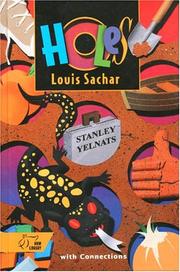
A boy is sent to a desert camp to dig holes, and three separate stories a century apart turn out to be one. The single most popular Newbery winner of the last thirty years and the best-constructed — read it first here, because working out how the strands connect is exactly the skill the rest of this stage uses.
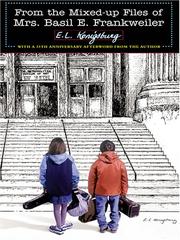
Two children run away to live in the Metropolitan Museum of Art and start investigating a statue. Pure competence-fantasy, and a useful counterweight to the medal's reputation for sadness.
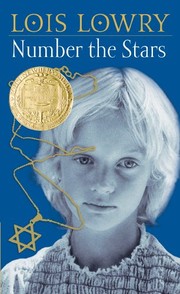
A ten-year-old Dane helps smuggle her Jewish best friend out of occupied Copenhagen. The right first book about the Holocaust for this age — the danger is real and constant, the violence stays offstage, and it never asks a child to carry more than they can.
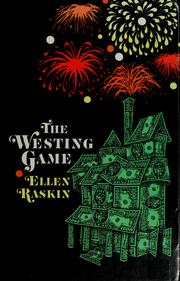
Sixteen heirs are paired up and given clues to a millionaire's murder. A genuine puzzle that plays fair with the reader, and a deliberate palate cleanser before the next stage, where the books get much heavier.
Roughly Ages 10 to 12: Harder Books, Harder Subjects
IntermediateTake on three winners that deal with death, racism and conformity directly, and understand the criticism that the medal rewards sad, worthy books over ones children pick up voluntarily.
▸ Study plan for this stage
Pace: Five to six weeks and no compression. Bridge to Terabithia is 152 pages and must go first — read it in two or three sittings and then leave a clear week before the next book. Roll of Thunder, Hear My Cry is 276 pages and the strongest novel on this path; give it two to three weeks and do not rush th
- Bridge to Terabithia as the winner that established a children's book could end badly, and the reason everything after it on this path assumes a reader who knows that
- Paterson's method of making the invented kingdom entirely a matter of imagination — no magic, no other world, just two children agreeing to see something — so that what is lost is a friendship rather than a fantasy
- That it is among the most-challenged Newbery winners, and precisely which elements the challenges concern
- Roll of Thunder's achievement: night riders, burnings and daily humiliation held inside a nine-year-old narrator's point of view without either softening the events or making Cassie understand more than she would
- The land as the book's centre — the Logan family owns its own ground, which is the source of both their independence and their danger
- Cassie's education in what she can and cannot do, which is the novel's spine and is delivered in a series of small, specific, unforgettable incidents
- The Giver's community as a place that has traded pain, choice and colour for safety, and the book's refusal to say straightforwardly whether the trade was wrong
- The deliberately ambiguous ending, which is the whole design — the book that created the modern children's dystopia, and one of the most banned winners
- In Bridge to Terabithia, why does Paterson keep the kingdom entirely imaginary? What would change if there were real magic in it?
- Jess's reaction to what happens is not the reaction a reader expects. What does Paterson know about grief that the expected version would have missed?
- In Roll of Thunder, what does Cassie learn that she cannot do, and how does Taylor let the reader understand more than Cassie without ever leaving her head?
- Why does the land matter so much to the Logans? Trace it — the book returns to it repeatedly and for different reasons each time.
- In The Giver, what exactly has the community given up, and what has it got? Make the community's case at its strongest before you dismiss it.
- How does The Giver end? Argue at least two readings from the text alone, and notice that the book is built so that both survive.
- Read Bridge to Terabithia, then put it down for a week before starting the next book. This is a scheduling instruction and it is the most important one in the stage.
- In Roll of Thunder, mark every incident that happens off the page or is reported rather than shown. Taylor is extremely deliberate about what a child narrator witnesses directly, and the pattern is the technique.
- Write 300 words on why Bridge to Terabithia is challenged, then 300 words on why librarians gave it the medal. Both cases can be made honestly from the same book and doing both is the exercise.
- After The Giver, write your reading of the last two pages before consulting anything. Then read a second reading. Ambiguity is a technique and this is the best chance on the path to feel it working.
- Add three rows to the ledger, and revise your one-sentence guess about what the Newbery is for. It should be shifting by now.
Next up: You have now read the medal at its heaviest, which is the right vantage for the last stage — where two mid-century staples and two recent winners let you judge how much the award has actually changed and how honestly.
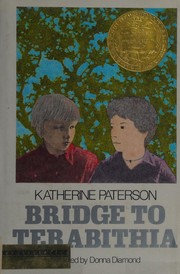
Two lonely children invent a kingdom in the woods, and then one of them dies. The most-challenged Newbery winner and the one that established the medal's willingness to end badly; read it first here, because everything after it assumes a reader who knows a children's book can do that.

A Black family in Depression-era Mississippi tries to hold onto its own land. Unflinching about night riders and burnings while keeping a nine-year-old narrator's point of view intact — the strongest novel on this path and the best-argued case for the medal's judgement.
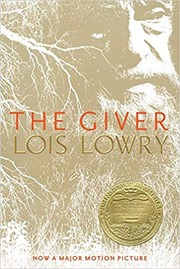
A boy in a pain-free, choice-free community is made the sole keeper of everything it has forgotten. The book that created the modern children's dystopia and one of the most banned winners; its deliberately ambiguous ending is the point, so resist looking up what happens.
The Survival Classics and the Modern Turn
IntermediateFinish by comparing the medal's mid-century staples with its recent choices, and form a view on how much and how honestly the award has changed.
▸ Study plan for this stage
Pace: Four to five weeks. Island of the Blue Dolphins is 184 pages and takes a week; set aside an extra evening afterwards for reading what Nicoleño descendants and scholars have written about it, which is part of this stage rather than optional extra work. The Crossover is 240 pages of verse and can be r
- Island of the Blue Dolphins as a genuinely gripping survival novel, based on a real Nicoleño woman who lived alone on San Nicolas Island for years
- The medal's older habit visible in it: an Indigenous life narrated with sympathy by an outsider on the basis of very thin historical evidence, with details of culture and language largely invented
- That Nicoleño descendants and scholars have since written about the book, and that reading them alongside it is the honest way to read it now — this is a live conversation about representation and authority, not a settled verdict
- The wider point about the medal's early decades, which contain winners with racial caricature blunt enough that libraries now shelve them with commentary rather than withdraw them
- The Crossover written entirely in verse: basketball, twin brothers and a father's failing heart, with the line breaks doing the pacing that prose paragraphs would do
- The first verse novel to become a genuine schoolroom staple, and the evidence that the medal's idea of eligible form had widened
- New Kid as the first graphic novel to take the medal, which caused real argument among librarians about whether comics qualify as literature — an argument worth understanding from both sides
- The medal's commercial power: a Newbery seal sells books in enormous numbers, which is why what it chooses has real consequences for what American children are given
- Island of the Blue Dolphins is a good novel and a questionable representation. Can both be true, and how would you present it to a ten-year-old today?
- Read what Nicoleño descendants have written about the book. What specifically do they object to, and what does the objection ask a reader to do differently?
- In The Crossover, what do the line breaks do that paragraphs could not? Find a page where the form carries the meaning.
- New Kid's medal caused an argument about whether comics are literature. Set out both sides at their strongest. Which is your view, and does reading the book change it?
- Compare the 1961 winner with the 2020 winner. What has changed about who tells whose story, and is the change complete?
- Final version: what is the Newbery Medal for? Answer with your ledger in front of you and cite specific winners.
- Read Island of the Blue Dolphins, then read at least one Nicoleño or scholarly response to it, then write 300 words on how you would introduce the book to a child. This is the most useful exercise on the path and it has no single correct answer.
- Read a page of The Crossover aloud at speed and then slowly. It is written for the fast reading and the difference is the point of choosing verse.
- Put New Kid beside Roll of Thunder from the previous stage. Both are about a Black child in a hostile institution, forty-four years apart, in completely different forms. Write a paragraph on what each can do that the other cannot.
- Complete the thirteen-row ledger. Then mark which winners you would still hand to a child unaccompanied, which with a conversation, and which mainly as evidence of their period. All three categories should have entries.
- Choose the winner you would give a reader starting this path, and defend it in a paragraph against Holes, which is the default answer. A reasoned alternative is the proof you read the list rather than the reputation.
Next up: This is the end of the path. The natural next move is sideways — the Honor books, which are the runners-up each year and contain several titles now better remembered than the winners that beat them.

A girl survives alone for years on an island off California, based on a real Nicoleño woman. Still gripping, and still the clearest example of the medal's older habit: an Indigenous life narrated with sympathy by an outsider, on the basis of very thin evidence. Read it and read what Nicoleño descendants have since said about it.
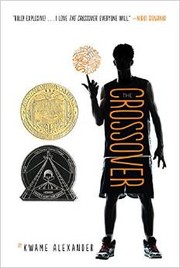
Twin basketball players and their father's failing heart, written entirely in verse. The first winner in verse to become a genuine schoolroom staple — read it after the older books to feel how completely the medal's idea of eligible form has widened.

A Black seventh-grader is bussed to an almost entirely white private school. The first graphic novel to take the medal, which caused real argument among librarians about whether comics qualify as literature — the right last stop, because it is the medal openly redefining what it is for.
Discussion
Keep reading
Paths that share books, cover the same subject, or open a related topic.