Kate DiCamillo books in order: where to start
DiCamillo's books are mostly standalones at very different reading levels, and publication order tells you almost nothing about which to hand over first. This path orders them by emotional weight instead — beginning with the early-reader chapter books and the warmest novel, then the fairy tales, then the two that make children cry on purpose, then the linked Three Rancheros trilogy. For an adult choosing: DiCamillo writes about abandonment, absent parents and death directly, and the prose difficulty is usually well below the emotional difficulty.
Youngest readers, and the warmest novel
BeginnerStart with the two books that ask least of the reader.
▸ Study plan for this stage
Pace: 2 weeks for about 260 pages, and the two books sit at very different reading stages. Mercy Watson to the Rescue (80 pages) is an early reader — heavily illustrated, large type, short chapters — and takes twenty minutes; it is the right DiCamillo for a child who has only just started reading alone. B
- The early-reader format as a deliberate design — Mercy Watson's illustration density, chapter length and vocabulary are calibrated to a reading stage, not to a subject
- Comedy from a single fixed appetite: Mercy wants buttered toast, and every plot in the series is that want colliding with something
- First-person child narration in Winn-Dixie, with Opal reporting what adults say without always understanding it
- The missing mother as DiCamillo's most persistent subject, introduced here in its gentlest form — named, explained, and not returning
- Community as the resolution: Winn-Dixie assembles a set of solitary adults into something that functions, and that is the plot
- Very short chapters as a structural choice for read-aloud, and how DiCamillo ends each one
- Plainness of language carrying weight — DiCamillo's sentences are simple and the feeling is loaded into what is left out
- What does Mercy Watson's format let DiCamillo do, and what does it prevent?
- How much does Opal understand about her mother, and how does DiCamillo let the reader understand more than the narrator does?
- Winn-Dixie is called her gentlest novel. Gentle compared with what — is it the subject, the ending, or the narration?
- List the adults Opal collects. What is wrong with each of them, and what does the book claim they do for one another?
- If you are reading aloud, where do the chapter breaks fall relative to the emotional beats?
- Read one Mercy Watson chapter and one Winn-Dixie chapter aloud and time both; use the difference to plan the rest of this path as read-aloud sessions
- Count the chapters in Because of Winn-Dixie and note the average length; then mark which chapters end on a laugh and which on a hurt — the alternation is deliberate
- Keep a missing-parent ledger from this book onward: for each DiCamillo novel, record who is absent, why, and whether they return; you will fill it in at every stage
- Write down the ten things Opal learns about her mother and note where in the book each one arrives; the pacing of that list is the novel's structure
- Read the last two pages of Winn-Dixie aloud and note what DiCamillo does not say
Next up: Winn-Dixie is DiCamillo writing plainly in a child's own voice; the next stage is the same author in an entirely different register, with a narrator who steps forward and speaks to you.
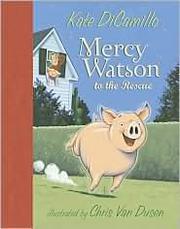
The first Mercy Watson book — a pig who eats buttered toast, in a heavily illustrated early-reader format. The right DiCamillo for a child who is only just reading alone.
A girl, a stray dog and a new town. Her first novel and still the gentlest full-length one: the missing mother is present throughout but the book resolves kindly. Read it before anything else at novel length.
The fairy tales
BeginnerThree books written in an older, more formal register, all with a narrator who addresses the reader directly.
▸ Study plan for this stage
Pace: 3–4 weeks for about 730 pages — The Tale of Despereaux (267 pages), The Magician's Elephant (204) and The Beatryce Prophecy (256). All three are older and more formal in voice than Winn-Dixie and all three have a narrator who addresses the reader directly, so they read aloud unusually well; a chapte
- The direct-address narrator — 'dear reader' — which enters DiCamillo's work with Despereaux and changes the contract between book and reader
- Four interlocking parts in Despereaux: mouse, rat, servant girl, princess, each given its own section before they converge
- Fairy-tale formality as a register, with soup, dungeons, thread and light as explicitly symbolic objects rather than props
- Light and dark as Despereaux's organising opposition, stated outright rather than implied
- The nameless European city of The Magician's Elephant and the fable logic of a question asked of a fortune teller producing an elephant
- Literacy as power in The Beatryce Prophecy — a girl who can read in a world where girls are not taught, and a prophecy about what that means
- The illustrated middle-grade fable as a form, and how Sophie Blackall's images function as part of the narration rather than decoration
- Cruelty rendered plainly: DiCamillo's villains are given motives and interiority, which is why they land
- What does the direct-address narrator let DiCamillo do that Opal's first-person voice could not?
- Despereaux is told in four parts before it converges. What would be lost if it were told chronologically?
- Chiaroscuro the rat is given a reason for what he does. Does that make him more or less frightening?
- The Magician's Elephant runs on a question and its literal answer. What is the book actually about, underneath the fable?
- Why does reading matter so much in The Beatryce Prophecy — what does the book claim literacy does?
- All three use a formal, archaic voice. Does it hold, and where does it feel like costume?
- Mark every 'dear reader' interruption in Despereaux and write down what each one is doing — warning, explaining, consoling, or slowing you down
- Diagram Despereaux's four parts on one page and mark the exact chapter where each thread joins the others
- Track the word 'light' through Despereaux and the word 'read' through The Beatryce Prophecy, noting where each becomes literal and where symbolic
- In The Beatryce Prophecy, read a Sophie Blackall illustration against the text on the facing page and describe what the image adds that the prose withheld
- Read one page of The Magician's Elephant aloud alongside one page of Because of Winn-Dixie and list every difference in sentence construction and vocabulary
- Update your missing-parent ledger with all three books
Next up: The fairy tales show DiCamillo working at a formal distance; the next stage removes the distance entirely, in the two shortest and hardest books she has written.

A mouse, a rat, a servant girl and a princess, told in four interlocking parts. The Newbery winner, and the first place her narrator starts speaking to the reader as 'dear reader'.
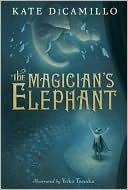
An elephant falls through a roof in a nameless European city and a boy tries to find his sister. Shorter and stranger than Despereaux; read it second in this stage.

A medieval-set fable about a girl who can read when girls are not taught to, with illustrations by Sophie Blackall. The most recent of the three and the one that most rewards having read the others.
The hard ones
BeginnerTwo short books that are the most emotionally demanding things she has written. Read the first-person one first.
▸ Study plan for this stage
Pace: 2 weeks for only 330 pages, and the low page count is misleading. The Tiger Rising (129 pages) is very short and should be read in one or two sittings by an adult before it goes anywhere near a child; The Miraculous Journey of Edward Tulane (200 pages) takes a week as a read-aloud and is much slower
- Suppressed grief as plot: Rob's refusal to cry is not a symptom in The Tiger Rising, it is the mechanism the whole book runs on
- The suitcase and the caged tiger as two versions of the same image, and DiCamillo's willingness to let the reader do the connecting
- An ending that withholds consolation — the book stops rather than repairs
- Edward Tulane's structure as a sequence of owners, each an episode, with the rabbit as the fixed point and the losses cumulative
- An unfeeling narrator learning to feel: Edward begins vain and unmoved, and the book's arithmetic is what it takes to change that
- Cruelty to a doll as a way of writing about loss without a human protagonist who can be damaged
- Reading aloud as a deliberate use case — both books are frequently read to a class or a family, and both are chosen for that reason
- How short a book can be and still demand more than a long one
- Who told Rob not to cry, and what does the book say happens to a child who obeys that?
- Does The Tiger Rising resolve? Describe exactly what has and has not changed by the last page.
- Edward is a china rabbit and cannot act. How does DiCamillo generate a protagonist's arc out of something entirely passive?
- Count Edward's owners. Which loss is the one the book is actually built around?
- These are the two shortest novels here and the two hardest. What is DiCamillo doing with compression?
- Would you read either aloud to a class, and which passages would you want to have read ahead of time?
- Read The Tiger Rising in one sitting and then write down every time Rob is told, directly or indirectly, to keep something inside; the list is short and it is the novel
- Mark the chapter in Edward Tulane where each owner is lost, then chart the intervals — the losses accelerate, and the chart shows it
- Read the Sarah Ruth chapters of Edward Tulane aloud to yourself before deciding whether to read them to a child; that is the passage adults most often want to have previewed
- Take the tiger and the suitcase in The Tiger Rising and write out what each stands for in one sentence each, then find the single scene where the book makes the connection explicit
- Add both books to your missing-parent ledger and note that this is the point where the pattern established in Winn-Dixie stops being softened
Next up: Having seen DiCamillo at her bleakest in standalone form, the next stage is her only linked sequence, where the same subjects get three books and three girls to work through.
A boy whose mother has died, a caged tiger and a suitcase of unfelt grief. Very short, very bleak, and it does not resolve tidily. Check it before handing it over.
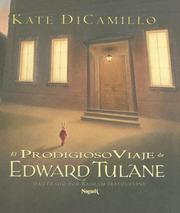
A vain china rabbit is lost and passed between owners across decades. It is deliberately punishing before it is redemptive, and it is the DiCamillo most often read aloud to a whole class so nobody cries alone.
The Three Rancheros trilogy
IntermediateHer only linked sequence, one book per girl. These must be read in order.
▸ Study plan for this stage
Pace: 3 weeks for about 740 pages — Raymie Nightingale (263), Louisiana's Way Home (227) and Beverly, Right Here (253). These must be read in order and they are the only linked sequence DiCamillo has written. One thing to know before buying all three at once: the books age up sharply. Raymie is a middle-g
- Three girls, three books, one shared event — the trilogy structure lets DiCamillo re-narrate the same friendship from three interiors
- Raymie as her most conventional realist novel: a specific place, a specific year, and children trying to fix adult problems by winning a contest
- Absent and failing parents as the trilogy's shared condition, with each book handling the absence differently
- Louisiana's unreliability — she has been told a story about herself, and the novel is about the story being taken away
- Reading age drift inside a single trilogy, and why that is a purchasing decision as much as a literary one
- Adult characters who are neither rescuers nor villains, particularly in Beverly, where every adult is compromised and some are still kind
- The friendship as the trilogy's actual subject, visible only when all three interiors are held together
- What does each of the three girls want in her own book, and how does each want look from inside the other two novels?
- Why is Louisiana's Way Home unreadable in isolation — what emotional groundwork does Raymie do that it depends on?
- Louisiana has been lied to about her own history. How does DiCamillo hand the reader the truth, and when?
- Beverly is aimed at older readers than Raymie. Point to three specific things in the text that make that so.
- Is this a trilogy or three linked novels? What in the construction decides it?
- After Raymie, write one paragraph each on Louisiana and Beverly using only what Raymie tells you; then read their books and mark what you got wrong
- Chart the timeline across the three books — Raymie's summer, the gap before Louisiana, the years before Beverly — so the age drift is visible as a number
- Track the grandmother in Louisiana's Way Home from first appearance to last and write down each point where the reader could have known what she was going to do
- Read the first chapter of Raymie and the first chapter of Beverly aloud back to back and describe the difference in voice, sentence rhythm and assumed reader
- Complete your missing-parent ledger across all three and look at the whole column from Winn-Dixie onward — the pattern is now the clearest thing about this author
Next up: With DiCamillo's most sustained and most demanding sequence behind you, the last stage shows the range she keeps in reserve.

Florida, 1975: three girls meet at baton-twirling lessons, each trying to fix a family. The most conventional realist novel she has written.

The second girl's story, and the one that reveals what her grandmother has actually done. Unreadable in isolation because the emotional groundwork is all in Raymie.

The third girl, four years older, having left home. Aimed at a distinctly older reader than the first book in the same trilogy — worth knowing before you buy all three at once.
Comic relief, and the newest
IntermediateTwo books that show the range she has left, once you know the register she usually works in.
▸ Study plan for this stage
Pace: 2 weeks. Flora & Ulysses (240 pages, catalogued with the ampersand) is a fast, funny read of three or four sittings, told partly in comic panels illustrated by K. G. Campbell, which changes the pace on the page — a panel spread reads in seconds and a prose chapter in minutes. Ferris is a recent nove
- Comedy as a genuine register for DiCamillo, not a break from her real work — the losses in Flora are the same losses, played differently
- Mixed-form storytelling: comic panels interleaved with prose, and what each does that the other cannot
- Flora as a self-described cynic who has learned her vocabulary from comics, and how DiCamillo uses a child's borrowed language
- The superhero frame applied to a squirrel, and what a parody structure lets a book say sincerely
- Ferris as late-career DiCamillo: the same subjects — death, family, a house, a child watching adults — handled with a lighter hand
- A dying grandmother written without a deathbed scene as the book's centre, which is a deliberate contrast with The Tiger Rising and Edward Tulane
- The full range now visible: early reader, realist novel, fairy tale, bleak novella, linked trilogy, comic novel
- Is Flora & Ulysses actually a comedy, or a book about neglect wearing one? Argue from a specific chapter.
- What do the comic panels do that the prose does not, and where does DiCamillo switch between them?
- Flora's mother is a real problem the book never fully solves. How does the comedy accommodate that?
- How does Ferris handle a dying grandmother differently from the way The Tiger Rising handles a dead mother?
- Having read across all five stages: what is the DiCamillo subject, in one sentence, and which book states it most directly?
- Read a Flora & Ulysses comic spread and the prose chapter that follows it, and write down what information each carried; the division of labour is consistent
- List everything Flora's mother does across the book and decide, on the evidence, whether the ending forgives her
- Set the grandmother in Ferris beside Edward Tulane's Sarah Ruth chapters and describe how DiCamillo's handling of dying has changed
- Close your missing-parent ledger with these two books and write a single paragraph on what the completed column shows
- Pick the one book from this whole path you would hand to a specific child you know, and write two sentences saying why and what you would tell them first
Next up: This ends the path: ordered by emotional weight rather than publication, from an early reader through the fairy tales and the two hardest novellas to the trilogy and the comedy, with the same preoccupation visible under all of them.
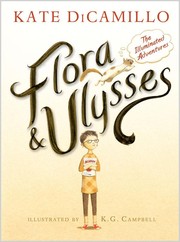
A cynical comics-reading girl and a squirrel with superpowers, told partly in comic panels. Catalogued as Flora & Ulysses. The funniest thing she has written and a deliberate contrast to the trilogy above.

A recent novel about a family summer, a ghost in the living room and a grandmother who is dying. Read last: it is her lightest handling of her most persistent subject.
Discussion
Keep reading
Paths that share books, cover the same subject, or open a related topic.