The Giver quartet books in order: where to start with Lois Lowry
Read The Giver first, then Gathering Blue, then Messenger, then Son. The second book is where people stall, because Gathering Blue appears to have nothing to do with The Giver — different village, different characters, no mention of the community Jonas fled. That disconnection is deliberate and it is the whole design: Lowry is building separate societies that each solved the problem of human pain differently, and Messenger is the book that reveals they occupy one world. Son then closes the circuit by returning to Jonas's community from the perspective of the mother he never knew he had. Beyond the quartet, Lowry has two other careers worth knowing — the historical novels, of which Number the Stars is the best known, and a long run of funny, unsentimental books about ordinary children. This path takes the quartet in order first, then opens out.
The Giver quartet, in order
BeginnerRead the four books in publication order and understand how three apparently unrelated stories turn out to share one world
▸ Study plan for this stage
Pace: Two to three weeks for 200, 219, 175 and 397 pages, in this order. If you are choosing these for a young reader, read them yourself first — the quartet's content changes sharply across the four books. The Giver's community practises what it calls release, which is revealed to be the killing of infan
- The Giver's premise — memory concentrated in one person so the community need not carry it — and its deliberately unresolved ending
- Why Gathering Blue appears disconnected, and that the disorientation is the design rather than a flaw
- Messenger as the pivot where the three settlements are revealed to occupy one world
- Son closing the circuit by returning to Jonas's community from Claire's side of it
- Each community as a different solution to the same problem of human pain, which is the quartet's actual argument
- Lowry's restraint: the worst events are stated plainly and briefly rather than dramatised
- The eight-year gap between Messenger and Son, and how it shows in the fourth book's length and darkness
- What has Jonas's community given up, and what does it get in exchange?
- What does Gathering Blue's village do with weakness, and how does that answer differ from the Giver community's?
- At what point in Messenger do the three settlements connect, and what makes it land?
- What does Son add that Messenger left open, and does it close The Giver's ending?
- How much does each book explain, and how much does Lowry leave the reader to assemble?
- Read The Giver's final chapter, then Son's final chapter, and write down what each one commits to; the difference is the whole case for reading the quartet as one book.
- Make a three-column table of the settlements — what each community controls, what it forbids, what it costs — filling it in as you go; Messenger is unreadable as a pivot without it.
- Mark every place where Lowry declines to describe something directly, and decide for yourself whether the restraint is the reason the books work for younger readers.
Next up: The quartet is speculative, but the same restraint is applied to documented history in the realist novels, which is where Lowry's reputation was first made.
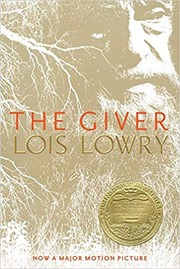
The starting point, and the book that has to come first: a twelve-year-old is assigned to receive the memories his community has chosen to give up, including colour, music, love and pain. Its deliberately unresolved ending is the hook the other three books answer.
The one readers are tempted to abandon. A crippled orphan in a brutal village is spared because she can embroider, in a society that looks nothing like Jonas's. Read it second anyway — the disorientation is the point, and Messenger cannot work if you have skipped it.
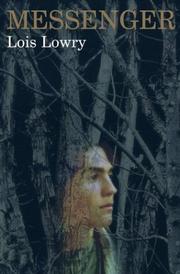
The pivot. Matty, a minor character from Gathering Blue, lives in a third settlement, and this is where the three worlds are shown to be one. Read it third, immediately after Gathering Blue, while the second book's village is still fresh.
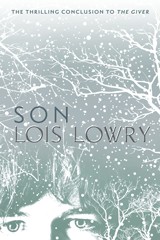
Published eight years after Messenger and written to close the quartet: it returns to Jonas's community and tells the story of Claire, the birthmother of the infant Gabriel. It is the longest and darkest of the four and only lands as an ending; read it last.
The historical novels
BeginnerRead the realist Lowry — the Newbery-winning Holocaust novel and the two autobiographical books — and see the same restraint applied to real history
▸ Study plan for this stage
Pace: Two weeks for 147, 154 and 190 pages, read in this order. Number the Stars is set during the 1943 evacuation of Denmark's Jews and includes the German occupation, the threat of deportation, and a death. A Summer to Die is drawn from the death of Lowry's own sister and is about a girl watching her ol
- The 1943 rescue of Denmark's Jews as documented history, and what Lowry fictionalises around it
- Bravery written as an ordinary domestic decision rather than as heroism
- A Summer to Die as her first novel and the origin of everything she later does with grief
- Autumn Street as her most autobiographical book, by her own account
- The continuity between the historical novels and the quartet: what ordinary people consent to
- How little Lowry states directly, and how much she achieves by ending a chapter early
- What in Number the Stars is historical record and what is invention around it?
- How does Lowry write a child's understanding of a danger the child does not fully grasp?
- What does A Summer to Die do with the sister's illness that a later, more skilled Lowry might have done differently?
- Where does Autumn Street's autobiography show, and where has it been shaped into fiction?
- What is the shared question running through these three and The Giver?
- Read a short factual account of the Danish rescue of 1943 alongside Number the Stars and mark what Lowry compresses, omits and invents.
- Set the opening chapter of A Summer to Die beside the opening chapter of Son and note what twenty-five years of practice changed in how she handles a mother.
- Identify the moment in Autumn Street where the narrator's understanding lags the reader's, and work out how Lowry engineered the gap.
Next up: Two Newbery medals and three books about death give a badly incomplete picture of the career, which the comic novels correct.
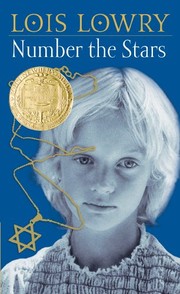
Lowry's other Newbery Medal winner, and for many readers their first Lowry: a ten-year-old in occupied Copenhagen helps hide her Jewish best friend during the 1943 rescue of Denmark's Jews. Read it after the quartet and the continuity is obvious — the same interest in what ordinary people consent to.
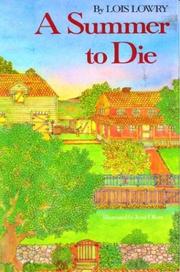
Her first novel, from 1977, drawn from the death of her own sister: a thirteen-year-old watching her older sister become ill. It is the origin of everything Lowry does with grief and it is much shorter and plainer than the later work; read it before Autumn Street.
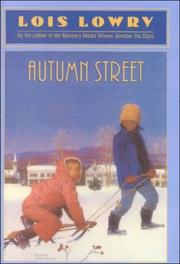
The most autobiographical of her books and, by her own account, the one closest to her. A child sent to her grandfather's house during the Second World War. Placed after A Summer to Die because the two together show how early her subject was settled.
The funny Lowry
BeginnerMeet the comic writer most readers never discover, and get a fair picture of a career that is not only dystopias and grief
▸ Study plan for this stage
Pace: One week for 130, 96 and 176 pages — the shortest stage on the path. These three sit at very different reading levels: Anastasia Krupnik is for readers around the age of its ten-year-old protagonist, Gooney Bird Greene is written for second-graders and is a decade below the rest of this path, and Th
- Anastasia's lists of things she loves and hates as a structural device and a characterisation shortcut
- That Lowry's reputation among librarians was built on humour before it was built on The Giver
- Gooney Bird Greene as a demonstration of writing down a decade in reading age without writing down to the reader
- The Willoughbys as deadpan parody, complete with a mocking glossary and a bibliography of its targets
- Comic timing on the page: how Lowry places the joke at a paragraph break
- Why the comic books and the dystopias are recognisably the same writer
- What is funny in Anastasia Krupnik, and how much of the comedy is at the adults' expense?
- What does Gooney Bird Greene assume its reader can do, and what does it not?
- Which specific books is The Willoughbys sending up, and does the joke survive not knowing them?
- What is consistent between these three and The Giver — voice, sentence length, what gets withheld?
- Which of the three would you hand to a reluctant reader, and why that one?
- Read one of Anastasia's lists aloud and time it; Lowry's comic rhythm is built for reading aloud and it is audible immediately.
- Read The Willoughbys' glossary and bibliography before the novel, then again after, and note which entries only become funny the second time.
- Take a page of Gooney Bird Greene and a page of The Giver and compare sentence length and vocabulary; the continuity between them is more visible than the difference.
Next up: Having seen the whole range, her own account of where the material came from can be read without spoiling the fiction it explains.
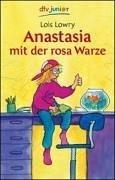
The first of a long-running comic series about a ten-year-old keeping lists of things she loves and hates. Start here in this stage: it is the earliest and the sharpest, and it establishes why Lowry's reputation among librarians was built on humour before it was built on The Giver.
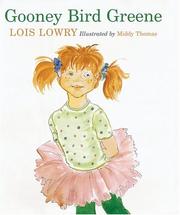
For much younger readers than the rest of this path — a new girl in second grade who tells absolutely true stories that sound impossible. Included because it shows Lowry writing deliberately down a decade of reading age without writing down to the reader.

A deadpan parody of the orphan-adventure tradition, complete with a mocking glossary and bibliography of the books it is sending up. The furthest thing from The Giver in her bibliography, and the best argument that the two Newbery medals are not the whole writer.
Lowry on Lowry
IntermediateRead her account of her own material and the two late books that return to it directly, and see how the life feeds the fiction
▸ Study plan for this stage
Pace: Three weeks for 189, 186, 192 and 80 pages, in this order. Looking Back must come after the fiction: almost every entry is a spoiler for a book on this path. The Silent Boy is narrated by a doctor's daughter in 1911 and turns on an infant's death and the institutionalisation of a boy who does not sp
- Looking Back as memoir built from photographs, each attached to a moment that later became a scene
- Reading a writer's sources after the fiction rather than before, and what that ordering protects
- The Silent Boy as the book in her catalogue that most rewards an adult reader
- How 1911 handled a child who did not speak, and Lowry's refusal to editorialise about it
- Rabble Starkey as the bridge between the comic writer and the serious one, written between the Anastasia books and The Giver
- On the Horizon's free verse and its move from historical events to named individual dead
- The single continuity across the whole career: what ordinary people consent to, and what they notice too late
- Which scenes in the novels does Looking Back turn out to explain, and does knowing the source diminish any of them?
- Why is The Silent Boy the quietest book in her catalogue, and what does the narration's limited understanding accomplish?
- What does Rabble Starkey say about class and improvised families that the better-known books do not?
- Why free verse for On the Horizon, and what does the form let her leave out?
- Having read across the whole career, what is the thing Lowry keeps writing about?
- Go through Looking Back and, for each entry, name the novel it feeds; you will end with a map of the career that no critical study of her provides.
- Reread the closing pages of The Silent Boy and work out exactly how much the narrator understands about what happened and how much you do.
- Write the two-line pitch you would give another adult for each of the four groups on this path — the quartet, the historical novels, the comedies and these late books — which is the practical outcome of reading the whole shelf.
Next up: You now have the whole career rather than the two famous books, and enough of Lowry's method to place any of her titles you meet next.

A memoir built from photographs and short essays, each attached to a moment that later became a scene in a novel. Read it after the fiction, not before: almost every entry is a spoiler for a book on this path, and it is far richer once you can recognise the sources.
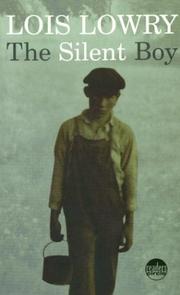
An early-twentieth-century novel narrated by a doctor's daughter about a boy who does not speak, and about how such a child was handled in 1911. The quietest book in her catalogue and the one that most rewards an adult reader; place it after the memoir.

A girl and her very young mother living in someone else's house, in a novel about class and improvised families that Lowry wrote between the Anastasia books and The Giver. It is the bridge between the funny writer and the serious one.

A late book in free verse, connecting her childhood in Hawaii and occupied Japan to the individual people who died at Pearl Harbor and Hiroshima. Read it last: it is the shortest thing here and the most direct statement of what she has been doing since Number the Stars.
Discussion
Keep reading
Paths that share books, cover the same subject, or open a related topic.