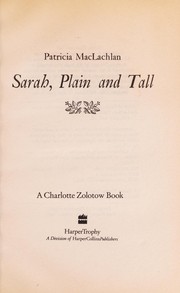
For a newly confident reader of seven or eight, start with Sarah, plain and tall. A mail-order bride comes from Maine to a prairie farm in about sixty pages of very plain sentences, and it is the shortest winner in the medal's history: a whole story, with a beginning, a middle and an end, at a length a child can finish alone. For anyone older — a ten-year-old, or an adult working through the list — start with Holes, which is the best-constructed winner of the last thirty years and the one most likely to produce a second book.
The winner that will defeat a reader placed too early is Bridge to Terabithia. Two lonely children invent a kingdom in the woods, and then one of them dies. It is the most-challenged Newbery winner and the book that established the medal's willingness to end badly, and handing it to a child who has read only cheerful books is how you get a child who distrusts recommendations. The same caution applies to Roll of Thunder, Hear My Cry and The Giver: excellent, and not first.
What the Newbery is, and what it is not
Awarded since 1922 by American librarians, it is the oldest children's book award in the world, and it goes to the writing only — illustration has a separate medal, the Caldecott. Its official remit is the most distinguished contribution to American literature for children, with children defined as up to age fourteen. That definition is why the winners run from books a seven-year-old reads alone to novels about death, war and slavery, and why a Newbery sticker on a cover tells you almost nothing about who the book is for.
Two things are worth knowing before you start. The medal moves books in enormous numbers, so the list has real power over what American children are given. And its earliest decades contain winners with racial caricature blunt enough that libraries now shelve them with commentary — the Hugh Lofting Doctor Dolittle books being the standard example. The American Library Association renamed its Laura Ingalls Wilder Award in 2018 over the depiction of Native and Black people in her work. That history is not a footnote; it is part of what the medal has been.
Roughly ages seven to nine
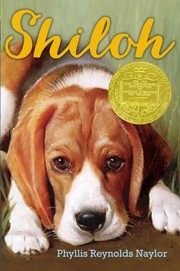
After Sarah, plain and tall, read Shiloh, in which a West Virginia boy hides a mistreated beagle from its owner and has to lie to everyone to do it. It is the first book here with a real moral problem — the child is right and dishonest at the same time. Then The Tale of Despereaux, longer and much odder, with a narrator who keeps interrupting to address the reader directly, which is the best bridge into books that expect some work.
Roughly ages nine to eleven
Holes sits first in this band: a boy sent to a desert camp to dig holes, and three separate stories a century apart that turn out to be one. From the Mixed-Up Files of Mrs. Basil E. Frankweiler sends two children to live in the Metropolitan Museum of Art and is pure competence-fantasy, a useful counterweight to the medal's reputation for sadness. Number the Stars is the right first book about the Holocaust for this age: the danger is constant, the violence stays offstage, and it never asks a child to look at more than a child can hold. The Westing Game is a genuine puzzle that plays fair with its reader, and a deliberate rest before the heavier stage.
Harder books, harder subjects
Bridge to Terabithia comes first here, because everything after it assumes a reader who knows a children's book can hurt. Roll of Thunder, Hear My Cry is unflinching about night riders and burnings while keeping a nine-year-old narrator's viewpoint intact, and it is the strongest novel on this path. The Giver created the modern children's dystopia, is among the most banned winners, and ends deliberately ambiguously — which is the argument, not a flaw.
This is also where the standing criticism of the medal belongs: that librarians reward sad, worthy books over the ones children pick up voluntarily. Read this stage and stage two side by side and decide how fair that is.
The old staples and the modern turn
Island of the Blue Dolphins is still gripping and still the clearest example of the medal's older habit — an Indigenous life, based on a real Nicoleño woman, narrated with sympathy by an outsider. The Crossover is written entirely in verse and became a schoolroom staple. New Kid was the first graphic novel to take the medal, which caused real argument among librarians about whether comics count as literature, and it is the right last stop for exactly that reason.
Follow the full ordered path here: Newbery Medal Winners: The Best Ones to Read, in Order.