The Best Books for 10-Year-Olds: Middle-Grade Novels, in Order
Ten is the strongest year in children's fiction, and it is a different year from nine in one specific way: a nine-year-old reads a sad book and recovers, while a ten-year-old reads one and thinks about it for a week. This ladder is ordered by emotional weight rather than difficulty — contemporary novels about being exactly this age, then fantasy long enough to live inside, then history that happened to children, and finally the single book most likely to change what a ten-year-old thinks a novel is for. None of this is a test: a ten-year-old still rereading a favourite series is reading properly, and interest age, not reading age, is what should decide the order here.
Novels about being ten
BeginnerRead contemporary fiction that takes a ten-year-old's social world completely seriously.
▸ Study plan for this stage
Pace: Six to eight weeks if the child is reading independently at a chapter or two a night — Wonder is around 370 pages but in very short rotating chapters, When You Reach Me is about 200, Bridge to Terabithia about 150. Leave a clear gap before Bridge to Terabithia rather than handing it over the same we
- Wonder rotates its narration between Auggie, his sister, his friends and his sister's boyfriend, so the same events are re-told by people with different amounts at stake. That structure, not the facial difference, is what the book is teaching.
- Via's chapters are the ones adults most often skim and children most often remember: the sibling who is loved and is also permanently second in the family's attention.
- When You Reach Me is a New York friendship story and a time-travel mystery at once, and it withholds which it is until the final chapters. It rewards a reader who has just spent a book noticing structure, which is why it sits after Wonder.
- When You Reach Me is in open conversation with A Wrinkle in Time, which the protagonist is reading throughout. Having that book in the house is useful but not required.
- Bridge to Terabithia treats grief as its subject rather than as a twist, and it deliberately refuses to make the death meaningful. Jess's guilt, his anger and his father's awkwardness are the actual material.
- The invented kingdom in Bridge to Terabithia is a shared imaginative act between two children, and the book is as interested in the friendship's ordinary texture — school politics, a difficult teacher, a family short of money — as in the fantasy.
- All three books are set firmly in a child's social world, where the significant powers are other children and the adults are weather. Ordering them by emotional weight rather than by page count is what makes the sequence work.
- None of this is a schedule to be kept up with. A child who stops after Wonder and rereads it twice has read it properly.
- Which of Wonder's narrators would you want to talk about first if the child brings the book up, and why that one rather than Auggie?
- When You Reach Me conceals its genre. What would be spoiled by telling a child in advance that it is a time-travel story, and is that a trade you want to make?
- Bridge to Terabithia offers no consolation for the death. Are you comfortable handing over a book that does not resolve, and what would you say if asked why it ends that way?
- Wonder's adults are variably competent. Which ones does the book criticise, and does that criticism land differently for a reader who is ten than for you?
- Having read all three, which would you give a child who is reluctant, and which would you hold back for later?
- Read the final thirty pages of Bridge to Terabithia yourself before handing the book over, and decide in advance what you will say if the child comes to you upset.
- Read Via's section of Wonder on its own and write yourself a few lines on what the book is saying about siblings. It is the part most worth being ready to discuss.
- Leave at least a week between Wonder and When You Reach Me, and at least two before Bridge to Terabithia. The gap is doing real work in this stage.
- Reread the opening chapter of When You Reach Me after finishing the book, on your own, and note how much was hiding in plain sight. That is the reread the child will want to do.
- Keep a copy of A Wrinkle in Time within reach while When You Reach Me is being read, and say nothing about it unless it is asked for.
Next up: These three build the habit of finishing a book that asks something of you, which is what the long fantasy in the next stage will take for granted.

A boy with a facial difference starts mainstream school, told in short chapters that rotate between narrators. The multiple viewpoints are the real lesson: the reader gets to watch the same events be unfair in different ways.
A 1970s New York friendship story that is also a time-travel mystery, and it does not tell you which it is until the end. Read it second — it rewards a reader who has just finished a book with rotating perspectives and is alert to structure.
Two children invent a kingdom in the woods and then one of them dies suddenly and pointlessly. Placed at the end of this stage because it is the first book most ten-year-olds meet where grief is the subject and not the twist.
Fantasy long enough to live inside
IntermediateSustain a long invented world across hundreds of pages — the reading endurance that ten is the year for.
▸ Study plan for this stage
Pace: Three to four months across four books totalling roughly 1,380 pages, and the order matters more than the pace. The Lightning Thief is the easiest and belongs first; The Hobbit has the most demanding sentences and belongs last. Expect The Lightning Thief to pull the whole five-book series in behind
- The Lightning Thief relocates the Greek gods to modern America and moves fast, with jokes on nearly every page. Its real function on this ladder is momentum: it is a book children finish, and finishing a long book is the skill being built.
- Percy's dyslexia and ADHD are written into the premise as advantages rather than obstacles, which is worth knowing in advance if it applies at home.
- The Girl Who Drank the Moon asks considerably more: several timelines assembled into a puzzle, and prose that is doing something in its own right. It is the step up in difficulty inside this stage.
- The Graveyard Book is structured as linked stories, each a couple of years further on in Bod's life. That structure makes it unusually easy to put down and pick up, and unusually easy to read one chapter at a time aloud.
- The Graveyard Book's opening chapter is the frightening one and the rest is much warmer. A child who stalls at the start has usually stalled at the hardest point, not the typical one.
- The Hobbit is the oldest prose here, with longer sentences, inversions and songs, and that is precisely why it sits at the end of the stage rather than the start. The reward is immediate — it is still an adventure story with a dragon in it.
- Reading a four-hundred-page invented world is a different activity from reading a two-hundred-page realistic novel: the reader has to hold names, geography and rules in their head across weeks. This stage is that endurance, arranged so it is never the difficulty and the darkness increasing at once.
- A child who wants to read the entire Percy Jackson series before touching anything else on this stage is doing something useful, not avoiding the ladder.
- Why does The Lightning Thief go first when it is the least ambitious book of the four? What would be lost by opening with The Hobbit?
- The Graveyard Book's first chapter is its most frightening. Would you read it aloud yourself, hand it over, or let the child start it alone — and what decides that?
- What specifically makes The Hobbit's prose harder than the other three? Point to a sentence rather than a general impression.
- The Girl Who Drank the Moon runs several timelines at once. How would you help a child who has lost track without telling them what happens?
- If a child finishes The Lightning Thief and wants the other four books immediately, what is the case for letting them and what is the case for interleaving?
- Read the first chapter of The Graveyard Book yourself, before anything else in this stage, and decide how it will be handed over.
- Time yourself reading the opening two pages of The Hobbit aloud, then the opening two pages of The Lightning Thief. The difference in pace is the difficulty gap made audible.
- Pick one chapter of The Graveyard Book and read it aloud in a single sitting. Its story-shaped chapters are built for exactly this, and it shows whether the reading-aloud habit is still welcome.
- Leave the whole Percy Jackson series accessible rather than rationed, and note where the child stops. Where they stop is better information than where you hoped they would.
- Sketch a one-page map or timeline of The Girl Who Drank the Moon for yourself while reading it, so you can answer a question without rereading the book.
Next up: Long invented worlds build the stamina; the next stage spends it on things that actually happened.

Greek gods relocated to modern America, fast and funny, and the first of a five-book series a ten-year-old will finish in a term. It is also, quietly, the easiest book on this stage, so start here.
A witch accidentally feeds a baby moonlight and makes her magical; the plot is a puzzle assembled from several timelines. It asks more of the reader than Percy Jackson and rewards it with much better prose.
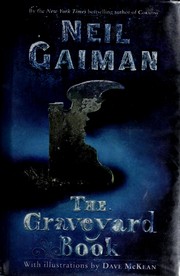
A toddler whose family is murdered is raised by the dead in a graveyard — the first chapter is genuinely frightening and the rest is a series of linked stories as the boy grows up. Read it after the two above; it is the darkest thing on this stage.
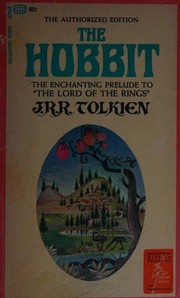
The oldest prose here and the one with the most demanding sentences, which is why it belongs at ten rather than nine. It is also still an adventure story with a dragon at the end, so the effort is repaid immediately.
History that happened to children
IntermediateRead the twentieth century through people the reader's own age, including one full-length non-fiction book.
▸ Study plan for this stage
Pace: Two to three months for about 780 pages. Number the Stars is short at under 150 and can be read in a week; Goodnight Mister Tom is around 360 and much heavier; Bomb is about 270 and reads like a thriller. Keep the order. Content notes for the adult: Number the Stars is set in occupied Denmark and th
- Number the Stars follows Annemarie, a ten-year-old in occupied Copenhagen, helping to hide her Jewish best friend. It is the standard first Holocaust novel for this age because the peril is real while the horror is kept off the page.
- The Danish rescue is a true story of a country that largely protected its Jewish population, which makes Number the Stars an unusual entry point — it is a book about the Holocaust in which the adults act well.
- Goodnight Mister Tom pairs an evacuee who has been badly abused with an elderly widower who is himself withdrawn, and the recovery is slow, specific and convincing. The abuse is described, not implied.
- The two war novels are not interchangeable and the gap between them is the point: one keeps the reader at a safe distance from the worst of it, and the other does not.
- Bomb is full-length narrative non-fiction — spies, sabotage, physicists, a real deadline — and its job on the ladder is to demonstrate that a true story can be paced like a thriller.
- Bomb is also a book about a moral decision without a clean answer, and it presents the arguments made at the time rather than settling them. That is worth being ready for.
- All three set a child, or the reader's imagined position, inside the twentieth century rather than beside it. History as something that happened to people this age is the through-line.
- A child who wants to stop after Number the Stars has still got the thing this stage is for. Goodnight Mister Tom in particular can wait a year without any loss.
- What does Number the Stars keep off the page, and what does that decision make possible for a first book on this subject?
- Goodnight Mister Tom describes abuse directly. Having read it, would you hand it over now, hold it, or read it alongside — and what is your reason?
- Bomb presents the arguments around using the bomb without adjudicating them. How would you answer a child who asks you what you think?
- Which of these three would you give a child who says they do not like history, and why that one?
- Number the Stars shows adults behaving well and Goodnight Mister Tom shows an adult behaving monstrously and another behaving well. What does reading them in that order do?
- What in Bomb makes it read like a novel? Name the specific techniques, since they are the reason it works here.
- Read Goodnight Mister Tom yourself before passing it on. It is the one book on this ladder where reading ahead is genuinely worth the hours.
- Read the first chapter of Number the Stars aloud and stop at the end of it. It sets the level of threat the whole book will operate at, and it is a fair sample to decide on.
- Pick one chapter of Bomb and mark the places where Sheinkin uses a novelist's move — a cliffhanger, a scene break, a withheld detail. Have one ready to point out.
- Leave a fortnight between Number the Stars and Goodnight Mister Tom, and longer if the first one was hard going.
- Look up the Danish rescue yourself so you can answer the question Number the Stars reliably produces: did that really happen?
Next up: Having read a book that does not resolve neatly, the last stage offers one that never explains itself at all.
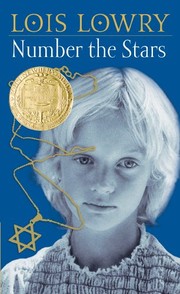
A ten-year-old in occupied Copenhagen helps hide her Jewish best friend. Short, plainly written and the standard first Holocaust novel for this age, because the danger is real but the horror stays offstage.
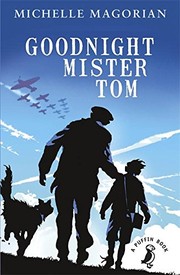
An abused evacuee is billeted on an elderly widower, and the recovery is slow and completely convincing. Considerably harder than Number the Stars — the abuse is described, not implied — so read it second.
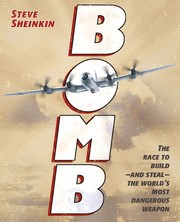
The race to build the atomic bomb told as a thriller, with spies, sabotage and real physicists. Full-length narrative non-fiction is the genuine new capability of this year, and this is the book that proves true stories can be paced like novels.
The one that changes what a book can do
IntermediateFinish a novel that is not written down to its reader at all.
▸ Study plan for this stage
Pace: Four to six weeks for a little over 400 pages, read slowly. Northern Lights — published in the United States as The Golden Compass — rewards a chapter or two a night rather than a sprint, and rereading the first fifty pages after finishing is common and worth allowing time for. Content notes for the
- Northern Lights is simply an excellent novel that happens to have a child protagonist. It is not written down to its reader at any point, and that is the whole reason it closes the ladder.
- The daemon is the book's central invention and does an enormous amount of work at once — it externalises character, makes the villains' project immediately horrifying, and gives the plot its emotional stakes without a word of explanation.
- Pullman withholds explanation systematically. Dust, the alethiometer and the Magisterium are all in use long before they are defined, and the reader is expected to keep going and assemble it.
- Lyra is a liar, and the novel treats that as a talent rather than a flaw. Adults are frequently wrong, self-interested or dangerous, and the book does not soften this.
- Iorek Byrnison and the armoured bears are the part most children remember; the theological argument running underneath is the part most adults notice. Both are genuinely in the book and neither is decoration.
- The betrayal near the end is a real one, committed by an adult the reader has been given reasons to trust, and the book ends on a decision rather than a resolution.
- There are two sequels, and they are darker and more explicitly argumentative. Finishing Northern Lights alone is a complete experience; going on is a separate decision.
- Length, ambiguity and withheld explanation are exactly what every earlier stage was building toward. If this one is hard going, the answer is a year, not a simpler book.
- What does Pullman refuse to explain, and how does the book keep a reader going without those explanations?
- The daemons do several jobs at once. Name three, and consider which one the book would struggle most to do without.
- Lyra lies constantly and the novel approves. How would you answer a child who asks whether she is a good person?
- The Magisterium is a recognisable target. What would you say if asked what the book is arguing, and would you say the same about the sequels?
- The ending is a decision, not a resolution. Is that a reason to have the second book ready, or a reason to leave a gap?
- Looking back across all four stages: which book did the most work, and which would you drop if you were building this ladder for a different child?
- Read the first two chapters yourself and notice how many terms are used before they are defined. That count is the book's method in miniature.
- Decide in advance whether the sequels will be available immediately or after a gap, and be ready to say why.
- Read the betrayal near the end before handing the book over, so you know what is coming and are not caught off guard by the reaction.
- After the child finishes, leave the book somewhere accessible rather than shelving it. The reread of the opening is where the structure becomes visible, and it should be their idea.
- Write yourself a short list of the books on this ladder that were genuinely enjoyed rather than merely completed. That list, not this order, is what should shape the next year.
Next up: This is the end of the ladder: a reader who has finished Northern Lights can be handed almost anything and left to decide about it themselves.
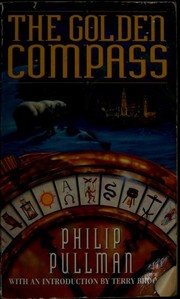
Armoured bears, stolen children, and a theological argument running underneath a straightforward adventure — the first book on this whole ladder that is simply an excellent novel that happens to have a child protagonist. Published in the United States as The Golden Compass. Save it for last: everything before it is preparation for reading something this long and this unwilling to explain itself.
Discussion
Keep reading
Paths that share books, cover the same subject, or open a related topic.