Best Books on the New Deal, in Reading Order
This curriculum builds from a vivid narrative foundation of the crash and New Deal's dramatic opening acts, through the machinery of its landmark programs and agencies, into the fierce constitutional battles with the Supreme Court, and finally to scholarly assessments of its lasting economic and political legacy. Starting at an intermediate level, each stage assumes the vocabulary and context built by the one before it, so readers arrive at the most analytical works already fluent in the people, programs, and politics involved.
The Crash & the Crisis That Made the New Deal
IntermediateUnderstand the economic collapse of 1929–1932, the human suffering it produced, and the political vacuum that brought FDR to power — establishing the essential 'why' before the 'what.'
▸ Study plan for this stage
Pace: 8–10 weeks, ~40–50 pages/day (Galbraith first: 2–3 weeks; Kennedy second: 5–7 weeks)
- The speculative bubble of the 1920s: inflated stock valuations, margin buying, and the disconnect between market prices and real economic value
- The mechanics of the 1929 crash: how panic selling, margin calls, and bank failures cascaded into systemic collapse
- The deepening depression (1930–1932): deflationary spiral, mass unemployment, agricultural collapse, and the failure of Hooverian remedies
- Human suffering during the crisis: homelessness, hunger, psychological trauma, and the breakdown of community institutions
- The political realignment: loss of faith in Republican leadership, the rise of radical movements, and the conditions that made FDR's election possible
- Galbraith's analytical framework: how to recognize the warning signs of speculative excess and irrational exuberance
- Kennedy's narrative of institutional failure: why existing economic and political structures proved inadequate to the crisis
- The intellectual vacuum: the absence of a coherent policy response before 1933, and the desperation for action
- What were the main drivers of the stock market bubble in the 1920s, and how did Galbraith explain the disconnect between stock prices and underlying economic reality?
- How did the 1929 crash unfold mechanically—what role did margin buying, panic, and bank failures play in turning a market correction into a systemic collapse?
- What made the depression deepen from 1930–1932, and why did Hoover's policies fail to arrest the decline?
- How did the Great Depression affect ordinary Americans across different regions and social classes, and what forms did their suffering take?
- Why did the political system lose legitimacy during the crisis, and what alternative movements or ideologies gained appeal?
- What conditions and public mood made FDR's election in 1932 a turning point, and what mandate did he inherit?
- Create a timeline of key events from 1920–1932 (bubble formation, crash, deepening depression, Hoover's responses, 1932 election) with 3–4 sentence explanations of why each matters
- Chart the stock market's rise and fall using Galbraith's data; annotate with the psychological and behavioral explanations he offers for irrational exuberance at each stage
- Write a 500-word analysis: 'Why Hoover's Remedies Failed.' Use Kennedy's account of his policies and explain the mismatch between the scale of the crisis and the government response
- Select three vivid human stories from Kennedy (breadlines, farm foreclosures, bank runs, etc.) and write a 300-word reflection on how each illustrates the breakdown of economic security
- Debate exercise: Argue both sides—'Could the 1929 crash have been prevented?' using Galbraith's analysis of speculation versus Kennedy's structural account of the depression
- Create a one-page 'memo to FDR' (March 1933) summarizing the crisis he inherited: economic data, human suffering, political threats, and the public's expectations for action
Next up: This stage establishes the desperate conditions and political urgency that demanded the New Deal; the next stage will examine FDR's specific programs and policies—understanding the 'why' now makes the 'what' and 'how' of New Deal legislation intelligible and consequential.
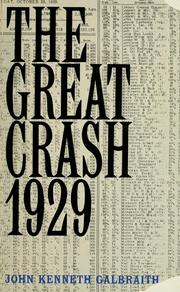
A lucid, authoritative account of the stock market collapse that triggered the Depression; Galbraith's clear prose makes the financial mechanics accessible and sets the stage for everything that follows.
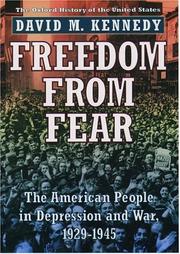
This Pulitzer Prize-winning survey covers 1929–1945 in full; read the first third here for an unmatched narrative of the Depression's depth and FDR's rise — it becomes the backbone reference for the entire curriculum.
The Hundred Days & the Alphabet Agencies
IntermediateGrasp the legislative explosion of FDR's first hundred days, the design and operation of the major New Deal agencies (CCC, NRA, AAA, TVA, WPA, Social Security), and the political coalition that sustained them.
▸ Study plan for this stage
Pace: 8–10 weeks, ~40–50 pages/day (approximately 2–3 weeks per book, with overlap for synthesis)
- The Hundred Days as a legislative watershed: FDR's emergency powers, the banking crisis response, and the speed of executive action under crisis conditions
- The alphabet agencies as experimental solutions: their distinct mandates (relief, recovery, reform) and how CCC, NRA, AAA, TVA, and WPA embodied different approaches to economic intervention
- The political coalition sustaining the New Deal: labor unions, farmers, urban machines, African Americans, and the South—and the tensions within it
- The design and operation of Social Security: its origins, coverage limitations, and role as a permanent safety net versus temporary relief
- The constitutional and ideological debates: business opposition, the Supreme Court challenge, and competing visions of federal power
- Regional and sectoral impacts: how the TVA, AAA, and WPA affected different regions and social groups differently
- The role of personality and improvisation: how FDR's leadership style, advisors, and willingness to experiment shaped agency design and implementation
- What were the major legislative acts passed during the Hundred Days, and what specific economic problems was each designed to address?
- How did the CCC, NRA, AAA, TVA, and WPA differ in their objectives, scope, and methods—and why did FDR pursue multiple overlapping approaches rather than a single coherent strategy?
- What was the political coalition that supported the New Deal, and what tensions or contradictions existed within it (e.g., between labor and business, North and South, urban and rural interests)?
- How did Social Security differ from earlier relief programs, and what were its original limitations in terms of coverage and benefits?
- What were the major constitutional and ideological objections to the New Deal, and how did FDR respond to the Supreme Court challenge?
- How did the New Deal agencies operate on the ground—what were the successes, failures, and unintended consequences documented in these accounts?
- Create a timeline of the Hundred Days legislation (using Smith's FDR) with each act's date, name, and primary purpose; then annotate it with the specific crisis it addressed
- Build a comparison matrix of the five major agencies (CCC, NRA, AAA, TVA, WPA) across columns for: mandate, target population, geographic scope, budget, and outcomes—draw on all three books
- Write a 2–3 page memo from the perspective of an FDR advisor (circa March 1933) recommending one of the major agencies; justify its design using evidence from Smith and Cohen
- Map the political coalition supporting the New Deal by identifying key constituencies (labor, farmers, African Americans, urban machines, etc.) and their specific interests; note where Cohen and Shlaes diverge on coalition stability
- Trace one agency's evolution from conception to operation: follow the CCC or TVA through Smith's biography, then cross-check with Cohen's account of implementation challenges
- Debate exercise: prepare arguments for and against a specific New Deal program (e.g., the NRA or AAA) using Shlaes's skeptical lens and Cohen's more sympathetic account; identify where evidence supports each view
Next up: This stage establishes the institutional and political foundations of the New Deal, preparing you to examine how these agencies performed during the mid-to-late 1930s, the constitutional crises they provoked, and the competing visions of the welfare state that emerged from their successes and failures.
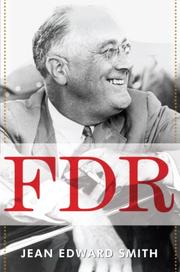
A comprehensive, readable single-volume biography that gives the fullest portrait of Roosevelt as political strategist and administrator — essential for understanding why specific agencies were shaped as they were.
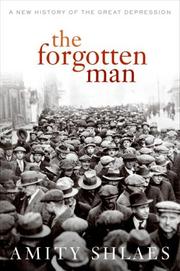
Offers a revisionist, agency-by-agency critique of New Deal programs through the stories of ordinary Americans and forgotten figures; reading it after Smith sharpens critical thinking by presenting a serious counter-narrative.
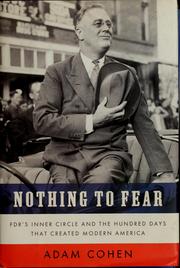
Focuses tightly on the Hundred Days through the competing visions of FDR's inner circle (Hopkins, Perkins, Wallace, Ickes, Moley), showing how the programs were actually built from the inside.
The Supreme Court Fight & the Constitutional Crisis
IntermediateUnderstand how the conservative Supreme Court struck down core New Deal legislation, why FDR launched his court-packing plan, how the 'switch in time' resolved the crisis, and what it meant for American constitutional law.
▸ Study plan for this stage
Pace: 4–5 weeks, ~40–50 pages/day. "Scorpions" is approximately 500 pages; allocate 2–3 weeks for the core narrative (Part I–II), then 1–2 weeks for deeper engagement with the constitutional and biographical material in Part III.
- The ideological clash between FDR's New Deal and the conservative 'Four Horsemen' of the Supreme Court (Sutherland, Van Devanter, McReynolds, Butler)
- The constitutional doctrine of substantive due process and the Lochner era—how the Court used it to strike down economic legislation
- FDR's court-packing plan: origins, mechanics, political strategy, and why it was so controversial
- The 'switch in time that saved nine': how Justice Roberts' shift on the minimum wage case (West Coast Hotel v. Parrish) defused the crisis
- The biographical and personal dimensions of judicial conflict: how Feldman uses the lives of Brandeis, Cardozo, and the conservative justices to illuminate constitutional philosophy
- The transformation of the Commerce Clause and the end of Lochner—how the crisis reshaped American constitutional law
- The political cost of the court-packing fight and its impact on FDR's second term and the New Deal agenda
- What were the main constitutional objections the conservative Supreme Court justices raised against New Deal legislation, and how did they justify striking down key laws like the NIRA and AAA?
- Why did FDR decide to pursue court-packing, and what was his actual plan? What were the political and constitutional arguments for and against it?
- What was the 'switch in time that saved nine,' and why is Justice Roberts' vote in West Coast Hotel v. Parrish considered the turning point in the constitutional crisis?
- How did the Supreme Court crisis reshape American constitutional law, particularly regarding the scope of the Commerce Clause and the end of the Lochner doctrine?
- What role did the biographical details and personal relationships between justices (especially Brandeis, Cardozo, and the Four Horsemen) play in the unfolding of the crisis, according to Feldman?
- What were the long-term political and constitutional consequences of the court-packing fight for FDR, the New Deal, and the separation of powers?
- Timeline exercise: Create a detailed chronology of the major Supreme Court decisions striking down New Deal legislation (1935–1937), noting the vote, the constitutional reasoning, and the political reaction. Cross-reference with Feldman's narrative to see how he contextualizes each decision.
- Constitutional doctrine comparison: Read excerpts from Lochner v. New York (1905) and West Coast Hotel v. Parrish (1937) alongside Feldman's analysis. Write a 2–3 page essay explaining how the Court's interpretation of the Due Process Clause and Commerce Clause changed between these two cases.
- Judicial biography exercise: Create character profiles for at least four justices featured in 'Scorpions' (e.g., Brandeis, Cardozo, Sutherland, Roberts). Note their constitutional philosophy, their personal background, and their role in the crisis. Use this to understand how Feldman uses biography to explain jurisprudence.
- Court-packing debate simulation: Divide into two groups—one arguing FDR's position (the Court is obstructing the people's will), the other arguing the opposition's position (court-packing threatens judicial independence). Use Feldman's account of the political arguments to ground your debate.
- Primary source analysis: Read FDR's 'fireside chat' about the Supreme Court (March 1937) and his court-packing message to Congress. Annotate it against Feldman's account of FDR's strategy and rhetoric. What does Feldman emphasize that the primary sources alone might not reveal?
- Comparative constitutionalism exercise: Research how another democratic nation (e.g., Germany, Canada, or the UK) has handled conflicts between the executive and the judiciary. Write a 2–3 page reflection on whether FDR's court-packing plan was uniquely American or part of a broader pattern, using Feldman's constitutional analysis as a reference point.
Next up: This stage establishes how the Supreme Court crisis fundamentally transformed the constitutional limits on federal power and executive authority, setting the stage for the next phase, which will explore how the New Deal's expanded federal role was consolidated and what it meant for American federalism and the modern administrative state.

A dual biography of Justices Hugo Black and Felix Frankfurter that illuminates the ideological fault lines on the New Deal Court; it builds the judicial vocabulary needed before tackling the court-packing fight directly.
Legacy, Limits & Long Shadow
ExpertEvaluate the New Deal's lasting economic, political, and social legacy — what it achieved, what it failed to do (especially for Black Americans and labor), and how it reshaped the relationship between citizens and the federal government.
▸ Study plan for this stage
Pace: 8–10 weeks, ~40–50 pages/day (accounting for dense analytical material and note-taking)
- The New Deal's role in establishing the modern welfare state and expanding federal government authority into economic and social life
- How the New Deal both advanced and constrained labor rights, with particular attention to racial exclusion and the limits of union protection
- The geographic and demographic disparities in New Deal relief: who benefited most and who was systematically left behind (especially Black Americans, women, and agricultural workers)
- The political realignment the New Deal triggered—the shift of Black voters to the Democratic Party despite the party's Southern segregationist wing
- The tension between emergency relief measures and permanent structural reform: what was temporary vs. what endured
- How the New Deal redefined the social contract between citizens and the federal government, establishing expectations of state responsibility for economic welfare
- The ideological and practical limits of New Deal liberalism: what it could not or would not address (poverty, systemic racism, regional inequality)
- The New Deal's international context and how it positioned the U.S. for World War II and the postwar order
- What were the major structural inequalities in how New Deal programs were administered, and how did Katznelson and Hiltzik explain the reasons for these disparities?
- How did the New Deal reshape the relationship between the federal government and American citizens, and what expectations did it create that persisted after 1945?
- What were the key differences between emergency relief and permanent reform in the New Deal, and which programs fell into each category?
- How did the New Deal affect labor organizing and union power, and what groups were excluded or marginalized in labor protections?
- What role did racial politics and Southern Democratic power play in shaping the limitations and contradictions of New Deal policy?
- Which aspects of the New Deal's legacy proved most durable, and which were dismantled or transformed in subsequent decades?
- Create a detailed comparison chart of three major New Deal programs (e.g., CCC, WPA, AAA) showing: stated goals, actual beneficiaries by race/region/gender, funding levels, and long-term outcomes—use evidence from both books
- Write a 2–3 page analytical essay: 'Did the New Deal Solve the Great Depression, or Did It Merely Manage It?' Ground your argument in specific data and examples from Katznelson and Hiltzik
- Map the geographic distribution of New Deal spending using information from Hiltzik's narrative; identify which regions thrived and which lagged, and hypothesize why based on political factors discussed in Katznelson
- Conduct a close reading of one chapter from each book that addresses racial exclusion (e.g., Katznelson on the Southern veto, Hiltzik on agricultural programs); write a 1,500-word synthesis analyzing how both authors explain the same phenomenon
- Create a timeline of New Deal programs with annotations indicating: (a) whether each was temporary or permanent, (b) which groups benefited most, (c) what unintended consequences emerged—use this to trace the evolution of federal responsibility
- Interview or survey 3–5 people over 65 (if possible) or research oral histories about how their families experienced the New Deal; compare their accounts to the historical narratives in both books
Next up: This stage equips you to understand the New Deal not as a monolithic success but as a contradictory set of policies that expanded state power while reproducing racial and regional hierarchies—a foundation essential for analyzing how subsequent movements (civil rights, labor, welfare reform) either built on or rejected the New Deal model.

A landmark revisionist work arguing that the New Deal was fundamentally shaped — and limited — by Southern Democrats and racial exclusion; it reframes everything learned in earlier stages with a more critical lens.
A recent, comprehensive synthesis that assesses the full arc of New Deal programs against the economic evidence, making it the ideal capstone that ties together narrative, policy, and legacy with the benefit of modern scholarship.
Discussion
Keep reading
Paths that share books, cover the same subject, or open a related topic.