The Dust Bowl: The Best Books to Read, in Order
This curriculum moves from vivid narrative and lived experience into rigorous historical analysis and finally into ecological and policy depth — building a complete picture of the Dust Bowl as a human, environmental, and economic catastrophe. Starting at the intermediate level, each stage assumes the vocabulary and context built by the one before it, so that by the end the reader can think critically about drought, displacement, and the long shadow the 1930s still cast on American land and society.
The Human Story First
IntermediateAnchor the Dust Bowl in lived experience — the dust, the fear, the exodus — before encountering any analytical framework.
▸ Study plan for this stage
Pace: 6–8 weeks, ~40–50 pages/day (alternating between novels and diary entries for variety)
- The sensory reality of dust: how it invaded homes, bodies, and consciousness (Steinbeck's dust imagery; Low's daily dust descriptions)
- Economic desperation as a driver of family breakdown and migration (the Joad family's loss of land and livelihood)
- The psychological toll of environmental catastrophe: shame, helplessness, and loss of dignity (Low's private fears; Steinbeck's portrayal of migrant camps)
- The distinction between individual survival and collective human dignity (Steinbeck's final act of charity; Low's documentation of community resilience)
- How oral history and personal testimony capture what statistics cannot (Low's diary as counterpoint to Steinbeck's novelistic empathy)
- The role of false hope and broken promises in sustaining or destroying communities (handbills luring migrants to California; Low's family's dwindling prospects)
- Describe the physical experience of the dust as depicted in both texts. How does Steinbeck use dust as a metaphor, and how does Low document it as a lived reality?
- What forces the Joad family to leave Oklahoma, and how does their experience compare to the economic pressures Low's family faces in South Dakota?
- How do Steinbeck and Low portray the loss of dignity and agency? What specific scenes or diary entries illustrate this most powerfully?
- What role do false promises (California handbills, government programs) play in shaping people's decisions and emotions in each text?
- How do the Joads and Low's family attempt to maintain hope or community in the face of environmental and economic collapse?
- What does each text reveal about the human capacity for both cruelty and compassion during crisis?
- Keep a 'sensory journal' while reading: record every description of dust, hunger, fear, or physical sensation. Compare entries from Steinbeck and Low—what details does each author emphasize?
- Create a timeline of the Joad family's journey (Grapes of Wrath) alongside key dates from Low's diary. Mark moments of crisis, hope, and despair in both narratives.
- Write a 2–3 page diary entry from the perspective of a Joad family member (e.g., Ma Joad, Tom, Rose of Sharon) responding to a specific event in the novel. Then compare your emotional choices to Low's actual diary voice.
- Collect 3–4 direct quotes from each text that best capture the human cost of the Dust Bowl. Annotate each with: Why is this moment significant? What does it reveal about dignity, family, or survival?
- Interview an older family member or community elder about a time they experienced economic hardship, environmental crisis, or forced migration. Record their account and analyze it against Low's diary style—what details do people naturally emphasize?
- Create a visual map or collage representing the Joad family's migration route and the environmental/economic barriers they face. Include images or descriptions from both texts to show how landscape and circumstance intertwine.
Next up: This stage grounds you in the emotional and physical reality of the Dust Bowl through lived testimony and literary empathy, preparing you to engage with historical analysis, economic data, and policy frameworks that explain *why* this catastrophe occurred and *how* it reshaped America.
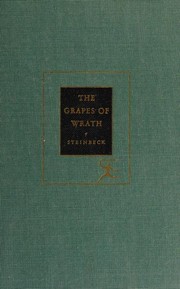
The canonical literary entry point: Steinbeck's Joad family makes the Okie migration viscerally real and establishes the emotional core every later analytical book will reference. Reading it first means all subsequent history has a human face.
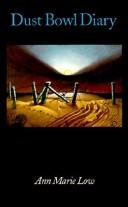
A North Dakota farm girl's actual diary from 1927–1937 provides an unmediated, ground-level counterpoint to Steinbeck's fiction — showing what daily life under the dust actually felt like for those who stayed.
The Definitive History
IntermediateUnderstand the full historical arc — causes, ecology, economics, and policy — of the Dust Bowl and the Great Depression that surrounded it.
▸ Study plan for this stage
Pace: 8–10 weeks, ~40–50 pages/day (alternating between books to maintain narrative momentum)
- The ecological catastrophe: how agricultural practices (monoculture, plowing native grassland) and drought created the Dust Bowl as a man-made disaster
- The economic collapse: how commodity prices, farm debt, and bank failures devastated rural communities during the Great Depression
- The human cost: migration patterns, family displacement, and the psychological toll documented through Terkel's oral histories
- Government intervention and policy: the role of the New Deal, the Resettlement Administration, and agricultural reform in attempting to address the crisis
- Regional variation: how the Dust Bowl affected different communities (Texas panhandle, Oklahoma, Kansas, Colorado) differently based on geography, land ownership, and local economies
- The interconnection between environmental degradation and economic systems: how profit-driven farming practices made communities vulnerable to ecological collapse
- What specific agricultural and environmental practices turned the Great Plains into the Dust Bowl, and how did they interact with drought?
- How did the Great Depression and Dust Bowl affect farm ownership, debt, and rural migration patterns differently across regions?
- What do the personal testimonies in 'Hard Times' reveal about the psychological and social impact of the Dust Bowl that historical data alone cannot capture?
- What New Deal policies and government interventions were attempted to address the Dust Bowl, and how effective were they?
- How did the Dust Bowl expose the vulnerability of an economic system built on monoculture and debt?
- What lessons about environmental sustainability and economic resilience does the Dust Bowl offer for understanding modern crises?
- Timeline construction: Create a detailed chronological timeline (1920–1940) marking key agricultural trends, drought onset, economic collapse, policy interventions, and migration waves, using evidence from both books
- Regional comparison map: Chart how the Dust Bowl affected at least three different regions (Texas panhandle, Oklahoma, Kansas) by documenting differences in land use, farm size, migration patterns, and recovery, citing specific examples from Egan
- Oral history analysis: Select 3–4 testimonies from 'Hard Times' and write analytical summaries connecting each person's experience to the structural causes (ecological, economic, policy) described in Egan
- Primary source document review: Find and annotate one New Deal policy document (e.g., Resettlement Administration guidelines) and evaluate its assumptions and limitations in light of both books' accounts
- Cause-and-effect diagram: Create a visual showing how monoculture → soil depletion → drought vulnerability → farm debt → foreclosure → migration, using specific examples from both texts
- Comparative narrative essay: Write a 1,500–2,000 word essay synthesizing Egan's historical analysis with Terkel's personal testimonies to argue how individual stories illuminate systemic failures
Next up: This stage equips you with a comprehensive understanding of the Dust Bowl as both an ecological and socioeconomic crisis, preparing you to examine how communities rebuilt, adapted, and carried these lessons forward—or failed to—in subsequent decades and into modern environmental and economic policy.

Egan's Pulitzer Prize-winning narrative history is the essential single-volume account of the southern plains during the 1930s; it builds directly on the emotional groundwork of Stage 1 and introduces the key regions, actors, and policy failures.
Terkel's mosaic of first-person voices broadens the frame from the plains to the whole Depression-era nation, giving the Dust Bowl its proper economic and social context through the words of people who lived it.
Ecology and the Land
IntermediateUnderstand the environmental and agricultural roots of the catastrophe — why the land broke, and what the relationship between farming practice and ecology really was.
▸ Study plan for this stage
Pace: 2–3 weeks, ~20–30 pages/day (accounting for extended study of photographs and captions)
- The relationship between monoculture wheat farming and soil degradation on the Great Plains
- How mechanization and plow-heavy agriculture disrupted native prairie ecosystems and exposed topsoil to wind erosion
- The role of economic incentives (commodity prices, debt) in driving unsustainable farming practices
- Visual documentation as evidence: how Lange's photographs reveal the material consequences of ecological breakdown
- The interconnection between land degradation, agricultural collapse, and human displacement
- Soil composition and the fragility of the High Plains ecosystem before and after intensive cultivation
- What specific agricultural practices documented in 'An American Exodus' contributed most directly to soil erosion and the Dust Bowl?
- How do Lange's photographs reveal the relationship between farming methods and environmental damage?
- What ecological conditions made the Great Plains vulnerable to catastrophic dust storms once the native prairie was plowed?
- How did economic pressures (prices, debt, land ownership) push farmers toward practices that damaged the land?
- What evidence does Lange present about the scale and speed of land degradation in the region?
- How does 'An American Exodus' connect agricultural collapse to the human crisis of displacement and migration?
- Select 5–8 photographs from 'An American Exodus' that best illustrate soil damage, erosion, or agricultural practices. For each, write a 1-paragraph analysis of what ecological or farming practice is visible.
- Create a visual timeline: arrange Lange's images chronologically (or thematically) to show the progression from intact farmland to dust-covered devastation. Write captions explaining the ecological shift.
- Research the native prairie ecosystem of the Great Plains (grasses, root systems, soil composition). Then compare it to the monoculture wheat fields shown in Lange's work—write a 2–3 page essay on why plowing destroyed the land's resilience.
- Map exercise: Using Lange's photographs as reference, identify the geographic regions most affected. Research rainfall patterns, soil types, and topography of those areas. Write a brief explanation of why these places were especially vulnerable.
- Interview or read an oral history of a farmer or farm family from the Dust Bowl era. Cross-reference their account of farming practices with what Lange's images show. Write a reflection on how lived experience and visual evidence align or diverge.
- Create a cause-and-effect diagram: start with 'native prairie ecosystem,' then trace how each agricultural innovation (plow, tractor, wheat monoculture) cascaded into ecological damage, visible in Lange's photographs.
Next up: This stage establishes the *why* and *how* of environmental collapse; the next stage will likely shift to the human and social consequences—migration, poverty, policy responses, and survival strategies—building on the ecological foundation you've now internalized.

Lange's photographic record (with text by Paul Taylor) of the migrant experience provides a visual-documentary layer that deepens ecological and human understanding simultaneously, and shows how the land's destruction was written on people's bodies.
Migration, Race, and the New Deal
ExpertCritically examine the Great Migration of Okies, the New Deal's responses, and the racial and political dimensions that standard accounts often underplay.
▸ Study plan for this stage
Pace: 8–10 weeks, ~40–50 pages/day. Start with McWilliams' *Factories in the Field* (approximately 3 weeks), then move to Kennedy's *Freedom from Fear* (approximately 5–7 weeks, focusing on New Deal chapters and Depression-era migration sections).
- Agricultural capitalism and the 'factories in the field' model: how industrial farming methods and corporate consolidation displaced small farmers and created a migrant labor underclass in California
- The Okie migration as a racial and class phenomenon: how Dust Bowl refugees were racialized as 'white trash' and faced discrimination despite their whiteness, complicating standard narratives of racial hierarchy
- New Deal contradictions: how agricultural programs (AAA, FSA) simultaneously supported large landowners while failing to protect migrant workers and small farmers
- The political economy of labor control: how growers and the state used legal, economic, and social mechanisms to suppress migrant worker organizing and maintain exploitative wages
- Regional inequality and the West: how federal policy reinforced California's agricultural dominance and the marginalization of migrant communities
- The limits of New Deal liberalism: how Kennedy's account reveals the ideological constraints that prevented the Roosevelt administration from addressing systemic agricultural exploitation
- Documentation and visibility: how McWilliams' investigative journalism and Kennedy's synthesis make visible the structural violence often erased from mainstream Depression narratives
- How does McWilliams characterize the transformation of California agriculture into 'factories in the field,' and what role did corporate consolidation play in displacing small farmers?
- What were the conditions faced by migrant workers in California agriculture during the Depression, and how did these conditions differ from those of other Depression-era workers?
- How did the New Deal's agricultural programs (particularly the AAA and FSA) both support and undermine migrant farmers and farm workers?
- In what ways were Okie migrants racialized and discriminated against, and how does this complicate narratives that treat the Depression as a crisis affecting a unified 'American' working class?
- What strategies did California growers and state authorities use to prevent migrant worker organizing, and how did federal policy enable or constrain these efforts?
- How does Kennedy's *Freedom from Fear* account for the New Deal's failures regarding agricultural labor and migration, and what ideological limitations does he identify in Roosevelt-era liberalism?
- Create a timeline comparing key moments in McWilliams' narrative of agricultural consolidation with New Deal policy dates from Kennedy; identify where policies aligned with or contradicted growers' interests.
- Write a 2–3 page analysis of a specific New Deal program (AAA, FSA, or WPA) using both McWilliams and Kennedy: did it help or harm migrant workers, and why?
- Trace the labor organizing efforts McWilliams documents (strikes, unions, communist organizing) and cross-reference with Kennedy's discussion of New Deal responses to labor unrest; what patterns emerge?
- Construct a comparison chart of how McWilliams and Kennedy each represent the Okie migrant—what details does each emphasize, and what does each leave out?
- Research and annotate one primary source document (a grower's letter, a migrant worker's testimony, or a New Deal memo) mentioned or referenced in either book; write a brief reflection on how it complicates or confirms the authors' arguments.
- Debate the following claim: 'The New Deal was fundamentally incompatible with protecting migrant farm workers because it was designed to stabilize agricultural capitalism, not transform it.' Use specific evidence from both books.
Next up: This stage establishes the structural and ideological foundations of Depression-era inequality and state policy, preparing you to examine how these patterns persisted, evolved, or were challenged in subsequent decades and how cultural memory (literature, film, oral history) has shaped our understanding of this period.
Written in 1939 by a journalist on the ground in California, this book exposes the labor exploitation awaiting Dust Bowl migrants and is the essential companion to Steinbeck — grounding fiction in documented economic reality.
Kennedy's Pulitzer Prize-winning synthesis places the Dust Bowl squarely within the full sweep of the New Deal and WWII, allowing the reader to evaluate federal policy — from the Soil Conservation Service to the AAA — with real analytical depth.
Long Shadows: Legacy and Warning
ExpertConnect the 1930s Dust Bowl to modern land use, climate vulnerability, and the ongoing risk of repeating the same mistakes on the Great Plains.
▸ Study plan for this stage
Pace: 4–5 weeks, ~25–30 pages/day
- The Ogallala Aquifer as a finite, non-renewable resource and its depletion trajectory under current irrigation practices
- How the same agricultural expansion and groundwater extraction patterns of the Dust Bowl era persist on the modern Great Plains
- The relationship between aquifer depletion, soil degradation, and vulnerability to future drought and ecological collapse
- Economic and political structures that incentivize short-term resource exploitation over long-term sustainability
- Regional case studies of communities and farms facing water scarcity and the human consequences of aquifer decline
- The role of technology and infrastructure (center pivots, wells, dams) in masking and accelerating resource depletion
- Climate change as a multiplier of aquifer stress and the compounding risks for food security and rural livelihoods
- What is the Ogallala Aquifer, and why is Ashworth's metaphor of 'blue' (water) central to understanding its status as a hidden, undervalued resource?
- How does Ashworth demonstrate that the Great Plains are repeating the resource-depletion patterns that caused the 1930s Dust Bowl, despite historical knowledge of those failures?
- What evidence does Ashworth present about the rate of aquifer depletion, and what timeline does he suggest for when the Ogallala will become economically or physically exhausted?
- How do modern agricultural technologies and economic incentives (subsidies, commodity prices, debt cycles) trap farmers in unsustainable water extraction?
- What are the human and ecological consequences of aquifer depletion that Ashworth documents in specific communities or regions?
- How does Ashworth connect current climate trends and drought patterns to the risk of a future Dust Bowl-like catastrophe?
- Create a timeline overlay: map the depletion rate of the Ogallala Aquifer from Ashworth's data alongside historical Dust Bowl precipitation and migration patterns to visualize the parallel trajectories
- Research and write a 2–3 page case study of one specific community or county Ashworth discusses (e.g., the Texas Panhandle, western Kansas) that is facing aquifer depletion, using Ashworth's narrative as a foundation and adding current news sources
- Calculate the 'water budget' for a hypothetical farm using Ashworth's data: estimate annual precipitation, irrigation needs, and aquifer drawdown to understand the unsustainability math firsthand
- Create an annotated map of the Ogallala Aquifer showing zones of critical depletion, agricultural intensity, and climate vulnerability based on Ashworth's regional examples
- Debate exercise: argue both sides—the farmer's perspective (economic survival, debt, commodity prices) and the hydrologist's perspective (aquifer limits, climate risk)—using Ashworth's evidence to ground each position
- Write a policy brief (2–3 pages) proposing one regulatory or economic intervention to reduce aquifer depletion, grounded in Ashworth's analysis of why current incentives fail
Next up: This stage grounds students in the scientific and economic reality of ongoing resource depletion and climate vulnerability on the Great Plains, preparing them to evaluate potential solutions—whether technological innovation, policy reform, or cultural and agricultural transformation—in subsequent stages.
Ashworth traces the depletion of the Ogallala Aquifer — the underground water source that 'solved' the Dust Bowl — showing that industrial agriculture has only deferred, not resolved, the crisis Worster described. A sobering capstone.
Discussion
Keep reading
Paths that share books, cover the same subject, or open a related topic.