Almost every book about the New Deal is also an argument about the present, and most readers meet the argument before they meet the events. That is backwards. The legislative record of 1933 to 1938 is complicated enough — the NRA struck down, the Wagner Act upheld, relief programs stood up and dismantled, a sharp recession in 1937 that nobody planned for — that you want the chronology in your head before anyone tells you what it proves.
The other reason order matters here is that the New Deal was not one thing. The First Hundred Days, the "Second New Deal" of 1935, and the stalled late period had different aims and different coalitions. Books that treat it as a single program tend to be doing so because they are grading it.
Start with the collapse and the narrative
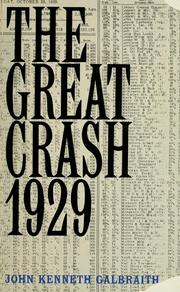
The great crash, 1929 is Galbraith's short account of the speculative mania and the October break. It is decades old, written with obvious pleasure in its own wit, and still the fastest way to understand what the incoming administration was reacting to.
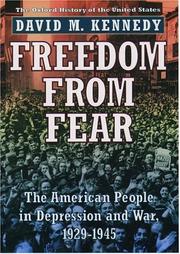
Then commit to Freedom from fear, David Kennedy's Pulitzer-winning volume covering the Depression and the war. It is the spine of this path: comprehensive, judicious about what the programs did and did not achieve, and unusually good at explaining the constraints Roosevelt was operating under rather than treating each choice as pure will.
Then the man and the case against him
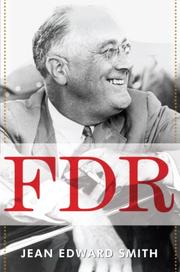
Jean Edward Smith's FDR is the best single-volume biography — strong on Roosevelt's temperament, his political instincts, and the polio years, and clear-eyed about the internment of Japanese Americans and the failures on refugees. Read it after Kennedy so you can see where personality actually moved events and where it did not.
Now read the other side. Amity Shlaes's The Forgotten Man is the most widely read revisionist account, arguing that the New Deal prolonged the Depression through policy uncertainty and hostility to business. Most academic economic historians dispute its central claims, and you should know that going in, but reading a well-made opposing case after Kennedy is far more useful than reading summaries of it. Contrast it with Adam Cohen's Nothing to fear, which returns to the Hundred Days through five members of Roosevelt's inner circle — Perkins, Hopkins, Moley, Douglas, Wallace — and shows how contested the direction was inside the administration itself.
Finish with the Court and the bargain
Scorpions is Noah Feldman's group biography of the four justices Roosevelt appointed — Black, Douglas, Frankfurter, Jackson — and it is the best way to understand the constitutional revolution that let the New Deal survive, without wading through the court-packing episode as a standalone drama.
Then read Ira Katznelson's Fear itself, which puts the Southern Democratic bloc at the center: the votes that passed the New Deal were bought partly by excluding agricultural and domestic workers from its protections, which meant excluding most Black workers in the South. It is the single most important corrective to a triumphalist reading. Michael Hiltzik's The New Deal: A Modern History makes a good closing survey, pulling the strands back together with the later scholarship in view.
Readers who want the comparative frame — welfare-state formation, executive power, coalition politics — will find it in the political science hub, and you can build your own variant list on /create.
Read in this order and you will be able to argue about the New Deal from evidence instead of allegiance. Follow the full path to keep the books in sequence.
Follow the full ordered path here: The Best New Deal Books to Read First.