Feminism: the essential reading path
This curriculum traces feminism from its foundational arguments through the major waves and their internal debates, arriving at contemporary gender theory and intersectional thought. Each stage builds the conceptual vocabulary needed for the next, so that by the end the reader can engage critically with both classic and cutting-edge feminist writing.
Foundations: Why Feminism?
BeginnerUnderstand the core problem feminism addresses — the social construction of women's subordination — and gain the essential vocabulary (patriarchy, gender roles, the personal is political) that all later texts assume.
▸ Study plan for this stage
Pace: 6–8 weeks total. Week 1–3: The Feminine Mystique (~30 pages/day, reading in thematic chunks — focus on Friedan's diagnosis before her prescriptions). Week 4–5: A Vindication of the Rights of Woman (~20 pages/day — dense 18th-century prose rewards slow, annotated reading). Week 6: We Should All Be Fe
- The 'problem that has no name' (Friedan): the unnamed psychological oppression of mid-20th-century American housewives and how silence itself is a tool of subordination
- Social construction of gender: the distinction between biological sex and the culturally imposed roles, expectations, and identities assigned to women across all three books
- Patriarchy as a system: not individual bad actors but an interlocking set of institutions, norms, and ideologies that reproduce women's subordination — visible in Friedan's suburbs, Wollstonecraft's drawing rooms, and Adichie's contemporary Nigeria
- Rationality and education as liberation (Wollstonecraft): the argument that women are not naturally inferior but are made intellectually weak by deliberate denial of education and rational development
- 'The personal is political': the insight, threaded through all three texts, that private domestic experiences (housework, marriage, beauty norms) are not individual problems but political conditions requiring collective solutions
- Internalized oppression: how women themselves come to police and reproduce the norms that constrain them — Friedan's 'comfortable concentration camp,' Wollstonecraft's 'overgrown children,' Adichie's socialized self-censorship
- Intersectionality as an emerging lens (Adichie): the recognition that gender oppression is shaped by race, class, and culture, and that a single universal 'women's experience' is insufficient
- Historical continuity of feminist argument: despite being written 170+ years apart, Wollstonecraft, Friedan, and Adichie diagnose strikingly similar mechanisms of subordination, showing patriarchy's adaptability across time and place
- In your own words, what is Friedan's 'problem that has no name,' and why does she argue that its namelessness is itself part of the problem?
- Wollstonecraft wrote in 1792; Friedan in 1963; Adichie in 2014. Identify one specific argument or observation that appears in all three books — what does its recurrence across 220 years tell us about the nature of patriarchy?
- How does Wollstonecraft use the concept of reason and education to challenge the idea that women's subordination is natural or inevitable?
- Adichie argues that gender roles are harmful to both women and men. Using specific examples from We Should All Be Feminists, explain the mechanism by which this mutual harm operates.
- All three authors write from different racial, national, and class positions. In what ways does Adichie's perspective expand, complicate, or challenge the picture of gender oppression painted by Wollstonecraft and Friedan?
- After reading all three books, how would you define 'feminism' to someone who has never encountered the term? Which book most shaped your definition, and why?
- Vocabulary log: Keep a running glossary as you read. For each key term (patriarchy, gender role, the personal is political, rationality, internalized oppression), write the definition in your own words AND find one concrete passage from the books that illustrates it.
- The 'problem that has no name' journal: Before starting Friedan, spend 10 minutes writing about a time you witnessed or experienced an expectation placed on someone because of their gender. After finishing the book, return to your entry — does Friedan's framework reframe what you wrote? How?
- Cross-book comparison table: Create a three-column table (Wollstonecraft | Friedan | Adichie). For each row, track how each author addresses: (1) the root cause of women's subordination, (2) the proposed solution, and (3) who is left out of or centered in their analysis.
- Close-reading annotation: Choose one paragraph from each book that you find most striking or most difficult. Annotate it line by line — what claim is being made, what evidence or reasoning supports it, and what questions or objections does it raise for you?
- 'Is this still true?' audit: After finishing all three books, find three real-world examples from current news, social media, or your own life that either confirm or challenge a specific argument made by one of the authors. Write a short paragraph for each linking the example to the text.
- Conversation or discussion challenge: Explain the core feminist argument of any one of the three books to a friend, family member, or study partner who hasn't read it — without using academic jargon. Note where they push back, and use those objections to deepen your own understanding of the text.
Next up: By establishing that women's subordination is socially constructed, historically persistent, and politically produced — not natural or inevitable — this stage equips the reader with the foundational vocabulary and critical lens needed to engage the more structurally complex and theoretically rigorous analyses of power, sexuality, and identity that characterize intermediate feminist texts.
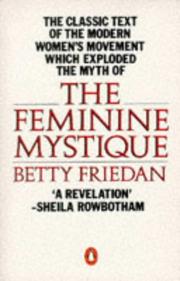
The book that ignited second-wave feminism by naming 'the problem that has no name' — women's domestic confinement — making it the perfect entry point for understanding what feminism is responding to.
The founding text of Western feminism, arguing that women deserve equal education and rational agency; reading it second shows how long these arguments have existed and grounds everything that follows historically.
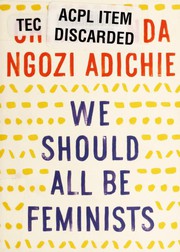
A short, accessible modern essay that distills why feminism still matters today, bridging the historical foundations just established to the contemporary world with clarity and warmth.
The Second Wave: Sex, Power & Liberation
BeginnerGrasp the major arguments of second-wave feminism — sexual politics, patriarchy as a system, and women's lived experience — and understand the debates that defined the movement from the 1960s to 1980s.
▸ Study plan for this stage
Pace: 10–12 weeks total, reading roughly 20–25 pages per day. Suggested pacing: "Sexual Politics" (weeks 1–4, ~330 pages), "The Female Eunuch" (weeks 5–8, ~350 pages), "Of Woman Born" (weeks 9–12, ~300 pages). Allow 1–2 buffer days per book for reflection and note consolidation.
- Sexual politics: the idea, central to Millett, that sex is a political category and that power relations between men and women are fundamentally political, not natural
- Patriarchy as a system: Millett's argument that patriarchy is a pervasive social institution — not merely individual sexism — upheld by ideology, family, education, and culture
- The social construction of femininity: Greer's critique that the 'eternal feminine' is a male-imposed myth that castrates women psychologically, economically, and sexually, producing the 'female eunuch'
- Female desire and self-ownership: Greer's call for women to reclaim their bodies, sexuality, and energy from compulsory femininity and the institution of marriage
- Motherhood as institution vs. experience: Rich's crucial distinction between the lived, embodied experience of mothering and the patriarchal institution that controls and defines it
- Compulsory heterosexuality and the male gaze: across all three books, the way heterosexual norms and male-defined desire shape women's self-perception and constrain their choices
- Literature and culture as political texts: Millett's method of reading canonical male authors (Lawrence, Miller, Mailer) as evidence of patriarchal ideology — establishing feminist literary criticism
- Personal experience as political evidence: the second-wave insistence that private, domestic, and bodily experience is legitimate political data, summed up in the slogan 'the personal is political'
- According to Millett, why is 'sexual politics' a coherent political category, and what institutions does she identify as enforcing patriarchal power?
- How does Greer define the 'female eunuch,' and what specific mechanisms — psychological, sexual, and economic — does she argue produce this condition in women?
- What is the difference, in Rich's framework, between motherhood as 'experience' and motherhood as 'institution,' and why does that distinction matter politically?
- How do all three authors treat the female body — as a site of oppression, liberation, or both — and where do their arguments converge or diverge?
- Millett reads literary texts by male authors as political documents. What does this method reveal, and what are its potential limitations as a feminist strategy?
- Taken together, what vision of women's liberation do Millett, Greer, and Rich collectively propose, and where do their prescriptions meaningfully differ?
- Close-reading log: For each book, choose one passage (2–3 pages) that best encapsulates the author's central argument. Write a 300-word analysis explaining how the language, examples, and rhetoric work together — practice the same critical-reading method Millett models in 'Sexual Politics'.
- Patriarchy mapping: After finishing 'Sexual Politics,' draw a diagram of the institutions Millett identifies as upholding patriarchy (family, education, religion, culture, etc.). Then, as you read Greer and Rich, annotate the diagram with examples from their books — tracking where the three authors agree, extend, or challenge each other.
- Personal-is-political journal: Greer and Rich both draw on personal and bodily experience as evidence. Write two journal entries (one after each book) connecting a specific argument from the text to an observation from your own life or a news story — practicing the second-wave method of linking private experience to structural analysis.
- Debate preparation: Stage a written debate (500–700 words) between Millett and Greer on the question: 'Is reclaiming female sexuality sufficient for liberation, or must political institutions be dismantled first?' Use direct quotations from both books to support each side.
- Comparative author profile: Create a one-page profile for each of the three authors summarising: (a) her core claim, (b) her primary evidence or method, (c) one major strength and one major criticism of her argument. Use this as a revision tool at the end of the stage.
- Timeline and context card: Build a brief timeline (1960–1985) placing key events of second-wave feminism alongside the publication of these three books. Annotate each event with a sentence explaining how it connects to an argument in Millett, Greer, or Rich — grounding the texts in their historical moment.
Next up: By internalising how Millett, Greer, and Rich built the foundational categories of patriarchy, embodiment, and sexual politics, the reader is equipped to engage with the critiques and expansions that followed — particularly the third-wave and intersectional challenges that interrogated whose experiences second-wave feminism actually centred.

Millett's landmark analysis of how literature and culture enforce male dominance introduced 'the personal is political' as an analytical tool, making it the essential second-wave text to read first in this stage.
A passionate, provocative argument that society represses female sexuality and energy; it deepens the reader's understanding of second-wave debates around the body, desire, and liberation.

Rich's exploration of motherhood as both institution and experience adds a crucial dimension — how patriarchy colonizes even the most intimate aspects of women's lives — rounding out the second wave's scope.
Intersectionality & Difference: Race, Class & Identity
IntermediateUnderstand how race, class, and sexuality complicate a single-axis view of gender oppression, and engage with the critiques that Black feminists and women of color leveled at mainstream (white) feminism.
▸ Study plan for this stage
Pace: 8–10 weeks total, reading roughly 20–25 pages per day. Week 1–3: "Ain't I a Woman" (~160 pp) — read in three focused sittings per week, pausing after each chapter to annotate. Week 4–6: "Sister Outsider" (~190 pp) — read one essay per sitting, journaling reactions before moving on. Week 7–10: "This
- Single-axis vs. intersectional analysis: hooks' critique in 'Ain't I a Woman' of how race AND gender simultaneously shaped the dehumanization of Black women, exposing the inadequacy of analyzing either axis alone
- Historical erasure and the politics of invisibility: hooks' excavation of how Black women were written out of both abolitionist and early feminist histories, and how that erasure persists in mainstream feminism
- The erotic as power and knowledge: Lorde's essay 'Uses of the Erotic' in 'Sister Outsider' reframes the erotic not as pornography but as a deep source of self-knowledge and resistance to oppression
- Difference as creative force, not division: Lorde's 'The Master's Tools Will Never Dismantle the Master's House' argues that genuine coalition must embrace difference rather than paper over it with false unity
- Silence, voice, and the cost of speaking: Lorde's 'The Transformation of Silence into Language and Action' frames self-silencing as complicity, urging women to speak across fear
- Theory in the flesh: the concept introduced in 'This Bridge Called My Back' that lived, embodied experience — particularly of women of color — IS a form of theory, not merely raw material for others' theorizing
- Coalition across difference: 'This Bridge Called My Back' as a whole models how women of color from distinct ethnic, class, and sexual backgrounds can build solidarity without erasing specificity
- Class and capitalism as feminist issues: across all three texts, class background and economic exploitation are shown to be inseparable from racial and gendered oppression, not secondary to them
- After reading 'Ain't I a Woman,' how did hooks demonstrate that mainstream 19th- and 20th-century feminism reproduced racist hierarchies, and what specific historical examples does she use to support this claim?
- How does Lorde in 'Sister Outsider' distinguish between the erotic and the pornographic, and why does she argue that suppressing the erotic is a tool of women's oppression?
- What does Lorde mean by 'the master's tools will never dismantle the master's house,' and how does that argument challenge the strategy of seeking inclusion within existing feminist institutions?
- How does 'This Bridge Called My Back' use personal testimony, poetry, and essay together to argue that lived experience constitutes legitimate feminist theory — and what does this form itself communicate that a conventional academic text could not?
- Across all three books, how is class treated as a feminist issue? Identify at least one argument from each text that shows how economic position intersects with race and gender.
- How do hooks, Lorde, and the contributors to 'This Bridge Called My Back' each conceptualize solidarity? Where do their visions converge, and where do they meaningfully differ?
- Annotation mapping: As you read 'Ain't I a Woman,' create a two-column annotation log — one column for hooks' critique of white feminism, one for her critique of Black male leadership. At the end, write a one-paragraph synthesis of how both critiques together build her intersectional argument.
- Lorde essay response journal: After each essay in 'Sister Outsider,' write a 150–200 word unfiltered response BEFORE reading any secondary commentary. Focus on: What did this make you feel? What did it challenge you to reconsider? Revisit these entries after finishing the book to track how your thinking shifted.
- Dialogue across texts: Choose one argument from hooks (e.g., on the sexualization of Black women) and find a passage in 'Sister Outsider' or 'This Bridge Called My Back' that speaks to the same theme. Write a 400–500 word comparative close reading showing how the two authors' approaches differ in tone, form, and political strategy.
- Contributor mapping for 'This Bridge Called My Back': Build a simple chart listing each contributor, her ethnic/class/sexual identity as she describes it, and her central argument. After finishing the anthology, use the chart to answer: What patterns of shared experience emerge? What differences resist easy synthesis?
- Personal positionality memo: After completing all three books, write a candid 1-page memo examining your own social position (race, class, gender, sexuality) and how it shaped what felt 'natural,' 'challenging,' or 'not about me' in these texts. Use at least one specific passage from each book as evidence.
- Coalition scenario workshop (for reading groups or solo): Draft a one-page fictional meeting agenda for a feminist coalition that includes the perspectives of hooks, Lorde, and at least two contributors from 'This Bridge Called My Back.' What agenda items would each insist on? Where would conflict arise, and how might Lorde's framework of 'difference as strength' help resolve it?
Next up: By grounding gender analysis in race, class, and sexuality through these three foundational texts, the reader has built the intersectional vocabulary and critical habits needed to engage with more structurally focused feminist theories — such as those examining institutions, law, labor, and global power — where these same axes of difference operate at systemic scale.
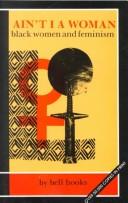
hooks's rigorous critique of how both racism and sexism intersect to uniquely oppress Black women is the essential starting point for understanding why 'women' is not a monolithic category.

Lorde's essays and speeches on the uses of the erotic, the master's tools, and difference as strength deepen the intersectional framework with poetic precision and moral urgency.
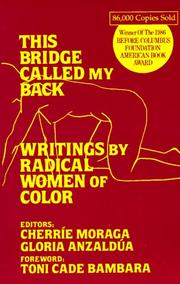
This landmark anthology of writings by radical women of color broadens the conversation beyond Black and white, cementing the reader's understanding that feminism must account for multiple, overlapping identities.
Gender Theory: Constructing & Performing Gender
IntermediateMove from descriptive accounts of women's oppression to theoretical frameworks that question gender itself — its construction, performance, and the binary categories we take for granted.
▸ Study plan for this stage
Pace: 6–8 weeks total: ~3 weeks on de Beauvoir (~25–30 pages/day, reading carefully with notes) and ~4–5 weeks on Butler (~15–20 pages/day, given the denser theoretical prose — re-reading key passages is expected and encouraged).
- De Beauvoir's foundational claim: 'One is not born, but rather becomes, a woman' — gender as a social and existential process, not a biological given
- The concept of 'the Other': how woman is constructed as the negative pole against which man defines himself as the universal subject
- Immanence vs. transcendence: de Beauvoir's existentialist framework for understanding women's oppression as a denial of free subjectivity
- Butler's critique of the sex/gender distinction: the argument that 'sex' itself is not a pre-discursive biological fact but is already culturally constructed
- Performativity: gender is not something one IS but something one DOES — a repeated stylization of the body that produces the illusion of a stable gender identity
- The heterosexual matrix: Butler's term for the cultural grid of intelligibility that demands coherence between sex, gender, and (hetero)sexual desire
- Subversive repetition and parody: how practices like drag expose the imitative structure of all gender, destabilizing naturalized categories
- The critique of identity politics: Butler's challenge to feminist movements that rely on a stable, unified category of 'woman' as their political foundation
- According to de Beauvoir, in what sense is 'woman' a historical and social construction rather than a natural fact, and what role does the concept of 'the Other' play in that construction?
- How does de Beauvoir use the existentialist concepts of immanence and transcendence to explain women's oppression — and what does liberation look like within her framework?
- What is Butler's central objection to the sex/gender distinction as it was used by second-wave feminism, and why does she argue that 'sex' is always already gender?
- What does Butler mean by gender performativity, and how does this differ from the commonsense idea that gender is a performance or a role one consciously plays?
- How does the concept of the heterosexual matrix function in Gender Trouble, and what kinds of bodies or desires does it render 'unintelligible'?
- In what ways does Butler see drag and other parodic practices as politically significant — and what are the limits she herself acknowledges in this argument?
- **Concept mapping:** After finishing de Beauvoir, draw a diagram linking 'the Other,' immanence/transcendence, and 'becoming woman.' Then, after Butler, extend the map to show where her concepts (performativity, heterosexual matrix, subversive repetition) agree with, depart from, or radicalize de Beauvoir's framework.
- **Close-reading journal:** Select one dense passage from each book (e.g., de Beauvoir's introduction to 'The Second Sex' and Butler's preface or Chapter 1 of 'Gender Trouble') and write a 300–500 word paraphrase in plain language — then note what is lost or simplified in your paraphrase.
- **Real-world observation log:** Over one week, keep a daily log of moments in everyday life (advertising, conversation, social media, public space) where gender is being 'performed' or enforced. Annotate each entry with the relevant concept from Butler or de Beauvoir.
- **Debate exercise:** Write two short position statements (150–200 words each) — one defending de Beauvoir's view that women need to claim transcendence and subjectivity within the existing framework, and one defending Butler's view that the very categories of the framework must be destabilized. Then write a paragraph reflecting on the tension between them.
- **Drag & parody analysis:** Find a specific cultural text (a film, music video, performance, or public figure) that involves gender parody or cross-dressing. Write a 400–600 word analysis applying Butler's concept of subversive repetition — and critically assess whether the example succeeds or fails as subversion by Butler's own criteria.
- **Socratic discussion or written dialogue:** Imagine de Beauvoir and Butler in conversation. Write a one-page dialogue in which de Beauvoir challenges Butler on the political risks of dissolving the category 'woman,' and Butler responds. Ground every line in actual arguments from the two books.
Next up: By dismantling the naturalness of binary gender and revealing it as constructed and performed, de Beauvoir and Butler open the door to the next stage's questions: if gender is a system of power enforced through discourse and institutions, how do race, class, sexuality, and other axes of identity intersect with and complicate that system — the central concern of intersectional and queer theory.
De Beauvoir's foundational claim that 'one is not born, but rather becomes, a woman' is the philosophical bedrock of gender constructionism and must be read before Butler's more radical extension of the idea.
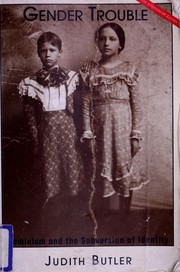
Butler's theory of gender as performance — rather than essence — is the most influential text in contemporary gender studies; de Beauvoir's groundwork makes Butler's dense argument far more accessible.
Contemporary Feminism: Equality, Power & New Frontiers
ExpertSynthesize everything learned by engaging with current feminist debates — #MeToo, reproductive rights, global feminism, and the ongoing tension between liberal and radical approaches — and develop an independent critical perspective.
▸ Study plan for this stage
Pace: 6–8 weeks total: Week 1–2 — "Feminism Is for Everybody" (~20 short chapters, ~15–20 pages/day, reading the whole book twice if needed given its density of argument); Week 3–5 — "Invisible Women" (~30 pages/day, pausing after each thematic section to review data and examples); Week 6–8 — "The Witches
- Hooks' critique of lifestyle feminism vs. visionary feminism rooted in ending sexist oppression — and why she insists feminism must be anti-capitalist, anti-racist, and anti-classist simultaneously
- The 'default male' as a design and data problem: how Criado Perez demonstrates that treating men as the human standard creates systemic, measurable harm to women across medicine, urban planning, economics, and technology
- The gender data gap — the structural absence of sex-disaggregated data — as a form of epistemic injustice and a feminist political issue, not merely a research oversight
- Intersectionality in practice: how all three authors, in different registers, show that race, class, and gender cannot be analyzed in isolation
- Liberal vs. radical feminist tensions: Hooks' insistence that surface-level inclusion (e.g., 'power feminism,' corporate feminism) without structural change is insufficient, contrasted with West's more culturally populist approach
- #MeToo and the politics of believability: West's essays frame the movement as a reckoning with who gets to be heard, believed, and taken seriously — connecting personal testimony to systemic power
- Reproductive rights as a site of ongoing political contestation: how bodily autonomy intersects with race, class, and state power across all three authors' frameworks
- Global and intersectional feminism: Hooks' insistence that Western feminism must not universalize its own experience, and how Criado Perez's global data examples reinforce this by showing how the data gap harms women differently across contexts
- According to Bell Hooks, why is 'lifestyle feminism' — the idea that anyone can define feminism however they like — ultimately a threat to the movement, and what does she propose instead?
- Identify three specific domains (e.g., medicine, urban design, AI) where Criado Perez shows the gender data gap causes direct harm to women. What is the common structural cause linking all three?
- How does Lindy West use popular culture, personal essay, and humor as feminist tools? What is her implicit argument about who feminism should speak to and how?
- Where do Hooks and West agree on the limits of mainstream or 'celebrity' feminism, and where might their approaches diverge? Use specific arguments from each book.
- Criado Perez argues that the absence of data is itself a political act. How does this claim connect to Hooks' broader argument about power and whose knowledge counts?
- After reading all three books, how would you define the central tension between liberal feminism (seeking equality within existing structures) and more radical feminist visions? Which authors push hardest against liberal frameworks, and why?
- Mapping exercise after Hooks: Draw a three-circle Venn diagram of race, class, and gender. For each of five feminist issues Hooks raises (e.g., domestic violence, reproductive rights, workplace equality), place the issue and annotate how all three axes of oppression interact — then write a paragraph on what a 'visionary feminist' policy response would look like.
- Data audit after Criado Perez: Choose one everyday product, public space, or institution in your own life (a car, a hospital, a workplace policy, a smartphone). Research whether its design was informed by female-disaggregated data. Write a one-page report modeled on Criado Perez's methodology: what data exists, what is missing, and what are the consequences.
- Essay response after West: Select one essay from 'The Witches Are Coming' and write a 500-word critical response that (a) identifies West's central argument, (b) steelmans the strongest objection to it, and (c) explains whether you find her rhetorical approach — humor, personal voice, pop culture — effective or limiting as feminist advocacy.
- Comparative synthesis: Write a 750-word essay answering: 'If Hooks, Criado Perez, and West were in a room together, where would they agree, and where would their sharpest disagreement lie?' Ground every claim in specific passages or arguments from the books.
- Current events application: Find a recent news story (within the last 12 months) about one of these topics: #MeToo, reproductive rights legislation, or an AI/tech bias case. Analyze it using the frameworks from all three books — Hooks' structural lens, Criado Perez's data lens, and West's cultural/rhetorical lens. Present your analysis in a one-page memo.
- Position paper: Draft a personal feminist manifesto of 300–500 words that synthesizes your own critical perspective after this stage. It must engage with at least one point of disagreement you have with one of the three authors, supported by evidence from the texts.
Next up: ">Having built a rigorous, multi-lens feminist framework — structural, empirical, and cultural — through Hooks, Criado Perez, and West, the reader is now equipped to engage with more specialized or discipline-specific feminist scholarship, whether in philosophy, legal theory, postcolonial studies, or feminist science studies, without losing sight of the political stakes that ground the theory in l

A concise, accessible manifesto that synthesizes hooks's decades of thought into a vision of feminism for all people; it serves as an ideal bridge between theory and contemporary activism.

A data-driven exposé of how the gender data gap causes systemic harm to women across medicine, urban planning, and economics — grounding abstract theory in concrete, modern evidence.

West's sharp cultural criticism on misogyny, #MeToo, and pop culture brings the curriculum to the present moment, showing how feminist ideas play out in everyday contemporary life.
Discussion
Keep reading
Paths that share books, cover the same subject, or open a related topic.