Start with My Brilliant Friend, and understand that the four Neapolitan novels are one book published in four parts rather than a series with instalments. They follow two girls born in a poor Naples neighbourhood in the 1940s across roughly sixty years of friendship, rivalry, marriage, politics and writing, and the fourth volume closes a question posed on the first page of the first. There is no reading order controversy and no volume that stands alone.
A note on our shelves, because it will otherwise confuse you: the four novels appear here as one omnibus, catalogued as The Neapolitan Novels : My Brilliant Friend and continuing with the other three titles. The separate entry catalogued as My Brilliant Friend under Chiara Lagani is a theatrical adaptation, not the novel. If you are buying, either the single-volume omnibus or the four separate paperbacks will do.
The order
- My Brilliant Friend — childhood and adolescence in the neighbourhood, ending at a wedding
- The Story of a New Name — marriage, a summer on Ischia, and the beginning of divergence
- Those Who Leave and Those Who Stay — the 1970s, politics, motherhood, and the cost of leaving
- The Story of the Lost Child — the return to Naples and the resolution
Read them consecutively and preferably close together. The books are built on accumulation: a slight in volume one detonates in volume three; a minor character in the neighbourhood becomes a political power by volume four. Long gaps between volumes cost you more here than in almost any other quartet.
The honest warning about the first fifty pages
My Brilliant Friend opens with an index of characters — the shoemaker's family, the grocer's family, the Solara family, the porter's family, some forty people across eight households. It reads like homework and it is the single most common reason people put the book down.
Two pieces of advice. First, the index is at the front for a reason; use it, and expect to flip back for the first two hundred pages. Second, do not try to memorise it. The families that matter — the Cerullos, the Grecos, the Carraccis, the Solaras — reassert themselves constantly, and everyone else can be picked up in context. The wall of names is Ferrante establishing a closed world where everyone's parentage determines their fate. Once the world is closed around you, the difficulty vanishes and the quartet becomes one of the most propulsive things in contemporary literary fiction.
Where to stop
Nowhere, honestly. My Brilliant Friend ends on an image rather than a resolution, and stopping there leaves the entire question of the frame narrative — an old woman searching for a friend who has erased herself — unanswered. If you are only going to read one, read something else.
Reading around the quartet
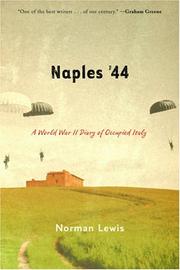
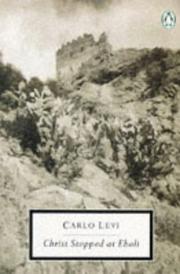
The context worth having is Neapolitan rather than literary. Norman Lewis's Naples '44 is a British intelligence officer's diary of the city under Allied occupation, in the exact years Lila and Elena are born, and it is the best single account of the poverty and improvisation the novels grow out of. Carlo Levi's Christ Stopped at Eboli covers the rural south a decade earlier and explains the world the neighbourhood's parents came from.
On the ideas: the quartet is deeply engaged with mid-century feminism, and our shelf includes Simone de Beauvoir under the title Nature of the second sex, which is a partial edition of the work published as The Second Sex. Elena's intellectual awakening in volumes three and four runs directly through this material.
For Ferrante on Ferrante, La frantumaglia collects her letters, interviews and essays. It is also where the authorship question is most directly addressed — the identity behind the pseudonym has been the subject of journalistic investigation and public dispute, which Ferrante and her publisher have consistently declined to confirm. The novels do not require you to have a view.
Follow the full ordered path here: The Neapolitan Novels Reading Order and Guide.