Start with Sharpe's Tiger. It is the earliest book in Sharpe's life — India, 1799, Sharpe still a private soldier — and it is a genuinely better-constructed novel than the book Cornwell actually published first. Written in 1997, sixteen years into the series, it has the pacing and the historical confidence the early volumes lack, and it gives you Sharpe's promotion from the ranks as an event rather than as backstory you infer.
That is a chronological recommendation, and it comes with a cost you should know about before you commit: read this way and the writing gets rougher as you go. After the India trilogy you drop back into the 1981 to 1986 Peninsular novels, which are shorter, thinner and more formulaic. Publication-order readers meet those books first and experience the series improving; chronological readers experience it declining for a stretch before it recovers. That is the real trade, and nobody should pretend it away.
The case for publication order
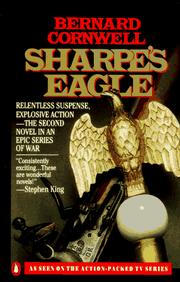
Cornwell wrote Sharpe's Eagle first, in 1981, and it was designed as an introduction: Sharpe arrives already a quartermaster with a mysterious past, earns his reputation, and the reader learns him the way his fellow officers do. The later prequels were written for people who already knew him, and they contain small reveals that land as reveals only if you have wondered about them for several books. Publication order also means you never read a novel that assumes knowledge from a book written later.
The case for chronological order
Sharpe's life is the only continuous thing in the series — there is no over-arching plot, just a soldier moving through the Napoleonic wars — so following it in sequence is the natural way to read twenty-odd volumes. The India books are strong openers. And because Cornwell wrote the prequels knowing everything, they contain no contradictions to trip over.
The recommendation
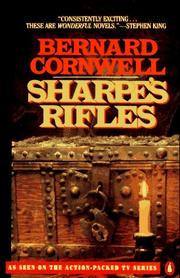
Chronological, starting with Sharpe's Tiger, then Sharpe's Triumph and Sharpe's Fortress, then into the Peninsular sequence: Sharpe's Rifles, Sharpe's Eagle, Sharpe's gold, Sharpe's company, Sharpe's sword, Sharpe's enemy, Sharpe's honour, Sharpe's regiment, and on to Sharpe's Waterloo. Cornwell has printed a chronological list in his own editions, which settles the argument as far as it can be settled.
The one concession worth making: if you are unsure whether you like Cornwell at all, read Sharpe's Eagle as a single trial volume first. It is the purest sample of what the series does and it is short.
Honest warnings
The early Peninsular novels reuse their own plot with some regularity — Sharpe is insulted by an aristocratic officer, is set up to fail, and wins anyway. The series is at its best when it is closest to a real battle, and the invented-mission books between engagements are noticeably weaker. Book by book the quality is uneven in a way that long series usually are, and reading twenty in a row is a mistake; space them.
Sharpe's attitudes are of his period and Cornwell does not sand them down. This is deliberate and it is not always comfortable.
Where to stop
Sharpe's Waterloo is the natural ending — the war ends, the arc closes, and the books Cornwell set afterwards are epilogues. Many readers stop there and are entirely satisfied. If you want the history straight rather than fictionalised, Cornwell's own Waterloo is a first-rate popular account of the four days and makes an excellent full stop.
For another long series where the order is genuinely argued over, see The Culture novels.
Follow the full ordered path here: Sharpe Reading Order: Publication or Chronological?.