Italian Literature: Best Books to Read in Order
This curriculum traces Italian literature from its medieval foundations through the Renaissance, Risorgimento, and modernist upheavals, arriving at the postmodern masters of the 20th century. Because the learner starts at an intermediate level, the path opens with the most accessible canonical works and steadily raises the literary and historical complexity, so that each book sharpens the cultural and linguistic intuition needed to fully appreciate the next.
The Medieval & Renaissance Pillars
IntermediateGrasp the founding myths, language, and moral imagination of Italian literature — the bedrock every later writer argues with or builds upon.
▸ Study plan for this stage
Pace: 8–10 weeks, ~40–50 pages/day (Inferno: 4–5 weeks; Decameron Vol. II: 3–4 weeks, with overlap for synthesis)
- Dante's terza rima form and its role in structuring moral philosophy through poetic language
- The nine circles of Hell as a systematic taxonomy of sin and its consequences—the medieval moral imagination made visible
- Contrapasso: the principle that punishment mirrors the nature of the sin, revealing Dante's ethical logic
- Dante's use of historical and contemporary figures to embed Italian politics and personal vendetta into cosmic order
- Boccaccio's frame narrative (the brigata fleeing plague) as a counter-model to Dante's hierarchical cosmos
- The Decameron's celebration of human wit, sensuality, and storytelling as alternatives to religious authority and moral absolutes
- Vernacular Italian as a vehicle for serious literature: both writers' choice to write in Italian rather than Latin as a foundational act
- The tension between medieval scholasticism (Dante) and proto-humanist pragmatism (Boccaccio) as defining poles of Italian thought
- How does Dante's terza rima form reinforce his vision of divine order, and what does the interlocking rhyme scheme suggest about the interconnectedness of sin and punishment?
- Explain the principle of contrapasso with three specific examples from Inferno: how does the punishment fit the sin in each case?
- What role do historical and contemporary Italian figures play in Inferno, and how does Dante use them to collapse the distance between personal grievance and cosmic justice?
- How does Boccaccio's frame narrative—ten storytellers fleeing plague in a villa—deliberately invert or challenge the moral architecture Dante constructed?
- Compare Dante's treatment of desire (e.g., Paolo and Francesca) with Boccaccio's treatment of the same theme in the Decameron: what does each author value?
- Why did both Dante and Boccaccio choose to write in vernacular Italian rather than Latin, and what does this choice reveal about their ambitions for literature?
- Map the nine circles of Hell: for each circle, identify 2–3 sinners, note their punishment, and write a one-sentence explanation of how contrapasso applies. Then reflect: what does Dante's ordering reveal about his moral priorities?
- Analyze a tercet (three-line stanza) from Inferno in terza rima: mark the rhyme scheme (ABA BCB CDC, etc.), then rewrite the same lines in blank verse or prose. What is lost? What does the form contribute to meaning?
- Create a dialogue between Dante and Boccaccio on the nature of sin and pleasure. Use specific scenes from both texts (e.g., Paolo and Francesca vs. a tale of seduction from the Decameron) to ground their disagreement.
- Trace one historical figure through Inferno (e.g., Farinata degli Uberti, Brunetto Latini, or Ugolino). Research their actual historical role in Florence, then analyze how Dante's portrayal serves his political and moral agenda.
- Select one novella from Decameron Vol. II that deals with wit, deception, or desire. Rewrite it as a scene in Dante's Hell: which circle would the protagonist inhabit, and why? What does this exercise reveal about the authors' different value systems?
- Write a comparative close reading (500–750 words) of how Dante and Boccaccio each use language to establish authority: Does Dante's cosmic vision depend on formal perfection? Does Boccaccio's rely on narrative charm and variety?
Next up: This stage establishes the two foundational poles of Italian literary imagination—Dante's hierarchical, divinely ordered cosmos and Boccaccio's humanistic, pleasure-affirming alternative—providing the philosophical and formal vocabulary that later Italian writers will either refine, reject, or synthesize.
The single most influential work in the Italian canon; starting with Inferno (rather than the full Commedia) gives an immediately gripping narrative while introducing Dante's allegorical method and his role as the father of the Italian literary language.
Read directly after Dante, Boccaccio's earthly, comic counterpoint reveals the other pole of the Italian tradition — sensual, ironic, and deeply human — and establishes the novella form that echoes through centuries of Italian prose.
The 19th Century: Nation, Memory & Realism
IntermediateUnderstand how Italian writers grappled with national identity, social class, and historical change in the era of the Risorgimento and its aftermath.
▸ Study plan for this stage
Pace: 8–10 weeks, ~40–50 pages/day. "The Betrothed" (680 pages): 2–3 weeks; "The Leopard" (300 pages): 1–2 weeks; review and synthesis: 1–2 weeks.
- National identity and the Risorgimento: how Manzoni's 17th-century Milan and Lampedusa's 1860s Sicily both reflect anxieties about Italian unification and modernization
- Social class and historical change: the tension between aristocracy and emerging bourgeoisie, and how both novels dramatize the collapse of old hierarchies
- Memory and historical consciousness: how Manzoni uses the past to comment on present politics, and how Lampedusa mourns a vanishing world
- Realism and narrative perspective: the shift from Manzoni's omniscient moral voice to Lampedusa's intimate, elegiac portrayal of decline
- The role of Providence and fate: Manzoni's Christian framework versus Lampedusa's secular, melancholic determinism
- Individual agency versus historical forces: how characters navigate or resist the currents of their times
- How does Manzoni use the 17th-century setting of 'The Betrothed' to address 19th-century Italian political concerns, and what is his vision of national unity?
- Compare the treatment of social class in 'The Betrothed' and 'The Leopard': how do both novels portray the relationship between aristocracy, clergy, and common people?
- What role does Providence or fate play in each novel, and how does this reflect the author's worldview regarding historical change?
- How do Renzo and Lucia's journey in 'The Betrothed' differ from Don Fabrizio's passivity in 'The Leopard', and what does each response to crisis reveal about the novel's historical moment?
- Analyze the narrative voice and tone in both novels: how does Manzoni's moral authority compare to Lampedusa's nostalgic, detached perspective?
- What do these novels suggest about the possibility of individual happiness or moral redemption in times of historical upheaval?
- Close-read the opening chapters of 'The Betrothed' (the encounter between Don Abbondio and the bravi) and the opening of 'The Leopard' (the prayer scene): compare how each establishes its historical world and moral stakes.
- Create a character map for 'The Betrothed' tracking how each major character (Renzo, Lucia, Don Abbondio, Cardinal Borromeo, the Unnamed) responds to the plague and famine; then do the same for 'The Leopard' with Don Fabrizio, Tancredi, Angelica, and the priest.
- Write a 500-word essay comparing how Manzoni and Lampedusa each use a historical crisis (plague in 'The Betrothed', the Sicilian revolution in 'The Leopard') to test their characters' values and reveal social structures.
- Trace the theme of memory across both novels: identify 3–4 passages where the narrator reflects on the past, and analyze what each reveals about the author's attitude toward history and change.
- Annotate a key scene from each novel (e.g., Lucia's vow in 'The Betrothed', Don Fabrizio's death in 'The Leopard') focusing on the author's use of religious or philosophical language; discuss how faith and doubt shape the narrative.
- Prepare a comparative presentation (10–15 minutes) on 'The Role of Women' in both novels: how do Lucia and Angelica embody or challenge the values of their respective historical moments?
Next up: This stage establishes how Italian writers used historical fiction to process national identity and social transformation; the next stage will explore how 20th-century Italian authors inherited, rejected, or radically reimagined these realist and moral frameworks in response to fascism, war, and modernism.

Italy's great national novel and the work that standardized modern Italian prose; its themes of power, faith, and ordinary people caught in history are essential context for everything that follows.
Though published in 1958, it is set in the Risorgimento and reads as the supreme elegy for the 19th-century aristocratic world — a perfect bridge between the realist tradition and 20th-century modernism.
Modernism, War & Existential Crisis
IntermediateEngage with the fractured, experimental voices that emerged from fascism, two world wars, and the collapse of stable identity in the 20th century.
▸ Study plan for this stage
Pace: 4–5 weeks, ~25–30 pages/day. Week 1–2: "If this is a man" (200 pages); Week 3: transition & reflection; Week 4–5: "Path to the Spiders' Nests" (180 pages)
- Testimony and the limits of language: how Levi uses fragmented, precise prose to document the indocumentable horror of Auschwitz
- Dehumanization as a systematic process: the camp's deliberate destruction of identity, dignity, and the concept of the 'human'
- Fragmented narrative and experimental form: how both authors reject linear storytelling to mirror psychological and historical rupture
- Resistance through consciousness: Levi's intellectual survival and Calvino's partisan protagonist as acts of defiance against erasure
- Unreliable perception and shifting identity: how war and trauma fracture the stable self in both texts
- Neorealism and allegory: Calvino's blend of gritty partisan realism with fable-like, dreamlike sequences
- Memory, reconstruction, and the impossibility of return: both authors grapple with whether one can truly recover or represent lived horror
- How does Levi's use of scientific precision and clinical language in 'If this is a man' function as both testimony and resistance to the dehumanizing logic of the camp?
- What is the significance of Levi's focus on small, concrete details (bread rations, names, daily rituals) rather than grand historical narrative?
- How does Calvino's protagonist Pin navigate between childhood innocence and adult violence in 'Path to the Spiders' Nests,' and what does this duality suggest about identity in wartime?
- Compare the narrative structures of the two texts: how do fragmentation and non-linearity in each reflect the authors' thematic concerns?
- What role does language itself play in both texts—as a tool for survival, documentation, or resistance?
- How do both Levi and Calvino depict the impossibility of returning to a pre-war sense of self or normalcy?
- Close-read a passage from Levi's opening chapters and annotate: identify moments where he uses precise, detached language to describe horror. What is the emotional effect of this restraint?
- Create a timeline of Pin's psychological and moral shifts across 'Path to the Spiders' Nests,' marking moments where his perspective fractures or transforms.
- Write a 500-word reflection: compare how Levi and Calvino each use fragmentation (in form and content) to represent the breakdown of stable identity.
- Analyze Levi's recurring motifs (hunger, names, language, hierarchy) across three separate chapters. How do these motifs accumulate to create meaning?
- Rewrite a scene from either text in a linear, conventional narrative style. Then compare: what is lost when you remove fragmentation and ambiguity?
- Create a visual map or diagram showing the different 'worlds' or narrative registers in 'Path to the Spiders' Nests' (realism, fable, dream, memory). How do they interact?
Next up: This stage establishes how 20th-century Italian writers responded to historical catastrophe through formal innovation and fractured consciousness; the next stage will likely explore how subsequent generations either inherited, rejected, or transformed these modernist strategies in the postwar and contemporary periods.
Pirandello's masterpiece of identity and illusion introduces the modernist crisis of the self that haunts Italian literature after WWI, and his fragmented, ironic style is essential preparation for the more demanding writers ahead.
The moral and literary conscience of 20th-century Italy; Levi's precise, luminous prose about Auschwitz is both a historical document and a profound meditation on what it means to be human — indispensable in any serious Italian reading list.
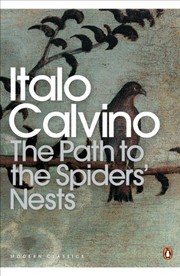
Calvino's debut novel — a Resistance story filtered through a child's eyes — introduces his signature blend of realism and fable, and serves as the ideal entry point before tackling his more experimental later work.
Postmodern Masters: Fable, Semiotics & the Novel as Game
ExpertAppreciate how Calvino and Eco pushed the Italian novel into metafiction, semiotics, and playful intellectual architecture without abandoning storytelling pleasure.
▸ Study plan for this stage
Pace: 8–10 weeks, ~40–50 pages/day (Calvino first: 3–4 weeks; Eco second: 5–6 weeks). Eco's density justifies slower pacing in the second half.
- Metafiction and narrative self-awareness: how Calvino's frame narrative and direct address to the Reader deconstruct the novel form itself
- Semiotics and the sign: Eco's theory of interpretation through layers of meaning, codes, and the instability of textual reference (especially in the monastery library)
- The novel as game and intellectual play: both authors treat reading/writing as rule-based systems that invite active participation rather than passive consumption
- Intertextuality and literary allusion: how both texts embed and parody other literary traditions, creating networks of meaning that demand cultural literacy
- The pleasure of the text vs. the pleasure of the puzzle: balancing Calvino's ludic joy with Eco's semiotic rigor, showing that intellectual complexity need not kill narrative engagement
- Postmodern skepticism toward authorial authority: the unreliable narrator, the absent author, and the reader's role in generating meaning
- The detective/scholar as reader: how both Adso (in Eco) and the Reader (in Calvino) mirror the act of interpretation itself
- How does Calvino use the frame narrative and direct address to the Reader in *If on a Winter's Night a Traveler* to make the act of reading itself the subject of the novel?
- What is the relationship between semiotics and mystery in *The Name of the Rose*? How does Eco use the library and the labyrinthine text as metaphors for interpretation?
- Compare the two authors' treatment of intertextuality: how do Calvino's ten incomplete novels and Eco's embedded medieval texts function differently as literary games?
- In what ways does *The Name of the Rose* present reading and interpretation as a detective activity? What does this suggest about how meaning is constructed?
- How do both texts challenge the reader's expectations of what a novel should be? What does each author gain by foregrounding the artificiality of narrative?
- Discuss the role of pleasure in these works: is intellectual play a substitute for emotional engagement, or does it enhance it?
- Map the narrative structure of *If on a Winter's Night*: chart how many times the Reader is interrupted, which novels are begun, and which are abandoned. Reflect on how this fragmentation mirrors real reading experiences.
- Create a semiotic analysis of one of the ten incomplete novels in Calvino (e.g., *Mr. Palomar* or *The Castle of Crossed Destinies*): identify the codes, symbols, and layers of meaning Calvino deploys.
- Trace the labyrinth of *The Name of the Rose*: map the library's structure and list the key texts Eco references (Aristotle, Augustine, etc.). Annotate how each reference deepens the mystery.
- Write a 2–3 page essay comparing how Calvino and Eco use metafiction: does one prioritize playfulness over meaning, or do they achieve balance differently?
- Perform a close reading of a passage where the Reader directly addresses the protagonist in Calvino and a passage where Adso reflects on interpretation in Eco. Analyze how each author uses second-person or introspective voice to implicate the reader.
- Create your own 'incomplete novel' opening (1–2 pages) in the style of Calvino's ten fragments, then write a brief reflection on what narrative conventions you deliberately subverted and why.
Next up: This stage establishes that the postmodern Italian novel can be intellectually rigorous *and* narratively engaging; the next stage will likely explore how later Italian writers either extend these techniques into new domains (e.g., historical fiction, autofiction) or react against postmodern excess by returning to realism or political urgency.
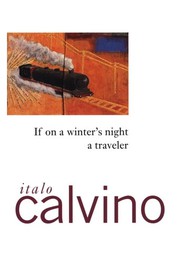
Calvino's most dazzling formal experiment — a novel about reading novels — rewards the reader who has already met his earlier realism; it crystallizes the postmodern Italian aesthetic and is best savored after The Path to the Spiders' Nests.

A medieval murder mystery that is simultaneously a treatise on semiotics, hermeneutics, and the power of texts; it synthesizes the entire Italian tradition — Dante, Boccaccio, scholasticism — into a gripping, erudite novel.
Contemporary Voices: Naples, Women & the Present
ExpertEncounter the living edge of Italian literature, where questions of gender, class, southern identity, and globalization are reshaping the tradition.
▸ Study plan for this stage
Pace: 8–10 weeks, ~40–50 pages/day (approximately 450–500 pages total). Recommend breaking into 3 sections: childhood friendship and neighborhood dynamics (weeks 1–3), emerging class consciousness and education (weeks 4–6), and the fracturing of friendship amid social aspiration (weeks 7–10).
- The Neapolitan neighborhood (rione) as a character: poverty, violence, and informal social codes that shape identity and possibility
- Female friendship as a site of ambition, rivalry, and complicity in a patriarchal, class-stratified society
- Education as both liberation and alienation: how schooling creates distance between Lila and Lenù and marks them as different within their community
- The role of beauty, intelligence, and strategic self-presentation in determining women's social mobility in post-war Naples
- Dialect, language, and code-switching as markers of class, education, and belonging—the tension between Neapolitan and Italian
- Male violence and female vulnerability: how gender shapes survival strategies and choices in the rione
- The legacy of fascism and war in shaping family trauma, economic precarity, and social hierarchies
- How does Lagani use the Neapolitan neighborhood as more than a setting—what does it reveal about the constraints and possibilities available to working-class women in 1950s Italy?
- Trace the evolution of Lila and Lenù's friendship from childhood to adolescence. What are the key moments of connection and rupture, and what do they reveal about ambition and class?
- How does education function in the novel as both a tool for escape and a source of social division? What does Lenù's continued schooling cost her in terms of her relationship with Lila and her community?
- Analyze the role of male violence in the novel. How do the women respond to and navigate the threat of violence from fathers, brothers, and other men?
- What is the significance of physical beauty in the novel, particularly in Lila's case? How does it intersect with intelligence, class, and female agency?
- How does Lagani use language and dialect to explore questions of identity and belonging? What does code-switching between Neapolitan and Italian reveal about the characters' social positions?
- Create a detailed map of the rione: identify key locations mentioned in the novel (the courtyard, the school, the streets) and annotate them with scenes that reveal the neighborhood's social hierarchies and unwritten rules.
- Write a comparative character study of Lila and Lenù at three key points in the novel (early childhood, age 10–11, and age 14–15). Track how their intelligence, ambition, and self-presentation diverge and what drives these divergences.
- Identify 10–15 instances where dialect or language choice marks a character's class position or social aspiration. Create a glossary of key Neapolitan words/phrases and their significance to the narrative.
- Analyze a scene of male violence or threat (e.g., Stefano's aggression, the brothers' behavior). Write a close reading that examines how Lagani depicts female vulnerability and resistance.
- Research the historical context: post-war Naples, the economic boom of the 1950s, and education reform. Write a 2–3 page reflection on how these historical forces shape the novel's plot and characters' choices.
- Conduct a dialogue analysis: select 3–4 key conversations between Lila and Lenù and annotate them for subtext, power dynamics, and what remains unspoken. What do these conversations reveal about their relationship?
Next up: This stage establishes the foundational tension between female friendship, class aspiration, and southern identity that will deepen and complicate across the Neapolitan quartet, preparing you to encounter how these characters' choices ripple across decades and reshape their lives and community.

The opening volume of the Neapolitan Novels is the defining Italian work of the early 21st century; it channels Boccaccio's earthiness, Manzoni's social realism, and Levi's moral clarity into a fierce, intimate story of female friendship and ambition.
Discussion
Keep reading
Paths that share books, cover the same subject, or open a related topic.