Best Books on the Medici and Renaissance Florence, in Reading Order
The Medici were bankers who ran a republic without ever formally holding power, and the art they paid for is the reason most people have heard of Florence at all. This path takes the family first, because their three centuries give the period a spine, then the city itself, then the buildings and paintings, then the politics — conspiracy, exile, and the friar who briefly burned the whole arrangement down. The last stage is the argument about what the Renaissance actually was, which is where an enjoyable subject turns into a serious one.
The Family
BeginnerLearn the dynasty — Cosimo, Lorenzo, the two Medici popes, the grand dukes — and how a bank became a ruling house.
▸ Study plan for this stage
Pace: Four weeks for about 790 pages. Hibbert's The House of Medici: Its Rise and Fall (364pp) is popular narrative history and moves at 30 pages a session comfortably; the family tree in the front matter is not optional, because six generations reuse four given names. Strathern's The Medici (430pp) is a
- Giovanni di Bicci as the founder who made the bank respectable and the papal account that made it rich, which is the commercial base under everything the family later did
- Cosimo the Elder's method of ruling without office — controlling elections, tax assessments and creditors while holding no formal title, which Hibbert makes the family's signature technique
- Lorenzo the Magnificent as a different kind of Medici: brilliant at diplomacy and patronage, notably worse at banking, and presiding over a business already contracting
- The two Medici popes, Leo X and Clement VII, and how the family's move from Florence to Rome changed the scale of what it could do and what it could lose
- The break between the elder branch and the grand dukes — Cosimo I onward — when informal influence was finally replaced with a formal title and a Tuscan state
- Strathern's throughline of patronage as a relationship: what a patron actually supplied, what he expected in return, and how that shaped what artists and thinkers could attempt
- Why the family's story ends in exhaustion rather than catastrophe, which is the least dramatic and most historically typical part of it
- How did the Medici bank make its money, and which single client mattered most to its early growth?
- What specific mechanisms did Cosimo the Elder use to control Florence without holding office, and why did the republic's formal institutions not stop him?
- In what ways was Lorenzo a weaker head of the family business than his grandfather, and how did he compensate politically?
- What changed for the family once one of its members held the papacy, and what did that cost them in Florence?
- Where do Hibbert and Strathern emphasise different things, and what does each leave out that the other covers?
- Draw the family tree yourself from Hibbert, marking each figure with one line on what they were actually good at. Names repeat relentlessly, and building the tree by hand is the only reliable cure.
- Make a two-column timeline: Medici events on the left, European events on the right, 1397 to 1737. You will add to it in every subsequent stage.
- Write 200 words on Cosimo the Elder's method of rule, without using the word 'behind the scenes'. Forcing the specifics is the exercise.
- List every artist or thinker Strathern names as a Medici beneficiary. Keep the list — stage three works through several of them, and the fifth stage asks where the money came from.
- Pick one succession in the family and write a paragraph on what would plausibly have happened if it had gone the other way. Hibbert gives you enough to reason with.
Next up: You have the family; the next stage supplies the city they operated in, which is the only way to see how strange and how precarious the Medici arrangement actually was.
The most readable history of the family across three hundred years, and the standard popular introduction. Start here: it gives you the cast, and everything else on the path is a deeper cut into one part of it.
A more recent narrative organised around the family's relationship with the artists and thinkers they funded, from Brunelleschi to Galileo. Read it second for the intellectual history Hibbert covers more lightly.
The City
BeginnerUnderstand Florence as a place and as a political system — guilds, priors, factions, and a republic of perhaps sixty thousand people.
▸ Study plan for this stage
Pace: Three weeks for 398 pages. Hibbert's Florence spans the Roman foundation to the twentieth century, so read the medieval and Renaissance chapters closely and the later ones at speed unless they interest you. This is also the stage to read with a street map open: Florence is small, the buildings are s
- The guild system as the constitution in practice — the major and minor guilds, and the fact that political participation ran through commercial membership
- The Signoria and the priors: short terms, selection by lot from vetted name-pouches, and the deliberate design against any individual accumulating power
- How that design was defeated in practice by controlling who went into the pouches, which is the concrete form of the Cosimo method from the previous stage
- The scale of the place — a city of tens of thousands doing the business of a European power, which explains both its intensity and its factional claustrophobia
- The wool and silk trades and the Arno as the material base beneath the banking, since Florence was a manufacturing town before it was a financial one
- The Ciompi revolt of 1378 as evidence that the political conflicts of the period were not only between elite families
- Faction as the city's normal condition — Guelf and Ghibelline, then the family alignments that replaced them — rather than as an aberration that the Medici interrupted
- The physical city as political statement: which family built where, and how a palazzo functioned as an argument about status
- How did a Florentine actually become a prior, and which of the safeguards in that process was easiest to subvert?
- What was the relationship between guild membership and political rights, and who was excluded entirely?
- What triggered the Ciompi revolt and what did it achieve, and what does its suppression tell you about the republic's limits?
- Why does a city of this size produce so much conflict at close range, and how does that scale change how you read the Pazzi conspiracy in a later stage?
- In what sense was Florence a republic while the Medici were dominant, and in what sense had it stopped being one?
- Draw a diagram of the Florentine constitution — guilds, councils, the Signoria, the term lengths — on one page, then mark in a second colour every point at which the Medici could apply pressure.
- On a map of central Florence, mark the Duomo, the Palazzo della Signoria, San Lorenzo, Santa Croce, Santa Maria Novella and the Palazzo Medici. Every event in stage four happens within a fifteen-minute walk, and seeing that changes the story.
- Write 200 words on the Ciompi revolt as a Florentine wool worker would have described it, using only what Hibbert reports.
- Add the city's crises — plague, revolt, war with Milan, war with Pisa — to your timeline from the previous stage, and note which Medici generation was managing each.
Next up: With the city's institutions and its map in your head, the next stage goes into the buildings themselves — starting with the one that was under construction, unfinishable, for a century and a half.
The biography of the city from its Roman foundation to the twentieth century, with the Renaissance at its centre. Read it after the family so you can see how unusual the Medici arrangement was against the republic's ordinary workings.
The Art They Paid For
BeginnerFollow the patronage into the actual buildings and pictures, and learn how a Renaissance workshop and commission worked.
▸ Study plan for this stage
Pace: Three weeks for about 510 pages. Brunelleschi's Dome (193pp) is a short, propulsive book and can be read in three or four sittings — but read it with images to hand, because it is an engineering story and the herringbone brickwork and the double shell are much easier to follow visually. Vasari's Liv
- The actual problem of the Florence dome: a 140-foot octagonal opening left in a cathedral by builders who had no method for closing it, and no timber long enough for conventional centring
- Brunelleschi's solution as King explains it — a double shell, a herringbone brick pattern that let each ring support itself as it rose, and stone and iron chains resisting outward thrust
- The machinery as the other half of the achievement: the ox-hoist with a reversible gear, and the fact that inventing the lifting equipment was as hard as designing the dome
- Secrecy and the competitive commission system: Brunelleschi withheld his method, and the Opera del Duomo's competitions are how such projects were awarded
- The workshop as the unit of artistic production — apprenticeship, division of labour, and a contract specifying pigments and delivery dates, which is a very different picture from the solitary genius
- Vasari's invention of art history: biography as the organising form, and the idea of art progressing through rebirth to perfection, which is an argument and not a neutral frame
- Vasari's Florentine and Michelangelo-centric bias, and his readiness to improve a story — irreplaceable as a source, unreliable as a report, and the reader's job is to hold both
- The commission as the real origin of most of these works: patron, subject, price and deadline came first, which is the connection back to the family and forward to the bank's ledgers
- What exactly made the dome impossible by conventional methods, and what were the two or three innovations that made it possible?
- Why was the hoisting machinery as significant an achievement as the structure itself?
- How did an artist in fifteenth-century Florence actually get work, and what did a typical contract specify?
- Take one story Vasari tells about Brunelleschi and compare it to King's account. What has Vasari added, and what is the addition doing for his larger argument?
- What is Vasari's theory of artistic progress, and what does adopting it cause him to overvalue or ignore?
- Sketch the dome in cross-section from King's description — inner shell, outer shell, the chains, the herringbone courses — and label how the load travels. If you can draw it, you have understood the book.
- Read Vasari's life of Brunelleschi immediately after finishing King, and list every claim where the two accounts diverge. This is the cleanest available demonstration of how to use a biased primary source.
- Take one painting you can find a good image of — Botticelli's Primavera or Masaccio's Trinity will do — and write 200 words on what the patron was buying, using what you now know about commissions.
- Write out Vasari's implicit ranking of the artists he covers, then note who is missing from his selection. The omissions are as revealing as the judgements.
- Add the major commissions to your running timeline and mark which Medici, if any, paid for each. Some of the most famous works were not Medici money at all, and noticing that corrects a common impression.
Next up: Having seen what the money produced, the next stage shows what it cost politically — a murder in the cathedral you have just spent a book inside, an exile, and a friar who burned the paintings.
How the cathedral dome was engineered without centering, by a goldsmith who kept his method secret. The single best book for grasping what fifteenth-century Florence could do, and short.
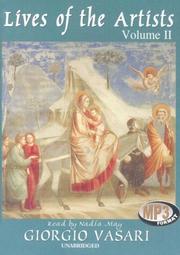
The 1550 book that invented art history, written by a painter who worked for Cosimo I and knew many of his subjects. Unreliable in its anecdotes and irreplaceable as a source — read a selection rather than all of it, and read it after King so you can hear where Vasari is mythologising.
Conspiracy, Exile, and the Friar
IntermediateSee the politics at close range: the Pazzi conspiracy, Lorenzo's management of the republic, the family's expulsion, and Savonarola's theocracy.
▸ Study plan for this stage
Pace: Five to six weeks for about 1,180 pages, and the narrative heart of the path. Magnifico (384pp) is a full biography and reads steadily. April Blood (302pp) is tightly focused on 1478 and can be read in a week. Fire in the City (336pp) covers 1494 to 1498 and is the most morally complicated book here
- Unger's reframing of Lorenzo as a working politician — alliance management, marriage diplomacy, and the daily manipulation of Florentine offices — with patronage as one instrument among several
- The 1478 Pazzi conspiracy: a rival banking family, papal involvement through Sixtus IV's circle, and an assassination staged during Mass in the cathedral
- What Martines shows about the aftermath — the summary hangings, the bodies from the Palazzo windows, and how the reprisals consolidated rather than weakened Medici control
- The war with the papacy that followed, and Lorenzo's personal journey to Naples, which is the single boldest political act in the path
- The 1494 expulsion: Piero's capitulation to Charles VIII of France and the family's flight, showing how quickly informal power evaporates when it fails to deliver security
- Savonarola's Florence as Martines presents it — a Dominican preacher of moral and institutional reform who acquired real political influence, with a programme that included both republican constitutional change and the destruction of luxury goods
- Why Martines takes the friar seriously rather than treating him as a fanatic: there was genuine popular support, a real critique of clerical corruption, and a constitutional programme, and none of that requires endorsing the bonfires or the excommunication and execution that ended it
- The Prince read in context: written after the Medici restoration by an ex-official of the republic that replaced them, dismissed and tortured, and addressed to a Medici — with its examples drawn from events in this stage
- What did the Pazzi actually want, who else was involved, and how close did the conspiracy come to succeeding?
- How did Lorenzo convert an assassination attempt into stronger control of the city, and what does that reveal about where his power really rested?
- Why did the family fall in 1494, and how much of it was Piero's failure rather than a structural weakness?
- What did Savonarola actually preach and what did his supporters want changed? State it as a follower would have, then state the case against him as his opponents made it.
- Which specific events from these three books can you find Machiavelli generalising from in The Prince, and does knowing the events make his advice more or less persuasive?
- Was Machiavelli writing a sincere manual, an application for employment, or a republican's dissection of tyranny? Argue one position using the text.
- Reconstruct 26 April 1478 hour by hour from April Blood, using the map from stage two. The conspiracy is a geography problem as much as a political one.
- Write 200 words on Savonarola from the point of view of a Florentine who supported him, and 200 more from one who did not, using only what Martines documents. Neither should be a caricature.
- Find three passages in The Prince that refer to events covered in this stage and annotate each with what actually happened. The book gets sharper and stranger with the footnotes filled in.
- List everything that was destroyed or dispersed in the bonfires as Martines describes them, and write a paragraph on what the earlier stages of this path would look like if that programme had continued for a decade.
- Compare Unger's Lorenzo with the Lorenzo of Vasari and of Hibbert. Three portraits, three purposes — and naming the differences is the exercise.
Next up: You have followed the family, the city, the art and the politics as narrative; the last stage asks the two questions narrative cannot answer — where the money actually came from, and whether 'the Renaissance' is a real thing at all.
A full biography of Lorenzo de' Medici that treats him as a politician rather than as a patron who occasionally governed. Read it first here: the next two books are both about crises he lived through or caused.
The 1478 Pazzi conspiracy — the murder of Giuliano in the cathedral, the papal involvement, and the reprisals — reconstructed by a historian of Florentine politics. The clearest window on how violent the republic's factional life really was.
Savonarola's Florence, from the Medici expulsion to the friar's execution in 1498, by the same author and unusually fair to a figure normally treated as a fanatic. It shows the Renaissance city rejecting everything the earlier stages celebrated.
Written in 1513 by a republican official dismissed and tortured when the Medici returned, and addressed to a Medici. Read it last in this stage, when you know the specific events he is generalising from — it is a very different book once you do.
What the Renaissance Was
BeginnerTake on the historiographical argument about the period, and get behind the art to the money that paid for it.
▸ Study plan for this stage
Pace: Two to three months, and the hardest stage by a distance. De Roover's Rise and Decline of the Medici Bank is a technical economic history built from ledgers and is best used selectively — read the chapters on the bank's structure, the branch system, the papal account and the collapse, and consult th
- The Medici bank's actual structure in De Roover: not a modern corporation but a set of partnerships, each branch a separate entity with local partners, which limited liability and also limited control
- Double-entry bookkeeping and the bill of exchange, and how the bill's cover for interest allowed profitable lending within the church's prohibition on usury
- The papal account as the bank's foundation, and what losing or sharing it did to the whole enterprise
- The causes of decline as the ledgers show them — bad branch managers, sovereign loans to rulers who could not be sued, over-extension, and inattention at the top under Lorenzo — which is a duller and better-evidenced story than most narratives give
- Burckhardt's thesis: the Italian state as a work of art, the discovery of the individual, the revival of antiquity, and the birth of the modern person, all argued in 1860
- Why Burckhardt still matters even though his framework has been steadily dismantled — periodisation, continuity with the Middle Ages, and the exclusion of most of the population are the standard lines of attack, and every later account is positioned relative to his
- Lee's counter-case: the violence, the slavery in Italian households, plague, the treatment of women and of Jewish and Muslim communities, and the sources of the money that paid for the pictures
- The path's closing question — whether 'the Renaissance' names a real transformation, a useful periodisation, or a story Florence successfully told about itself
- How was the Medici bank organised, and what did the partnership structure make possible that a unified firm would not have?
- How did a bill of exchange work, and how did it accommodate the prohibition on usury?
- What does De Roover identify as the principal causes of the bank's decline, and how does that compare with the explanations offered in the narrative books from stage one?
- State Burckhardt's thesis in his own terms, then name the three strongest objections later historians have made to it.
- Which of Lee's specific claims are best documented, and which parts of the Burckhardtian picture do they actually damage?
- After the whole path: was there a Renaissance? Answer with a definition first, then the evidence.
- Work through one worked example of a bill of exchange from De Roover, tracing the currencies, the parties and where the profit appears. Doing it once makes the entire financial history legible.
- Draw the branch structure of the bank at its height, with each branch's partners and its principal business. Then mark the two or three that caused the largest losses.
- Write 200 words stating Burckhardt's thesis without any modern hedging, then 200 words stating the strongest case against it. Keeping the two apart is the point.
- Take five specific claims from The Ugly Renaissance and check whether Lee cites a source for each. This is the right way to use a polemic that is also scholarship.
- Return to the list of artists and works you built in stage three and annotate each with where the money came from, using De Roover and Lee. This single page is the whole argument of the stage in concrete form.
- Write a final two pages on what you now think Florence between 1400 and 1550 actually was, naming which book each claim rests on and flagging where the authors disagree.
Next up: This is the end of the path — family, city, art, politics and the argument about the period itself — and the natural next move is to reread Brunelleschi's Dome, which reads differently once you know whose money and whose labour the cathedral was built with.

The definitive study of the bank's ledgers, branches and eventual collapse — double-entry bookkeeping, papal accounts, and the loans that were never going to be repaid. Technical, and the foundation under everything else on this path.

The 1860 book that created the modern idea of the Renaissance as the birth of the individual and of the state as a work of art. Its thesis has been steadily dismantled by later scholarship; read it as the position everyone since has been arguing with.

The counter-case: violence, slavery, plague, misogyny and the sources of the money, argued against the Burckhardtian picture. The right book to finish on, because the point of this path is that Florence was a real city and not a museum.
Discussion
Keep reading
Paths that share books, cover the same subject, or open a related topic.