Leonardo da Vinci: The Best Books to Read, in Order
Leonardo finished perhaps fifteen paintings and filled something over seven thousand surviving notebook pages, which is why the serious literature keeps insisting the notebooks matter more than the pictures. This path begins with the modern narrative biography, puts the notebooks in your hands immediately so the claims have evidence behind them, then moves to the scholarly lives that disagree about what kind of mind he had, and ends with a single-picture study, a contemporary source and two arguments about his afterlife. A cataloguing note: two books here are filed under the bare title Leonardo da Vinci and are named individually below.
The modern biography
BeginnerGet the whole life once, in the most accessible current telling.
▸ Study plan for this stage
Pace: Two and a half to three weeks for Walter Isaacson's 599-page biography, roughly 30 pages a day. It is narrative popular biography, heavily illustrated, and it assumes no art-historical background at all. Our catalogue files it under the bare title Leonardo da Vinci and lists two translators alongsid
- The chronology in one pass: Vinci and Florence, the years in Milan under Ludovico Sforza, the return to Florence, Rome, and the final years in France
- Isaacson's organising claim that the notebooks, not the paintings, are the record of the mind
- How few finished paintings there are, and the pattern of abandoned and undelivered commissions
- The anatomical dissections and the engineering studies as work Leonardo pursued for himself rather than for patrons
- Isaacson's method: a popular biographer building a case for curiosity as a transferable habit
- Where the book is narrative and where it is drawing conclusions the specialists in stage three dispute
- What is the sequence of Leonardo's patrons, and what did each one actually commission?
- Which paintings were finished, which were abandoned, and which are attributed rather than documented?
- What is Isaacson's argument about why the notebooks matter more than the pictures?
- Where does Isaacson move from evidence to inference about Leonardo's character?
- What in this account is presented as fact that you would want a specialist to confirm?
- Keep a running two-column list as you read: works Leonardo completed, and works he started and left — the imbalance is the book's real subject.
- Mark every notebook page Isaacson reproduces and note what he claims it shows; you will check those claims directly in the next stage.
- Write a one-paragraph chronology of the Milan years from memory after finishing, then correct it against the book — this is the period the scholarly lives will complicate most.
Next up: Every biography on this path is an argument about what is in the notebooks, so the next step is to put them in your hands before anyone else interprets them.

Isaacson's 2017 biography, built around the notebooks and organised as a case for curiosity as method. Filed under the bare title. It is the easiest complete life available and the right first book.
The notebooks, read alongside
BeginnerGo straight to the primary source, because every biography above and below is an argument about what is in it.
▸ Study plan for this stage
Pace: Do not read either of these straight through. Spend two weeks browsing H. Anna Suh's 352-page illustrated selection, twenty or thirty pages at a sitting, and then keep the 1,247-page compilation on the desk as a reference you dip into for the rest of the path. Suh's volume is a large-format picture
- That the notebooks are working papers, not a treatise — mirror writing, unsorted, reused pages
- The subject divisions of the fuller compilation: anatomy, water, flight, mechanics, painting, the aphorisms
- Drawing as Leonardo's method of thinking, not illustration of a conclusion already reached
- The anatomical sheets and what they demonstrate about dissection he actually performed
- The water studies as the clearest case of observation running ahead of any available theory
- That the notebooks as we have them are a fraction of what existed, reassembled and reordered by later editors
- What kind of document is a notebook page — a note to self, a draft for publication, a record of an experiment?
- Which subjects does Leonardo return to most often, judging by the compilation's own proportions?
- What does an anatomical sheet show that a written description could not?
- How much of what you read is Leonardo's arrangement and how much is his editors'?
- Which of Isaacson's claims can you now check directly against a page?
- Take three notebook pages Isaacson quoted and find them in Suh's selection; read the whole page, including what Isaacson did not quote, and note what the context changes.
- Pick one subject section of the compilation — the water studies are the best for this — and read twenty pages continuously, tracking how an idea develops across sheets.
- Choose one anatomical drawing and write down everything it records, then compare that with the accompanying text; the mismatch is the point.
Next up: With the primary material in hand you can read the three art historians who disagree about it and judge their arguments against the pages themselves.
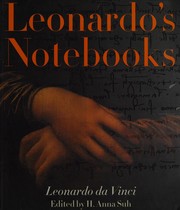
A large-format selection pairing the notebook pages with the drawings they sit beside. The best-illustrated way in; catalogued with Leonardo credited alongside the editor.
The standard fuller compilation of the writings, arranged by subject — anatomy, water, flight, painting, the aphorisms. Read it second, as the reference you keep returning to rather than a book you finish.
The scholarly lives
IntermediateRead the three art-historical studies that disagree, and notice what each one is arguing for.
▸ Study plan for this stage
Pace: Five to six weeks for 622, 194 and 384 pages, and be clear that these three are not the same kind of book. Charles Nicholl's Flights of the Mind is a long literary biography built from documents and reads like narrative. Kenneth Clark's study is 194 pages, is filed in our catalogue under the bare ti
- Nicholl's documentary method — tax records, court cases, shopping lists — and the picture of daily life it recovers
- Clark's connoisseurial approach, judging the paintings as paintings and establishing the modern account of them
- Kemp's thesis that a single natural philosophy runs through the anatomy, the engineering and the pictures
- Attribution as a live problem, and how each author handles works that are contested
- The three incompatible pictures of the mind: a documented Florentine artisan, an artist judged by his pictures, and a unified natural philosopher
- How the choice of evidence — archives, canvases, manuscripts — determines each author's conclusion
- What does Nicholl establish about the Milan and Florence years that Isaacson only narrates?
- What is Clark arguing about the paintings, and which of his judgements have since been revised?
- What does Kemp mean by a unified natural philosophy, and what evidence does he rest it on?
- Where do these three disagree about the same document or picture, and why?
- Which of the three is closest to what the notebooks themselves suggested to you in the last stage?
- Pick one painting treated by both Clark and Kemp — the Virgin of the Rocks is the richest choice — and set their accounts side by side, noting what each treats as evidence.
- Take Nicholl's use of one archival document and trace what he builds on it; then ask whether the document supports the weight.
- Read Kemp's chapter on the anatomical work with the relevant sheets from the last stage open, and mark where his reading depends on details you had not noticed.
Next up: Having three arguments about the whole life, the final stage narrows to one picture and one contemporary source, then to what later readers have made of him.
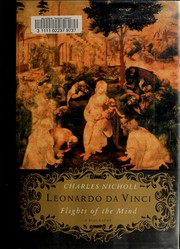
A literary biography that reconstructs the man from documents — tax records, court cases, shopping lists — rather than from the paintings. The most vivid on the Milan and Florence years.

Clark's 1939 study, the book that established the modern art-historical account of the paintings. Also filed under the bare title; distinguish it from Isaacson's by the author. Short, opinionated and still quoted.

The standard scholarly treatment, arguing for a unified natural philosophy running through the anatomy, the engineering and the pictures. The most demanding book here and the one specialists cite.
One picture, one contemporary, two arguments
IntermediateFinish with a close study, the sixteenth-century source everything descends from, and two books about what we do with him now.
▸ Study plan for this stage
Pace: Four weeks for 352, 320, 297 and 336 pages, in this order. Ross King's Leonardo and the Last Supper is narrative history around a single mural. Vasari's Lives of the Artists is the sixteenth-century primary source — a near-contemporary who never met Leonardo, writing biography with a thesis about Fl
- The Last Supper commission: the politics of Ludovico Sforza's Milan and the refectory it was painted for
- Why the mural deteriorated — the experimental technique Leonardo used instead of true fresco
- Vasari as a source: what he witnessed, what he collected second-hand, and what he shaped for effect
- Distinguishing evidence from Vasari in every later biography you have read
- Lankford's revisionist move: reading documented behaviour rather than assuming genius
- The self-improvement afterlife as a phenomenon worth understanding, and Gelb's book as its clearest specimen
- What did Leonardo's technique on the Last Supper actually do, and how soon did the damage begin?
- Which famous Leonardo anecdotes come from Vasari alone, and how far can any of them be corroborated?
- What does Lankford strip away, and does anything in the documentary record resist him?
- How did Leonardo become a symbol of creativity, and what does Gelb's book need him to have been?
- After all ten books, which single work would you hand someone who asked for one, and why?
- Read Vasari's life of Leonardo, then go back through Isaacson and Nicholl and mark every anecdote that traces to it — the count is larger than you expect.
- Take King's account of the Last Supper's composition and check it against a good reproduction, identifying each apostle group he describes.
- Read one chapter of Gelb against Lankford's argument and write a paragraph on which of Leonardo's actual documented habits survive the translation into a self-help principle.
Next up: You now have the modern life, the primary sources, the scholarly disagreement and the afterlife — enough to read any new Leonardo book and place it immediately.

The commission, the failing experimental technique and the Milan politics around a single mural. The clearest demonstration of how much context one picture carries.
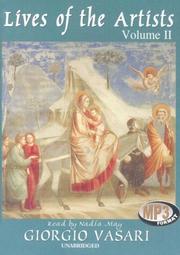
Vasari's 1550 lives, the source of most of the anecdotes and much of the mythology, written by someone who never met Leonardo. Read it here so you can see which stories are evidence and which are Vasari.

A deliberately revisionist attempt to strip away the genius framing and read the documented behaviour instead. Useful as a corrective after four admiring books.
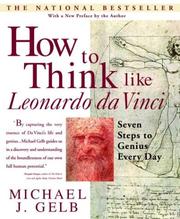
A creativity workbook, not scholarship, and included on that understanding. Read last if at all: it is the clearest example of the self-improvement afterlife the previous book is reacting against.
Discussion
Keep reading
Paths that share books, cover the same subject, or open a related topic.